Cool Cats and Frozen Fingers

This is the first really cold winter we have had since the freak snowfalls of January 2022. There hasn’t been any snow on Rhodes so far this year – all the rain fell in the early part of the winter, long before the temperatures started to plummet. We have had sustained periods of temperatures in single figures, with days that have not risen above 9 degrees centigrade and night time temperatures around 3 degrees.

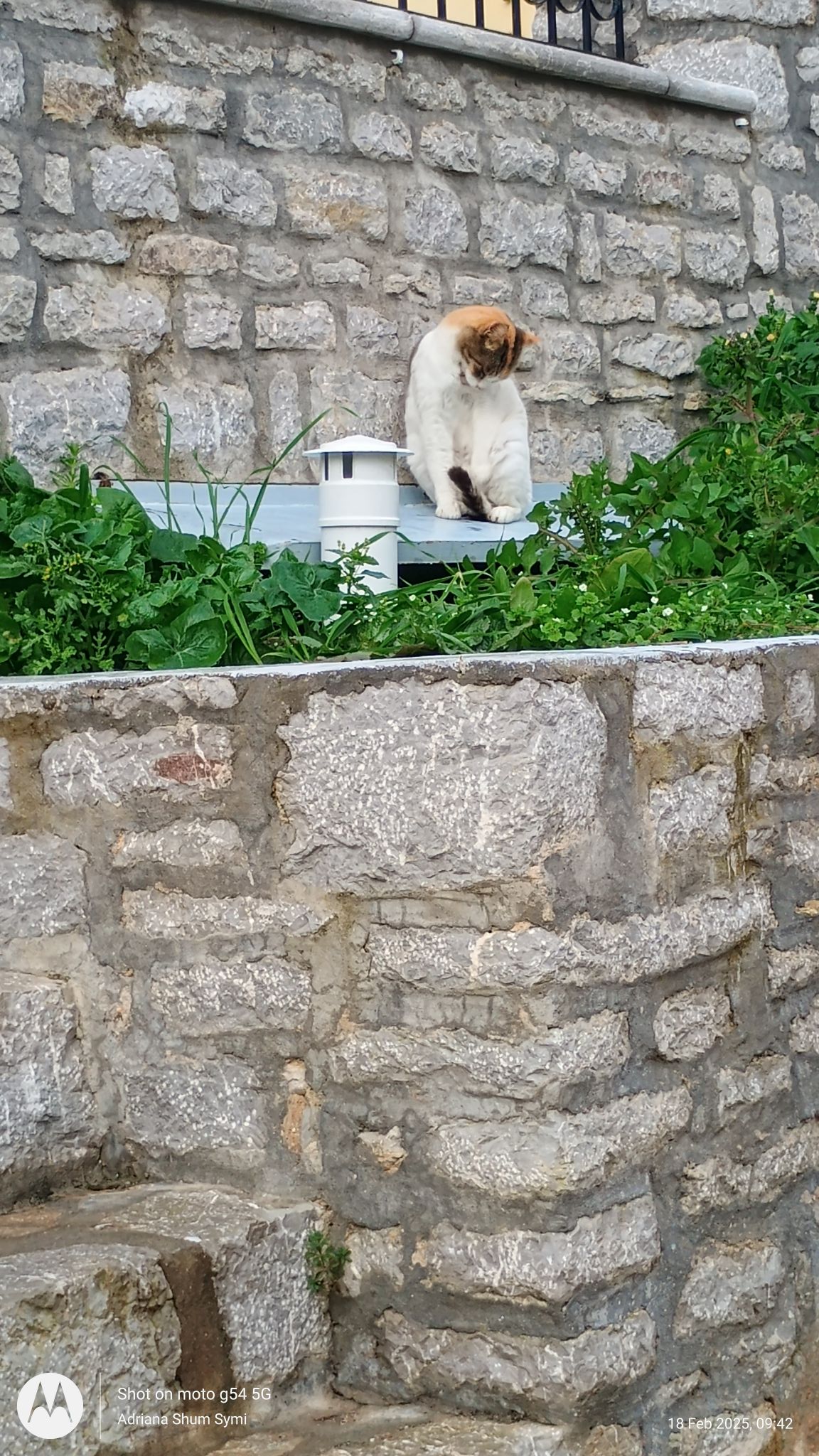
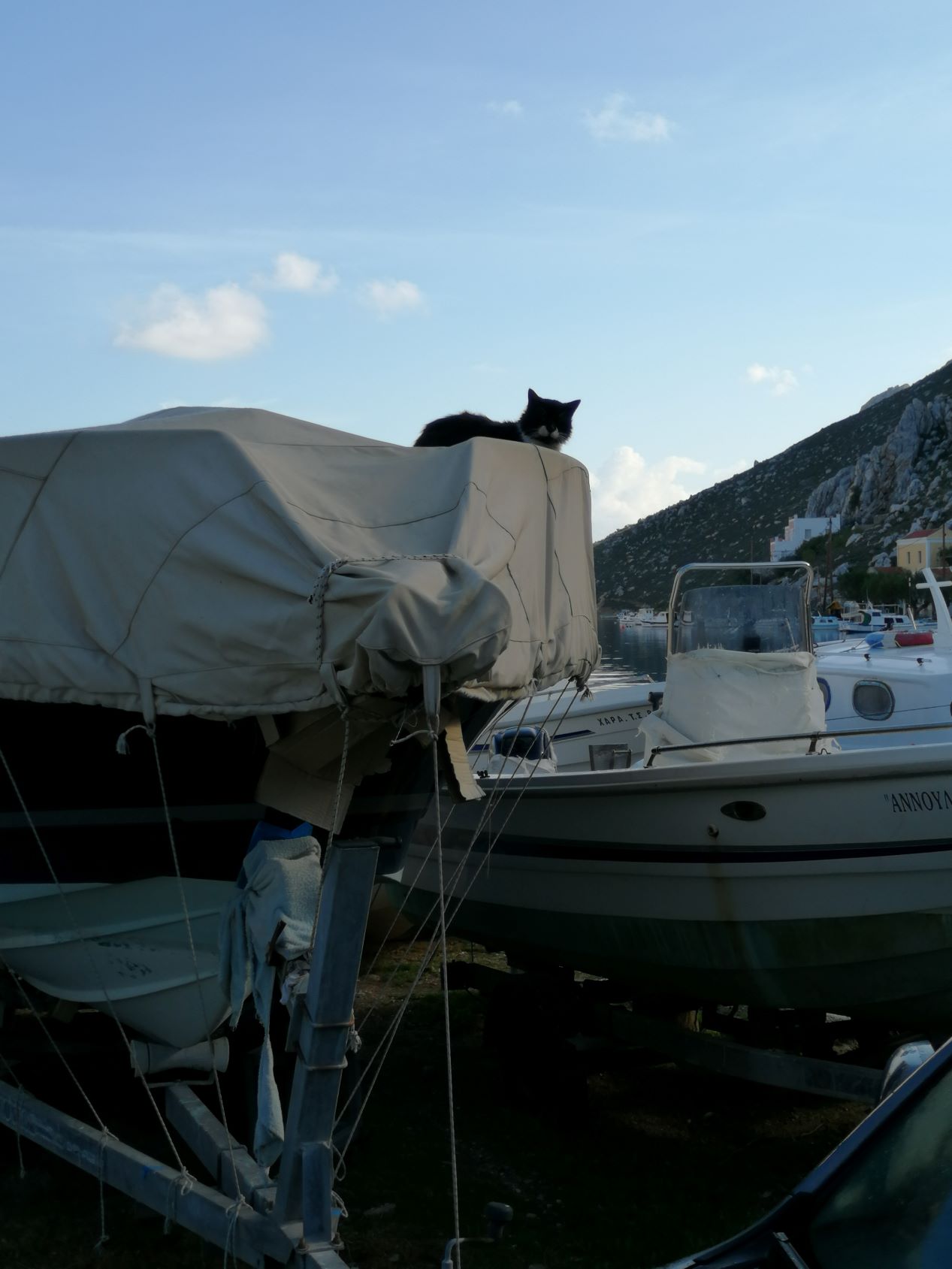
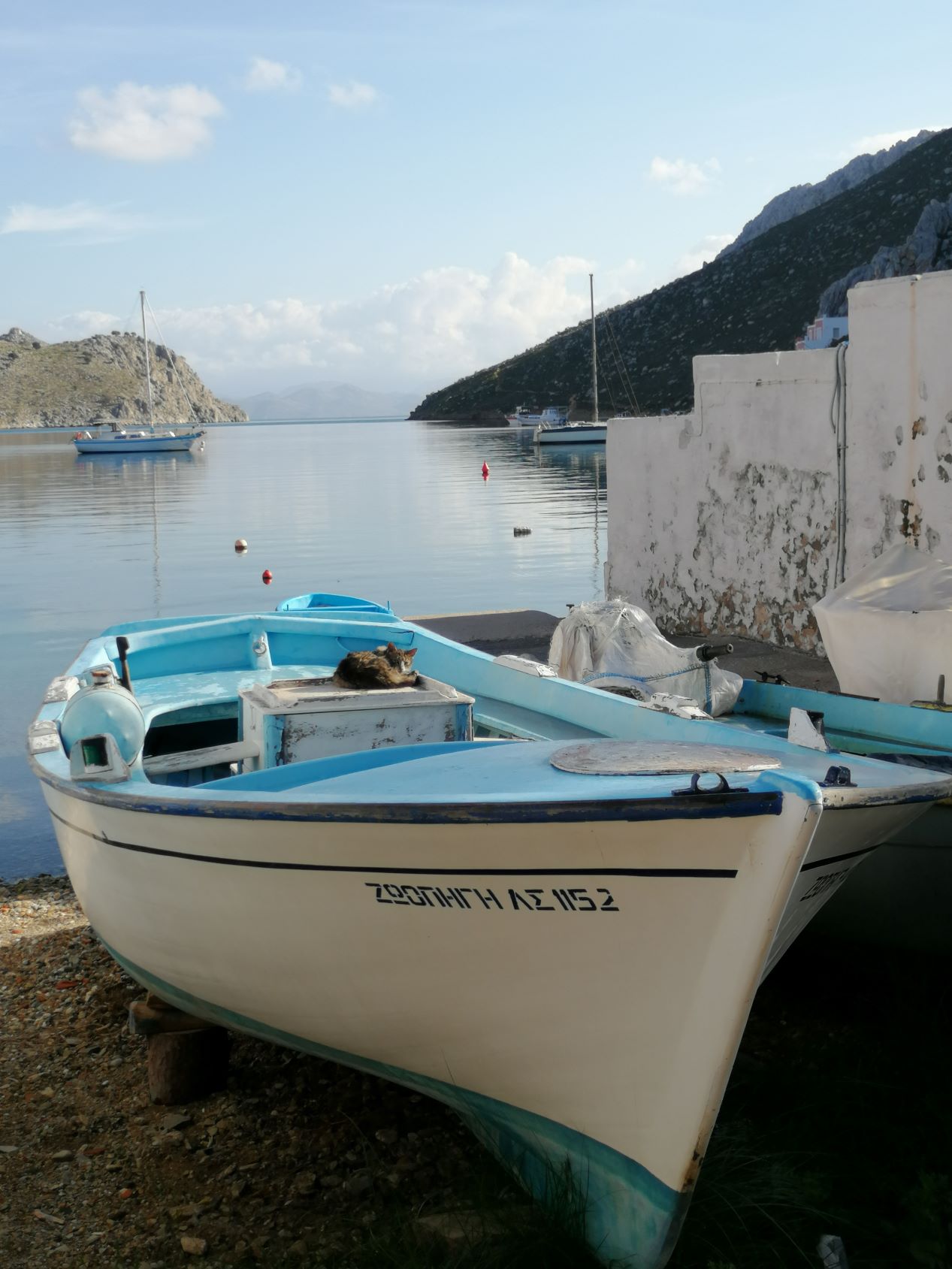
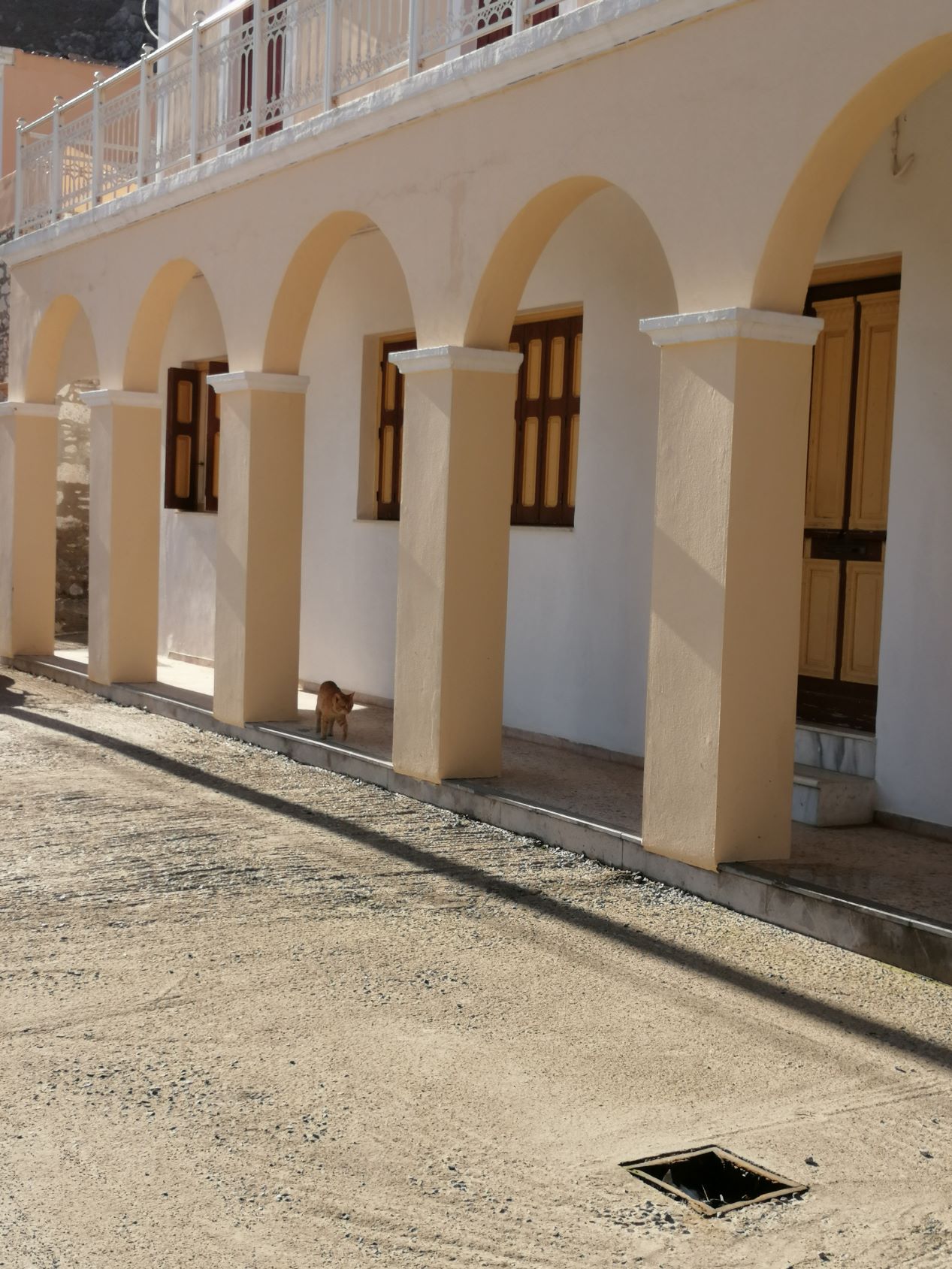
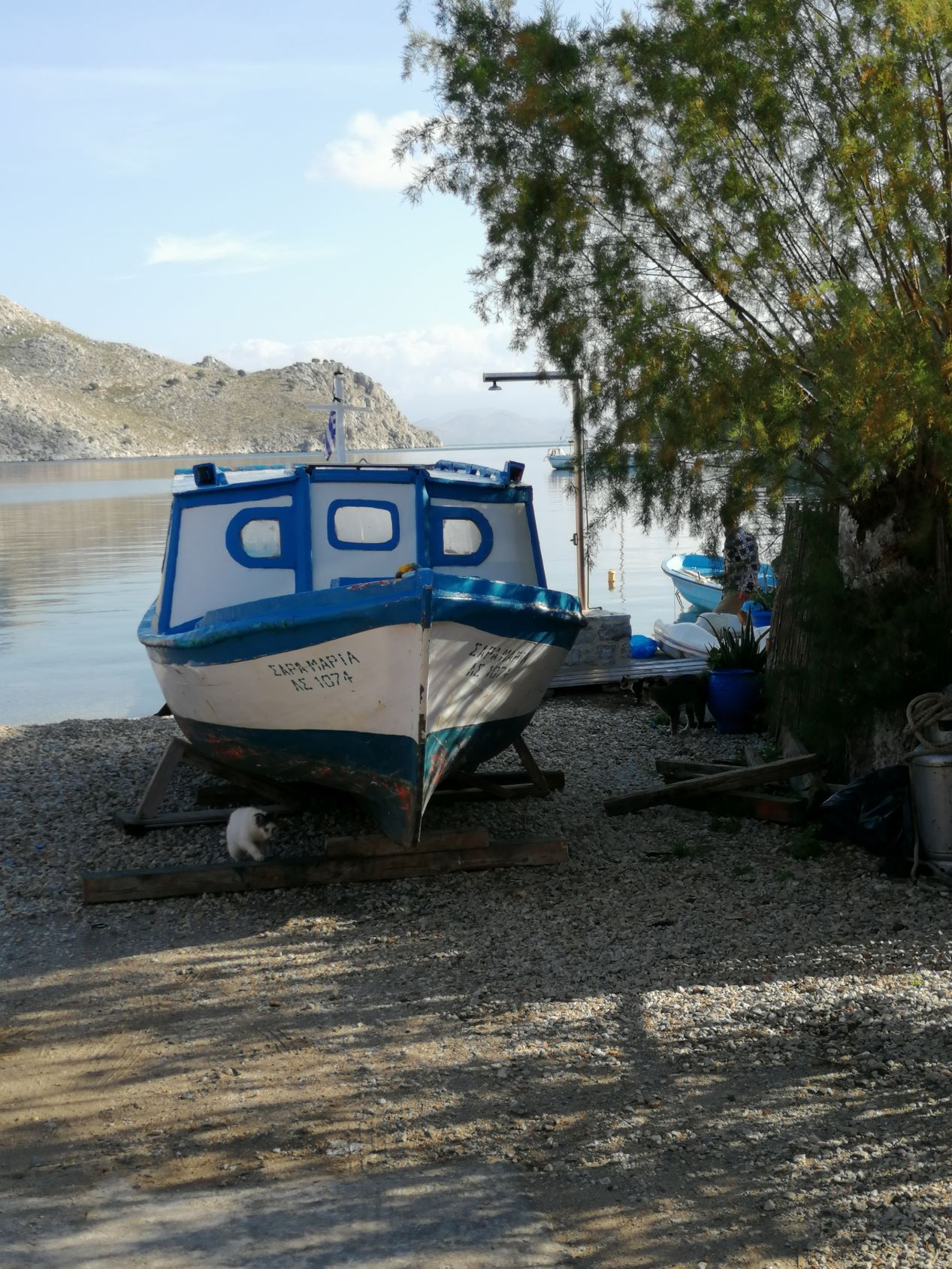
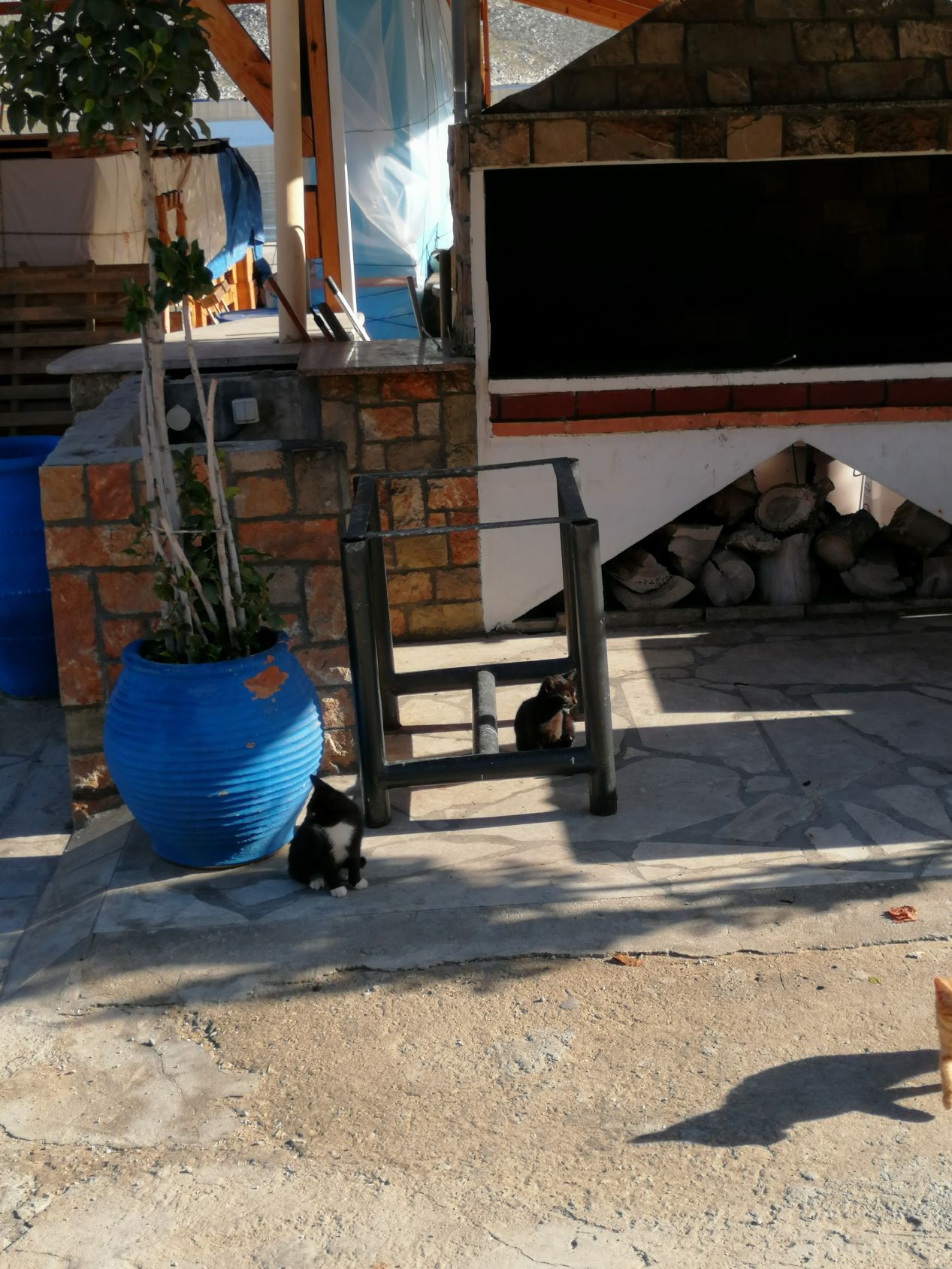
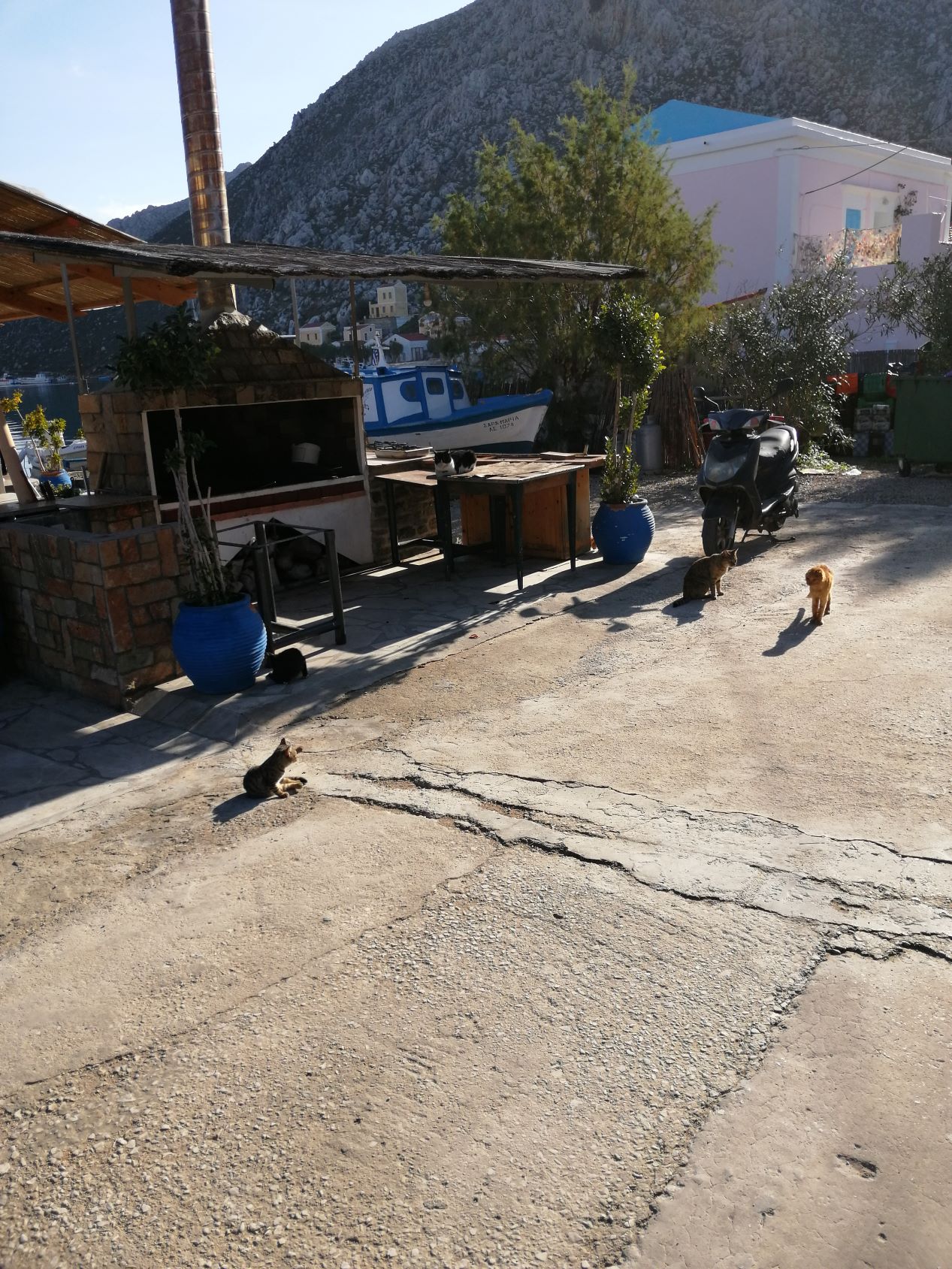
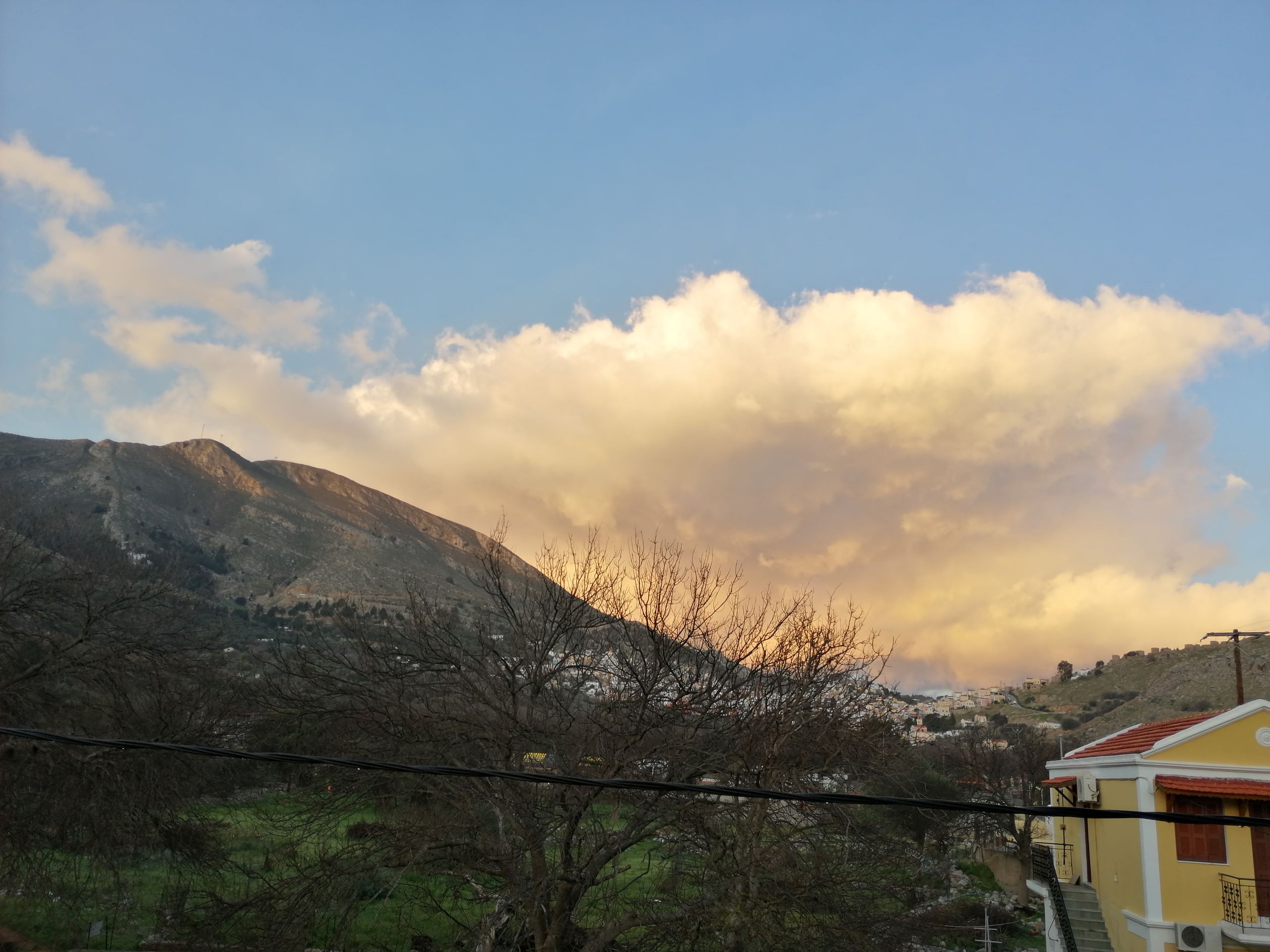
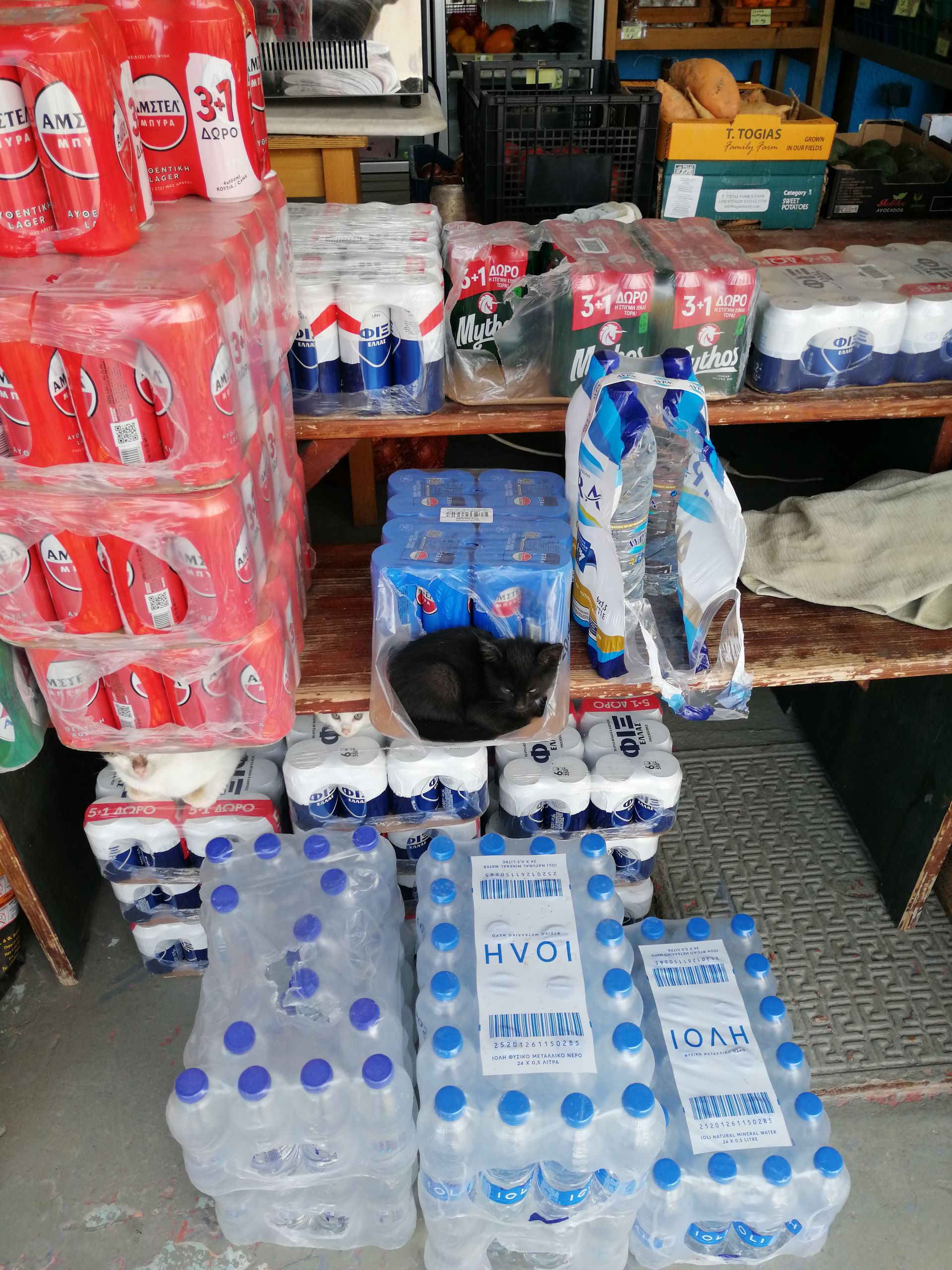
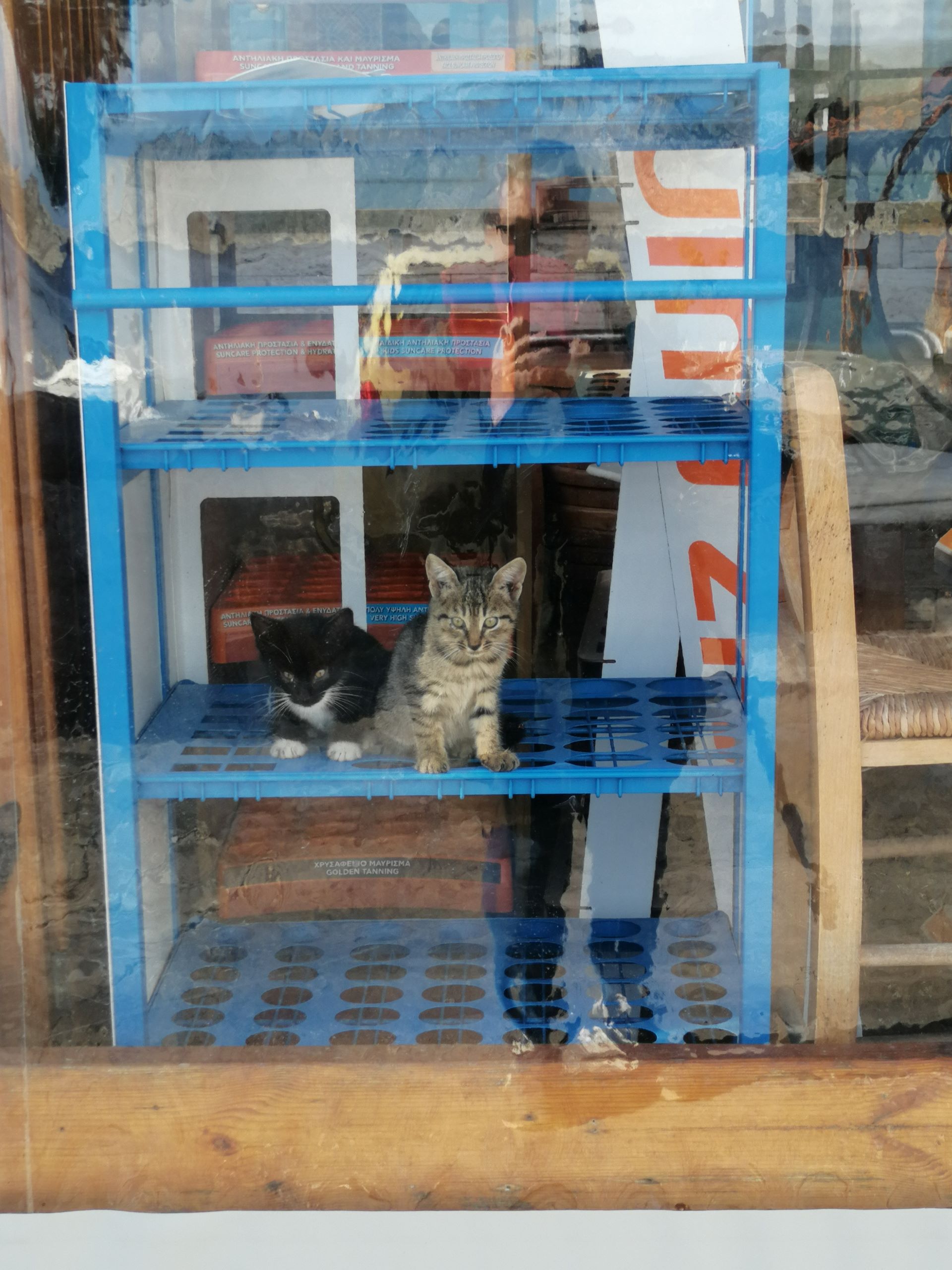
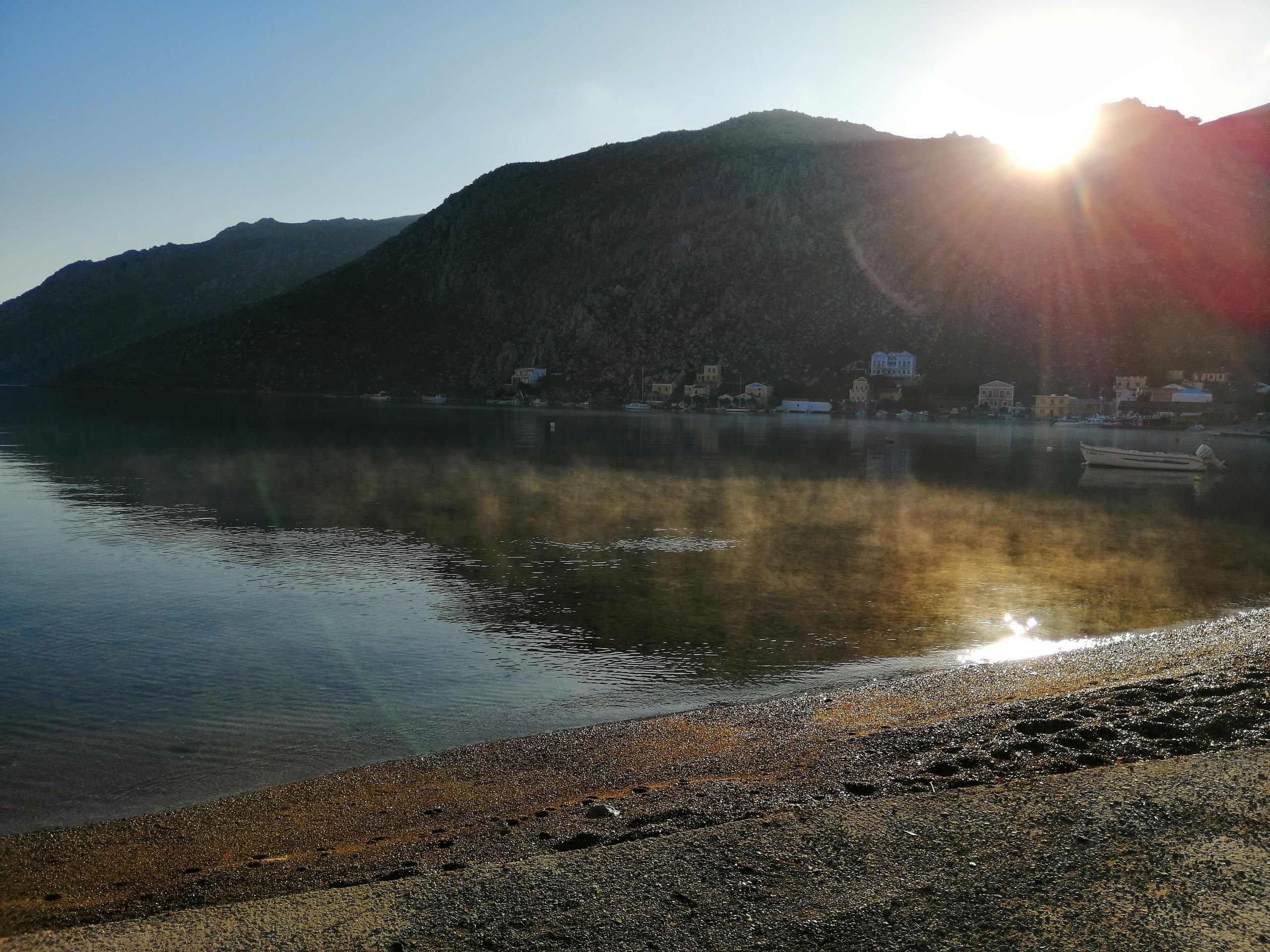
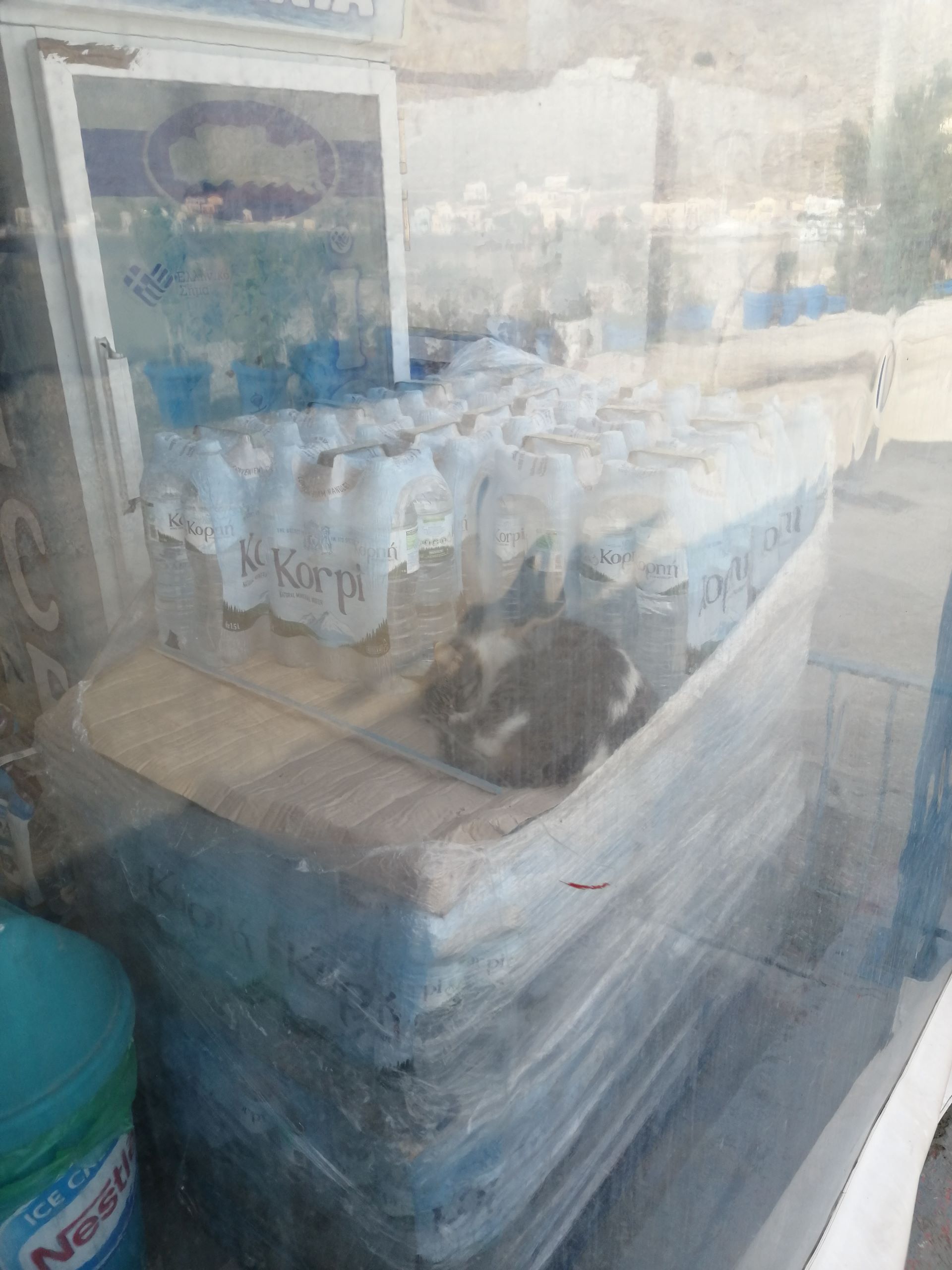
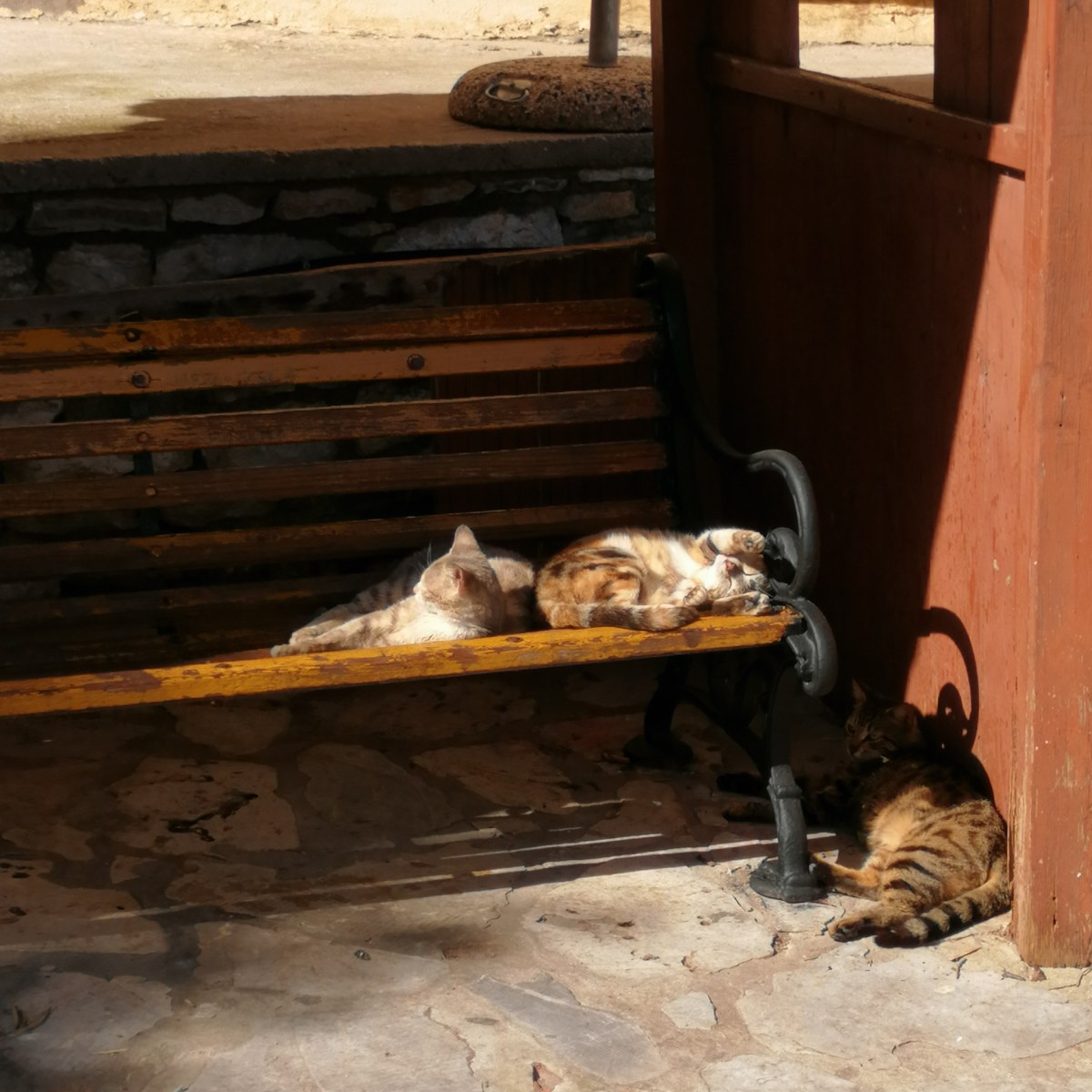
It’s that time of the year when Symi alternates between clear cold sunny days (4 degrees this morning, folks!) and mild moist ones with rain from the south (14 degrees and 3-dimensional damp). It is the week of Carnival in the run up to Clean Monday and Greek Orthodox Lent so occasionally one may see a fairy princess twinkling through the lanes with her mother but most of the time one just sees snoozing cats, foraging cats, basking cats, distainful cats, tatty cats and loved cats, all looking for a patch of sunshine out of the biting north wind.
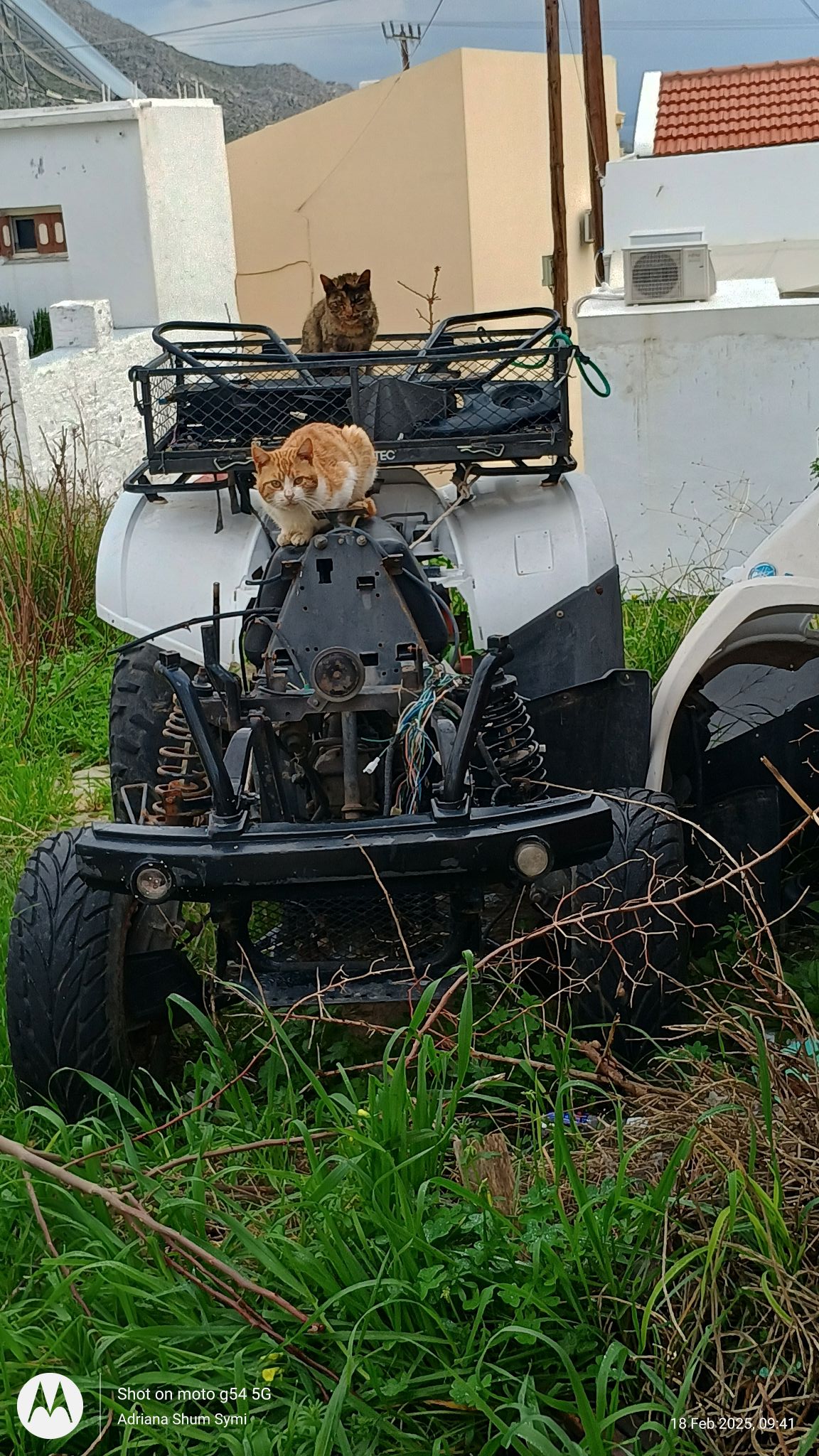
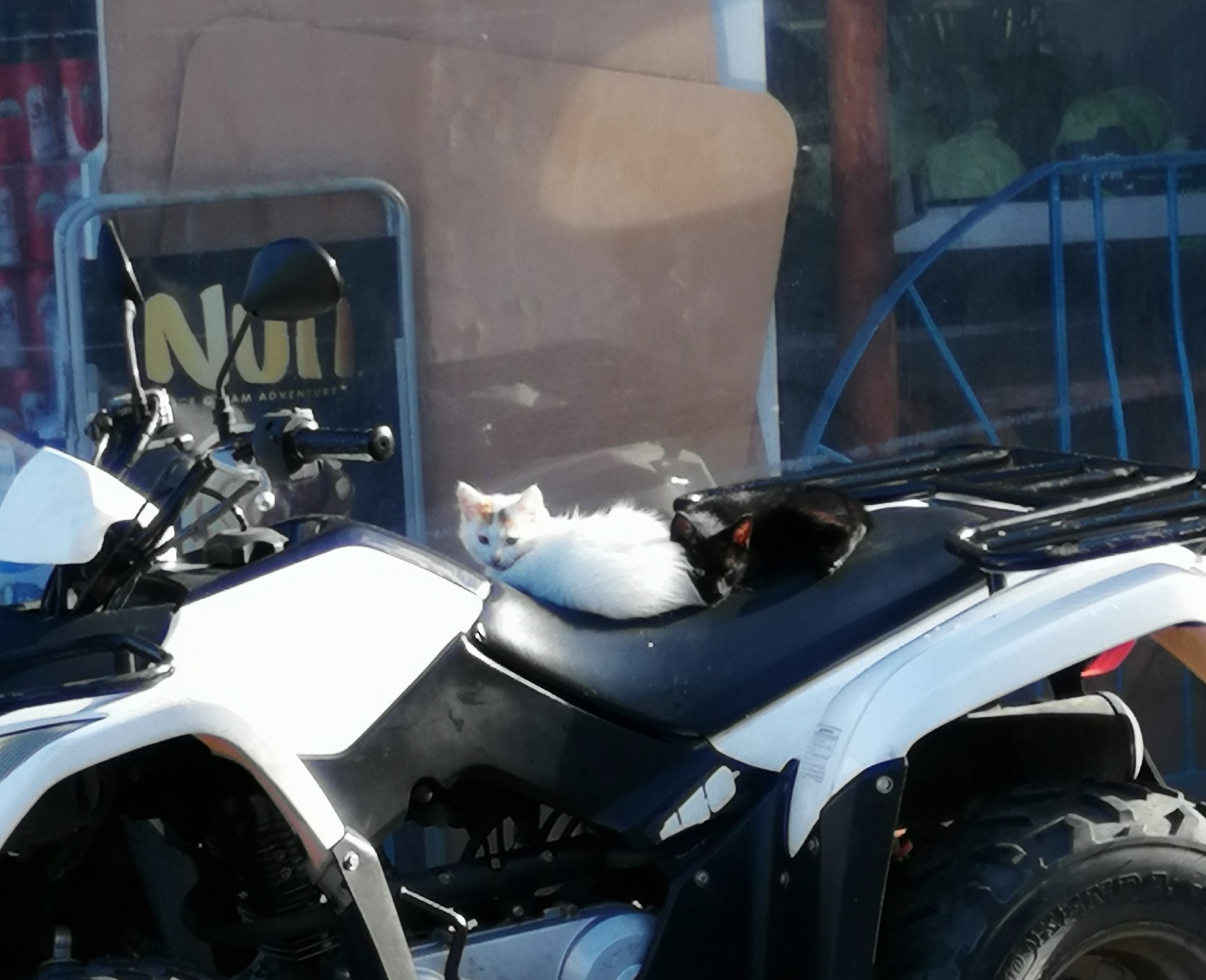
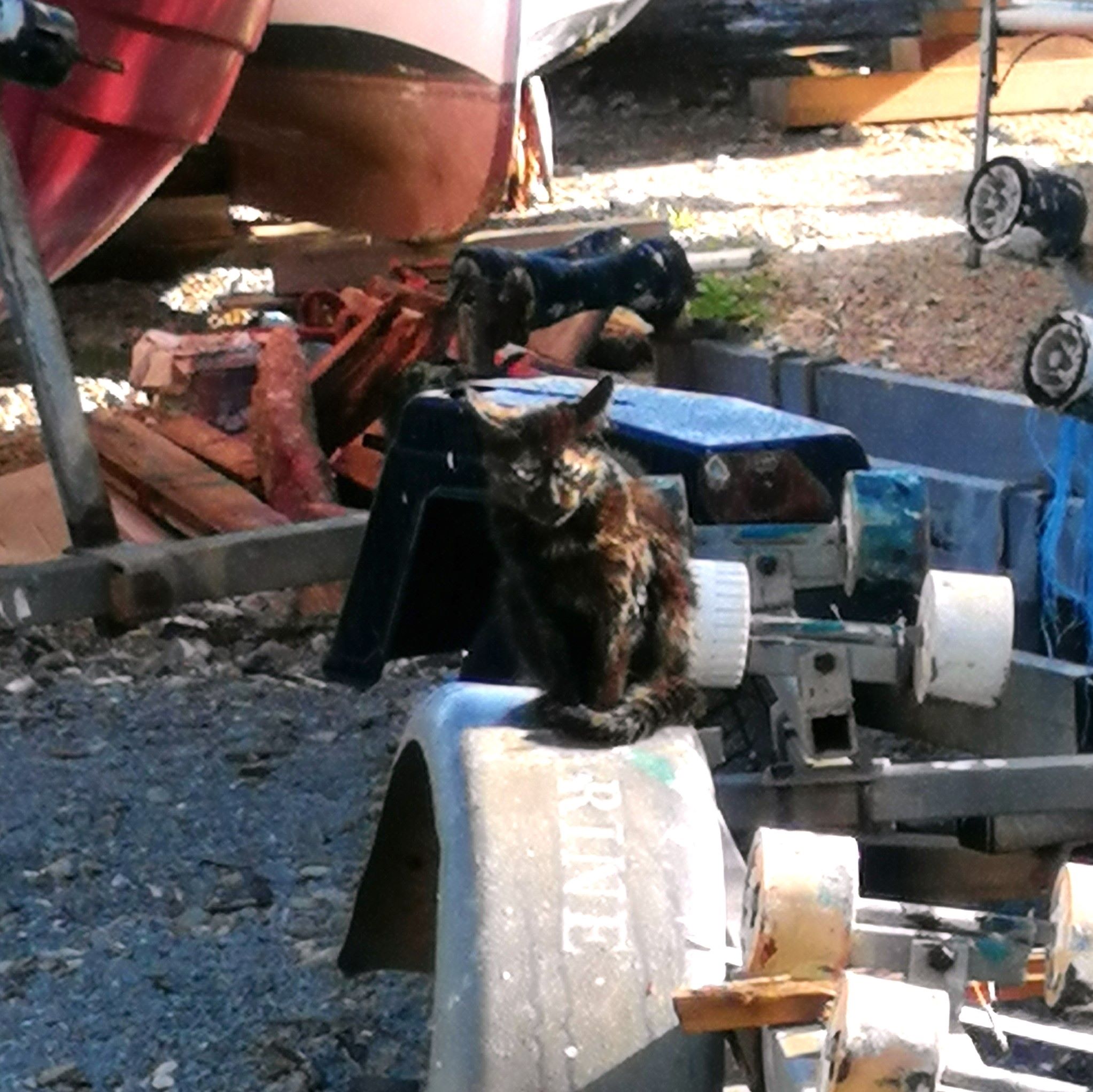
Two cats on an abandoned quad bike.
Quad Bike Moggies.
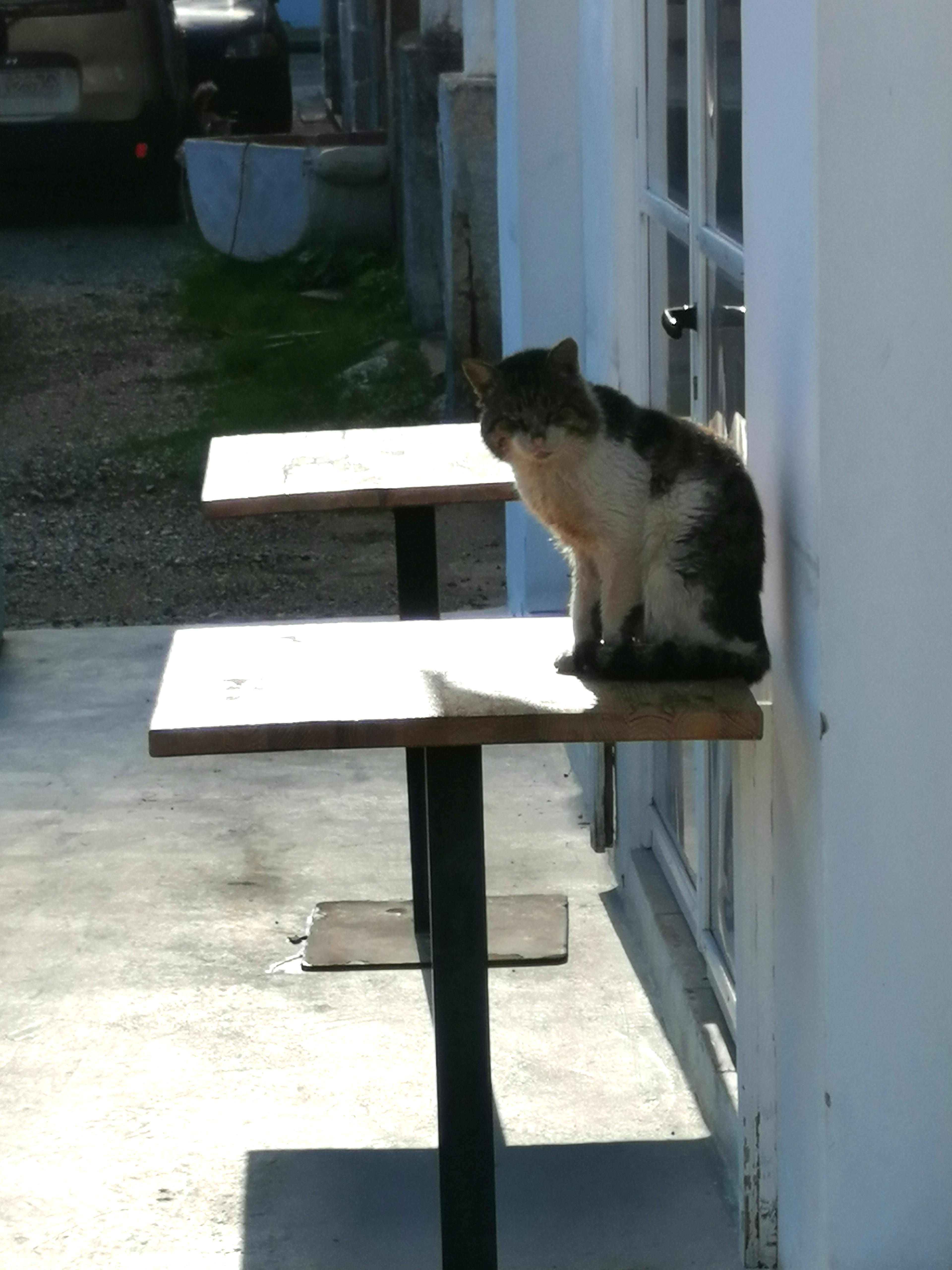
A cat on a cafe table.
The ultimate Cat on a Pedestal.
Cat on an old stove outside a house.
Cooker Cat
Cat by a heating vent.
Happiness is a warm heating vent.
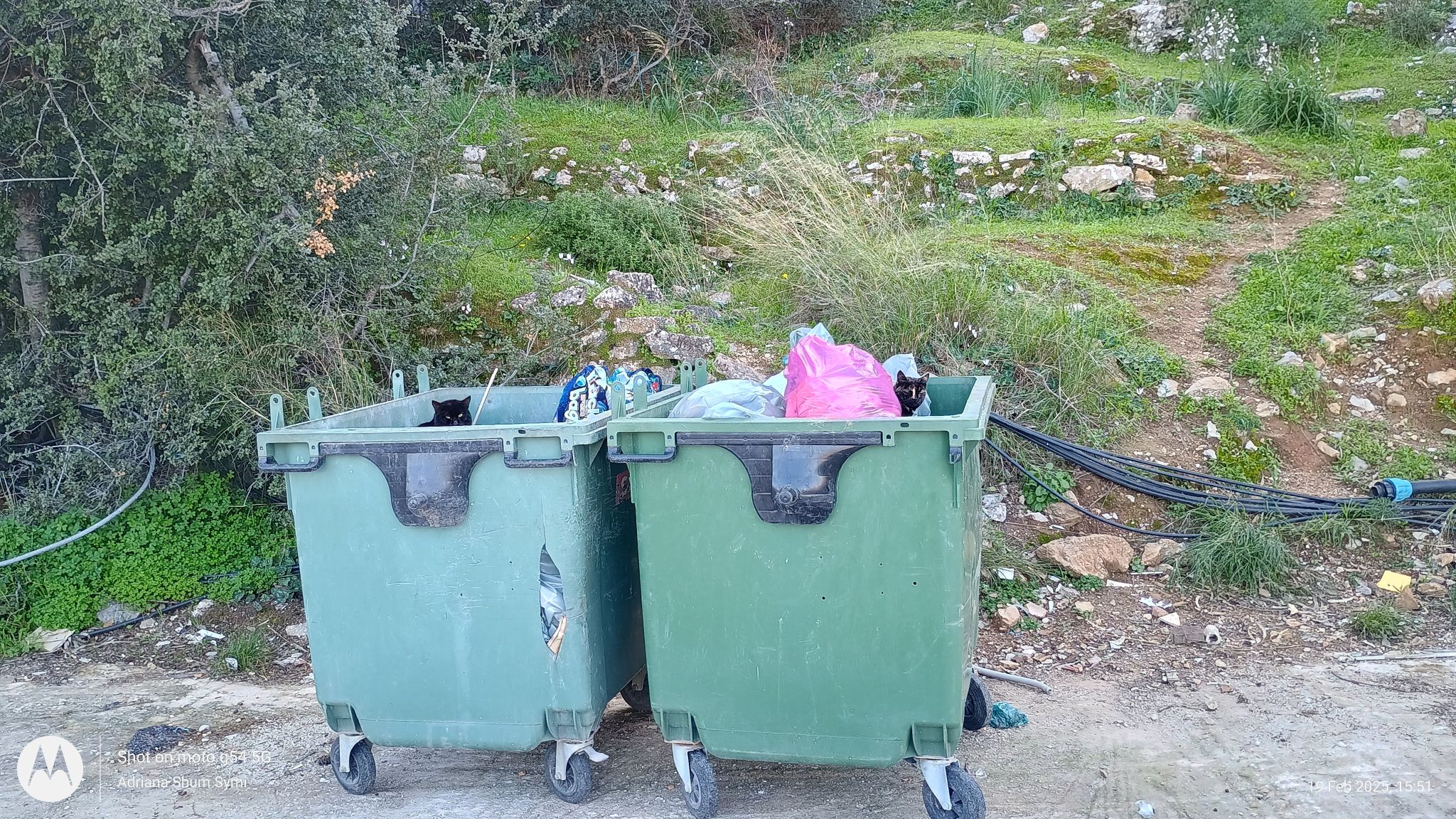
Two cats peeping out of two adjoining garbage skips.
Bin Cats in Lieni.

This is the first really cold winter we have had since the freak snowfalls of January 2022. There hasn’t been any snow on Rhodes so far this year – all the rain fell in the early part of the winter, long before the temperatures started to plummet. We have had sustained periods of temperatures in single figures, with days that have not risen above 9 degrees centigrade and night time temperatures around 3 degrees.

As you may know, central heating is rare in Greece, certainly in the southern regions, and using air conditioning for heating is expensive so many homes have old-style wood burners or new-style pellet stoves to keep warm. We also wear lots and lots of layers of clothing, even indoors! There is no shortage of firewood this year – many trees succumbed to the heat and either died off completely or lost substantial branches. Every afternoon I hear chain saws buzzing away in the Pedi valley and see pick up trucks laden with logs heading in different directions. The air is fragrant with wood smoke.

On a more serious note, this Friday, 28 February, there are country-wide strikes in protest at the poor handling of the investigation of the Tempe train accident which took place on 28 February 2023. There was a head-on collision between two trains. It was a holiday period and there were many students and young people among the 57 fatalities. The families are still waiting for justice. At the same time it is also a holiday long weekend this year as Monday 3 March is Clean Monday. If you are travelling in Greece at this time, please be patient and tolerant.

Symi Snapshots

Symi snapshots taken over a few sunny days in March 2024.

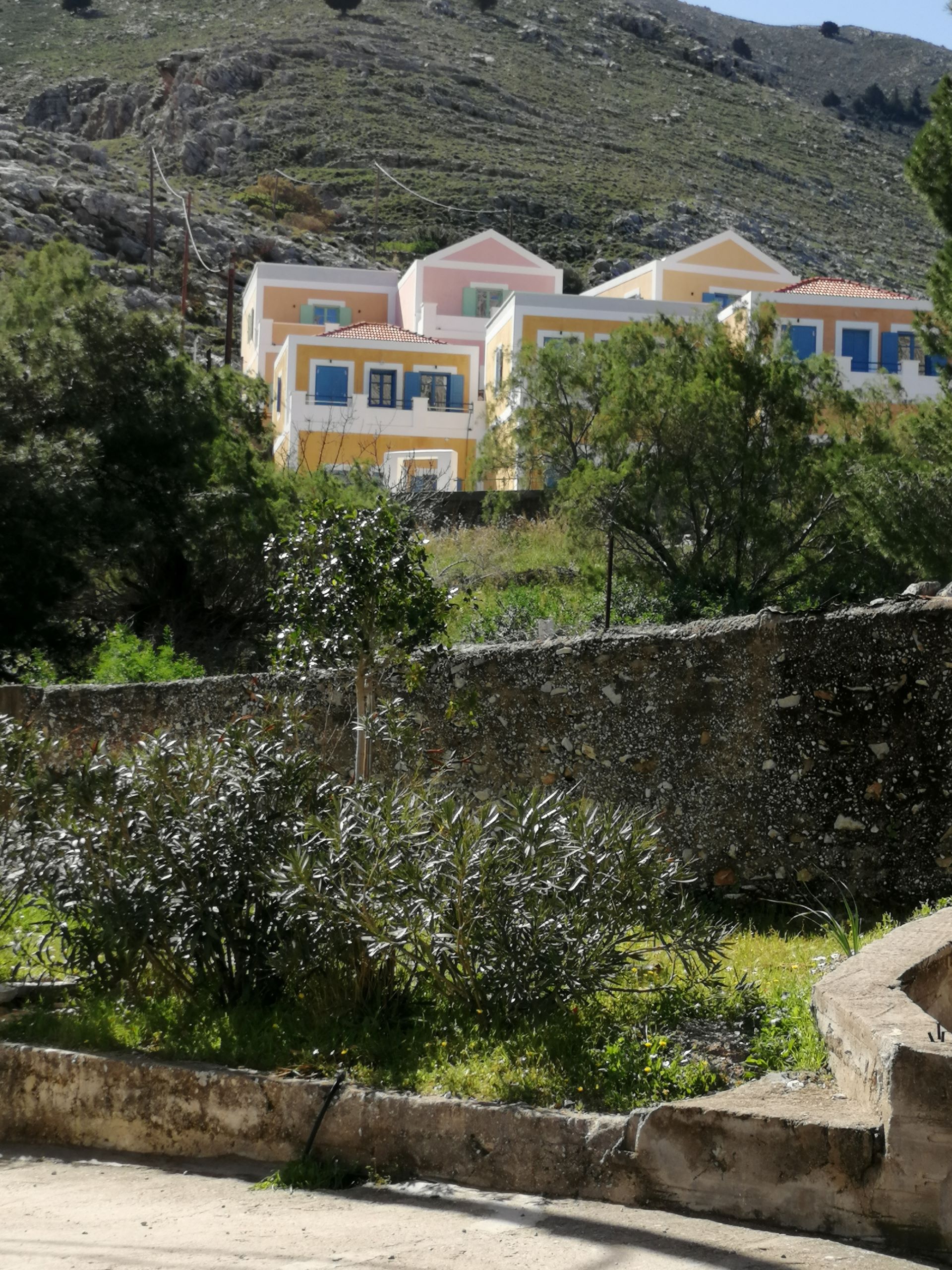
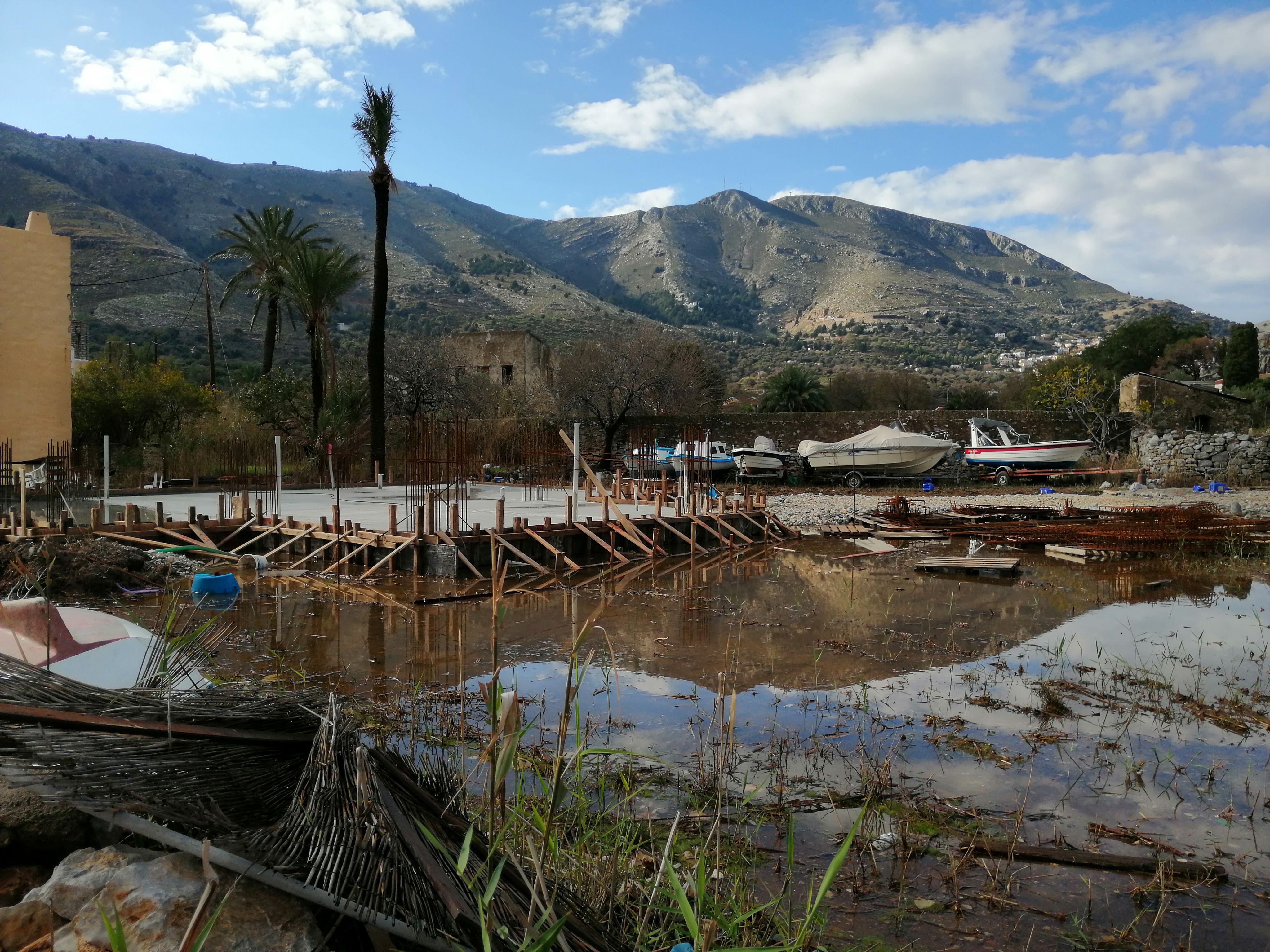
The first phase of the new hotel in Pedi is nearing completion. As you can see, it has been designed to look like a group of Symi neo-classical houses.
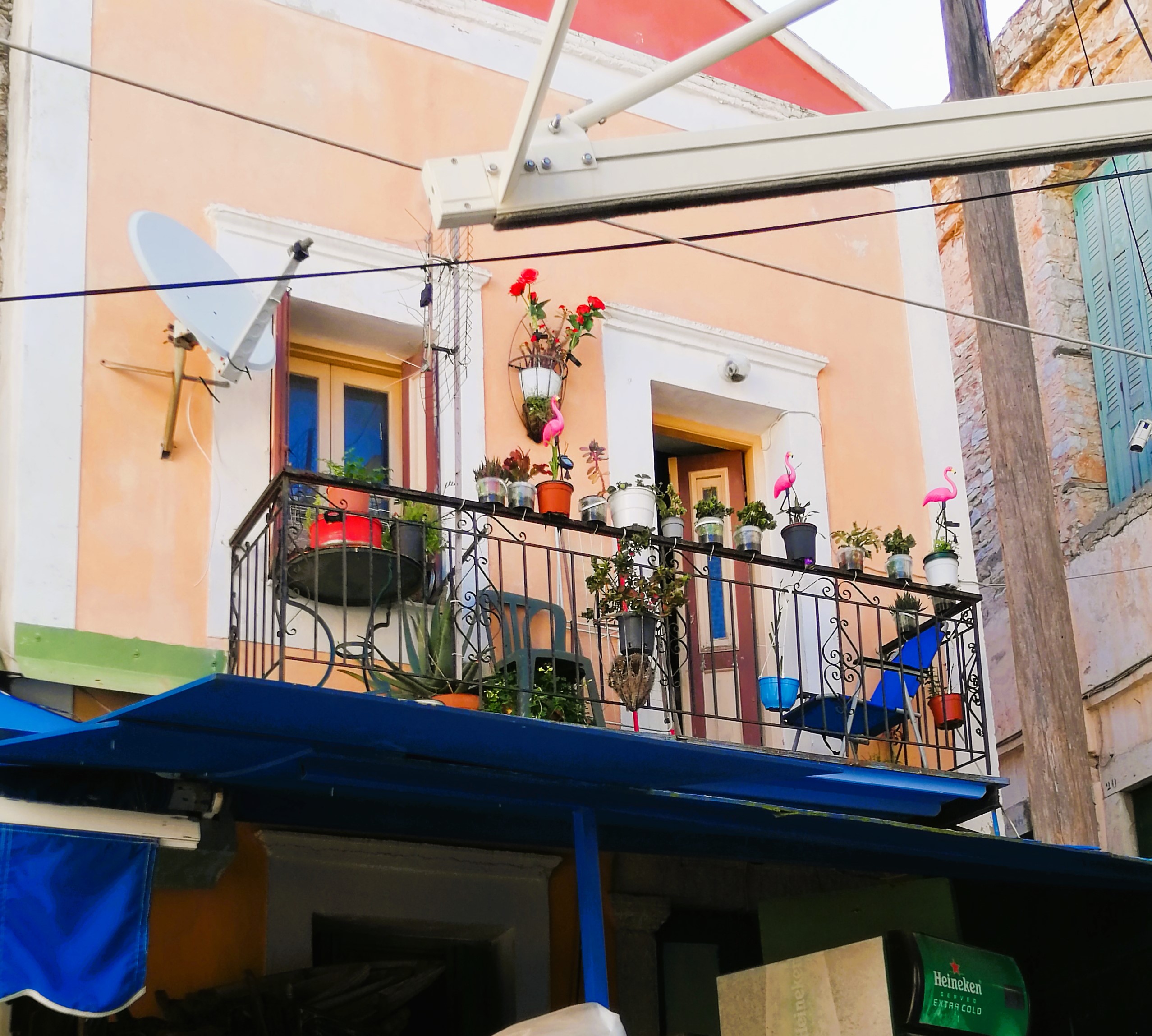
Flamingos livening up a balcony above the Bella Napoli pizzeria in Yialos.
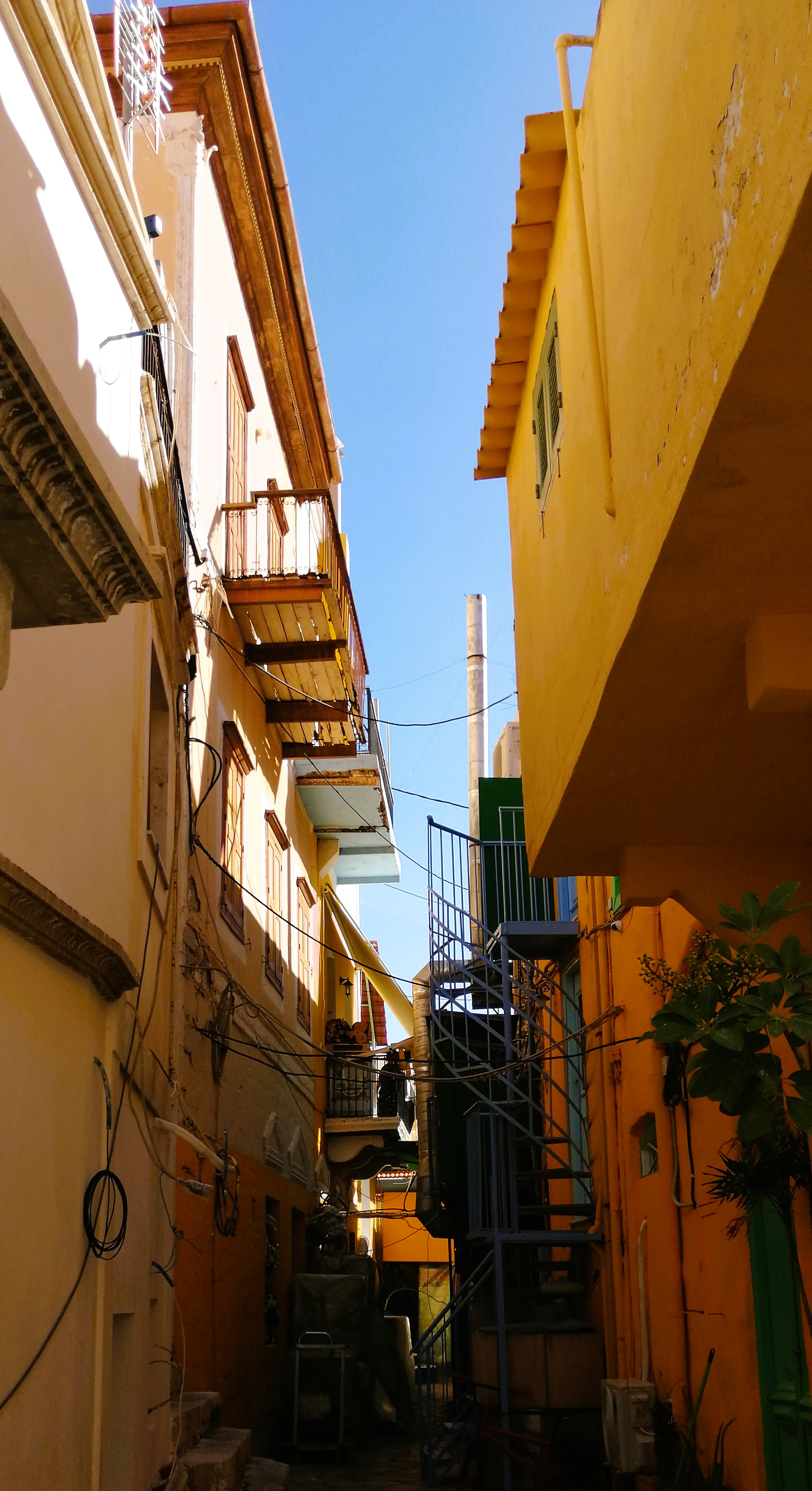
Behind the scenes of a well-known fish taverna in Yialos.
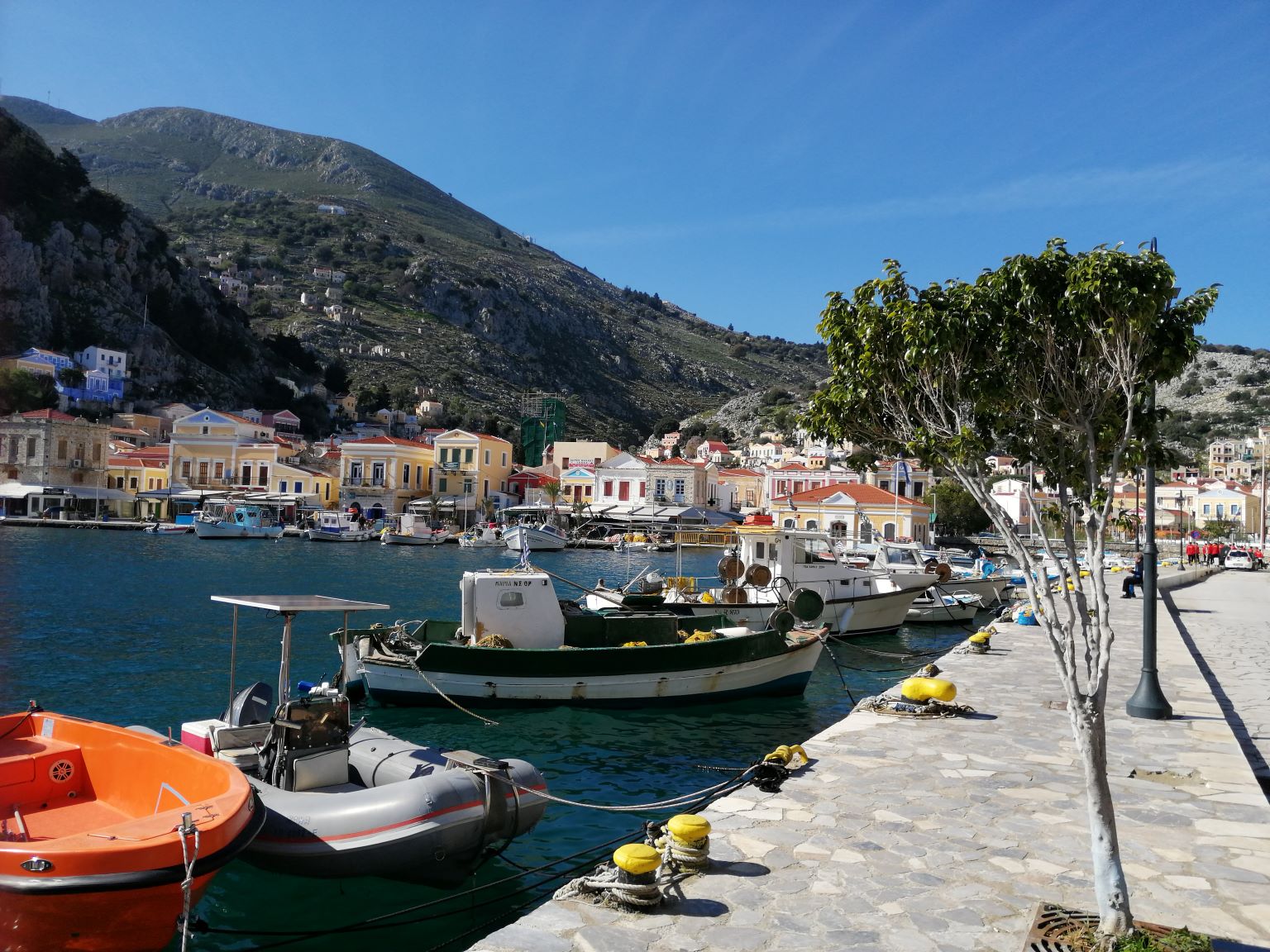
The little red figures disappearing into the distance are a visiting football team from Ialysos on Rhodes, over for the day to play against the Symi team.
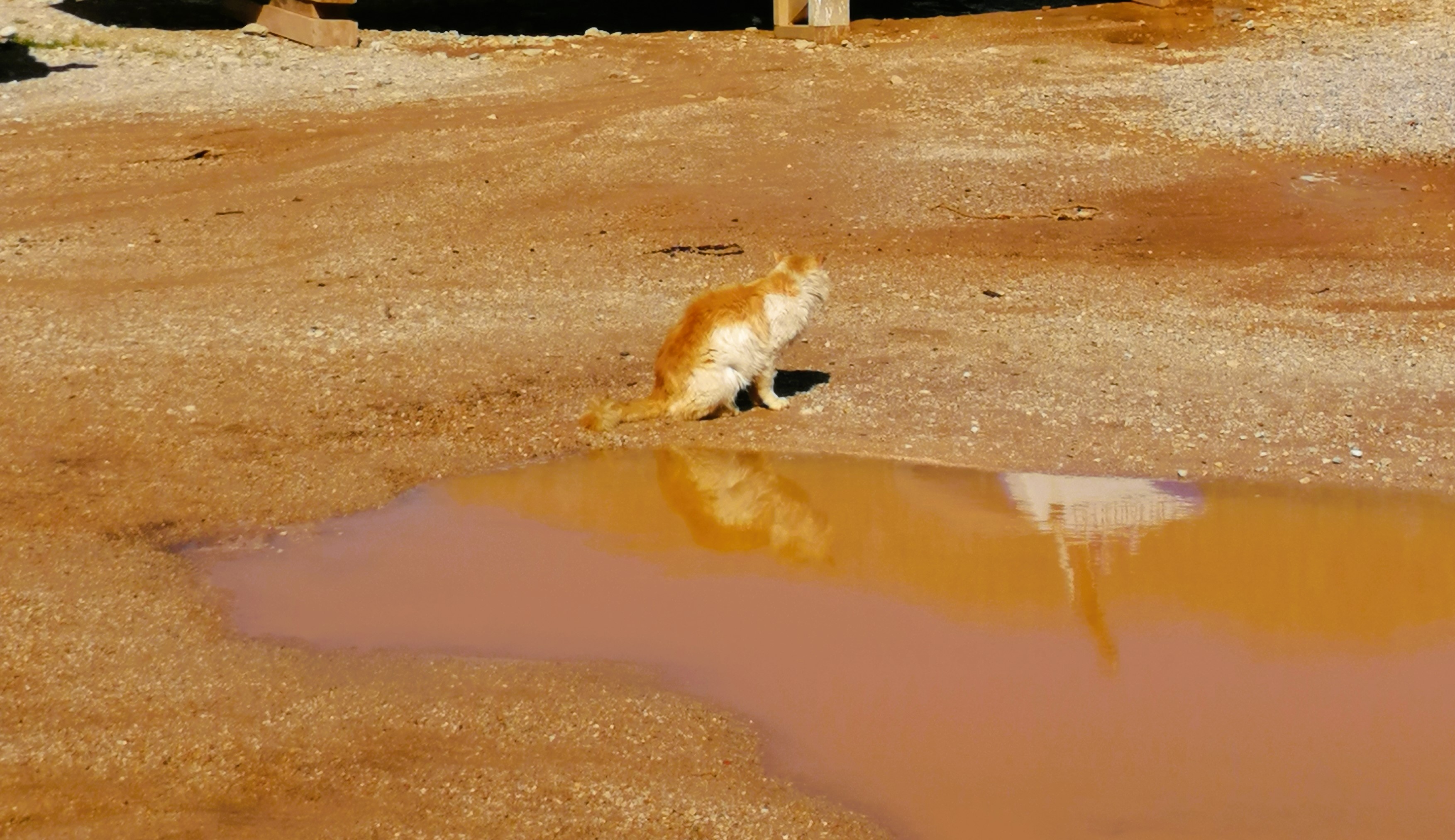
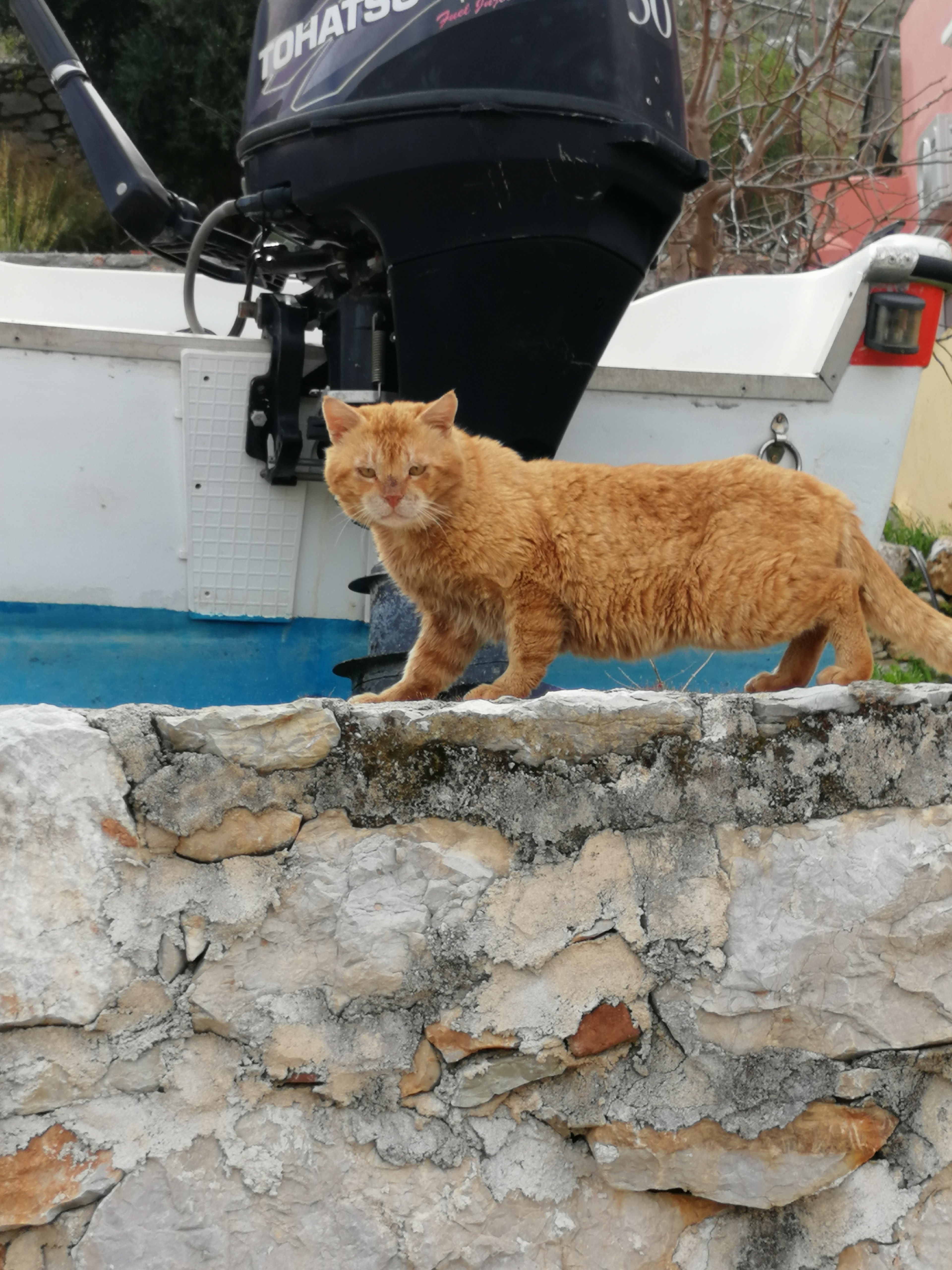
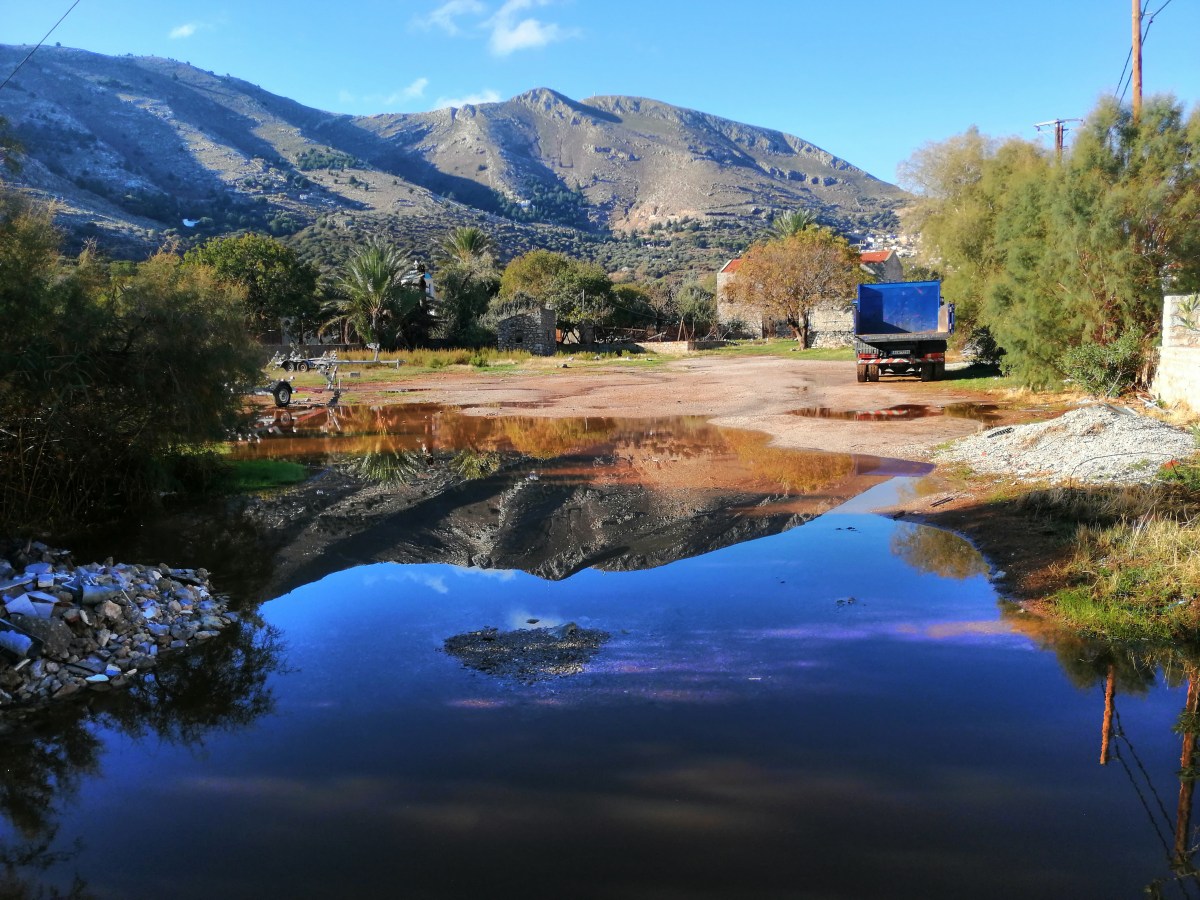
This old bruiser of a tom cat was admiring himself in the puddle but, as cats do, he decided not to face the camera.
His friend, however, was more obliging.
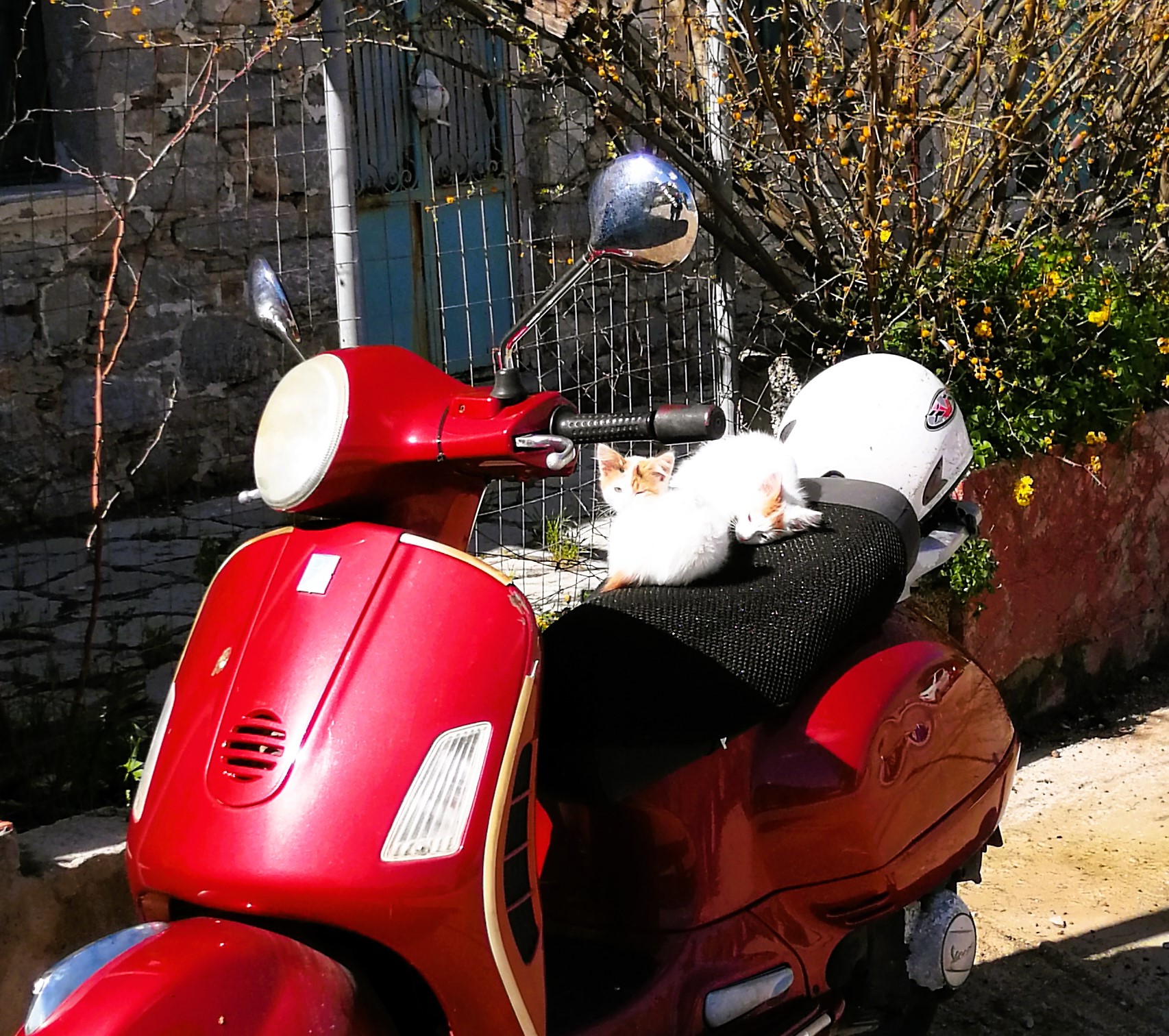
Happiness is a warm Vespa in a sunny spot.
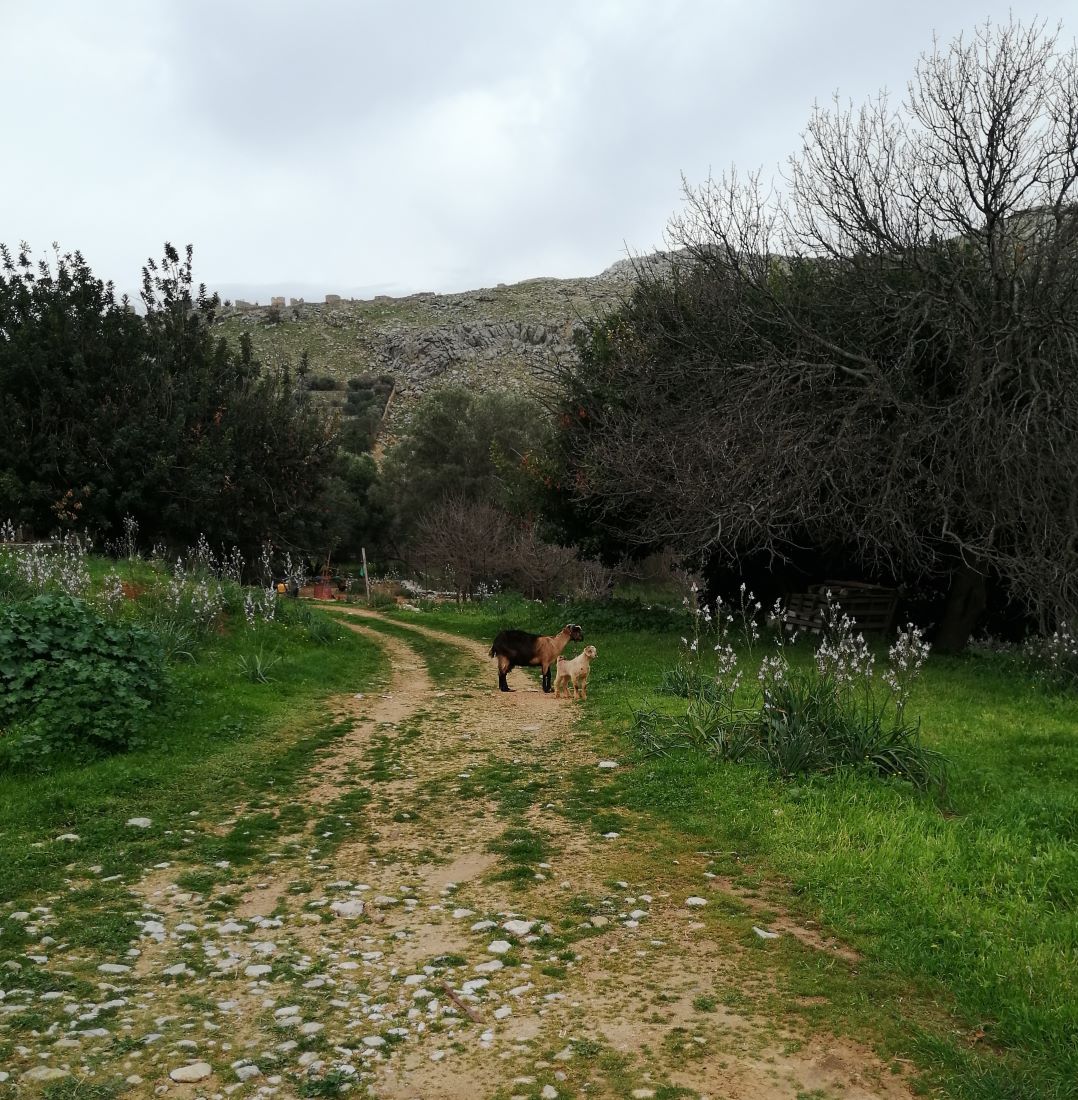
Meanwhile, in the Pedi Valley…
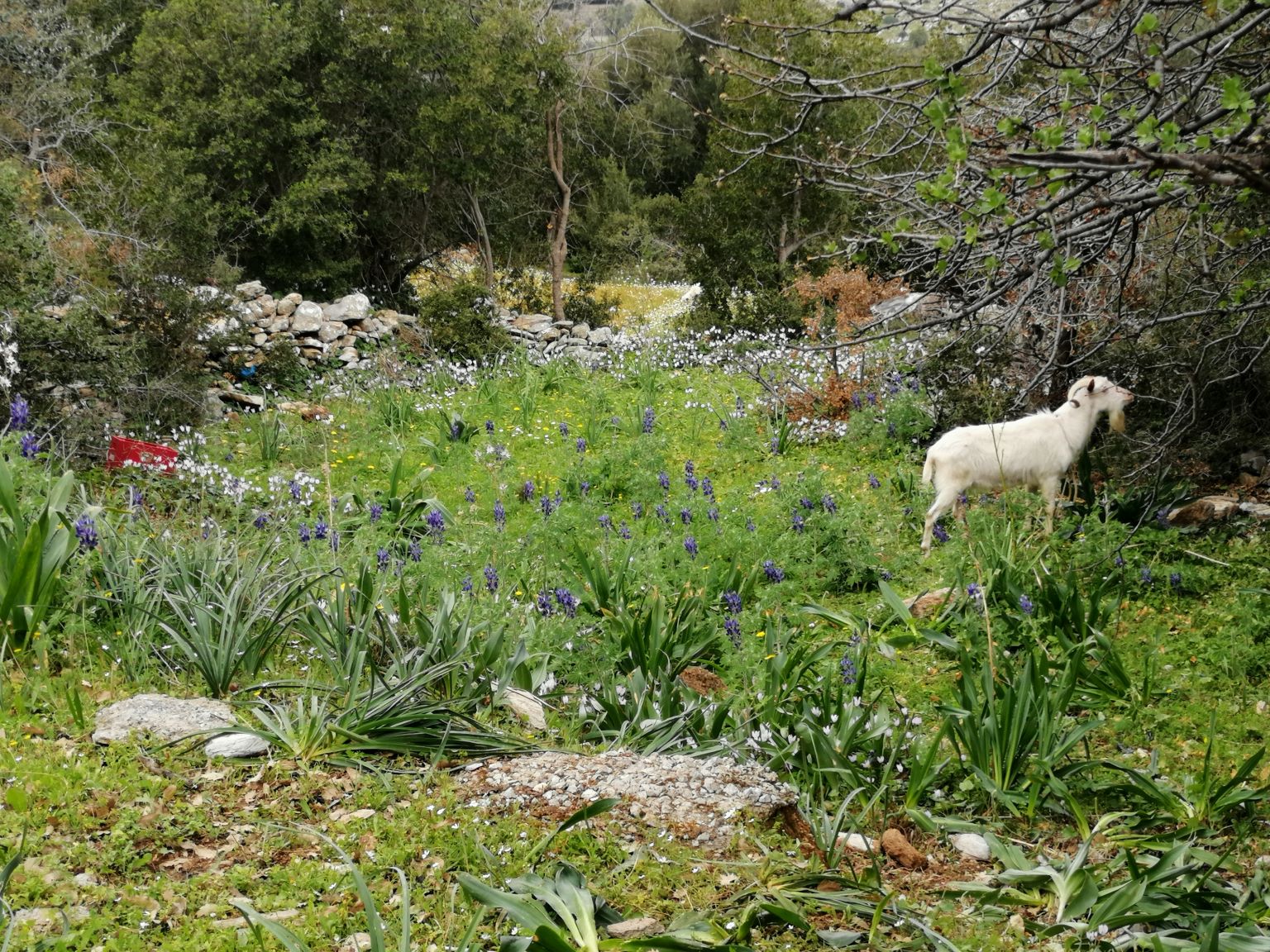
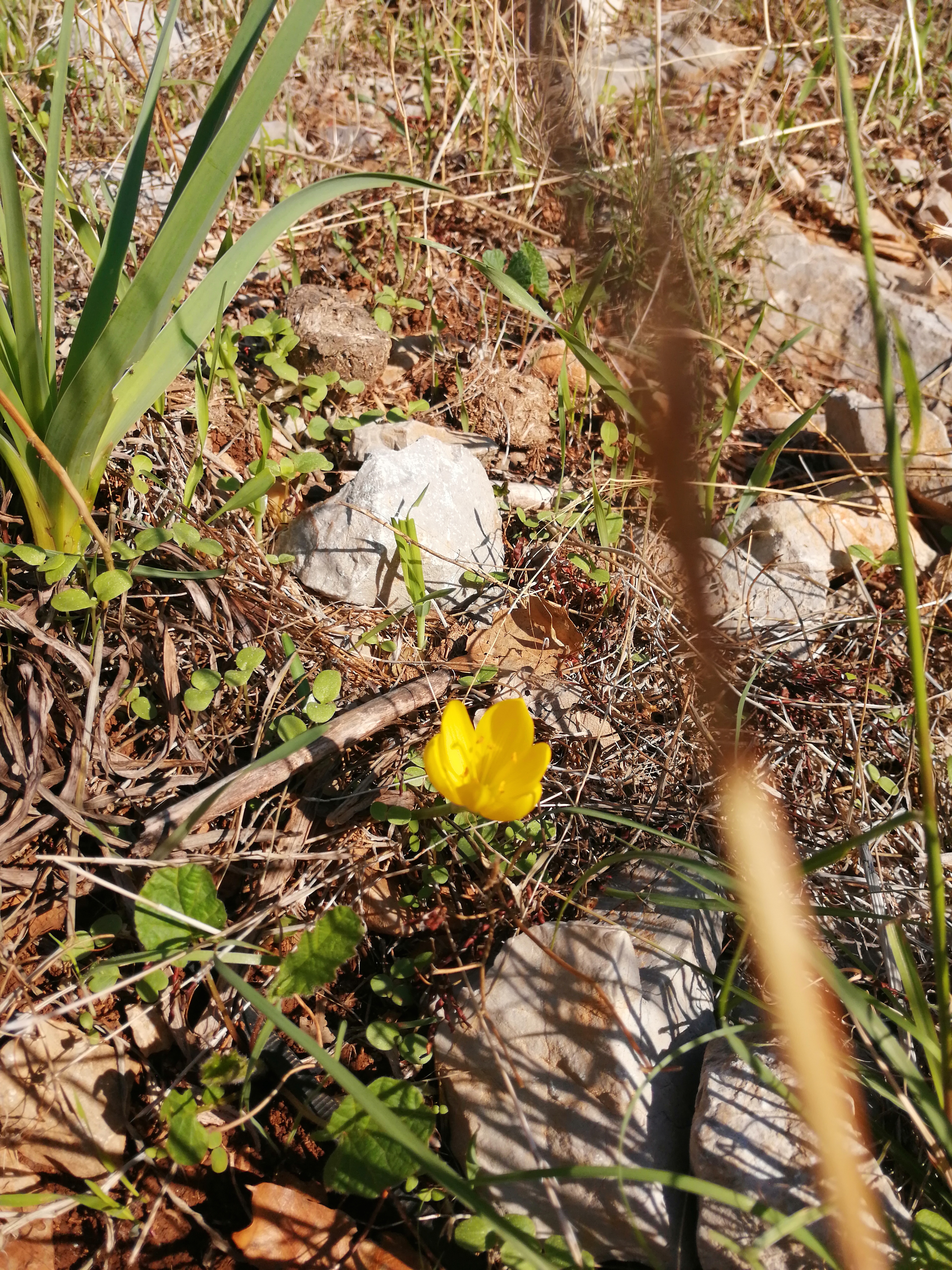
Goats and asphodels.
Wild garlic and goat defences.
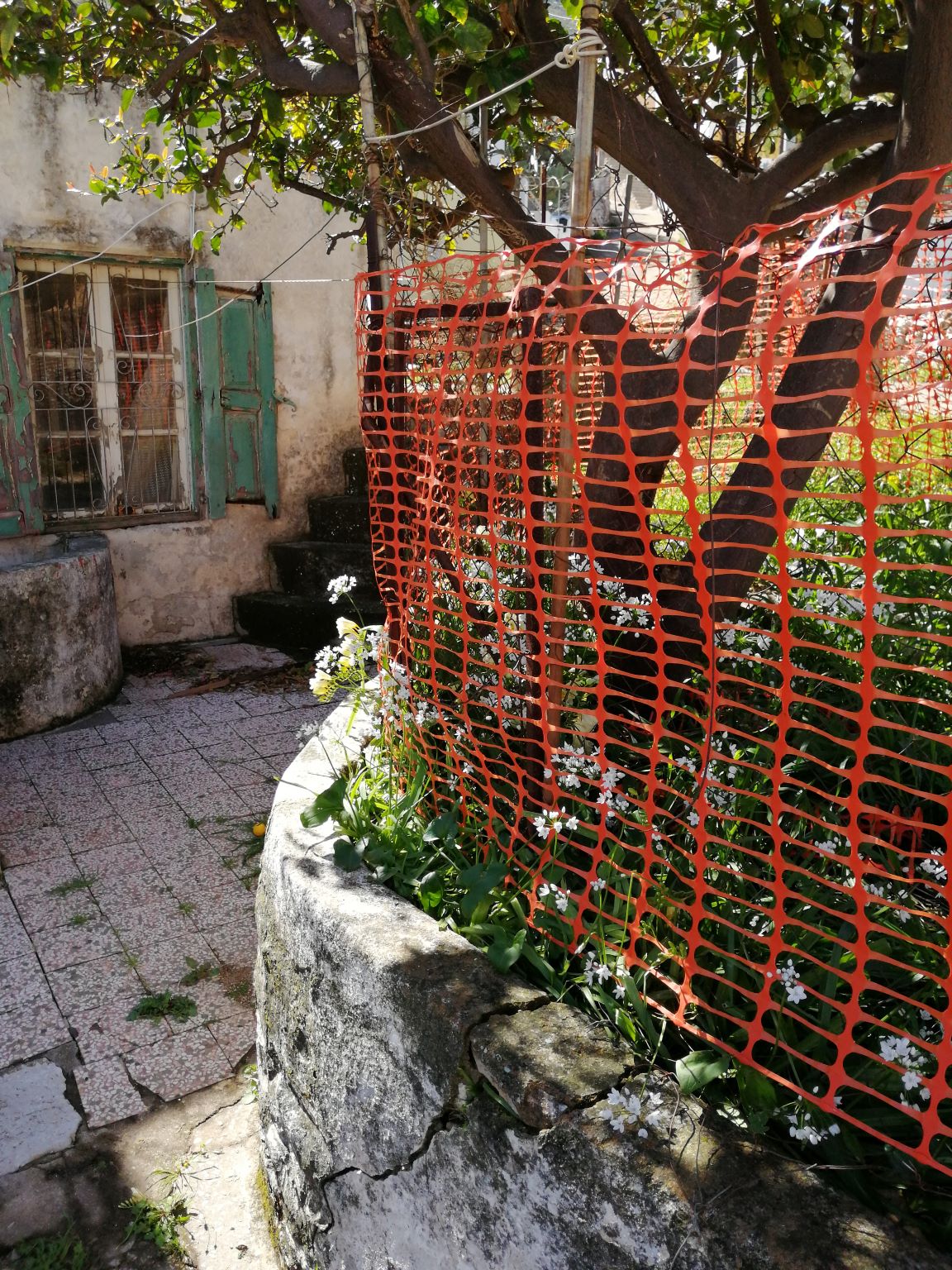
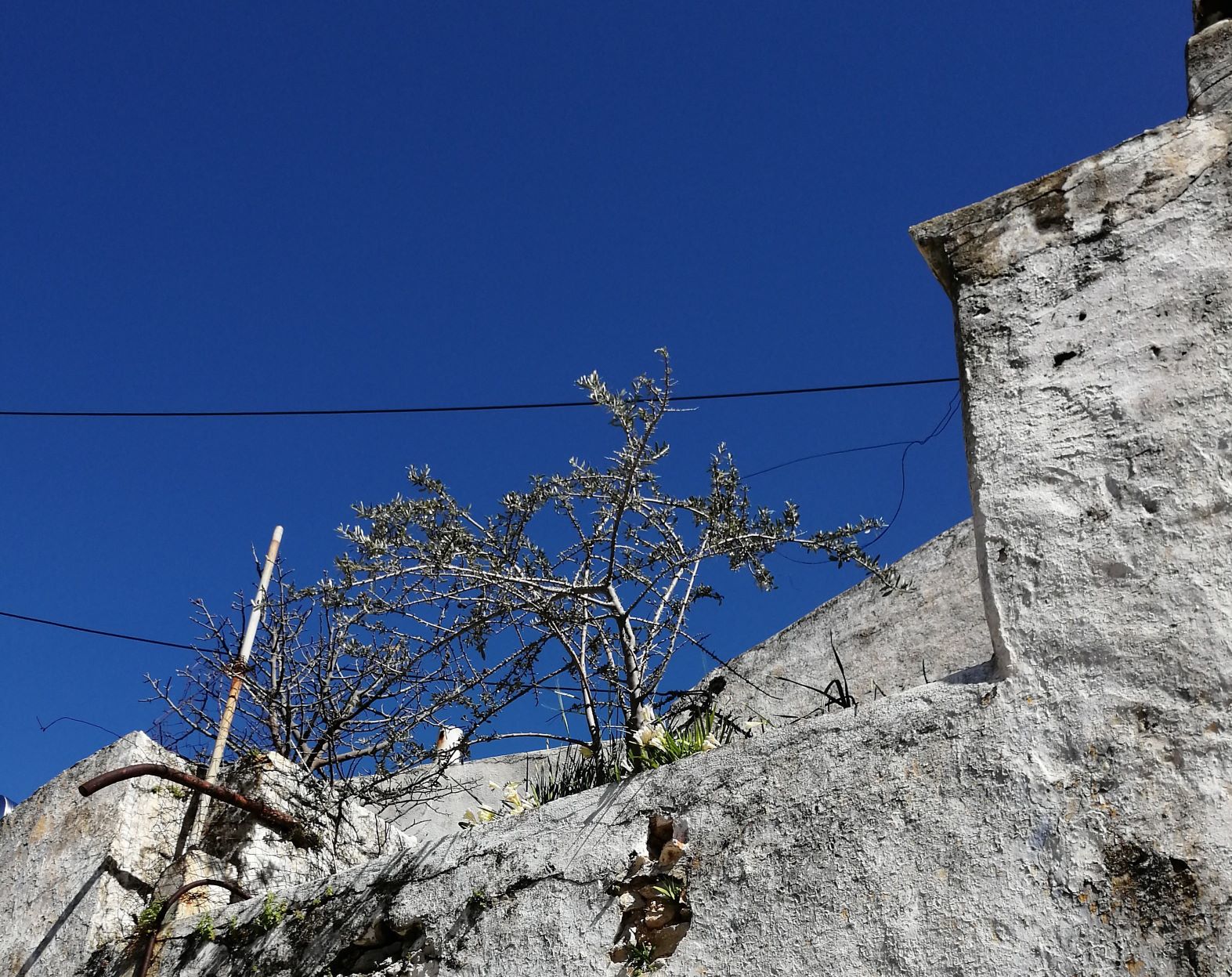
I wonder who planted these freesias and how long they have managed to survive in an untended planter of an abandoned building. The tree was probably seeded by birds.
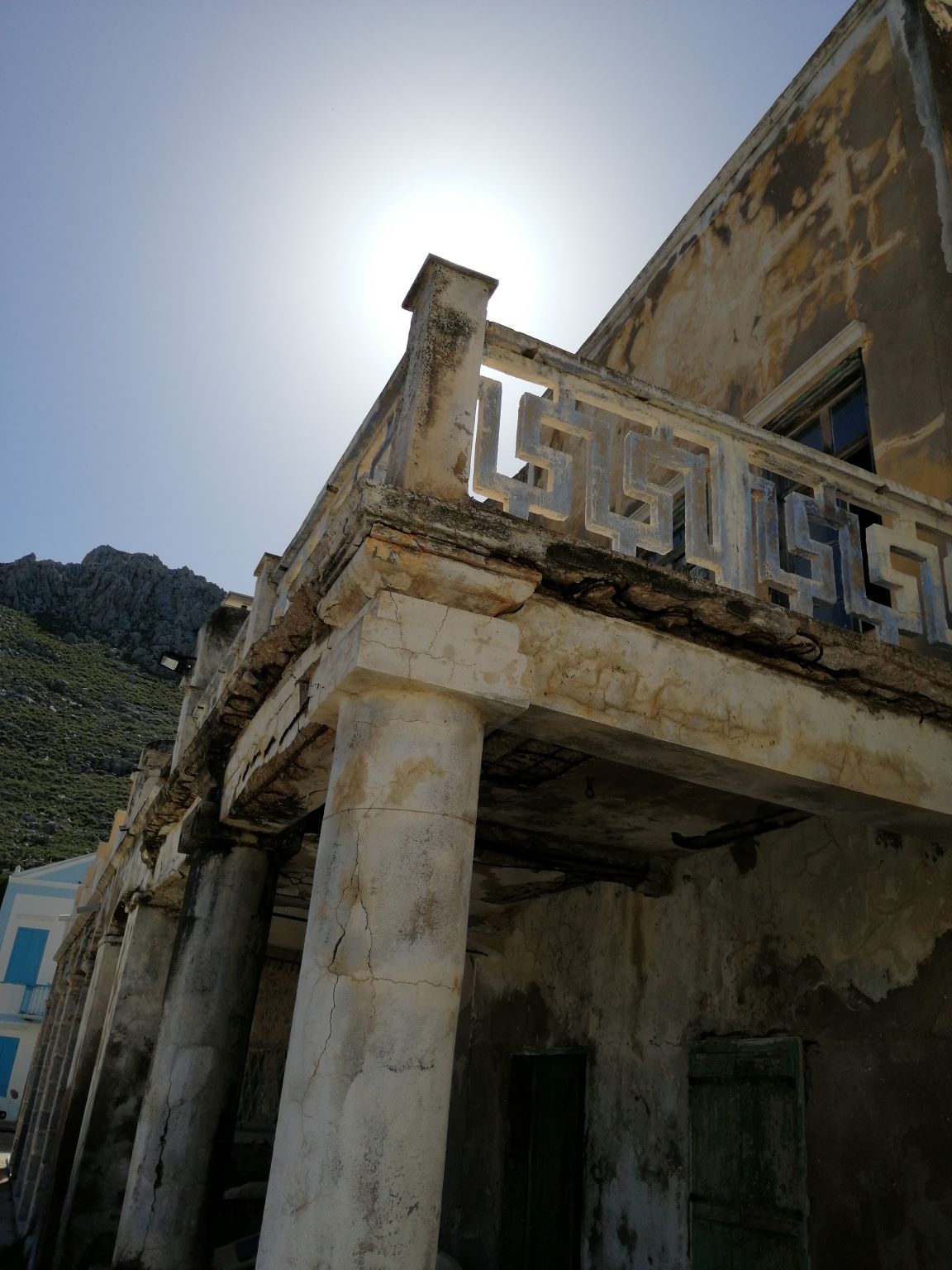
Some of Symi’s most interesting and unusual buildings are at risk of crumbling away to nothing due to lack of funding to restore them.

An Island of Cats

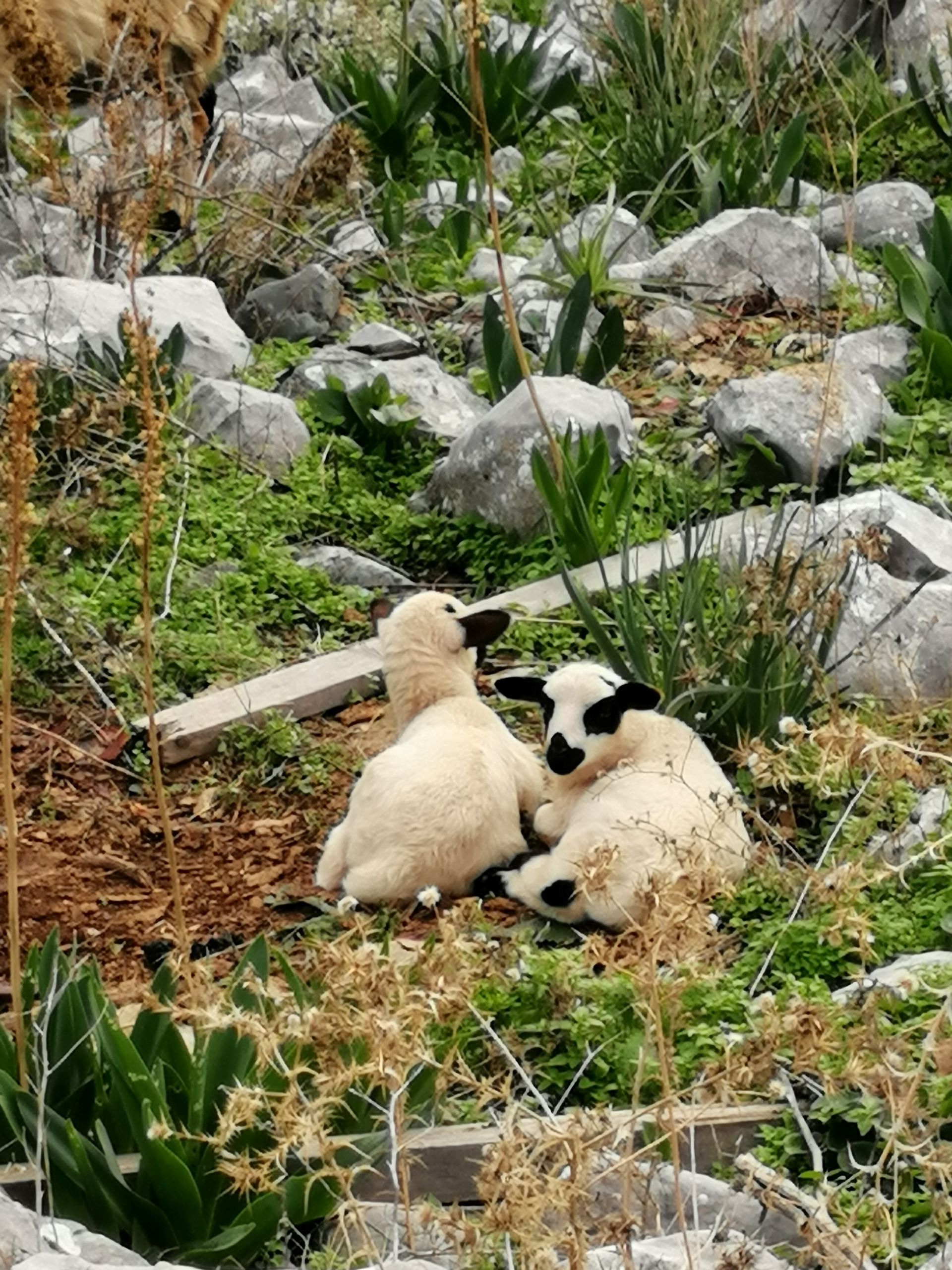
Symi is very quiet at the moment. Some days it seems as though it is an island of cats, chickens and sheep rather than people, particularly on a ‘Blue Star’ day when it feels as though the whole population of Symi has gone shopping on Rhodes. The winter bus service is severely curtailed. Only 3 trips in the morning – at 8, 11 and 1 from Yialos – and then 6 in the evening. No where to go and not much to do outside the nest.

February is slipping past and spring is overtaking a winter that didn’t really happen this year. Oh, we have had rain and wind and ferry cancellations and flight disruptions but by and large we have had a very mild winter. Temperatures have seldom dipped below 12 degrees centigrade on Symi and on sunny days it can be as warm as 26 degrees centigrade. There are concerns in Crete and on the mainland as the mountain areas have not had enough snow to feed the streams and rivers, a problem that is affecting many European countries as snowfall diminishes and glaciers recede in the Alpine regions.

Symi is very quiet at the moment. Some days it seems as though it is an island of cats, chickens and sheep rather than people, particularly on a ‘Blue Star‘ day when it feels as though the whole population of Symi has gone shopping on Rhodes. The winter bus service is severely curtailed. Only 3 trips in the morning – at 8, 11 and 1 from Yialos – and then 6 in the evening. No where to go and not much to do outside the nest.

The main human activity is on the building sites. The new hotel in the southern corner of Pedi is nearing completion. Work is continuing on the new sewage processing plant at the bend in the road above the new port, as well as the new road from the port which will join the main one at that junction. It was announced in the Greek press yesterday that the continuation of the commercial port from Petalo towards the new port has been approved and is out to tender. Apparently this will also include a new slipway so that the slip by the customs shed by the bridge can be closed off. The overall plan is to further reduce heavy traffic around the head of the harbour.

Greek Easter is very late this year, on the first weekend in May. As western/Catholic Easter is very early, at the end of March, April is likely to be quieter than usual. There are the usual fraught speculations regarding ferry schedules and who is opening when and is it worth opening up when there are unlikely to be enough customers to cover costs and so on. As it is, far fewer places than usual stayed open this winter. The big push to digitise the Greek economy and clamp down on tax evasion has had the knock on effect of killing the old ad hoc winter ‘let’s open on Friday night and see who turns up’ trade as everyone has to operate ‘by the book’ these days and that is just far too expensive in tiny places like Symi.

On that subject, you will see far more POS devices when you visit Greece this year. Every kind of business, including freelancers and the self employed, now have to be able to accept all kinds of card payments. There is an understandable reluctance on this, despite heavy state pressure, as service charges on card transactions are so high. The POS device has to be connected to the till which has to be connected to Taxisnet, the Greek tax portal, in real time. We also have to accept IRIS payments which are through an app on your phone. To add to the fun, there is a government app you can download to your phone so if you think you have been issued with a dodgy receipt or that someone is evading their taxes, you can report them to the tax office and there are actually prizes for doing this.

Wandering in the Wet

A winter wander round Pedi, Symi, in January

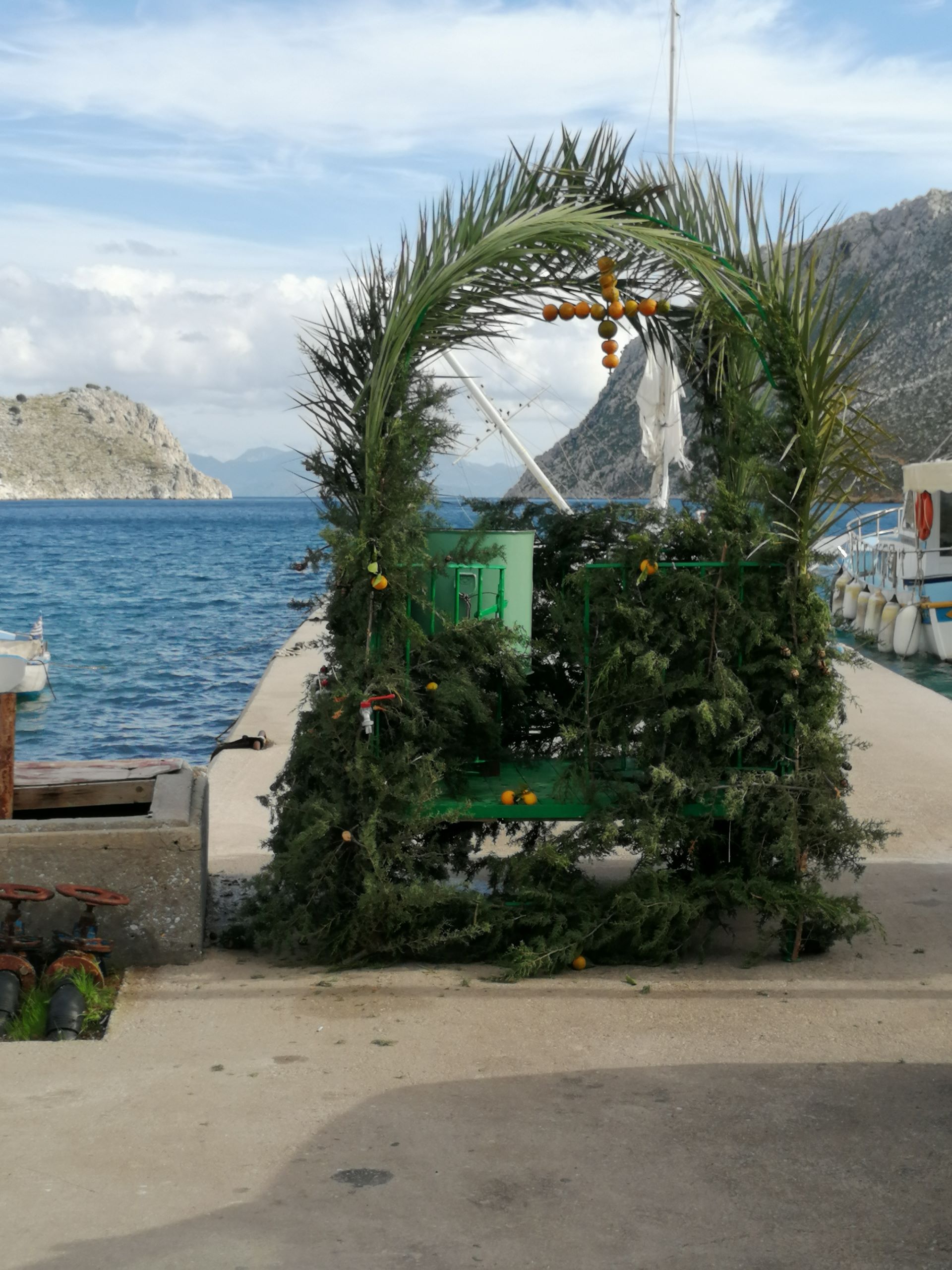
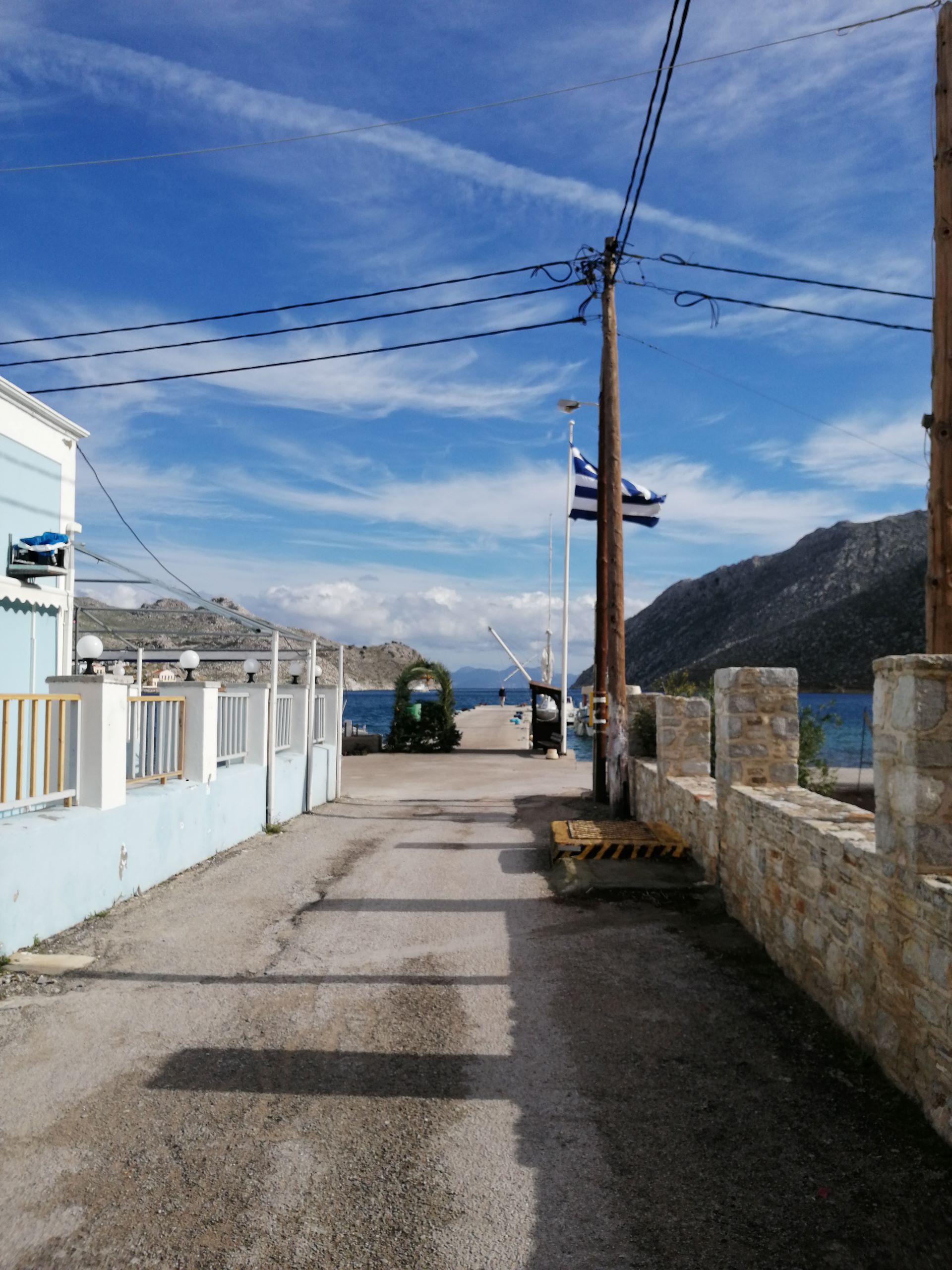
The Epiphany on 6 January is a big celebration in Greece. Booths like this, decorated with cypress and palm fronds and crosses of threaded oranges are placed by the water in many places. After a morning church service the priest and congregation gather at the booth. The priest throws a Cross in the water, symbolising the Baptism of Jesus by John the Baptist. The local young men then leap into the water to retrieve the Cross. Whoever finds it will be blessed for the year ahead. 

Symi is very quiet. The Twelve Days of Christmas are over and the children are back at school. Their older siblings have departed to universities and colleges in Rhodes, Kos, Athens and Thessalonica. Some of the locals are away, either on holiday or to attend to business and medical things. We don’t have daily ferries at this time of the year so getting things done often necessitates several nights off the island. The Best Western Plaza, which often resembles a Symi colony in the winter, is closed for refurbishment so alternative options are being explored. There are not many hotels open in Rhodes through the winter months and those that are seldom have the kind of restaurant facilities that the Plaza offers.

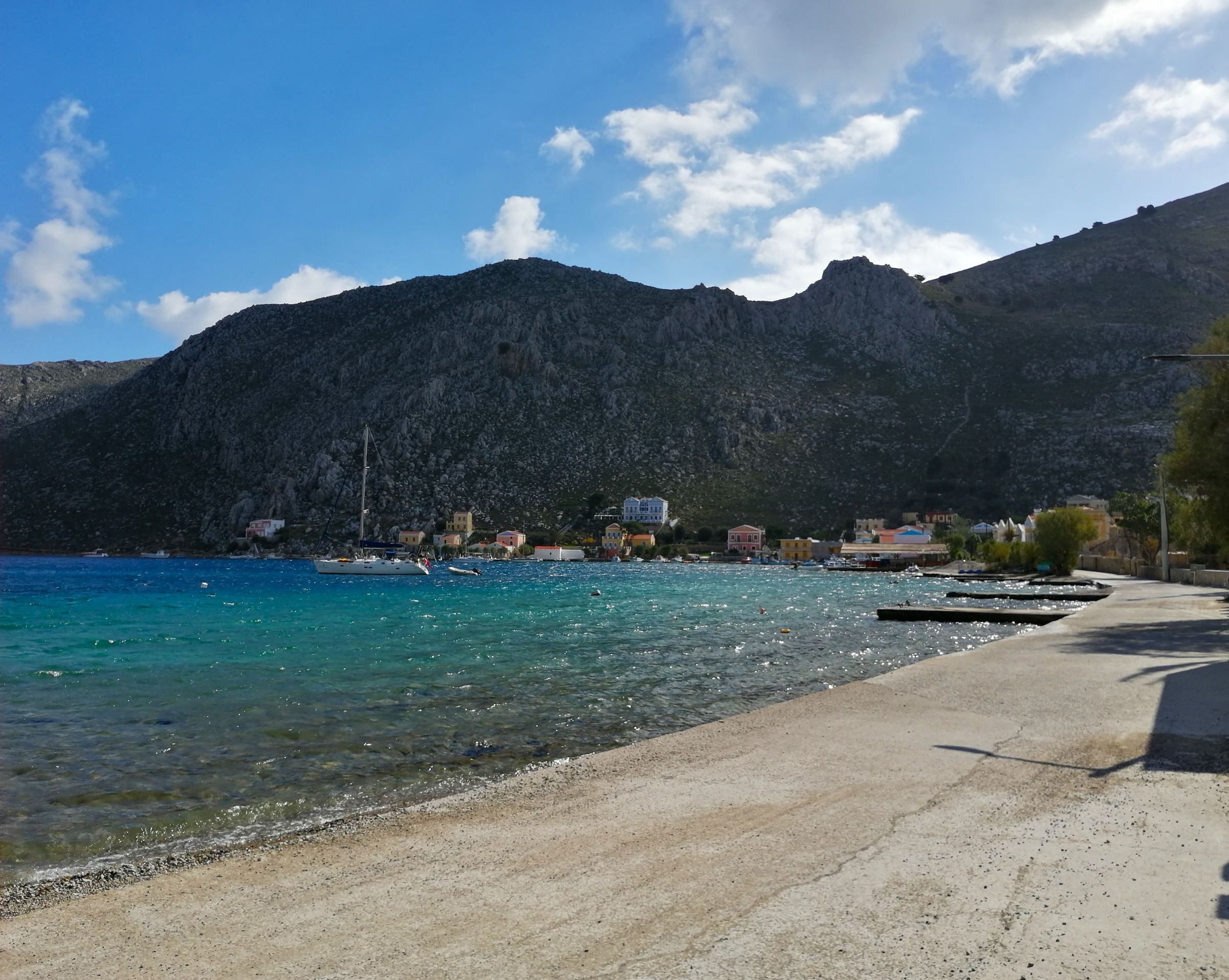
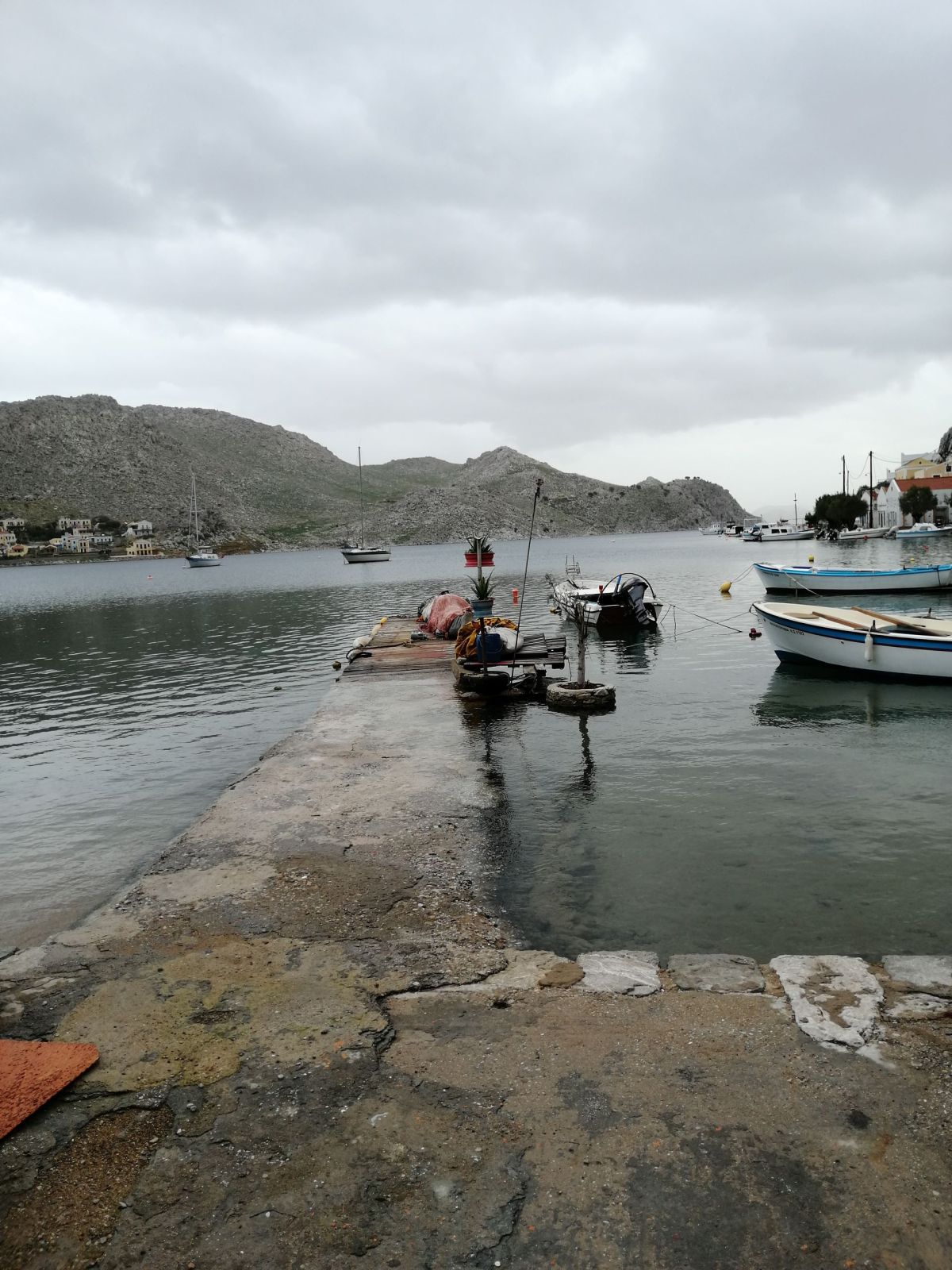
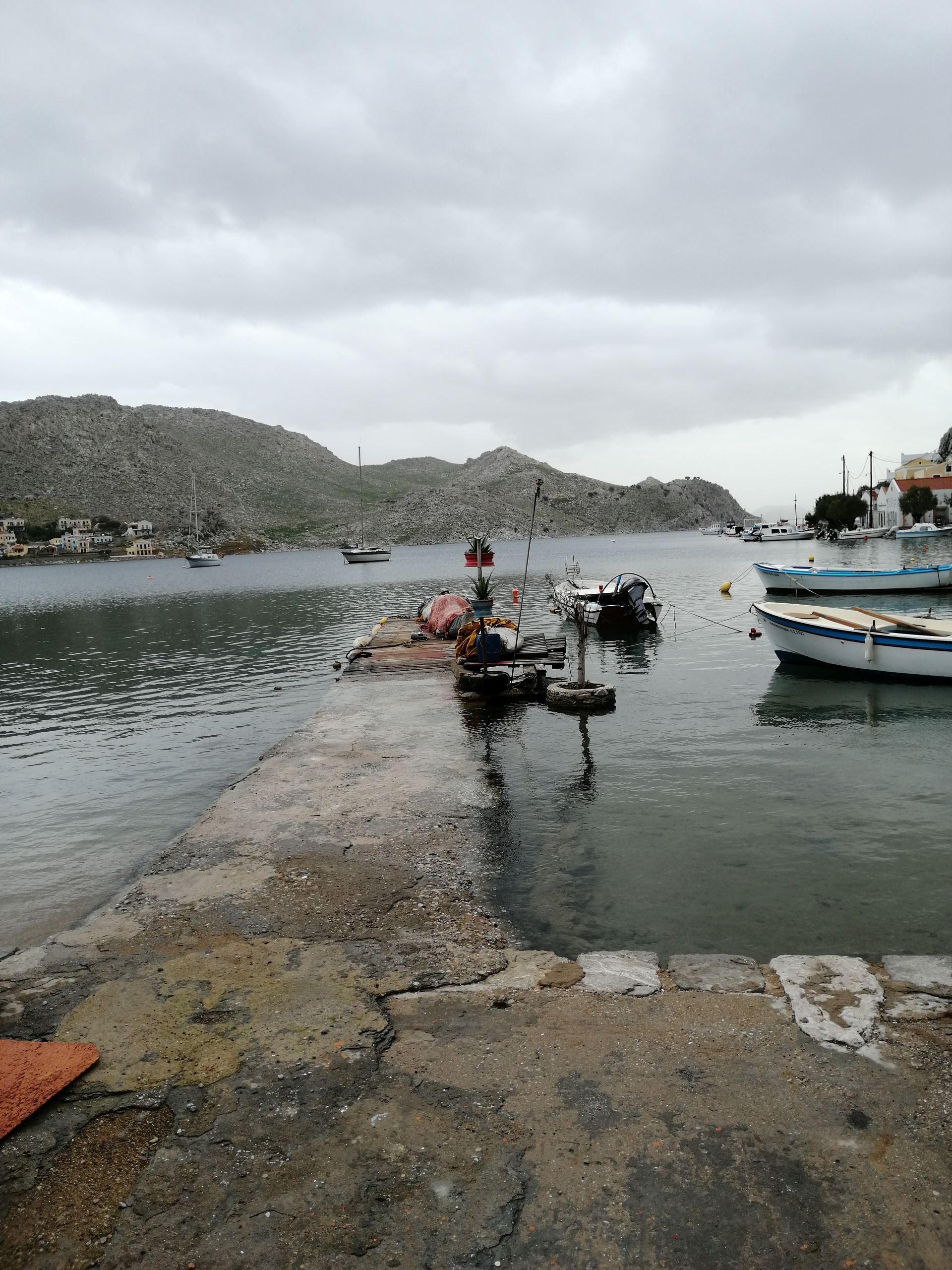
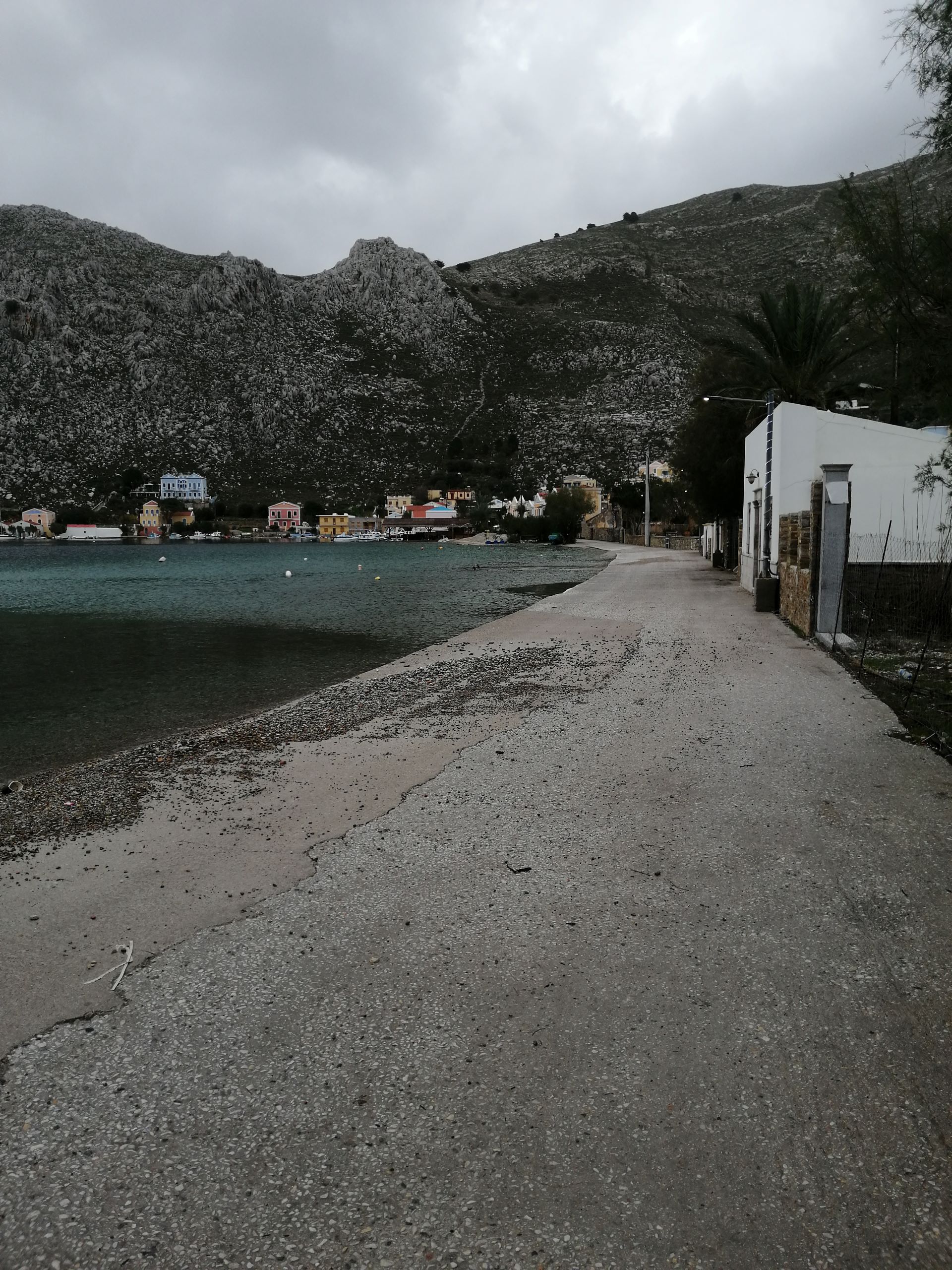
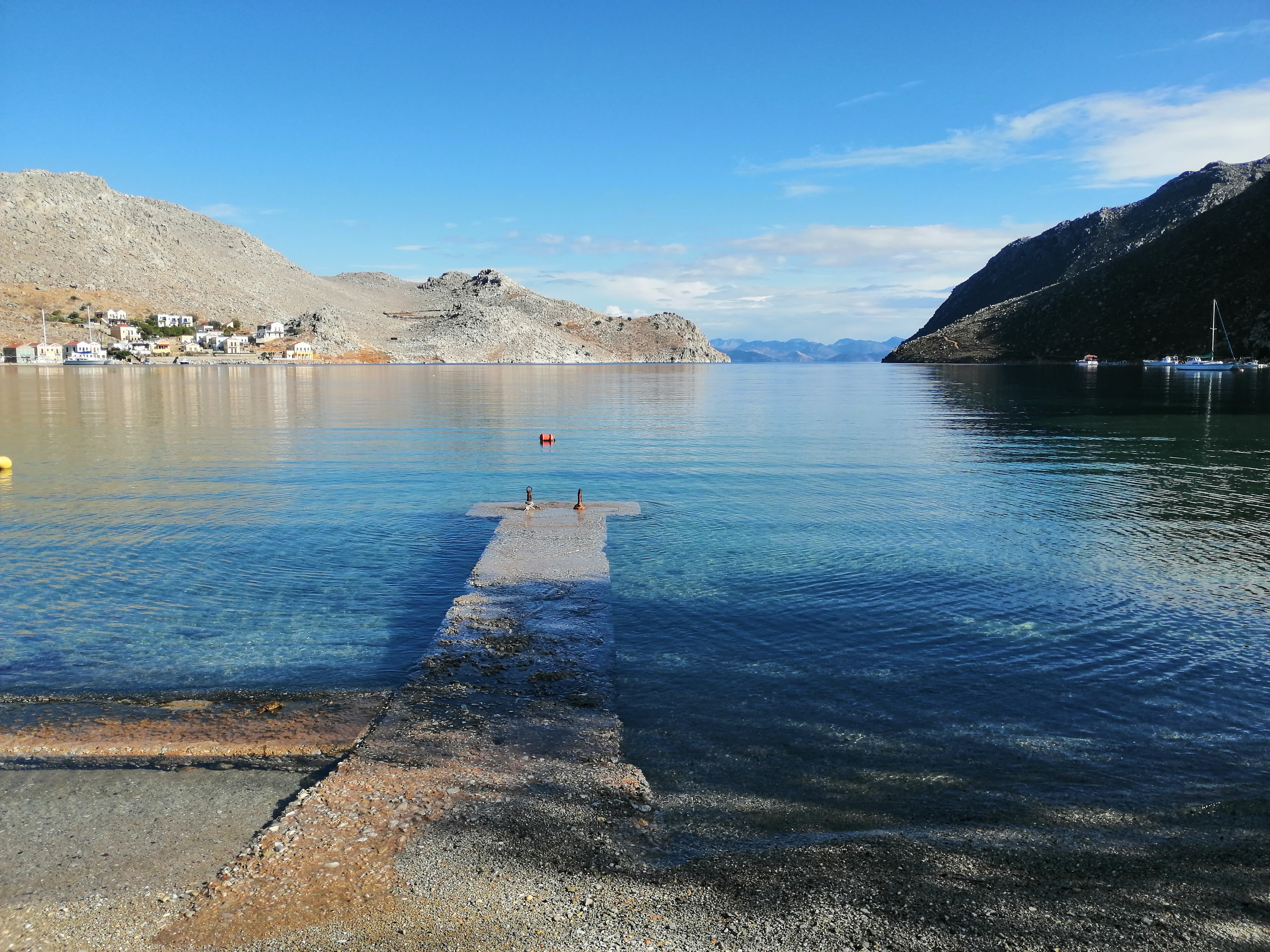
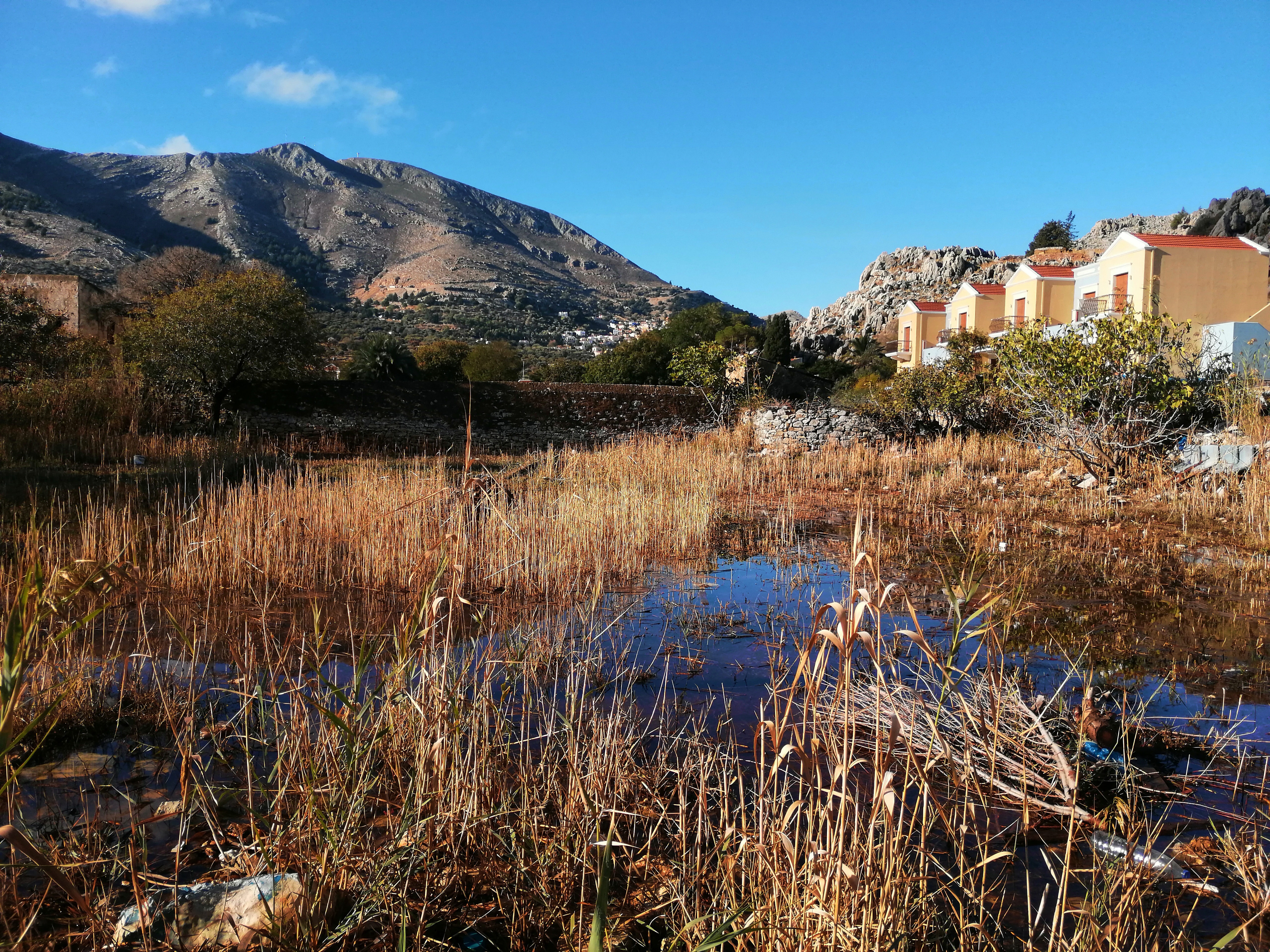
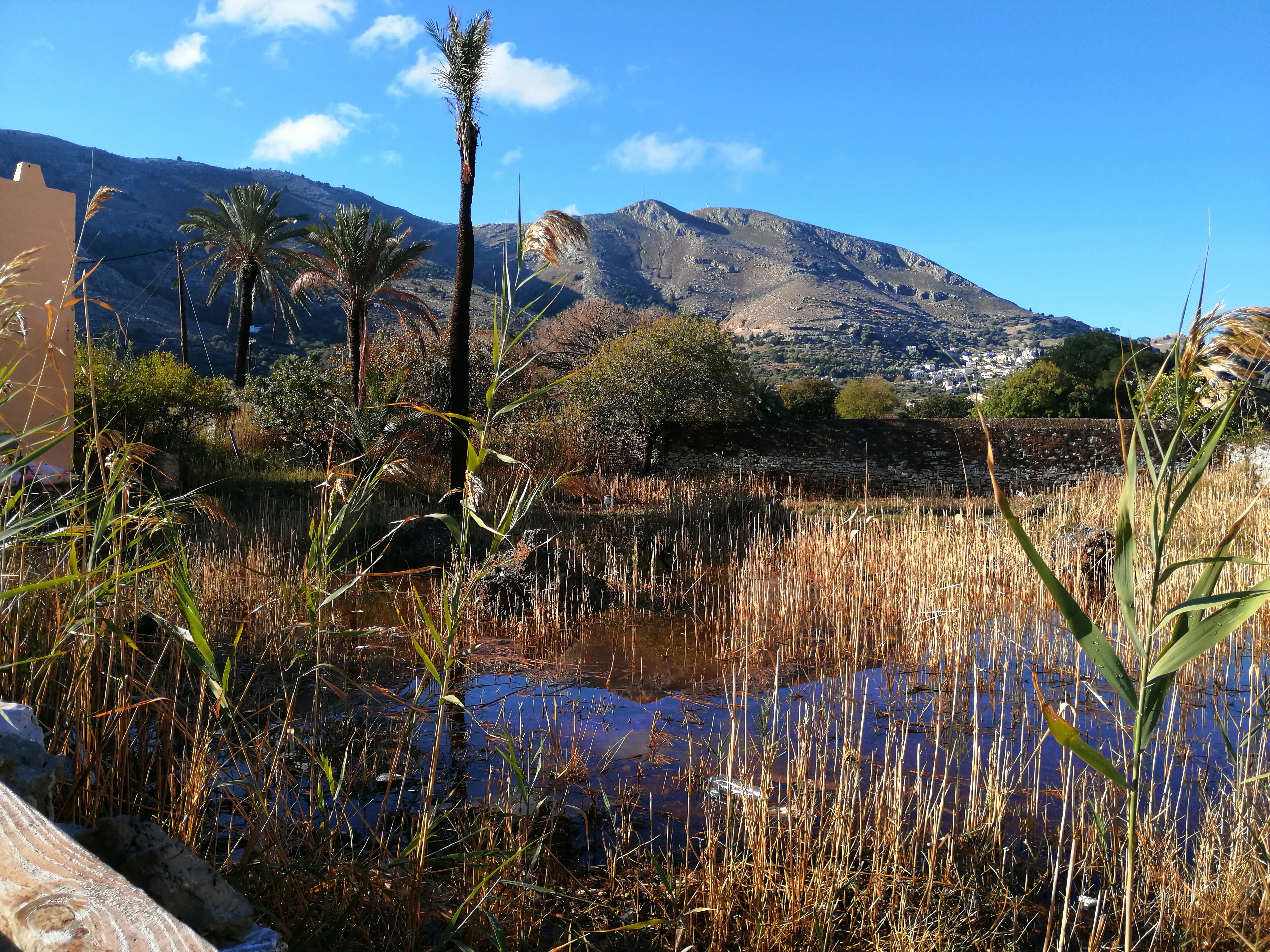
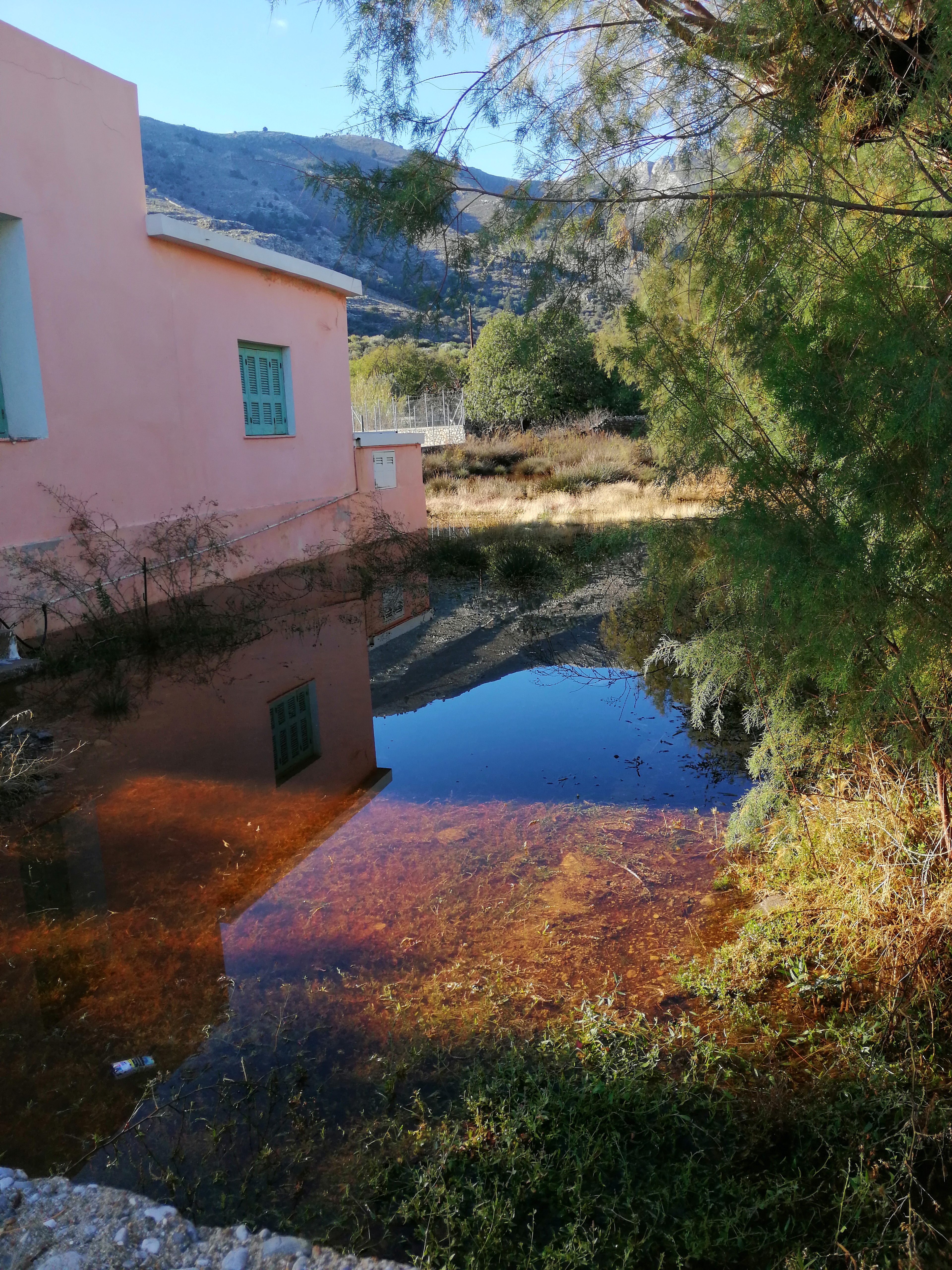
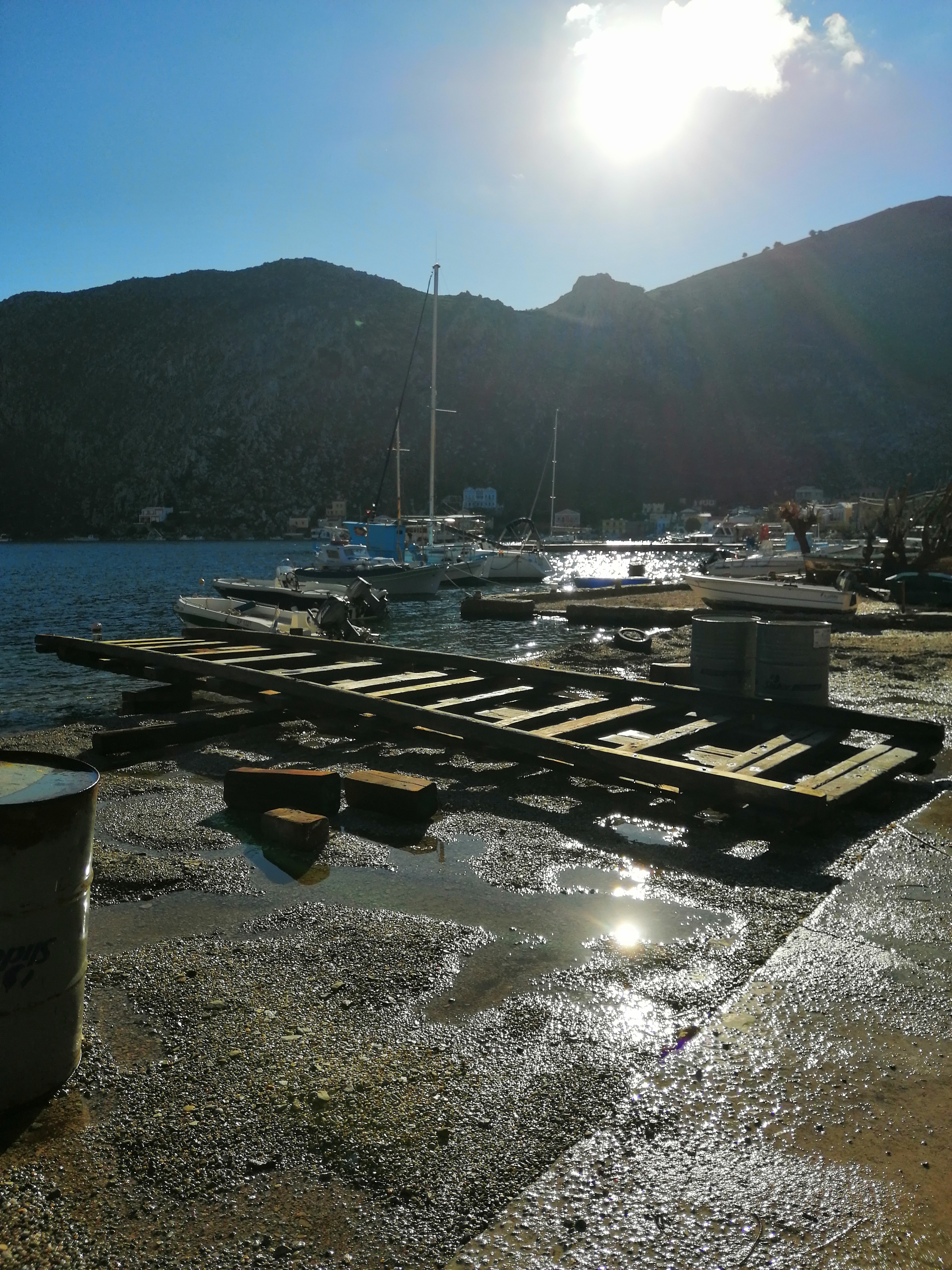
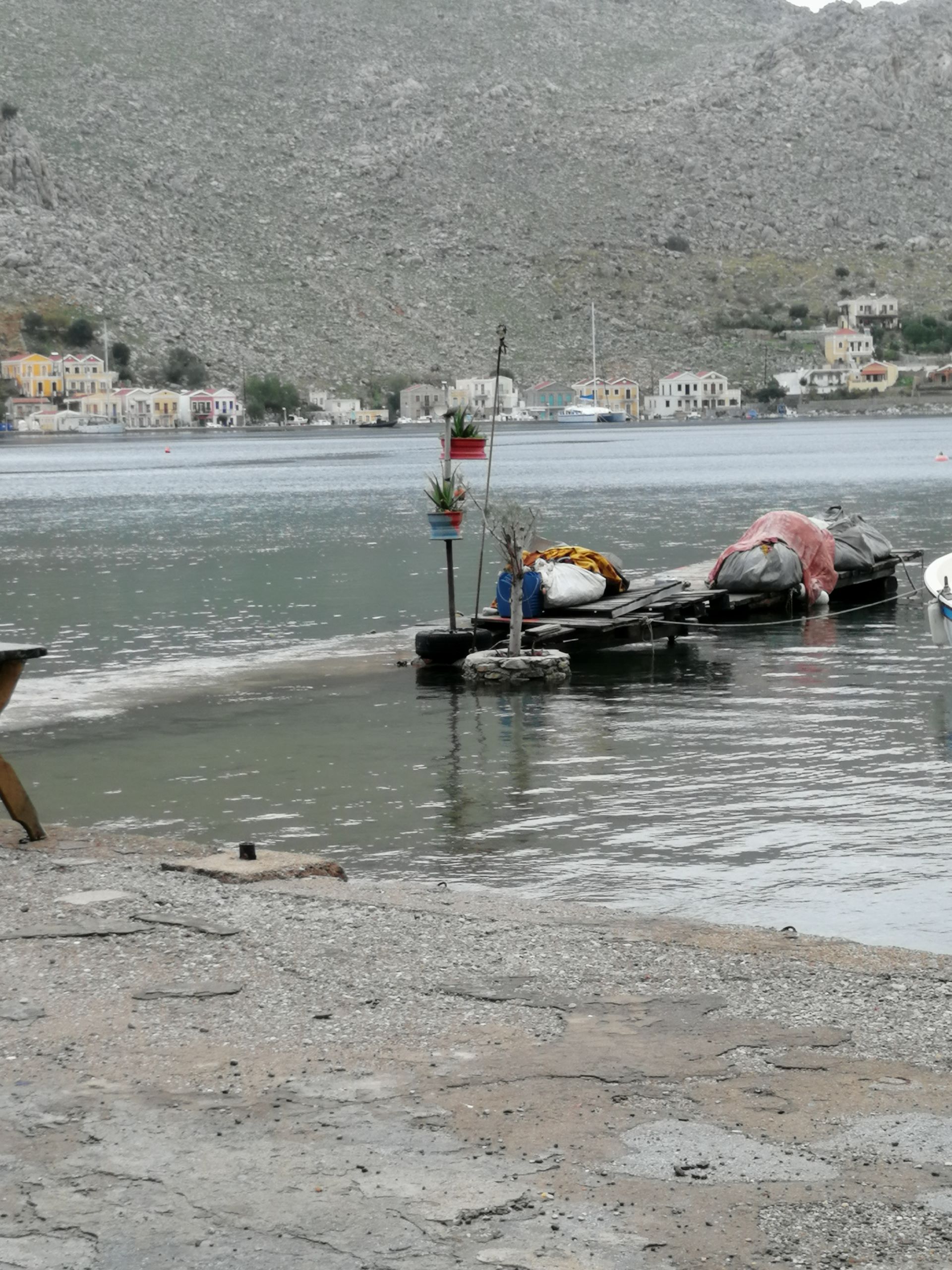
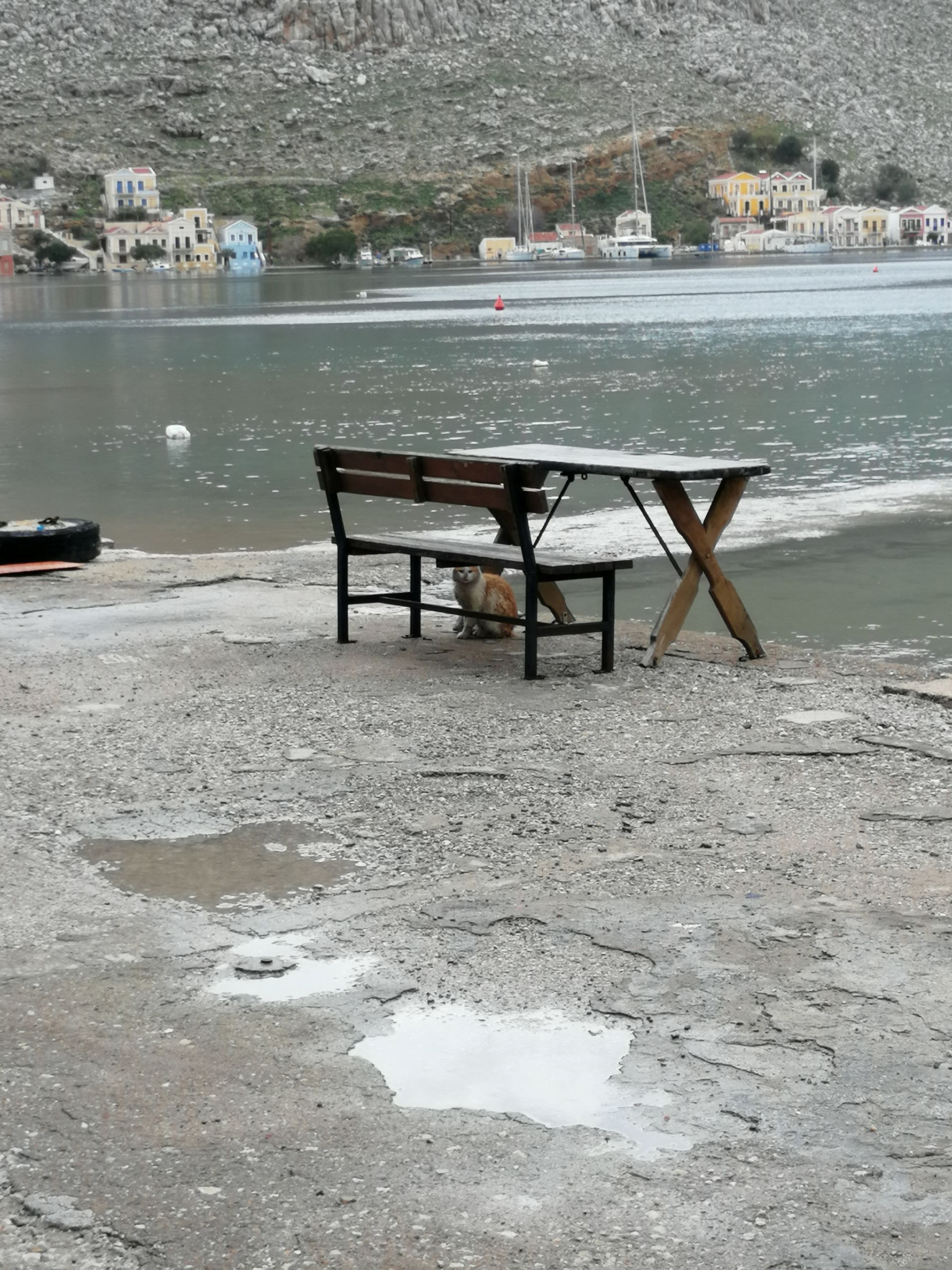
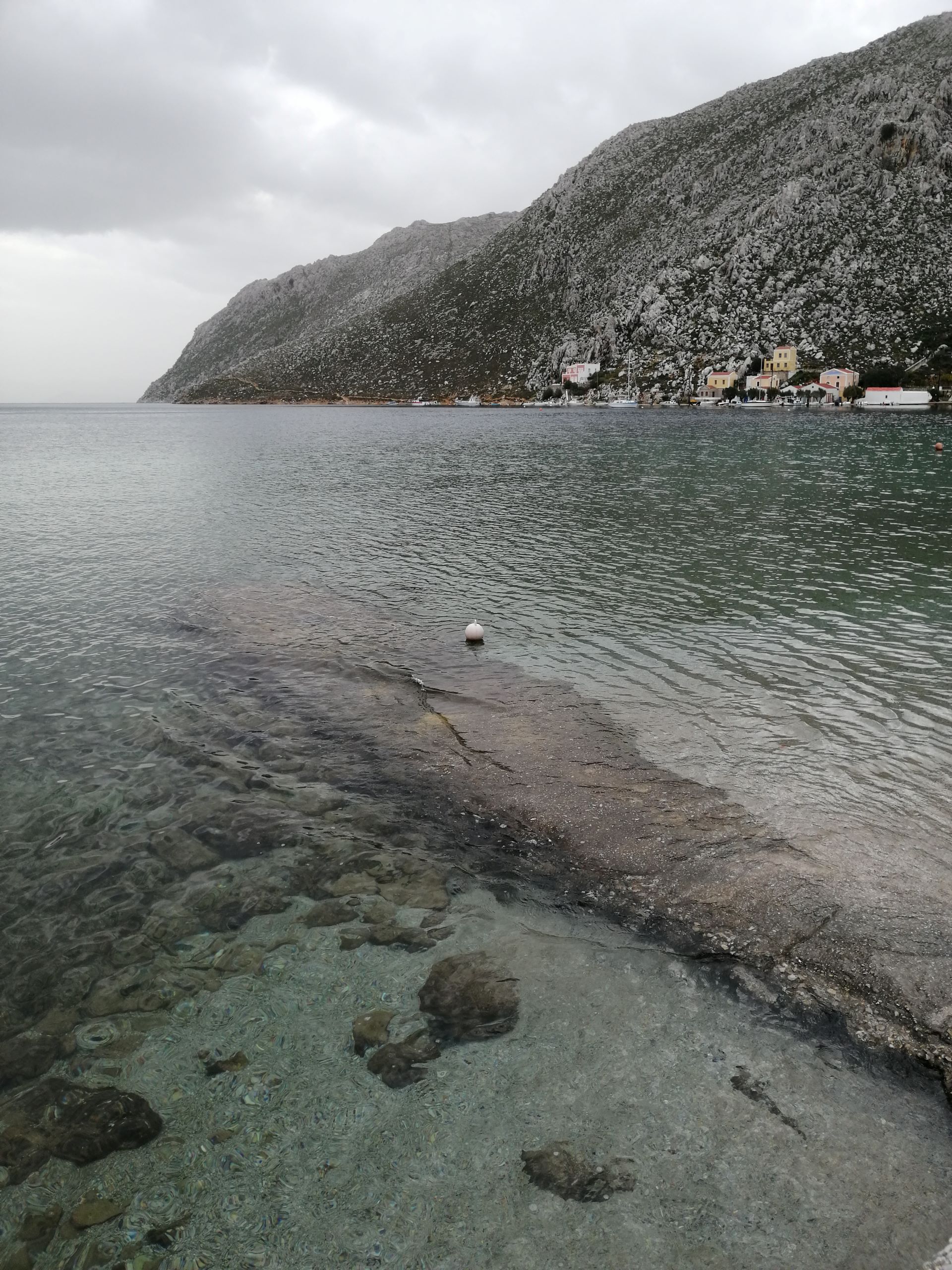
The Mediterranean does not have much by way of tides. The water levels rise and fall with barometric fluctuations. This time last year a big high pressure system hovered over the Eastern Med for weeks, causing abnormally low water levels. This year we have the opposite situation as successive lows and storm surges are pushing the sea up over the shore. The road around the harbour in Yialos is submerged in many places. Here in Pedi you can see from the photographs that the little jetties are submerged.

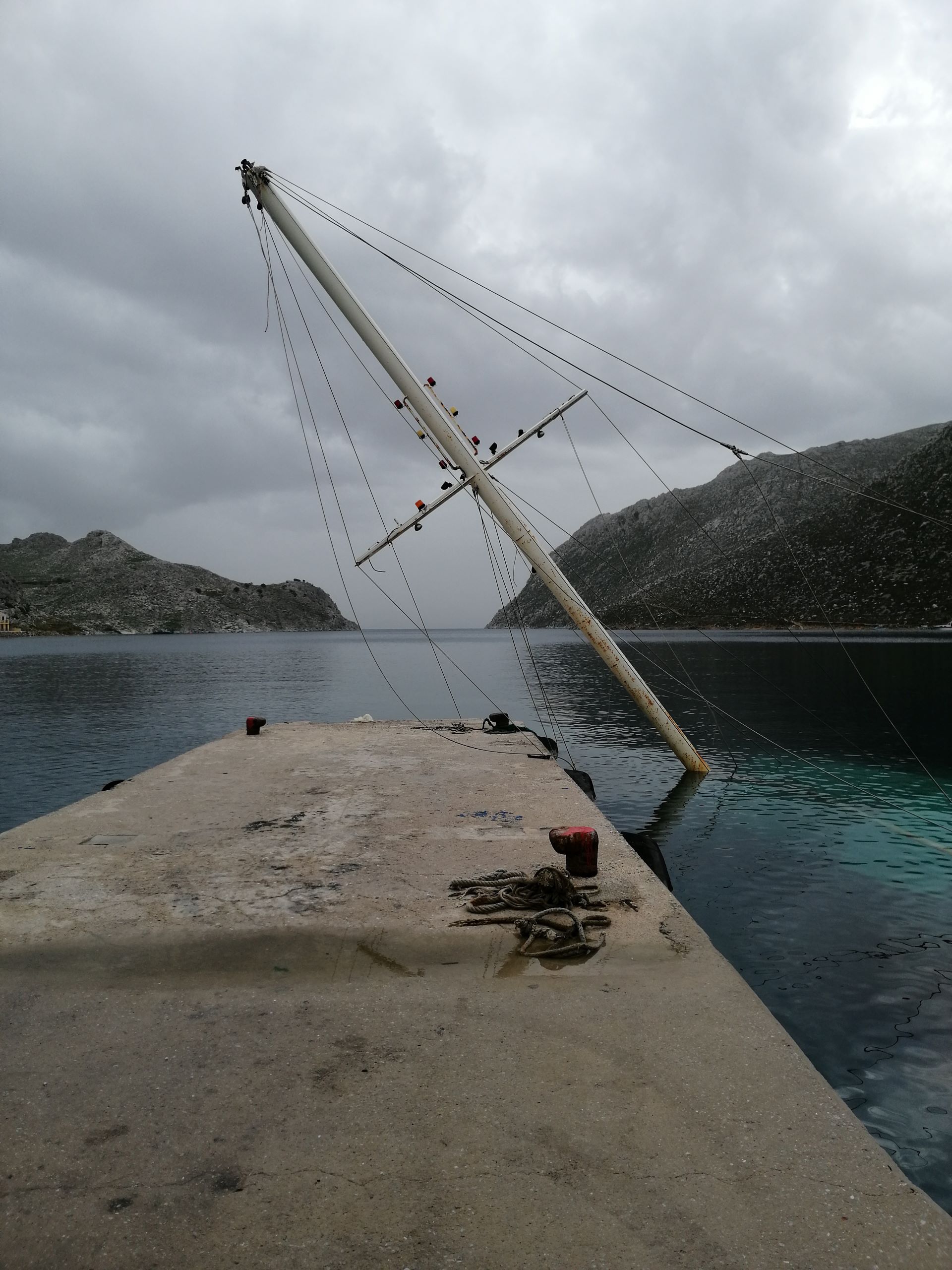
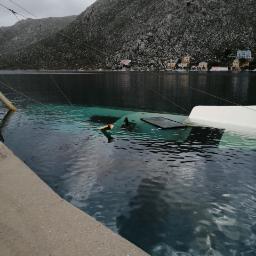
La Dolce Vita, the foreign charter boat that gained notoriety as a people-trafficking vessel in the early days of the refugee crisis about a decade ago, sank at her berth alongside the jetty in Pedi at the beginning of November 2023. Initially yellow floats were set up around her as there was a pollution control vessel in Yialos at the time. A week or so later these were recovered but nothing was actually done about raising the boat. In the meantime, with every storm she has settled further under the edge of the jetty and more doors and bulkheads are washing ashore as she breaks up. Quite what the plan is, if any, no one seems to know. Aside from the obvious pollution issues the boat is also a hazard for other ships and small boats using the jetty. As you can see, the angle of the mast cuts right across – a complication for the supply ships that come in every month to bring building materials and need room to swing their cranes.  We shall see…

Have a good weekend.

February Postcards from Symi


Symi is still deep in its winter sleep.  Down in Pedi random goats and sheep browse the verges and cats seek out the warm places. The weather is variable and forecasts frequently wrong.  Mild winds turn out to be gales and black clouds roll out from behind the Vigla on days that are supposed to be dry.  Airers laden with damp jeans and wet socks will be cluttering our homes for a while longer.  Temperatures can be anything from 6 to 16 degrees centigrade, depending on which way the wind is blowing.  Today’s Blue Star Chios ran on time but Dodecanese Seaways has cancelled due to strong north winds and a deteriorating forecast.

Behind closed doors some businesses are preparing for the season. The Pedi Beach Hotel is revamping all its rooms.  To Spitiko taverna in the harbour is also in the throes of a massive overhaul.  The new road which will connect the bend in the road above the harbour with the new commercial port is making progress.  This has been on the cards for some time and will facilitate the movement of heavy goods vehicles coming off the Blue Star up to the main road without going through Petalo.

The lease on the Nireus Hotel, which belongs to the Symi town hall, came up for auction at the beginning of the month as the original 25 year lease was up for review.  The Rhodian company that manages the Pedi Beach Hotel won.  So far there is a lot of gossip circulating as apparently this came as a surprise to the original lessees who had, it is said, assumed that this was merely a formality and that they would be rolled over for another 25.  The Rhodian company offered the town council a far higher rental, 200 000 euros per annum according to the local press, and is undertaking to raise the hotel to 4 star standard.  We are all waiting to see what happens this year as in theory the hotel should be opening for the season in April which is only weeks away.

Another piece of news that may have implications for Symi this summer is that the Dodecanese Seaways car ferry, the Panagia Skiadeni, has been sold.  Will the new owners be operating the existing Rhodes Symi route or will the boat be going elsewhere and if so, who will fill the gap?  As the Sebeco does  not take vehicles or goods this leaves a big hole in the island’s summer supply line.

Carnival is in the air.  Yesterday was Tsiknopempti – Smokey Thursday. The scheduled municipal BBQ event has been postponed to Sunday due to the wet and windy weather yesterday (surprise!).  If you are on Symi this weekend, the BBQ in the Chorio square is scheduled to start at 15.00, weather permitting of course!

So, as you can see, although it all seems very quiet on Symi at the moment, there’s really quite a lot going on.

A Winter Weekend in Patmos (Part 5)

After visiting the Christodoulou monastery in Chora we hit the road in our hire car, heading north this time.  We had heard that there was a traditional wooden boat yard at the top of the island and boat yards are like catnip to us so off we went.  When we eventually reached the site of supposed boatyard it actually turned out to have been turned into a shooting range and all that was left was a large winch. For some reason, going back through our cameras, it seems that neither of us thought the place sufficiently photogenic to be worthy of immortalisation, unlike the goats who had taken over that end of the island.  They seemed to be fairly feral and we saw no signs of ear-tagging or other forms of flock marking.

Patmos has a lot of arable land in comparison to Symi, with generously sized terraced fields, threshing floors, wells and meadows.  Although there is quite a lot of tourist development it seems to be mainly low-rise and unintrusive, unlike the hotel complexes fringing Rhodes and Kos.  The island has a large reservoir, out of bounds to tourists, as well as two large – and functioning – wind turbines.

The third village on Patmos after the port of Skala and the old town, Chora, is called Kampos.  We stopped there for lunch on our way back.  The only taverna open was a real time capsule. The walls were lined with old black and white family photographs, venerable patriarchs and matrons and, somewhat surprisingly, a black and white cat, all looking straight ahead in the formal poses of the day.  The radiators were welcome against the chill.  We would have sat outside at a table in the sun but that was the smoking zone and already occupied by a young Greek couple, wreathed in clouds of roll-up tobacco.  The proprietor was busy loading massive skewers of whole chickens onto rotisseries over a bed of coals in the back kitchen for an event in the evening but he was happy to have a couple of lunch guests if we didn’t mind having something already prepared.  We had braised lamb shanks cooked with roasted red peppers and apricots and a stifado.  Both were delicious and we felt no need for a substantial meal in the evening.

By the time we got back to the hotel Skala was waking up from the brief winter siesta and we went for a stroll around the shops.  As the museum shop at the monastery was closed we went to see what the town had to offer by way of mementos.  One extremely dusty book shop yielded a copy of Cavafy to add to our collection but the souvenirs on offer were a bizarre mix of oriental bric a brac, discontinued Staffordshire pottery in a design that goes with nothing we already own, last year’s unsold Easter eggs and some very expensive icons.  We moved on to investigate the other two bookshops we had noticed the previous evening as well as the bio food shop and the newspaper shop.  In the newspaper shop we ran into the Croatian woman who was earnestly helping the young South Korean to select the best out of a bad collection of Patmos fridge magnets having resisted her exhortations to add an ungainly coffee mug to his suitcase.  The woman behind the counter was familiar – she had served us in Jumbo the previous evening (we bought a deliciously chintzy kitschy kitchen clock for a friend on Symi).  Even Patmos has job-sharing, it seems.

Supper that evening was a picnic in our room of hummous, pita and other bits and pieces from the AB supermarket down the road from the hotel while perusing the glossy picture books of Patmian icons and museum artefacts that the hotel keeps for the use of guests.

Sunday morning, before our departure, was set aside for a trip to the Church of the Apocalypse, the cave where St John the Divine had his famous revelations.  Of which more tomorrow.

shop 1
Hanging about hopefully outside one of several fishmongers

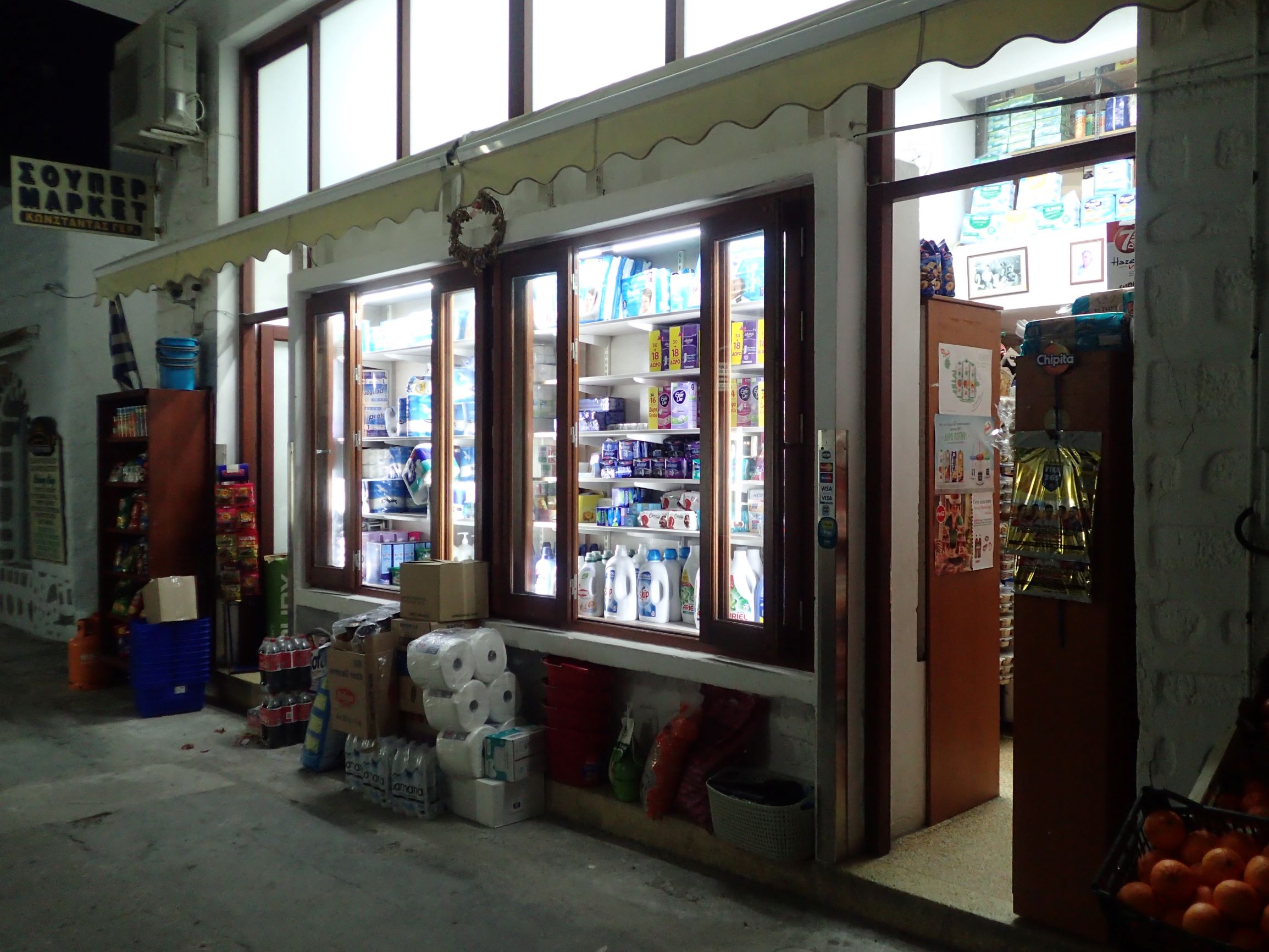
shop 2
Traditional supermarket. The window display is accessed by opening the windows from the street.

shop 3
Municipal buildings at the port.

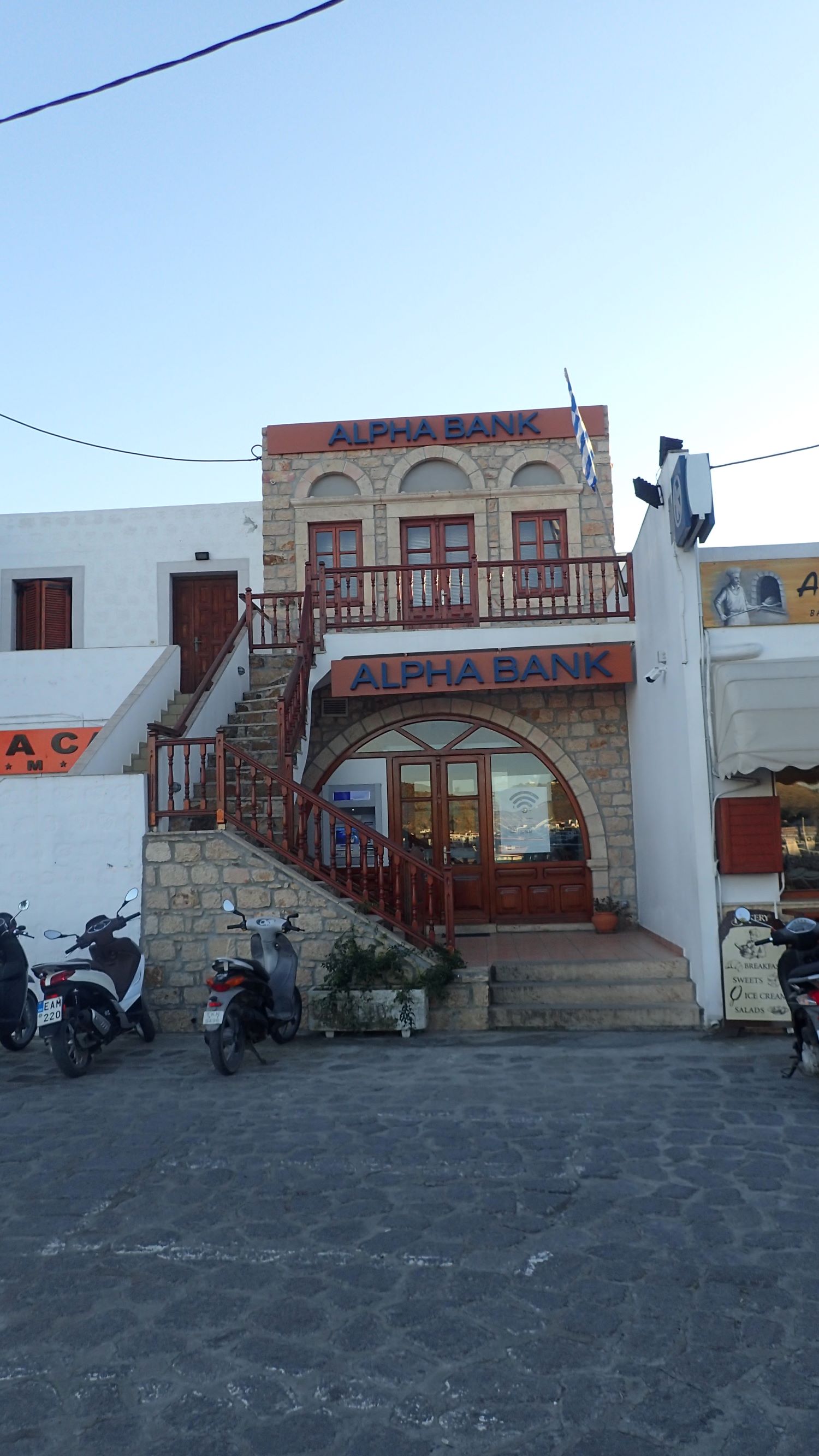
shop 4
The Alpha Bank

A Winter Weekend in Patmos (Part 4)


The windmills at Chora on Patmos have been restored, initially by private initiative but now with some kind of grant.  One of them is fully functional and is, apparently, used to mill wheat in the summer.
The furthest one has a bronze Russian double-eagle over the door.  At first glance it looks like the Byzantine eagle used by the Greek Orthodox church in the Dodecanese but it differs in that it has a small crown above it, making it the emblem for the Russian royal family.  Interesting.

Apart from the Korean and Croatian tourists mentioned previously we did not see a soul on our walk from the monastery across to the windmills and back to the car park.  We did, however, see quite a few cats, of which more later.

Patmian architecture is very different to Symi’s.  The houses are flat-roofed stone structures with small windows and quirky doors within doors.  There are many tunnels across the lanes, supported by strong reeds and wooden beams to support the stone above.  The flat roofs are also made of reeds, wood and plaster which may be covered with gravel as insulation. Walls are painted white and woodwork is in muted shades of grey, eau de nil and verdigris. Very elegant.  I took more photographs on the Sunday morning so you still have those to look forward to.
After our morning explorations we then drove to the northern part of the island in search of a traditional wooden boat yard mentioned in a guidebook and met a lot of goats, but that is tomorrow’s instalment.
A Winter Weekend in Patmos (Part 3)

At first light on the Saturday morning Nicholas set off on an exploratory run, up the kalderimi (traditional stone-paved donkey path) through the trees to Chora on the hill top.  The path was well-maintained, although slippery with moss and weeds in places.  There is a policy in place to replace the fire-prone alien eucalyptus trees with indigenous conifers and in between the scorched trunks of eucalyptus there were new saplings, protected by mesh and connected to an irrigation network.  Once again, absolutely no litter, not even in the water courses.

After breakfast at the hotel we went up to Chora together.  The monastery gates open at 8.30 and we got there about an hour later.  There was not a soul to be seen but the door was open so we went in.  As we stood in the main courtyard, looking round, a chap of about 40 came up to us inquisitively.  It subsequently transpired that his name was Andoni, that he has learning difficulties of some sort and that he was in sole charge that day.  He was not expecting to see tourists and it was just as well that Nicholas speaks good Greek as he was slightly intimidating.  Eventually he left us alone to explore, only occasionally popping up from a random doorway or tunnel to check that we weren’t committing sacrilege.  One drawback of visiting in the winter is that the museum, treasury and museum shop are closed, although this is not mentioned in any of the guide books and the locals, when we asked later down in the harbour, seemed surprised.  A phone call from our hotelier established that these days there are so few tourists in the off season that it is no longer worth paying staff to open up these facilities between October and April.  Hence Andoni, no doubt.
An advantage, on the other hand, was that we could wander about and soak up the atmosphere without too many obvious 21st century intrusions.  Speaking of 21st century intrusions, the public toilets were open and immaculate, not just in the monastery but also the municipal facilities.  Symi, take note!
As you can see the views from the rooftops are fantastic.  In my next instalment I will share with you some photographs of the windmills as well as the lanes we walked through to reach them.

By the way, we weren’t the only foreign visitors on the island that weekend.  There was also a young man from South Korea and a middle-aged woman from Croatia.  More about them later!