






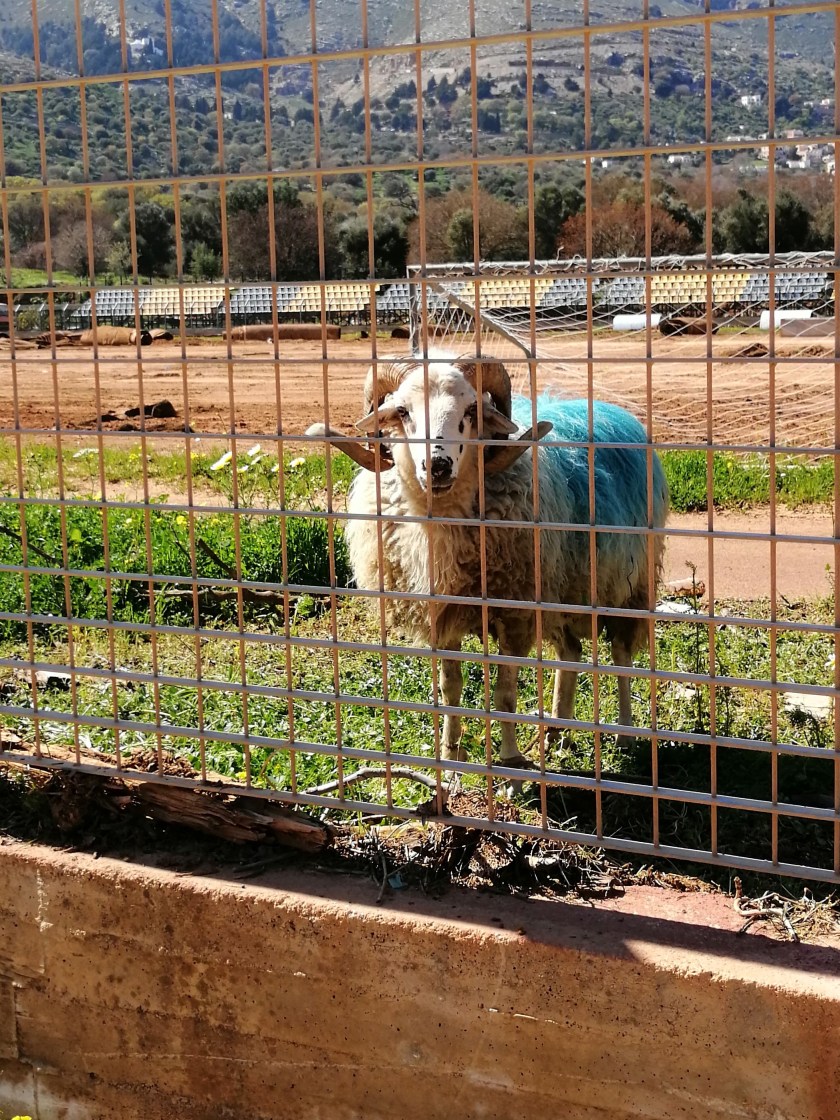


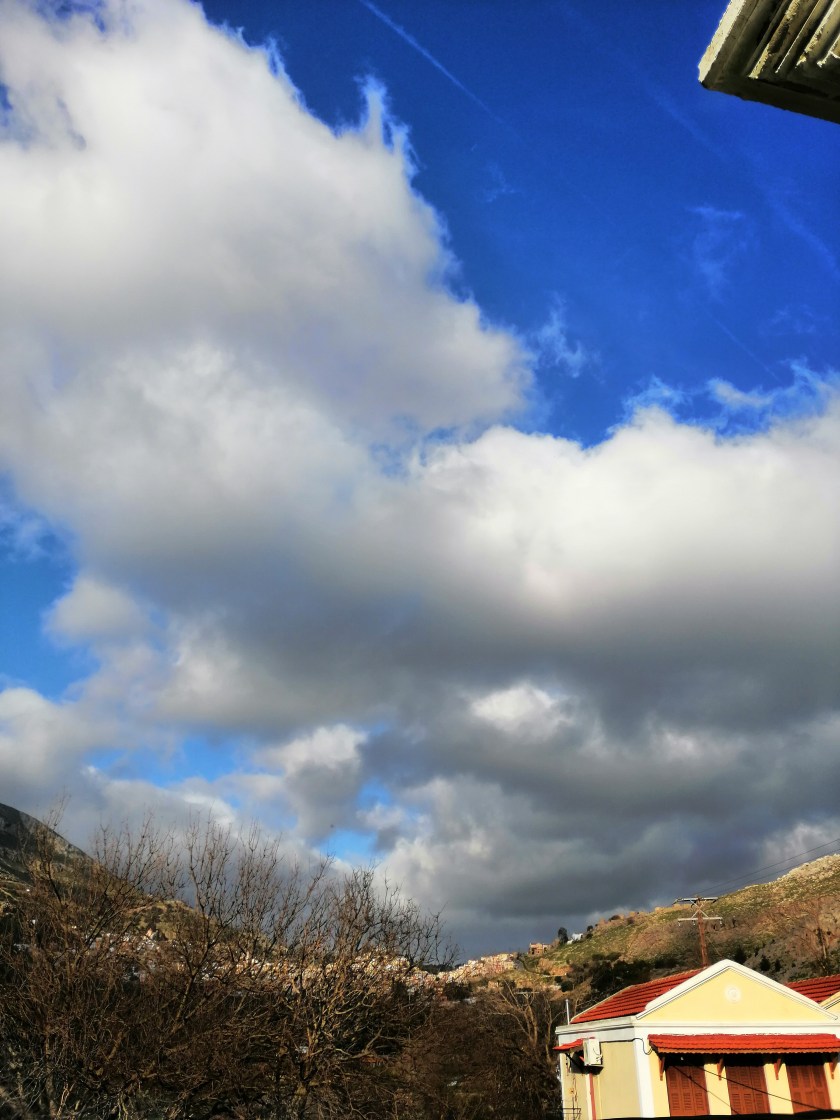


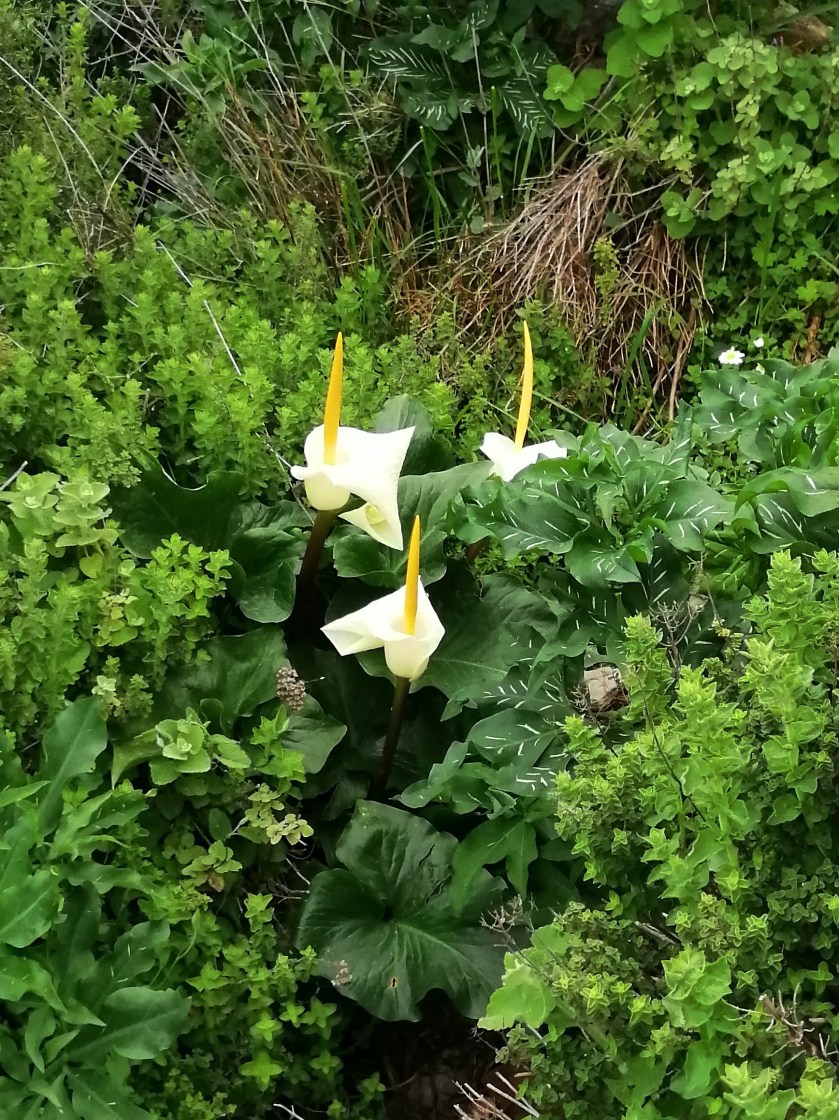

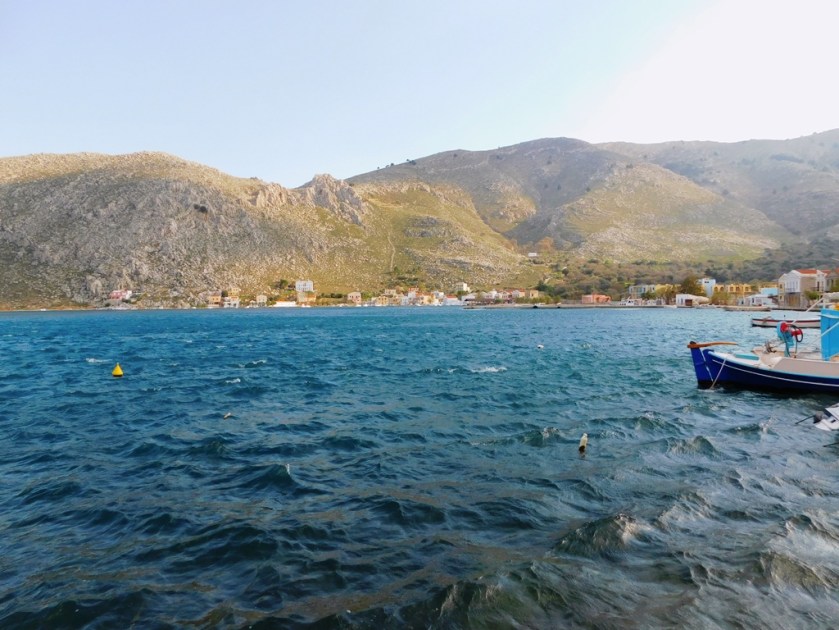








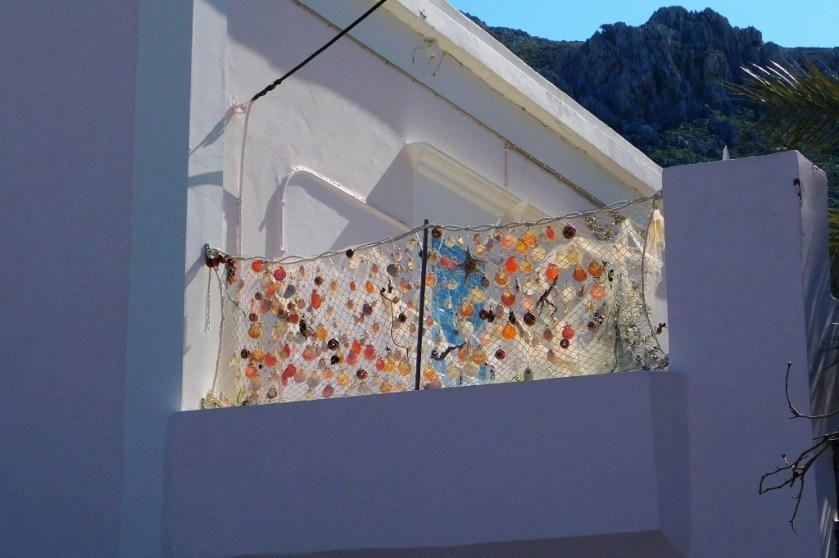
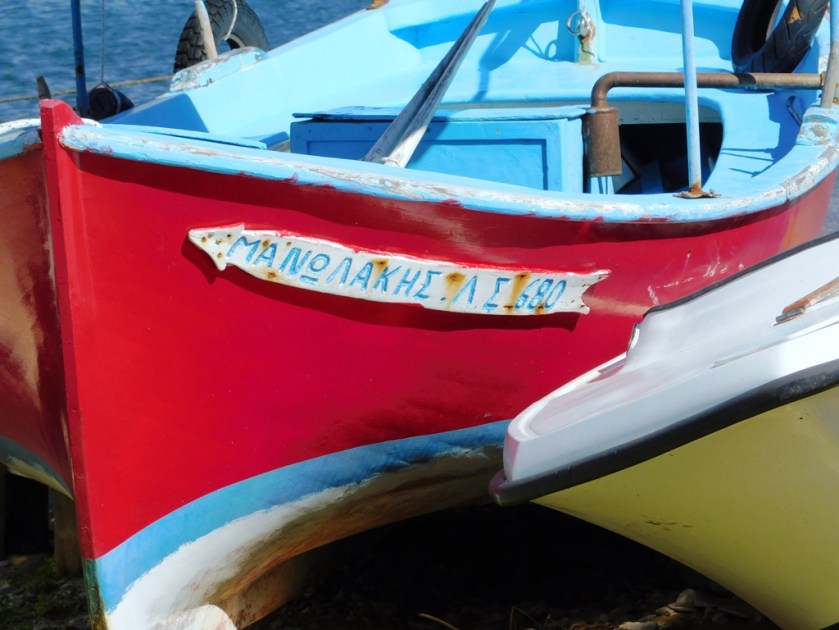


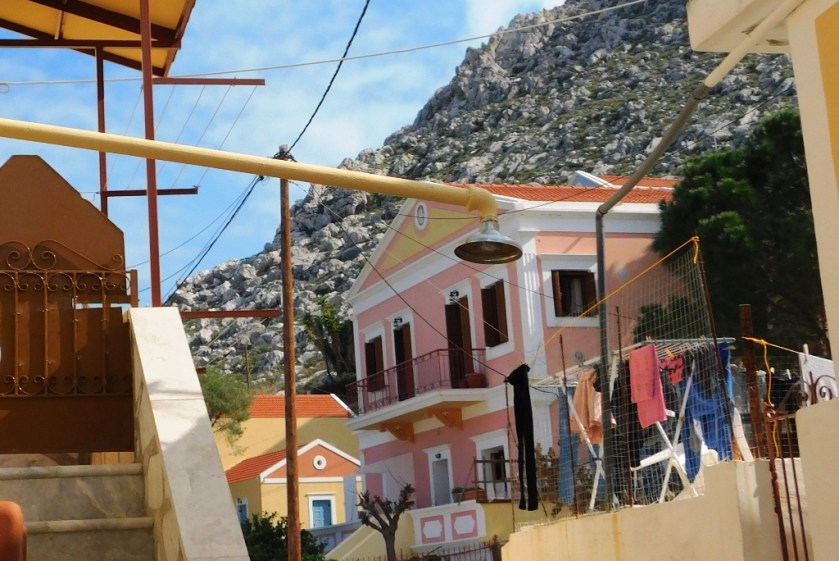


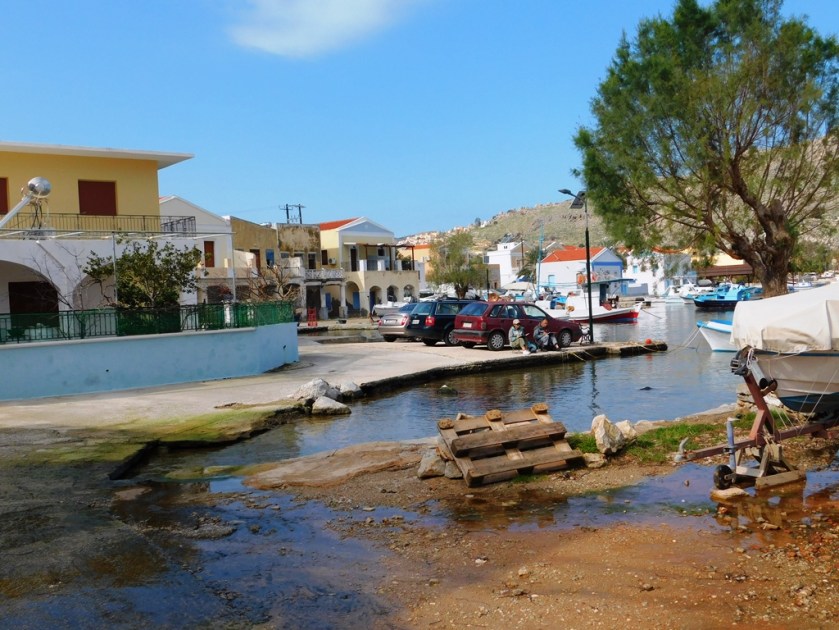




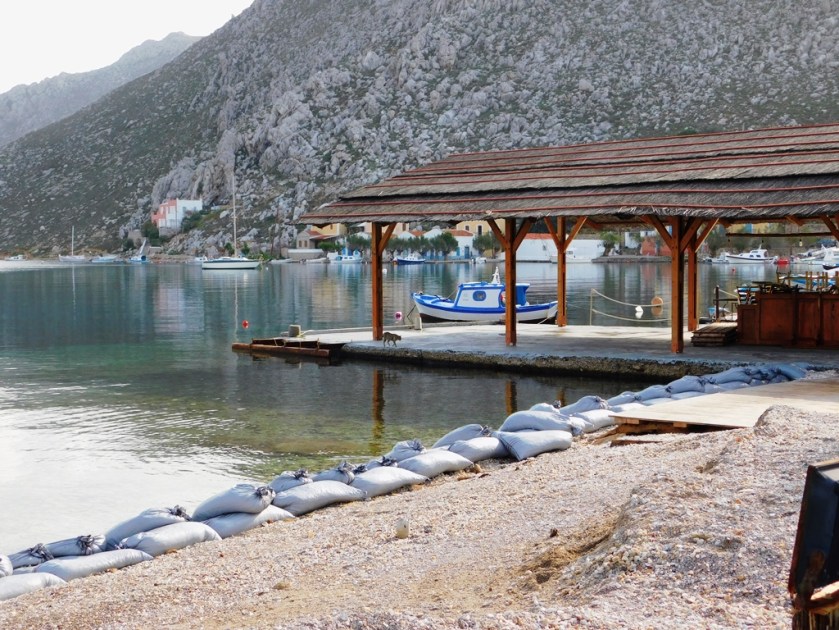
The weekly storms are still vicious but the sunny intervals between them are growing longer and milder. There is a feeling of spring in the air and there are more people around. It is that time of the year where it is warmer outdoors than in and everyone is relishing the sunshine. Walkers of all ages promenade past under the watchful gaze of grazing sheep. The ground is still to water-logged for much agricultural activity. More heavy rain is forecast for the weekend as another storm system passes over Greece. As we near the spring equinox the storms increasingly pass to the north of us so while they may disrupt the big boat schedules they are not as destructive locally.
Wherever one looks on Symi there are bits of history tangled up with the present day. The sense of continuity has a steadying effect. Invaders and occupiers have come and gone and people are still here, growing olives, grazing sheep, fishing …
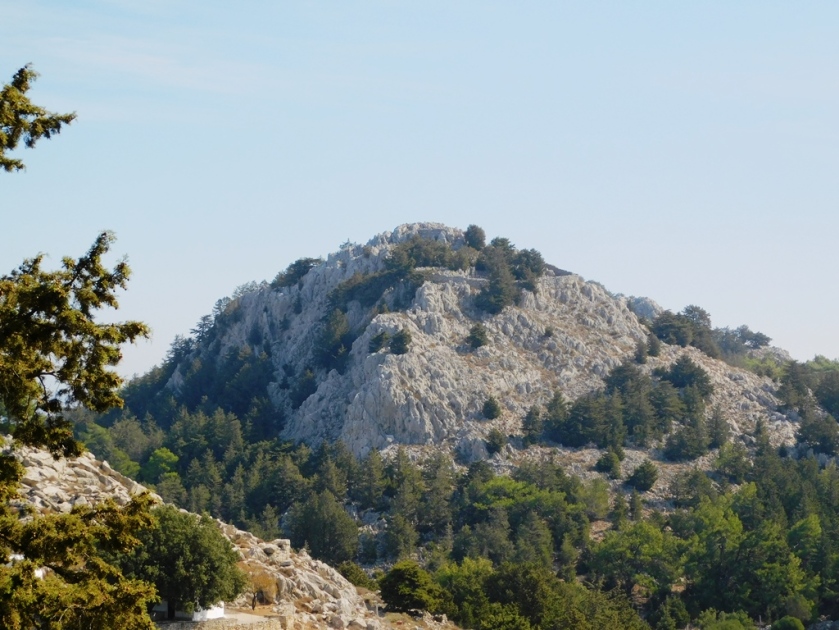
The photograph at the top of this blog shows the Kastro, Symi’s acropolis. This has been a fortification of one sort or another for thousands of years although the most recent structure was a castle, built by the Knights of Rhodes. Much of the remaining structure were destroyed during the Second World War when the retreating Germans blew up the munitions store they had there but there are still chunks of wall visible. The main habitation was always huddled around the acropolis rather than the sea. Trouble came from the sea. Pirates, invaders – anyone on the shoreline was vulnerable. Ancient settlements tended to be on high ground where you could see trouble coming before it arrived and defend yourself. Symi’s hill tops and mountain peaks are dotted with the remnants of ancient fortifications and settlements. They are not always easy to spot, particularly in the summer months when everything is uniformly dry and patterns are not so easily distinguishable on the landscape.
If you have any topics about Symi that you would particularly like me to focus on please let me know via the comments section or by emailing me or commenting on Facebook. I would love to hear from you.
Adriana


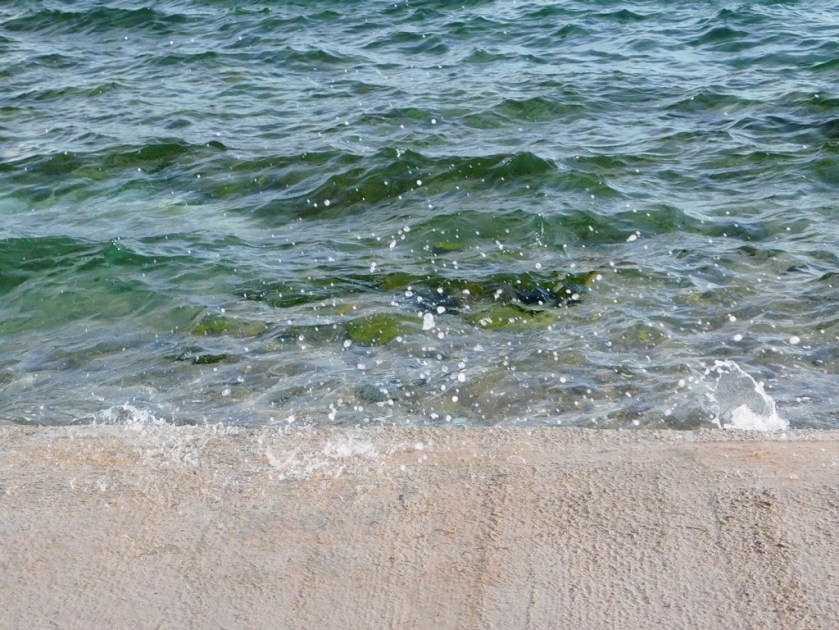


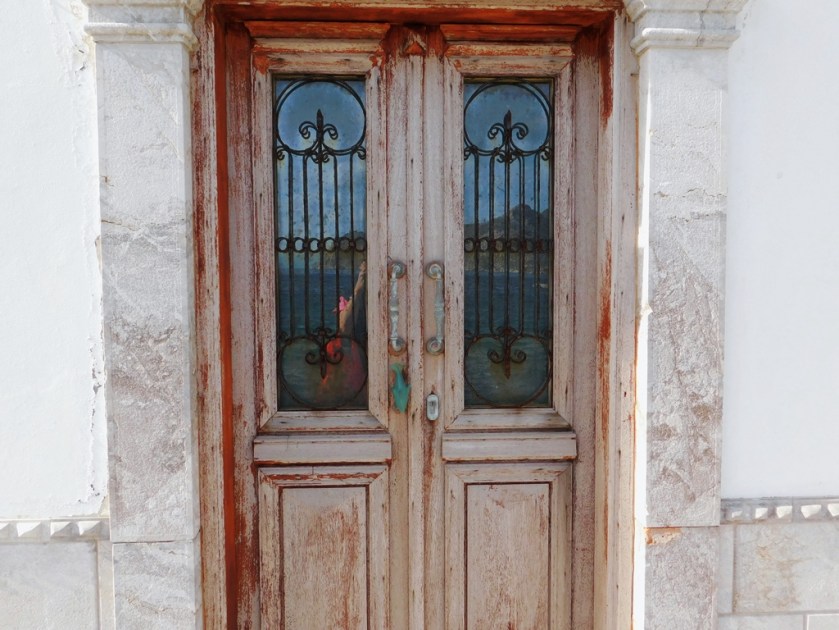
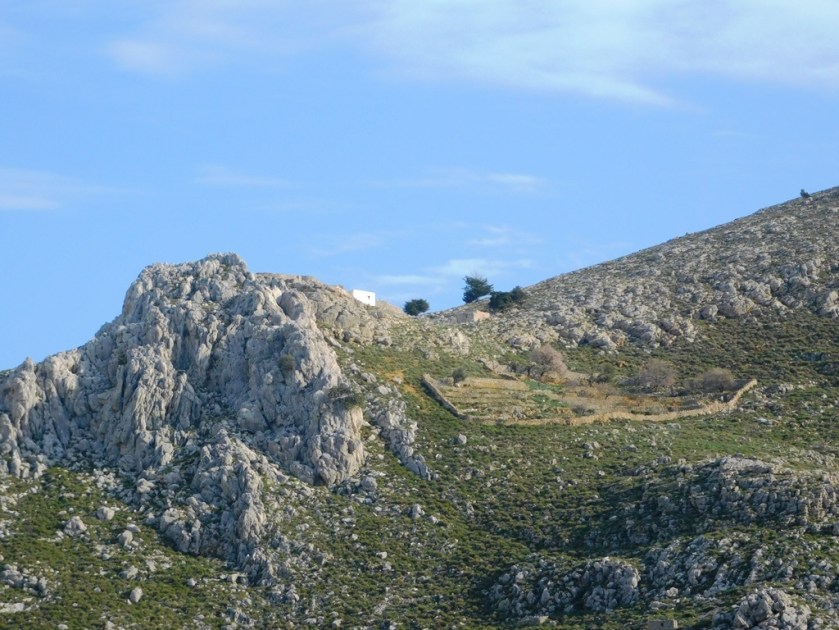


January was wet and windy and so far February has not been much better. They didn’t give a name to the storm that pounded Greece on Tuesday night and Wednesday but it delivered a lot of damage, particularly in Rhodes where large boulders were thrown about by the sea and many small seaside villages and beaches took a hammering. Once again there were shipping bans and flight disruptions as winds topped Force 9, gusting Force 10. There are another 6-8 weeks of winter still to come so it isn’t over yet. Heavy hail storms on high ground took their toll of the new lambs in the mountain pastures on Symi and the local shepherds all have stories to tell.
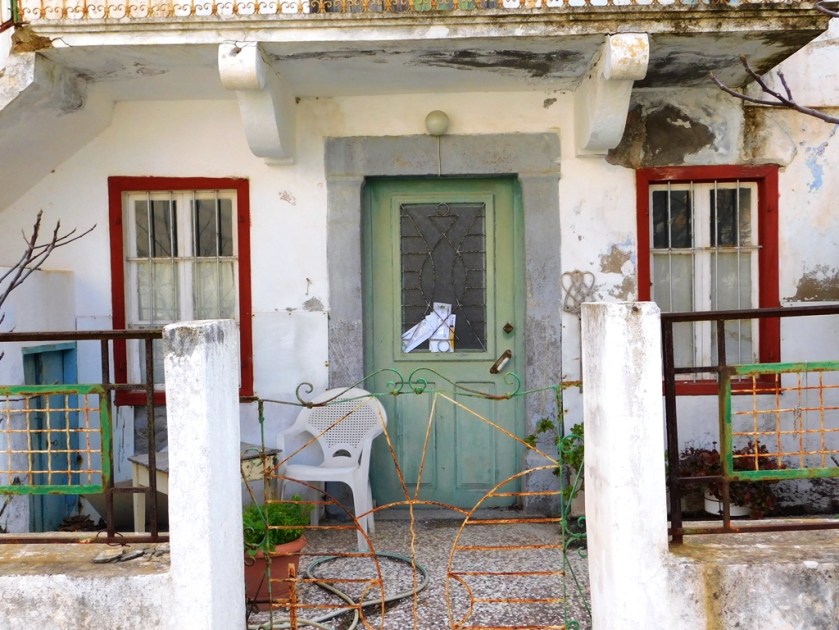
In the quieter corners the almond blossoms are opening and the countryside is very green. When the sun comes through it can be as much as 20 degrees centigrade, out of the wind. Most of the time, though, midday temperatures are around 14 degrees and last night the thermometer on our car was reading 7 degrees centigrade. The wind makes it seem chilly, particularly as the water has found its way into everything indoors and out. Most Symi houses, regardless of age, have damp problems in the winter. Either condensation turns surfaces black with mould or water seeps through walls, turning green with algae if there is any sunlight. Apparently tea tree oil helps with the mould spores, if one can get hold of it. Everyone else is constantly swabbing down with bleach solution. It is not for nothing that spring painting is an annual necessity.
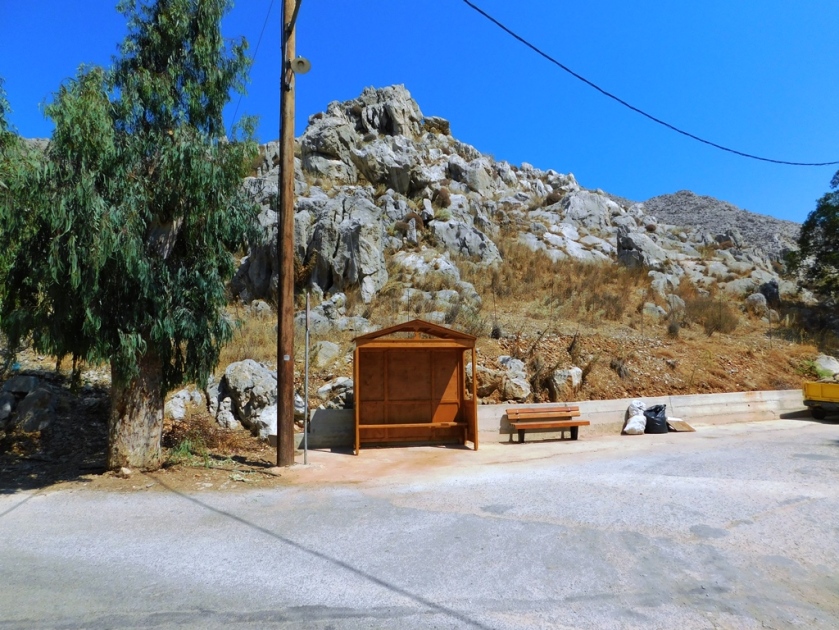
The bus is back, still running on a reduced winter schedule but much better than wading against the flow in the rain.
We have a few breezy partly cloudy days ahead and then the showers and next rainy spell is forecast to arrive on Monday night or Tuesday morning. As the Blue Star came in from Rhodes last night there should be fresh stuff in the shops this morning. Time to go foraging!
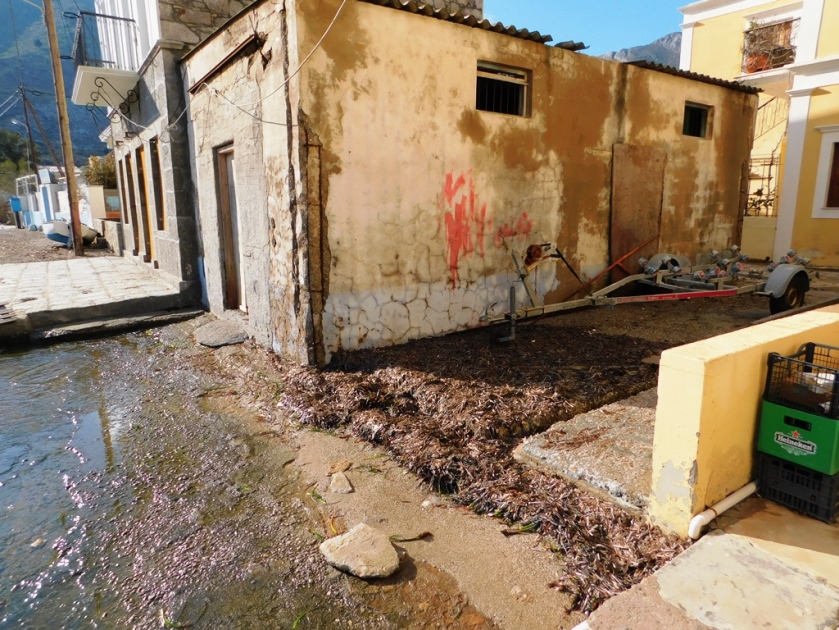
The cover photograph shows some of the sand and gravel that Tuesday night’s storm threw up along the waterfront road in Pedi. The small terracotta fragments are potsherds, fragments of ancient amphora and pithoi that have been smashed and polished by the sea over centuries.
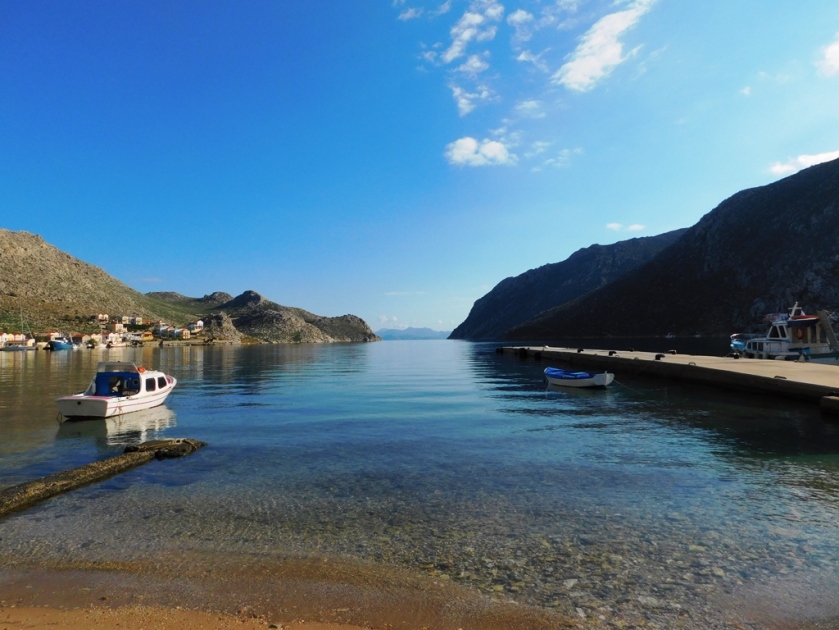
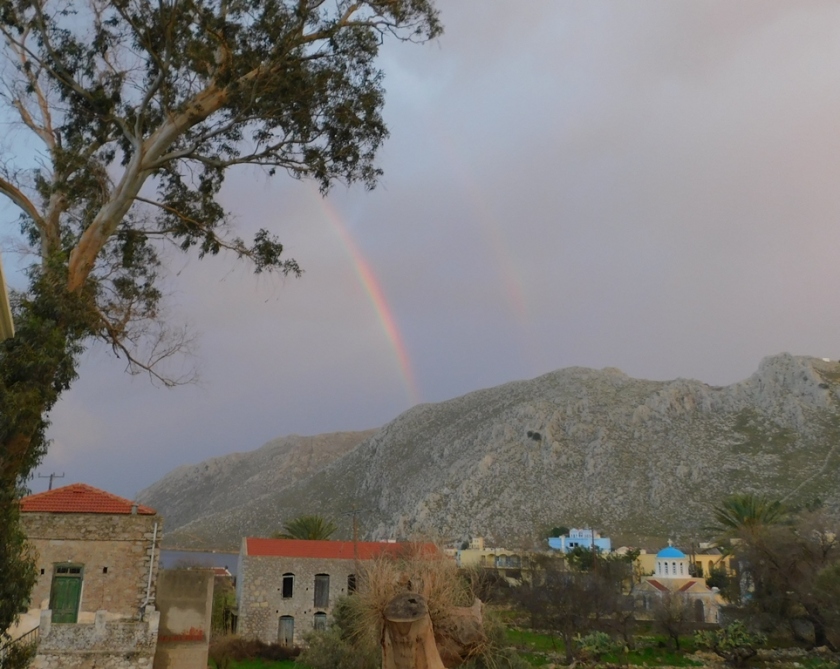
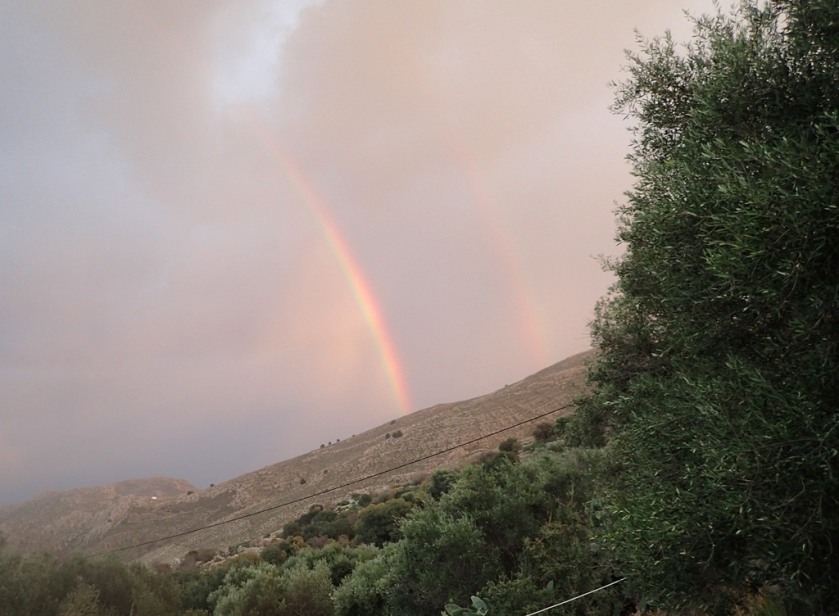
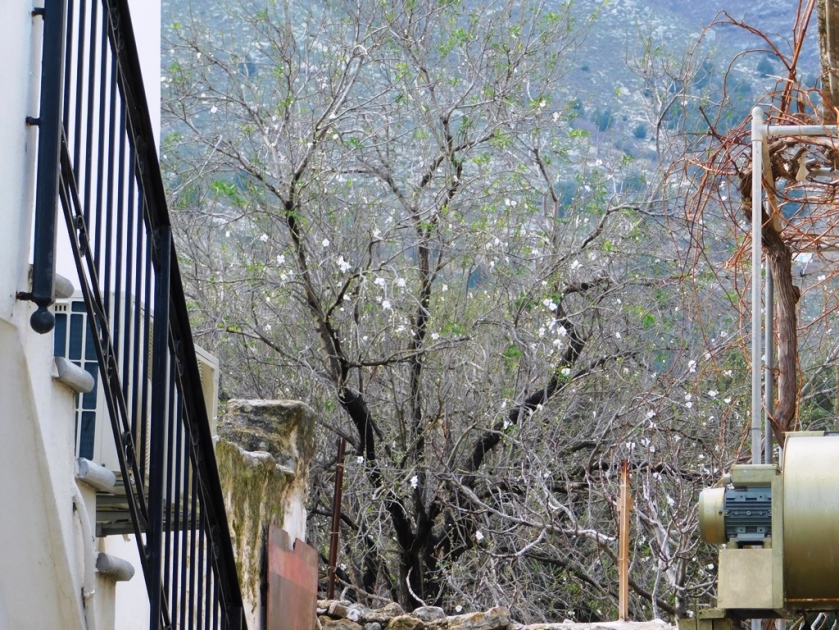
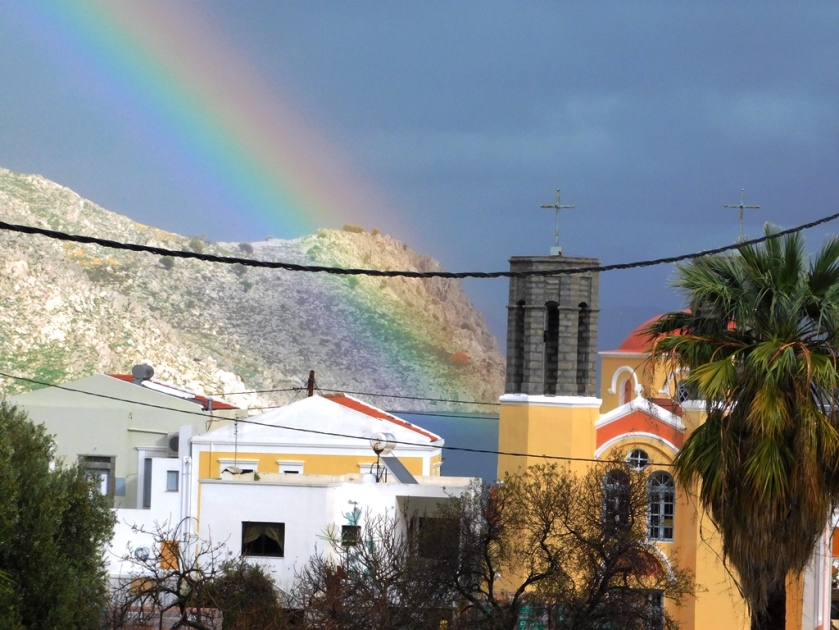
Winter in the Mediterranean may conjure up visions of mild temperatures, sunny days and pavement cafes. This can happen, if you are lucky, but most of the time, particularly in January and February, it can be very wet, extremely windy and, on occasion, even snowy.
This year the snow even crept to sea level in places like Corfu, Skopelos and Thessalonica. Rhodes had heavy snowfalls on the mountain tops and the Evzones found themselves strutting their stuff outside Syntagma, Athens, surrounded by the white stuff.
We have had ferry disruptions of one sort or another every week since December and the Best Western Plaza hotel in Rhodes is offering special rates for Symiots hanging about, waiting for boats and doctor’s appointments.
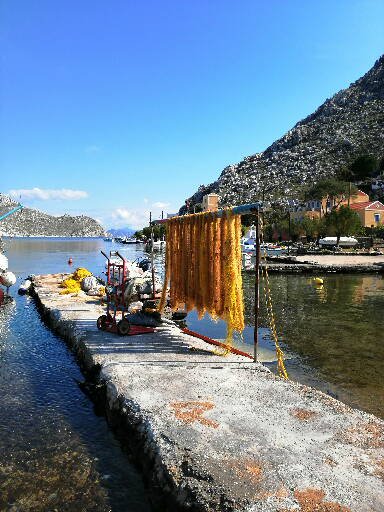
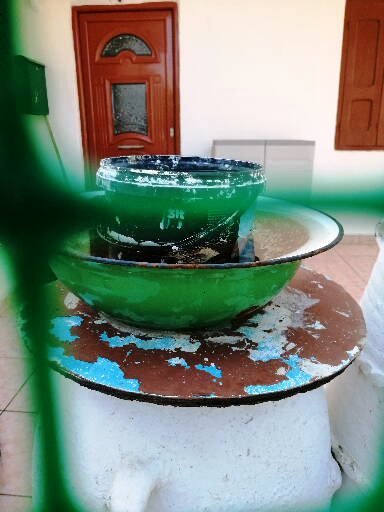
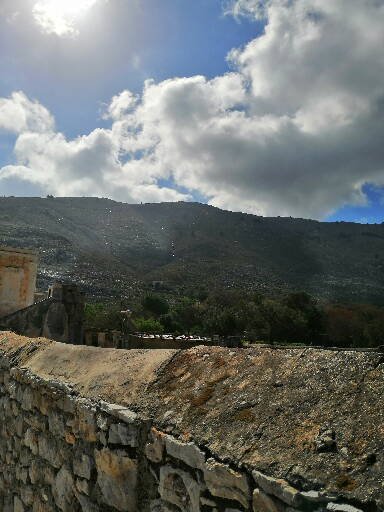
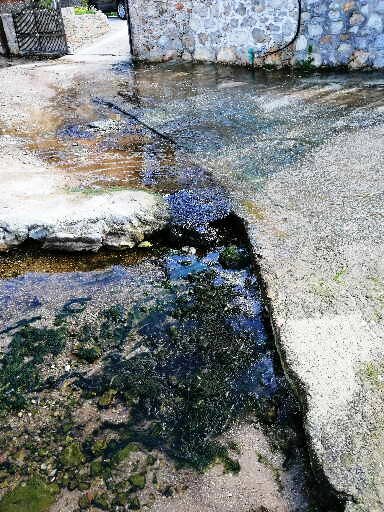
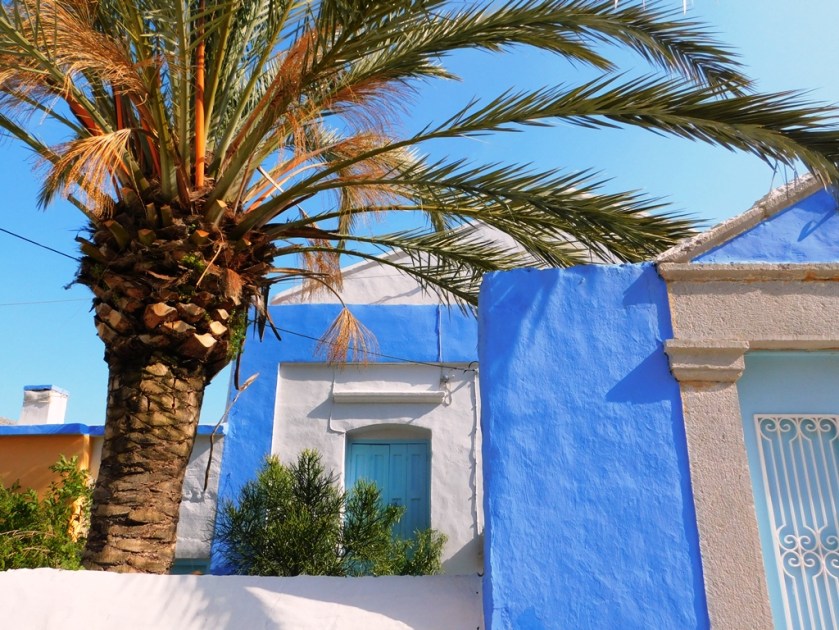
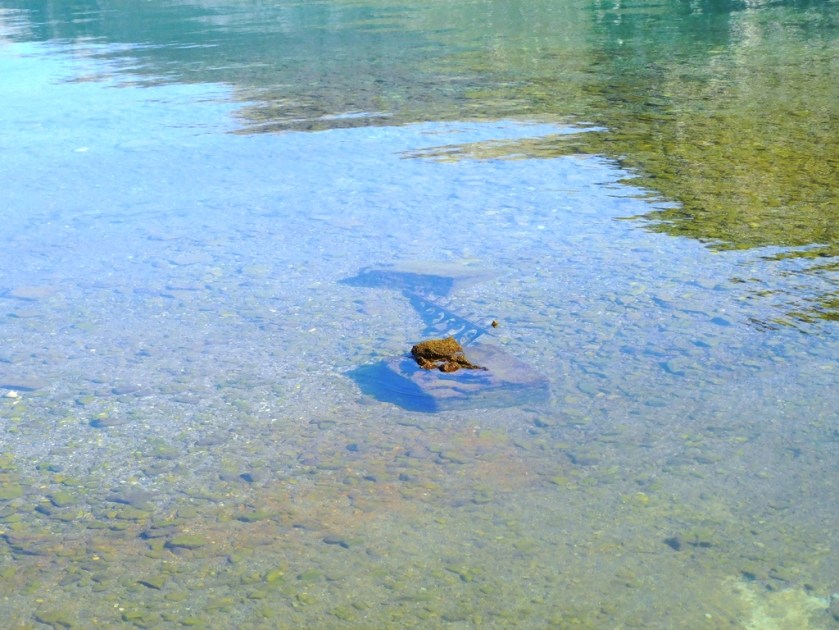
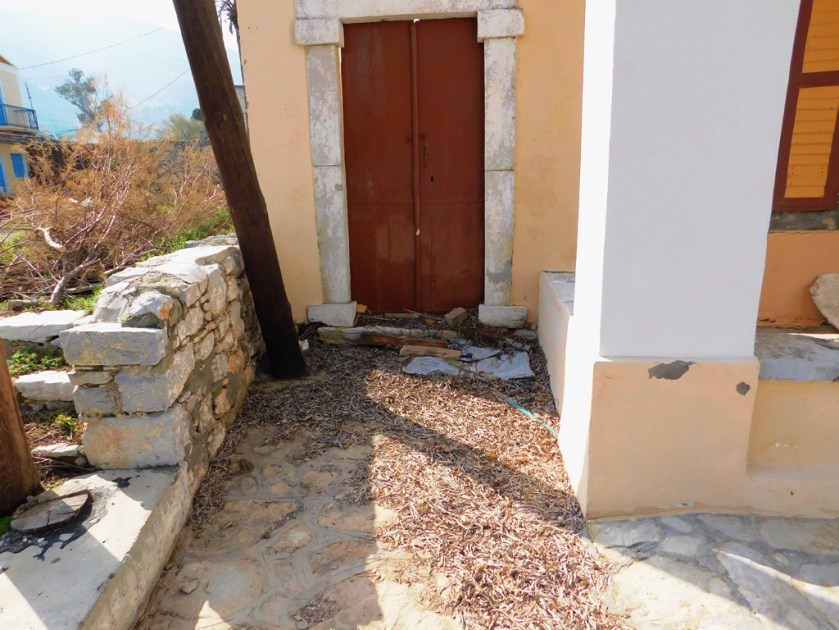
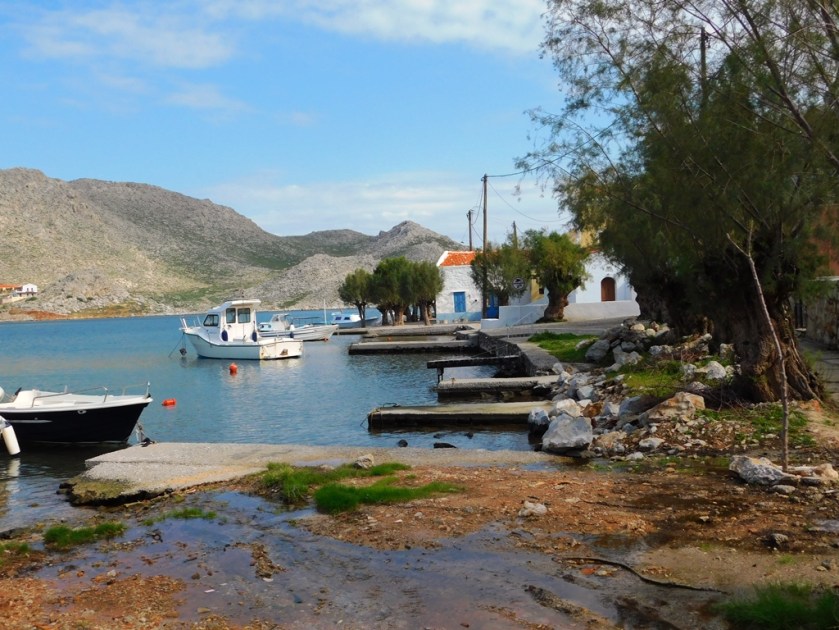
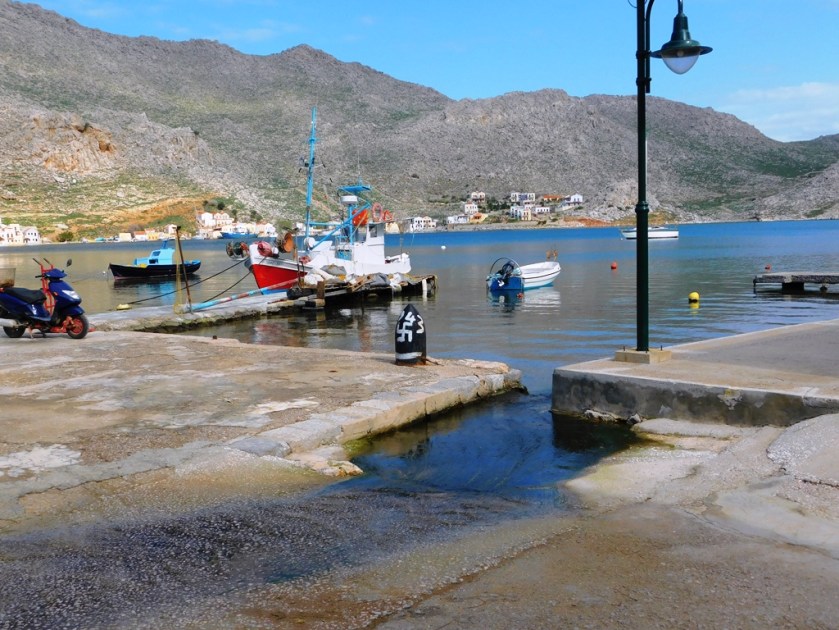
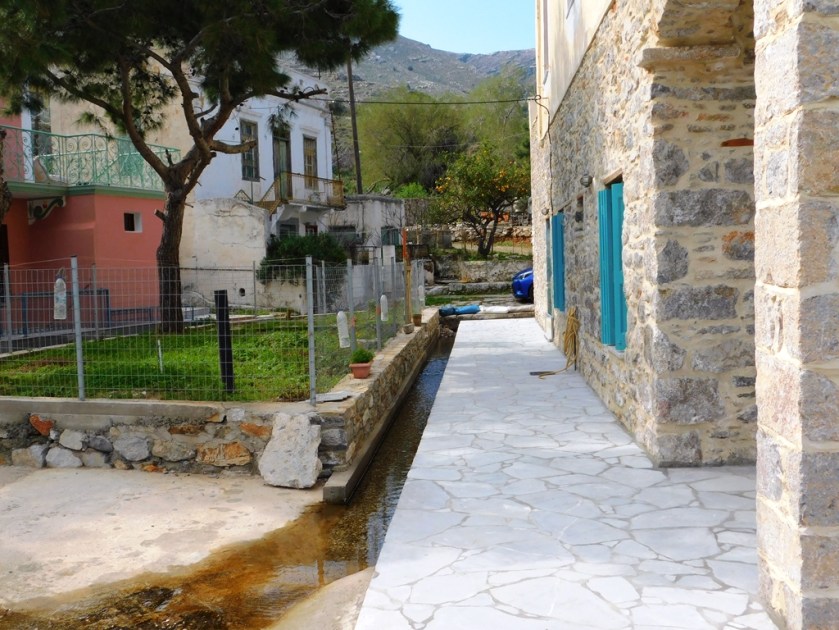
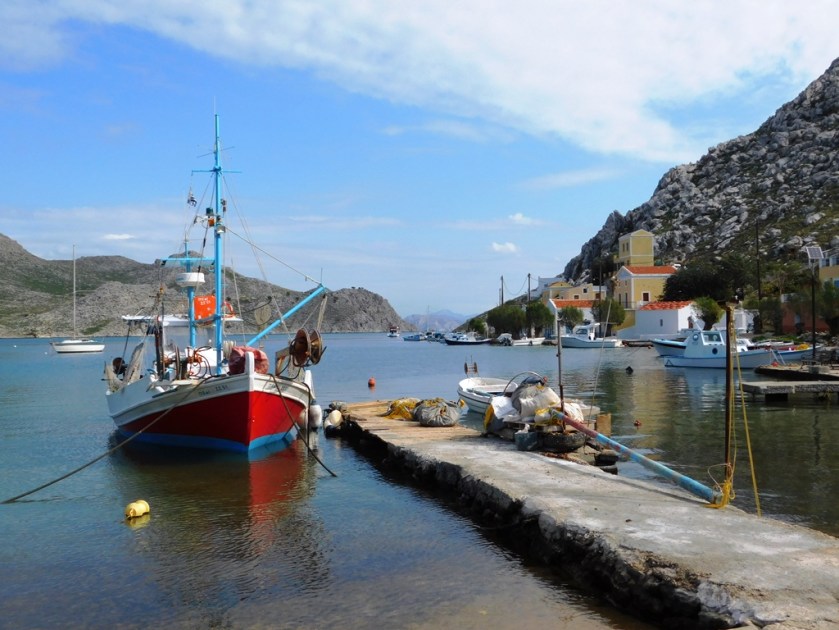
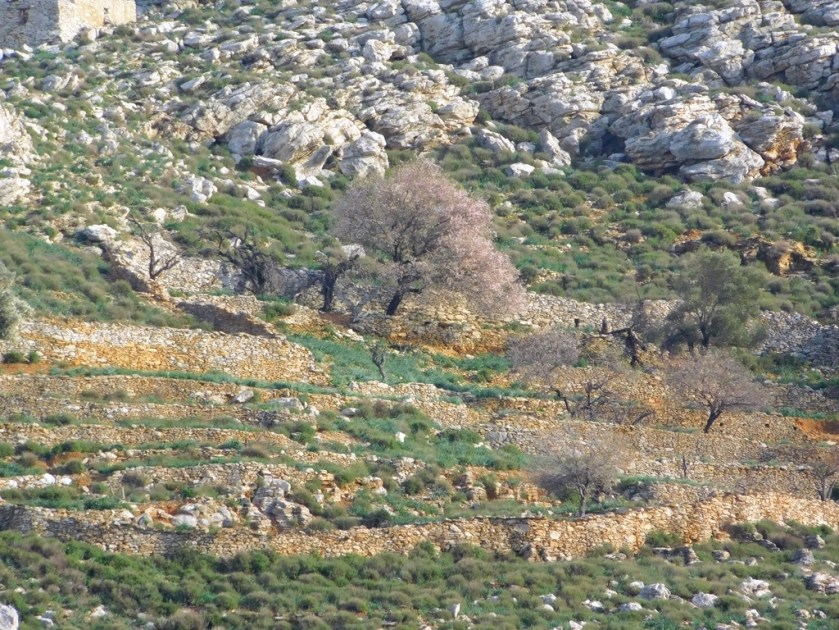
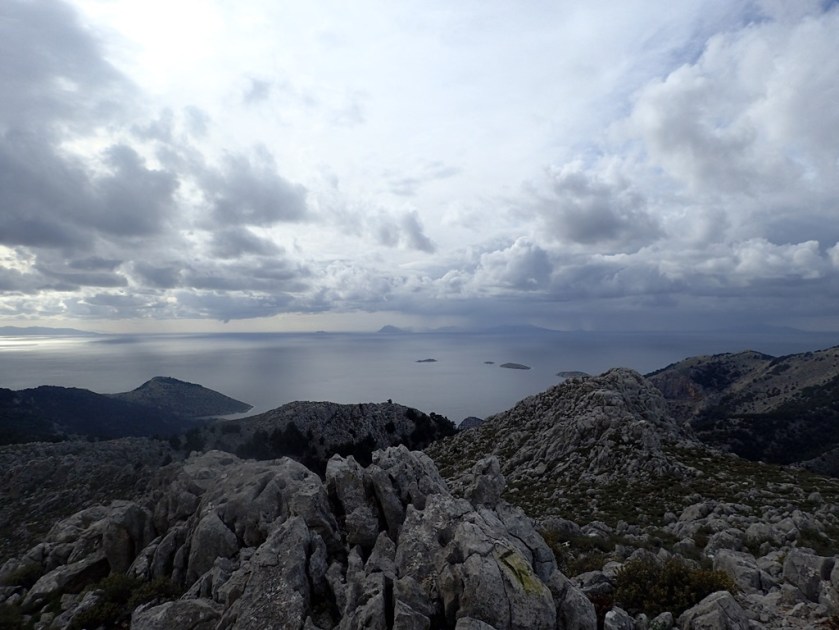
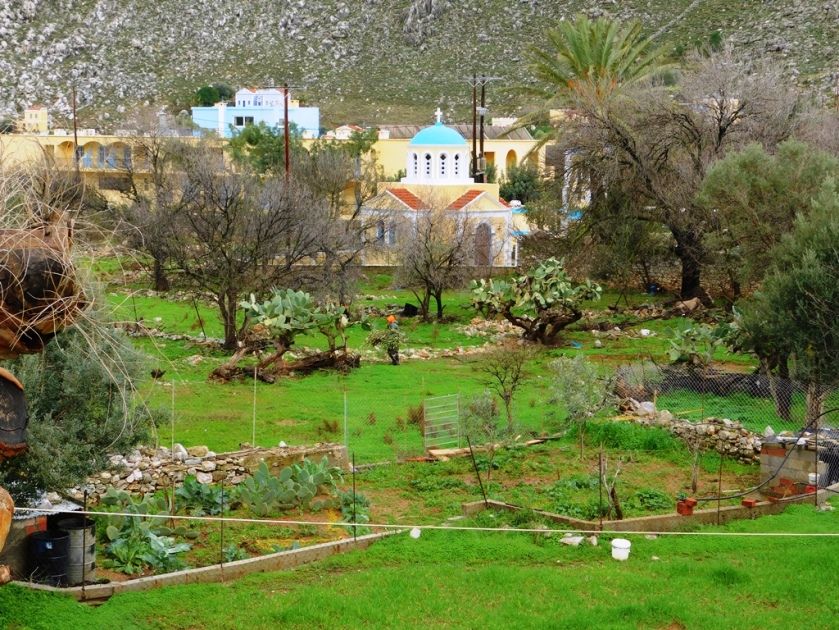
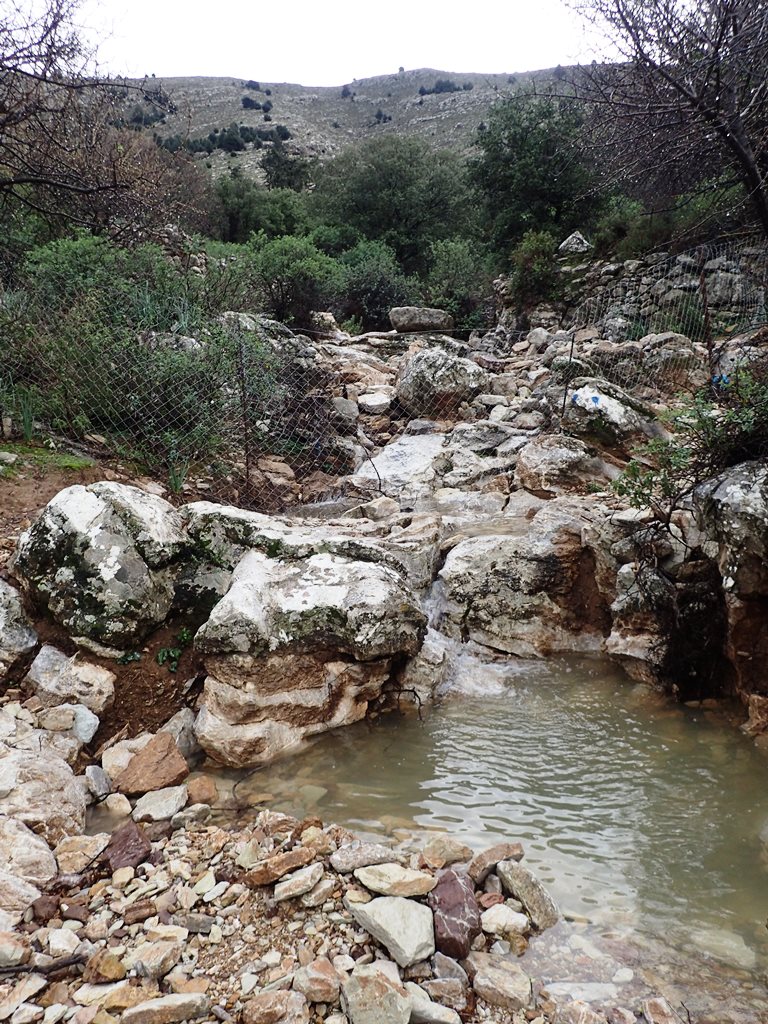
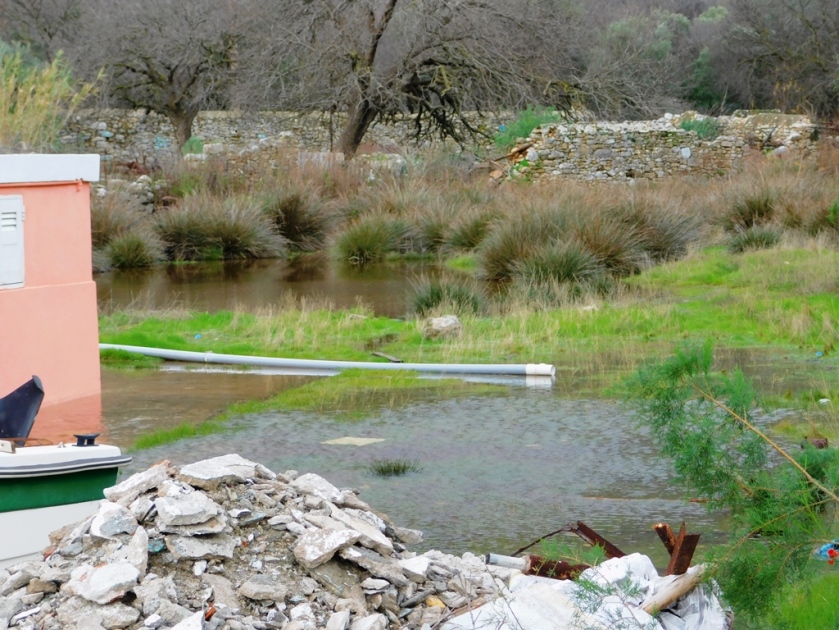
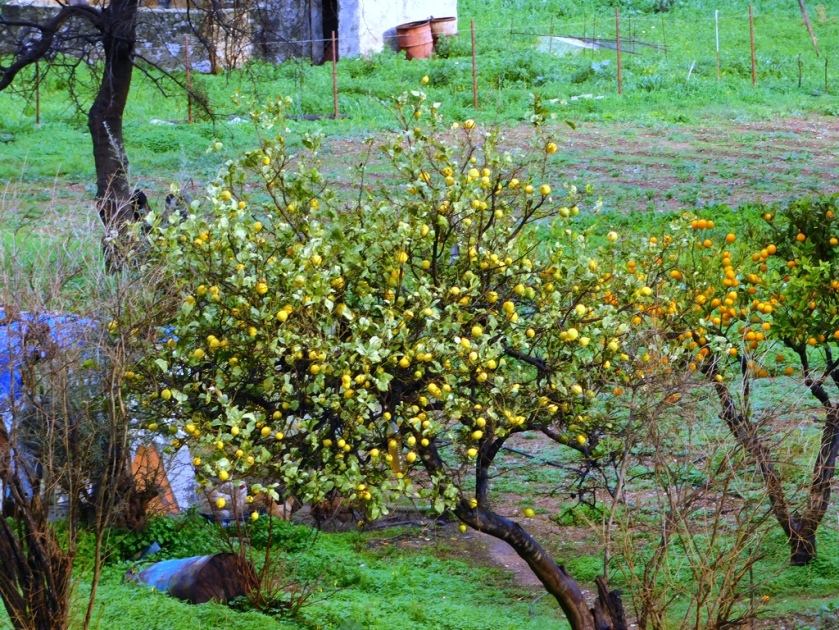
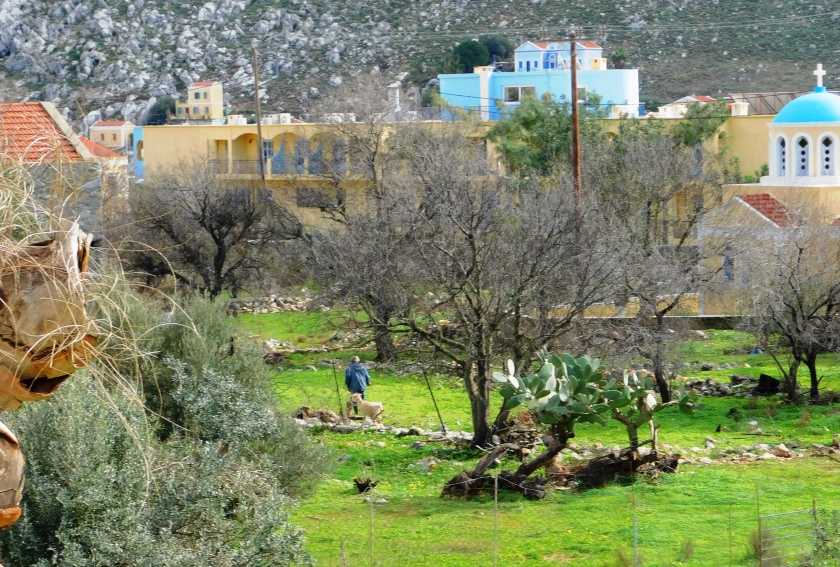
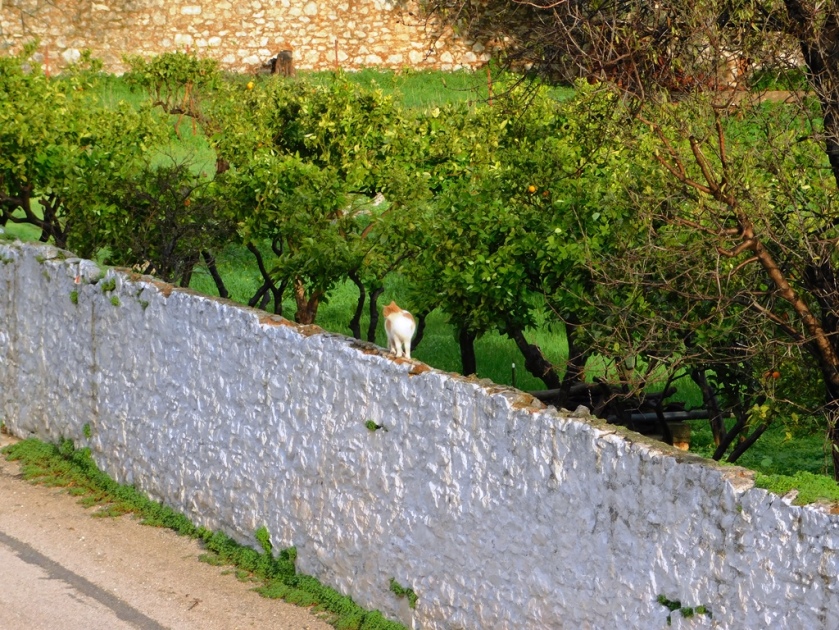
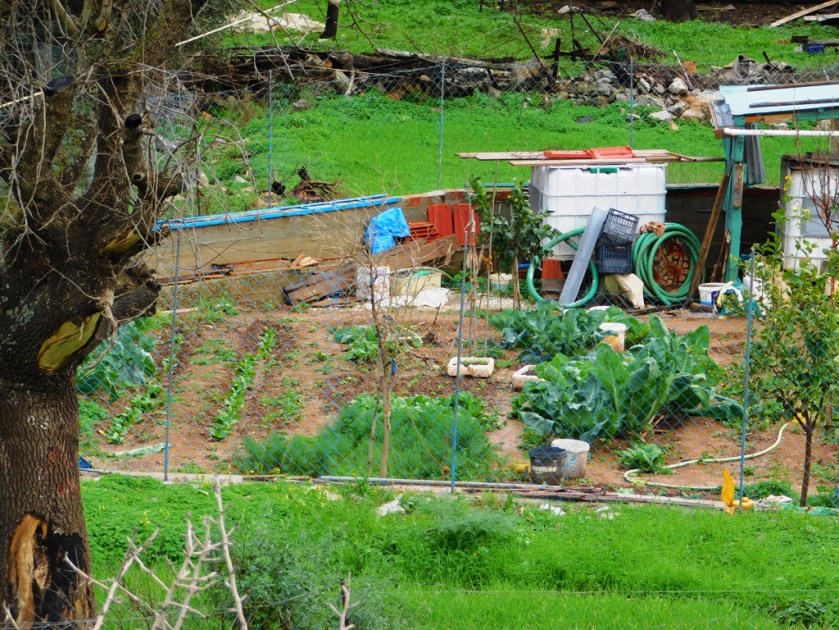
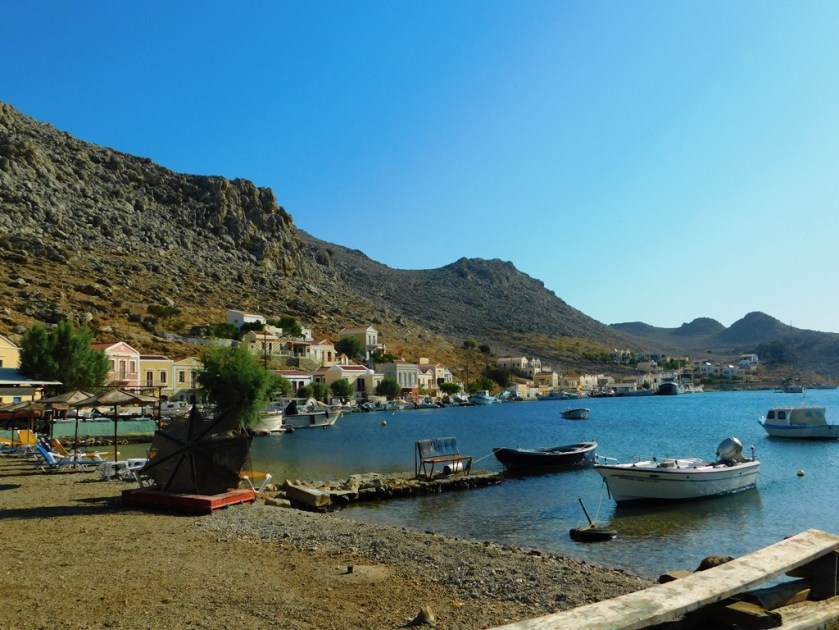
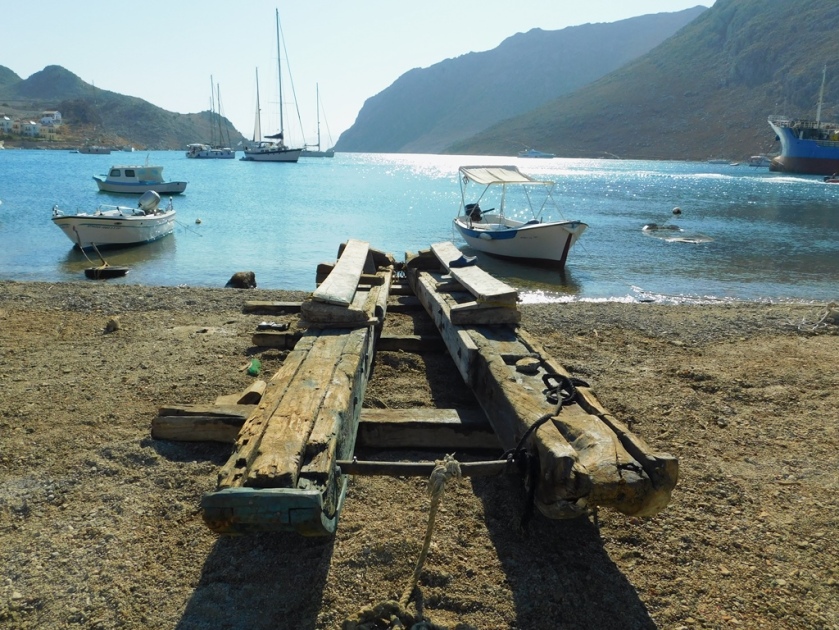
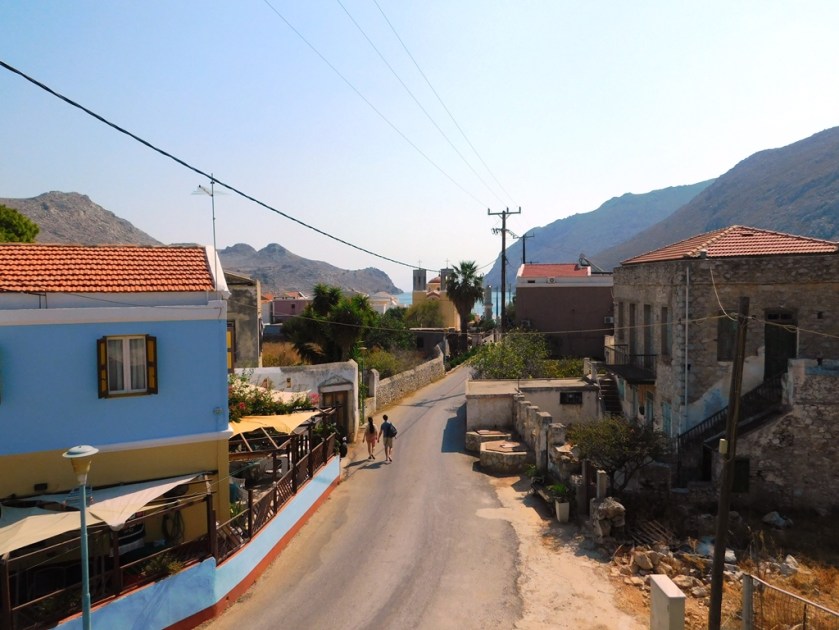
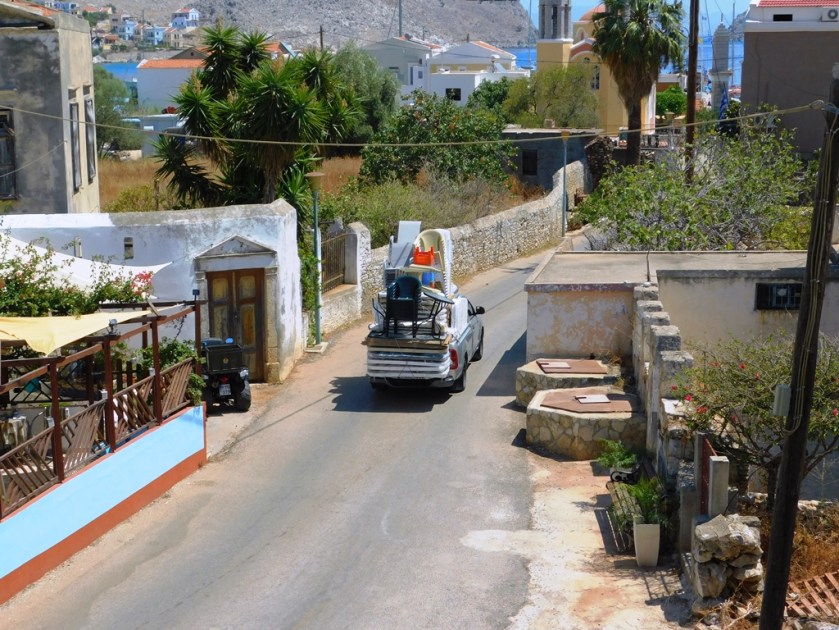
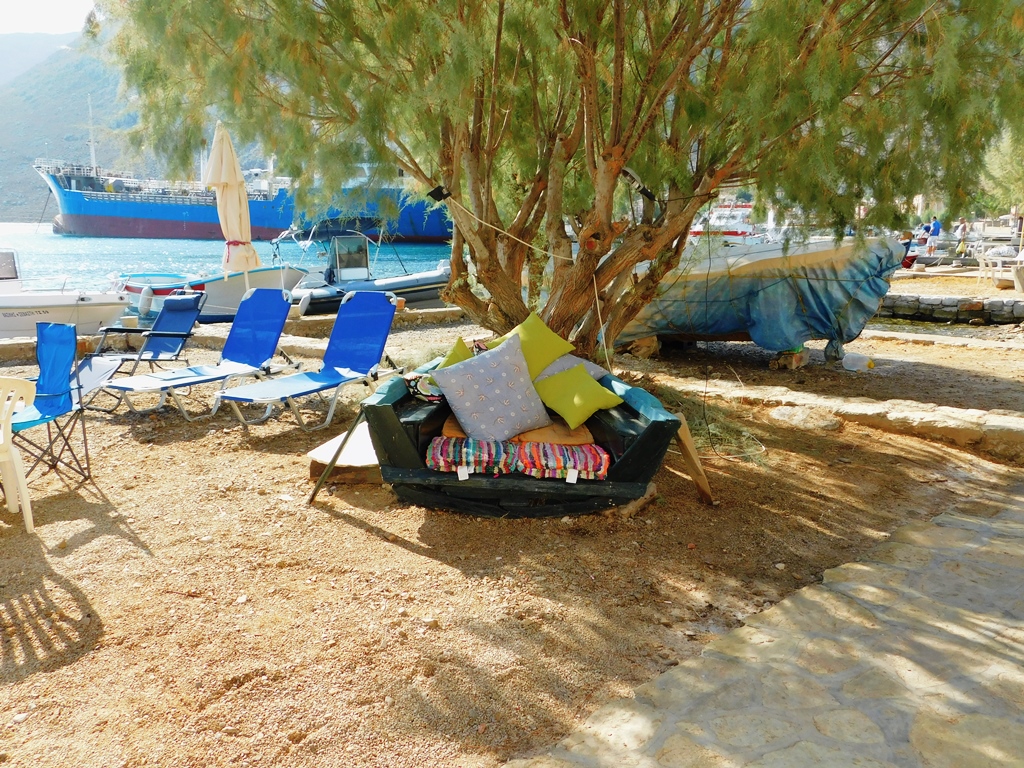
On a personal note, I have been out of circulation for many weeks, due to severe back problems. A strict regime of bed rest, exercises and medication under the supervision of an orthopaedic specialist in Rhodes seems to be working but I have to be very careful about how much time I spend sitting at the computer and have only recently been able to go for short walks, with the help of a stick. It is unfortunate that the Symi bus is out of circulation so I cannot venture further afield. At the moment my perambulations are strictly local but I can at least provide you with some photographs to give you an idea of what Pedi looks like in January.
Enjoy!
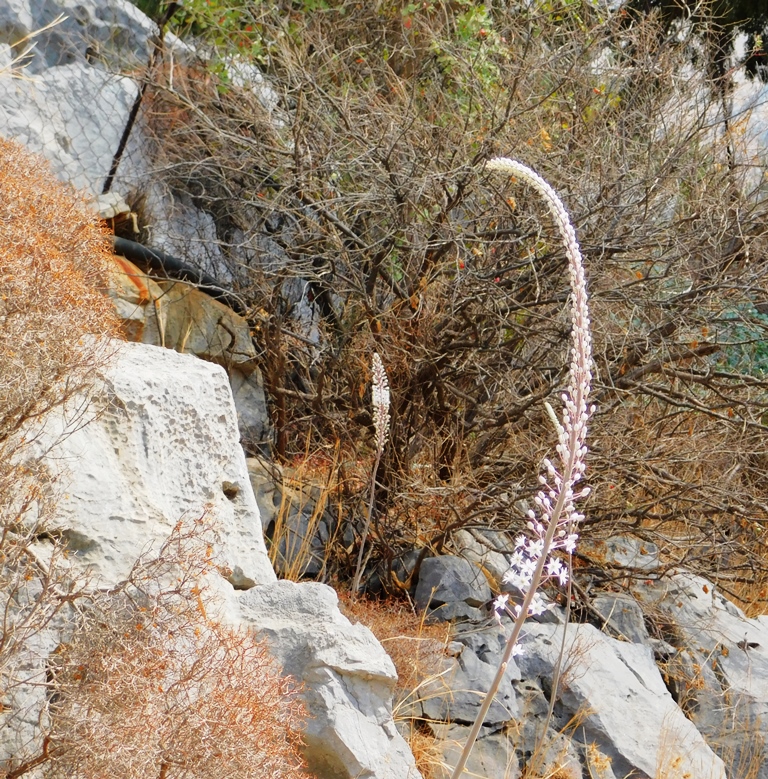
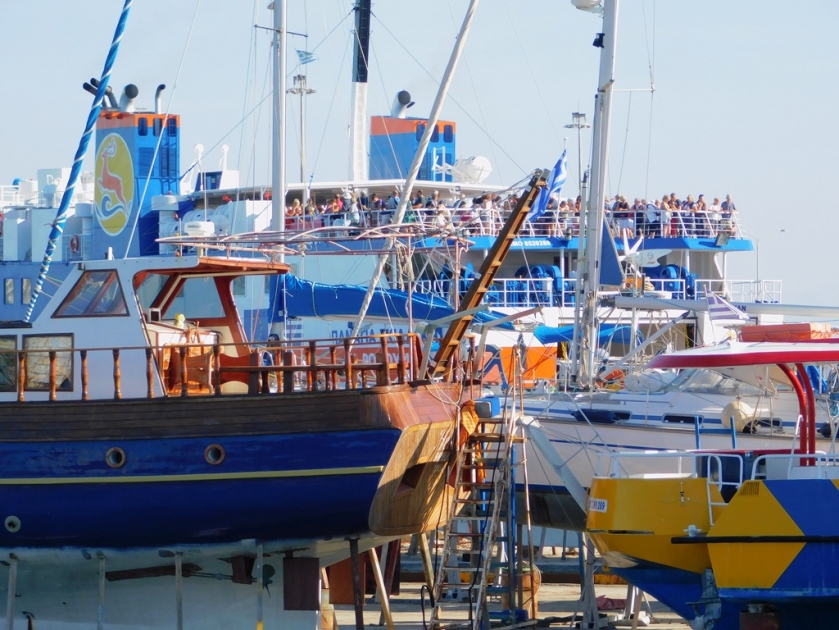
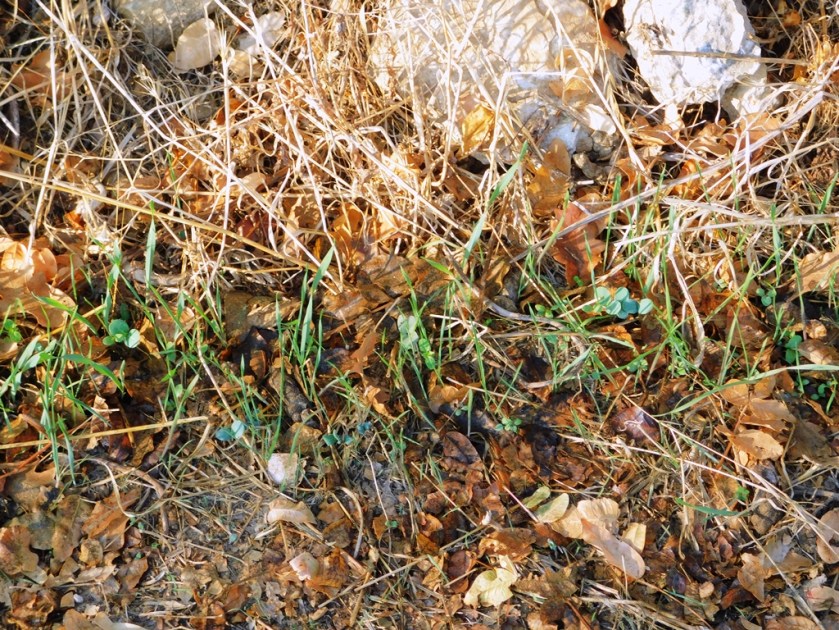
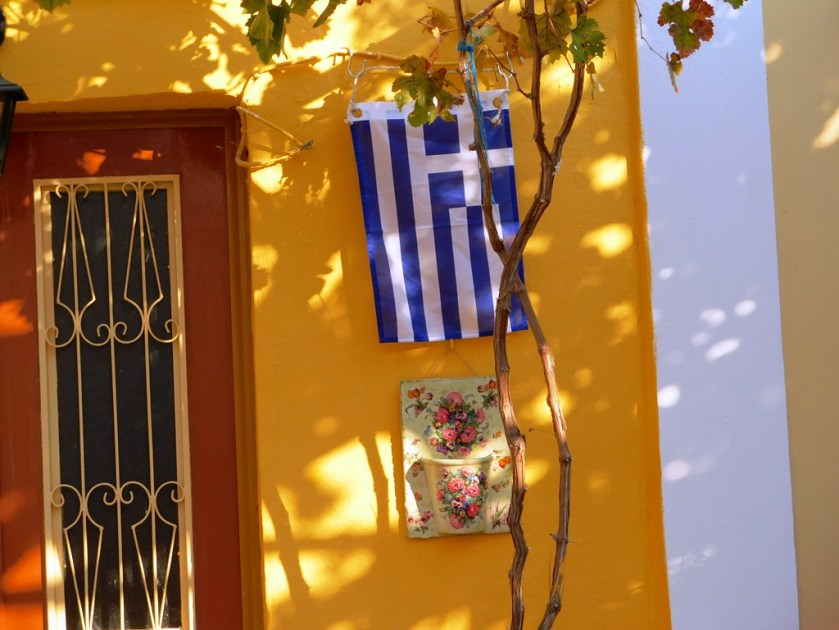
The weather is turning early this year. The first part of this week shipping was disrupted by northerly gales in the Northern and Central Aegean caused by Storm Xenophon. Now we are anxiously awaiting the arrival of the optimistically named Medicane Zorbas. This sounds like some sort of weird Greek pharmaceutical but it is actually a meteorological term for the Mediterranean version of a Category 1 Hurricane.

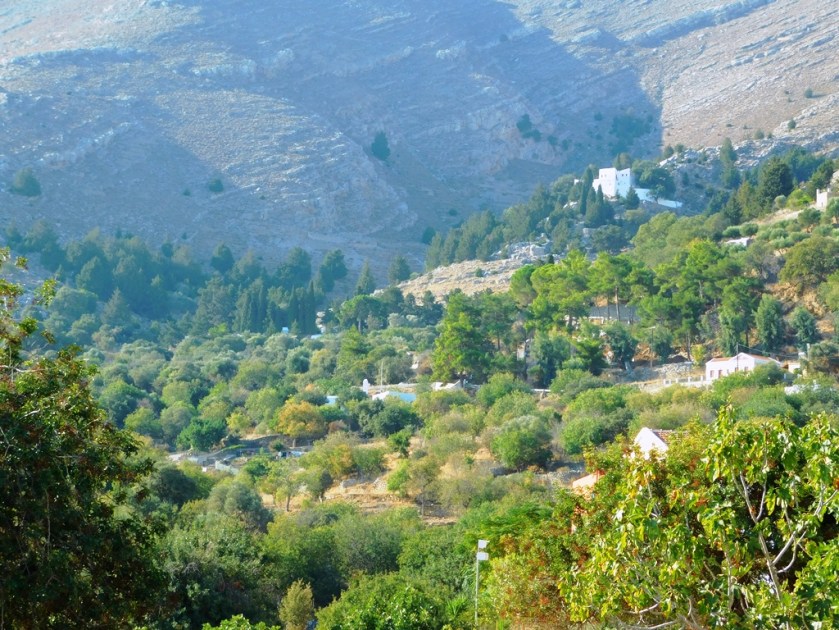
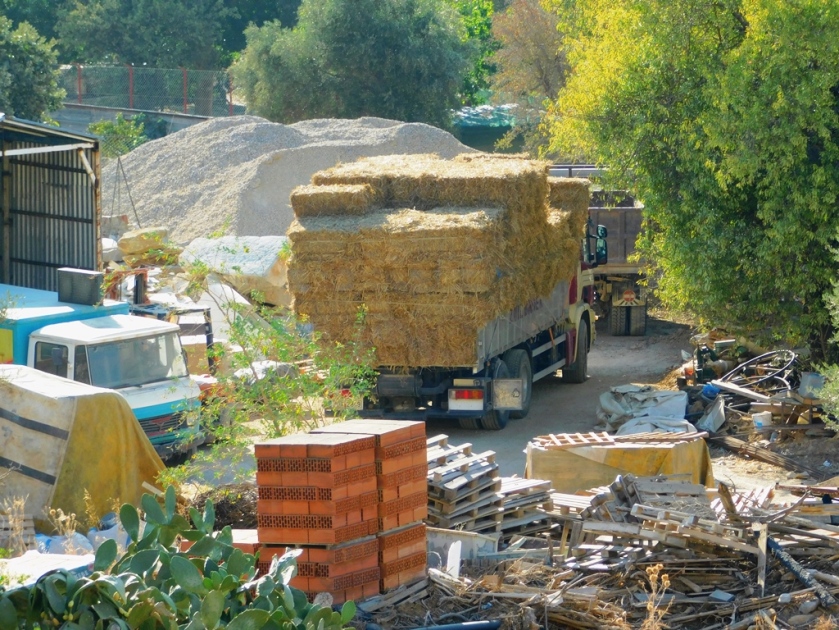
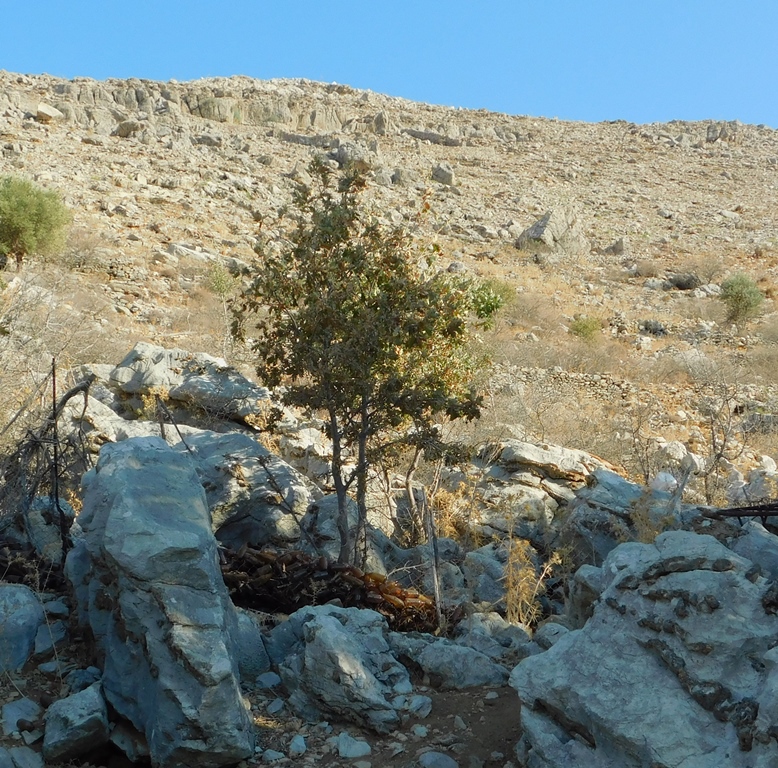
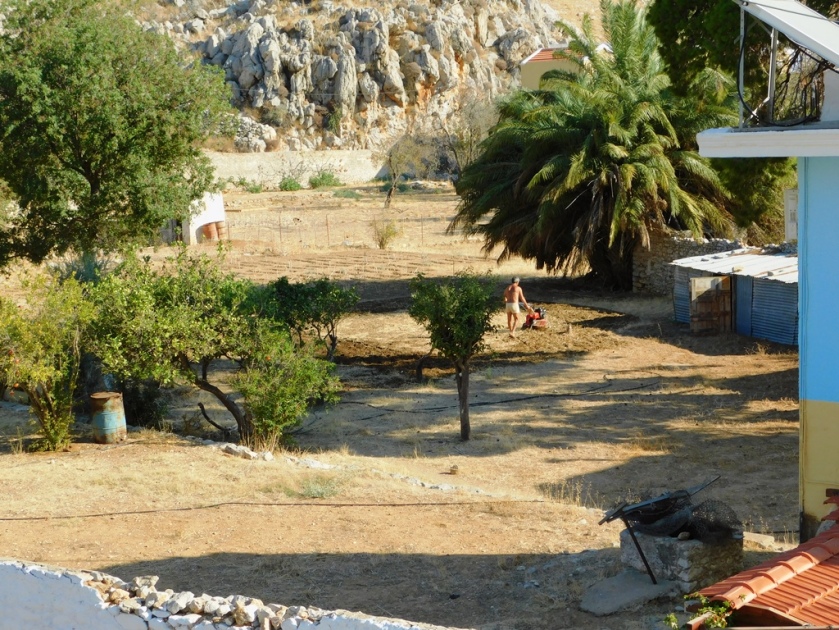
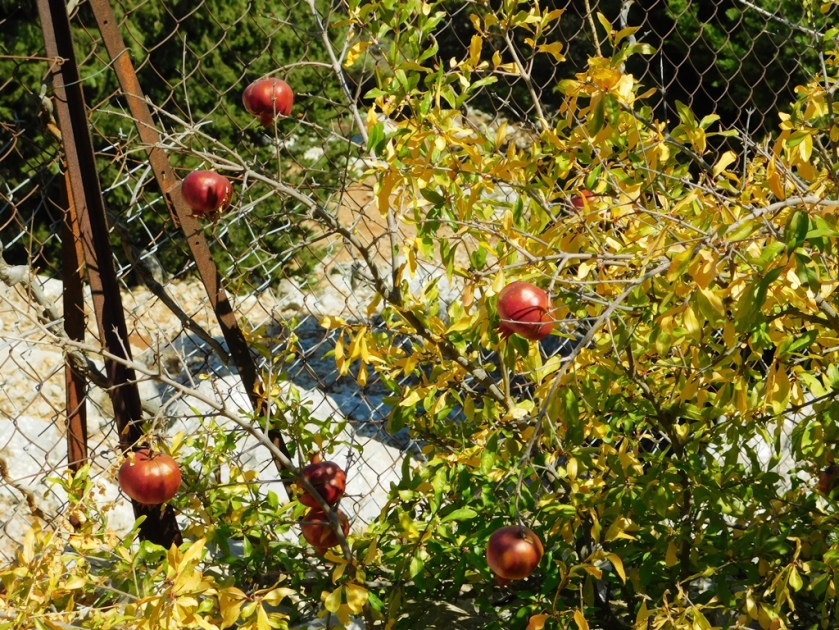
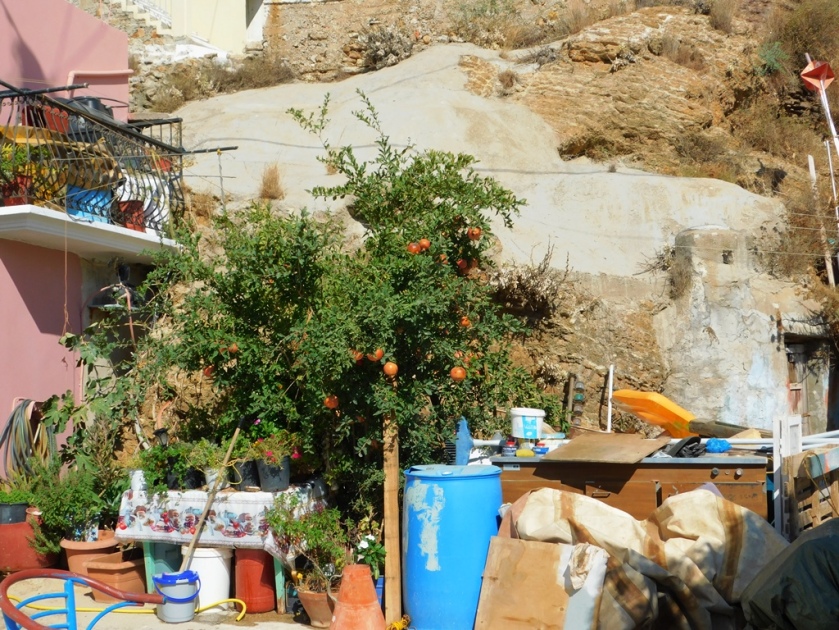
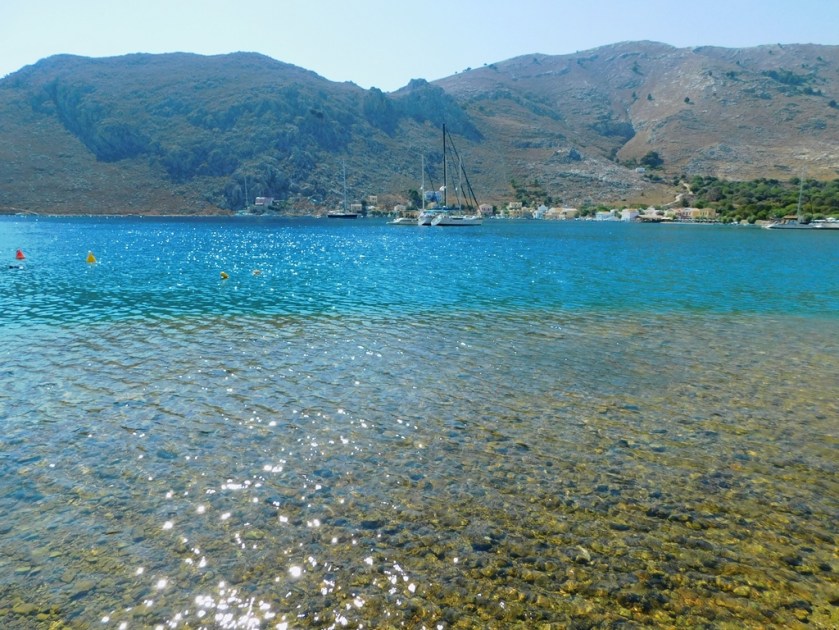
The weather is turning early this year. The first part of this week shipping was disrupted by northerly gales in the Northern and Central Aegean caused by Storm Xenophon. Now we are anxiously awaiting the arrival of the optimistically named Medicane Zorbas. This sounds like some sort of weird Greek pharmaceutical but it is actually a meteorological term for the Mediterranean version of a Category 1 Hurricane. The Mediterranean Sea is over-heating and feeding storms more commonly associated with the tropics. Zorbas is currently revolving over the Ionian and South Peloponnese. Crete is already feeling its effects in the form of storm surges and gale force winds. It is moving slowly towards us and the various computer projections seem undecided as to when and where it will hit the Eastern Aegean and Dodecanese. The bulletins are changing hourly, the shipping companies are struggling to keep up and travellers are worrying about planes, ferries, connections and insurance. Somehow the last weekend in September is behaving like the last week in October.
I had to go down to the harbour this morning to see the dentist. Symi may be a tiny island and somewhat inaccessible but we do have two excellent dentists and, despite the various ferry disruptions, my new bridge arrived in time to be fitted this morning. The harbour, Yialos, was very busy as some late season fancy yachts had decided that retail therapy was the answer on a grey blustery day. The water taxis and excursion boats aren’t running today due to the anticipated storms so late September visitors were also in the coffee shops and boutiques rather than sunning themselves outside the Pedi Beach Hotel. Workmen were banging in battens and balancing on ladders, rigging the plastic ‘tents’ that provide protection against the elements for those hospitality venues that stay open through the winter. This ritual is usually performed in late October or early November, not the last week in September.
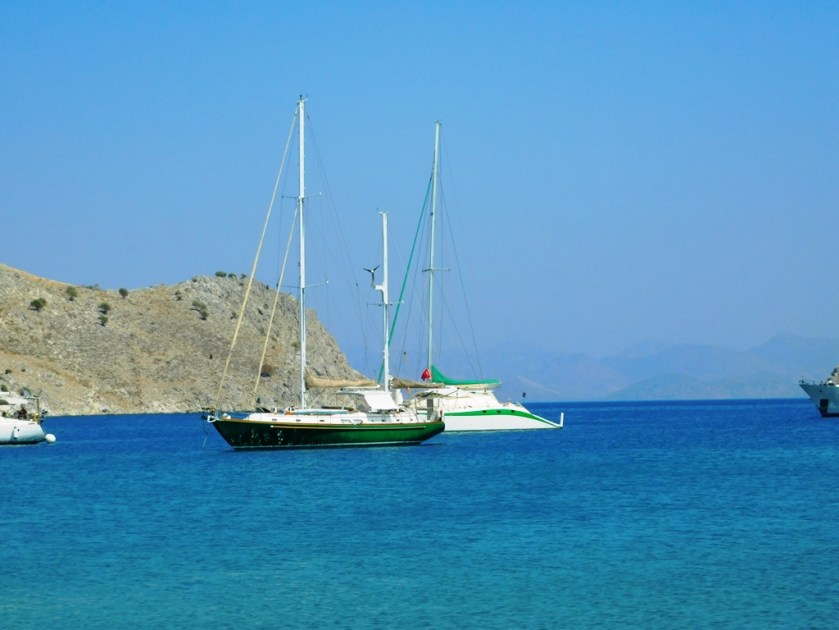
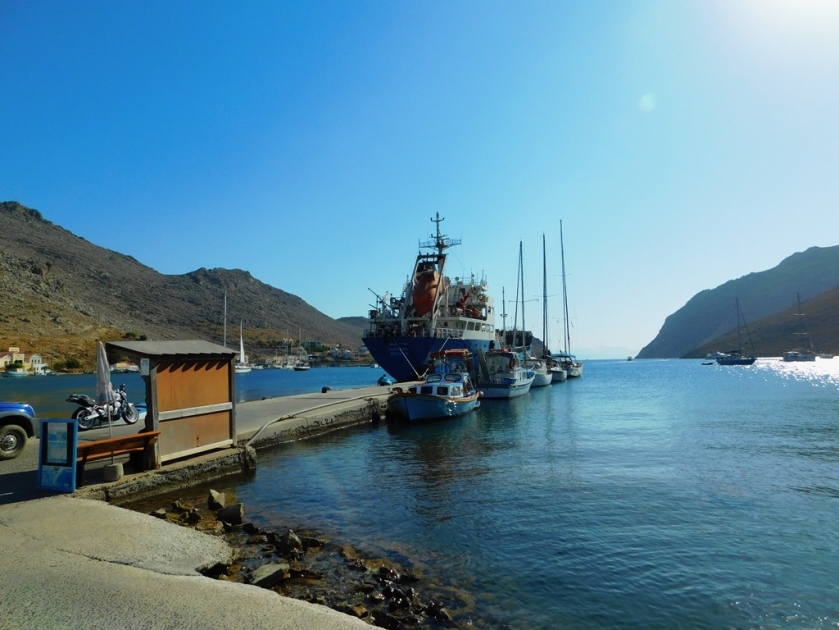
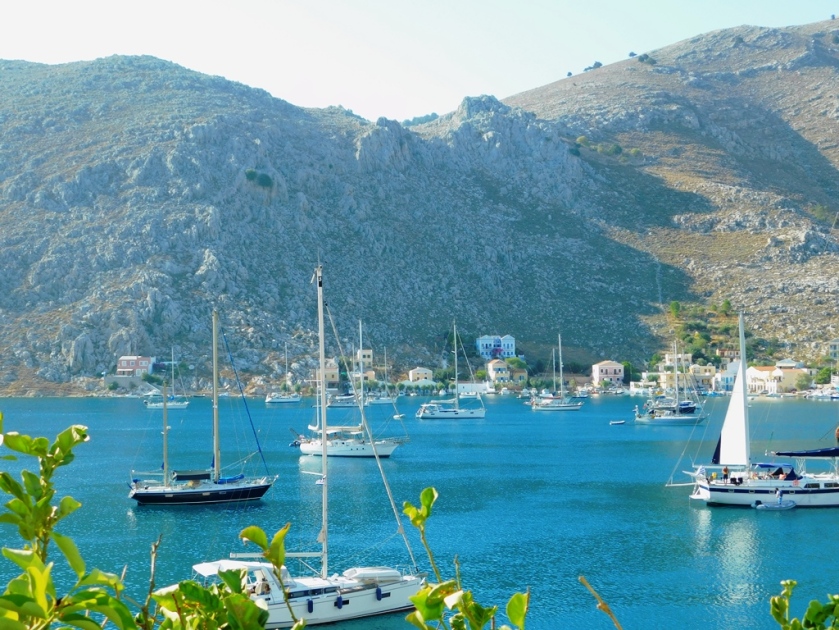
It is by no means cold. It is about 28 degrees today and very humid under a heavy blanket of cloud. The day has been punctuated by intermittent showers and the wind is starting to rise, buffeting the yachts at anchor in Pedi bay.
Have a good weekend – and I will let you know if Zorba came to visit or passed us by.
Regards,
Adriana
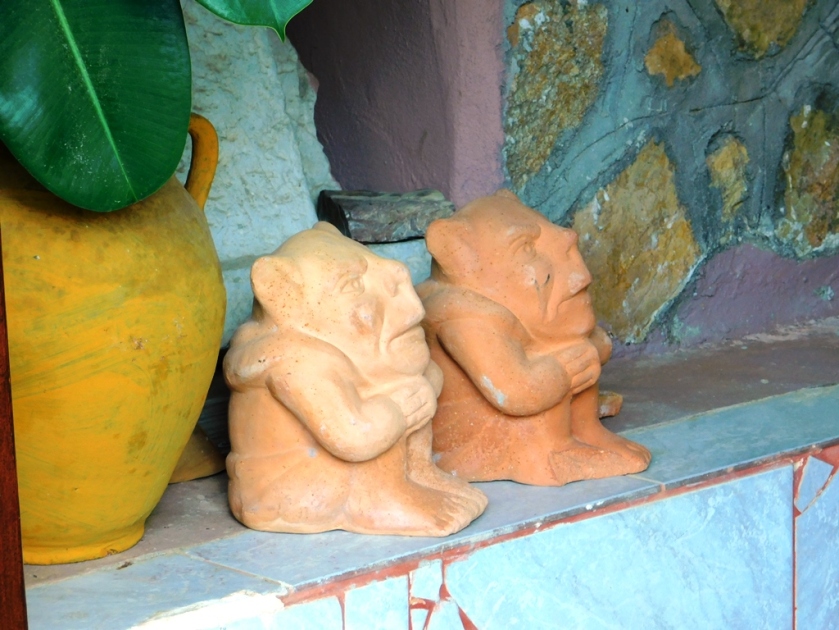
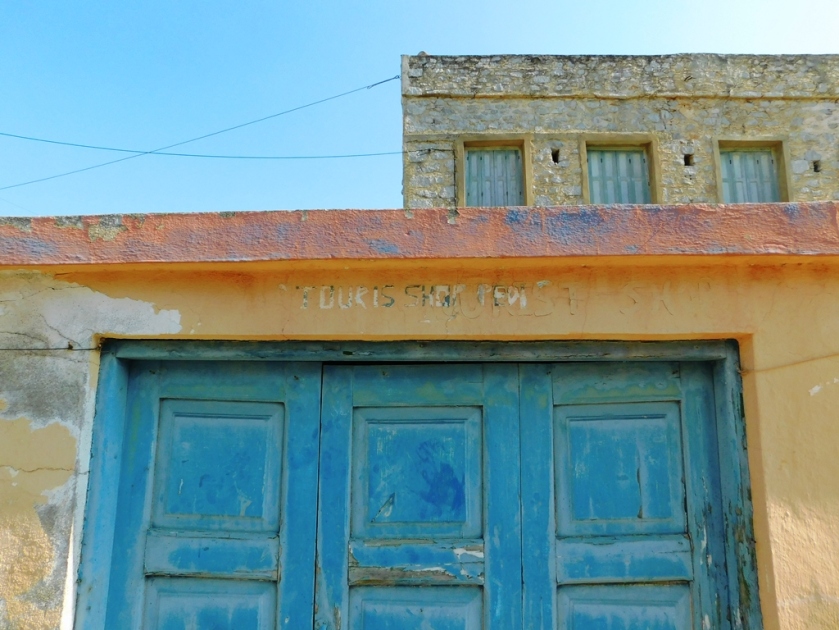
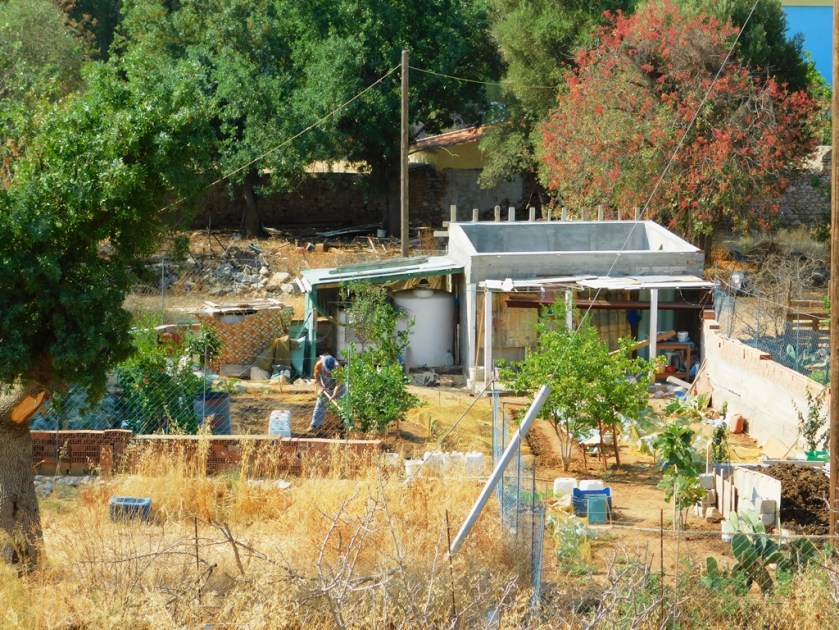
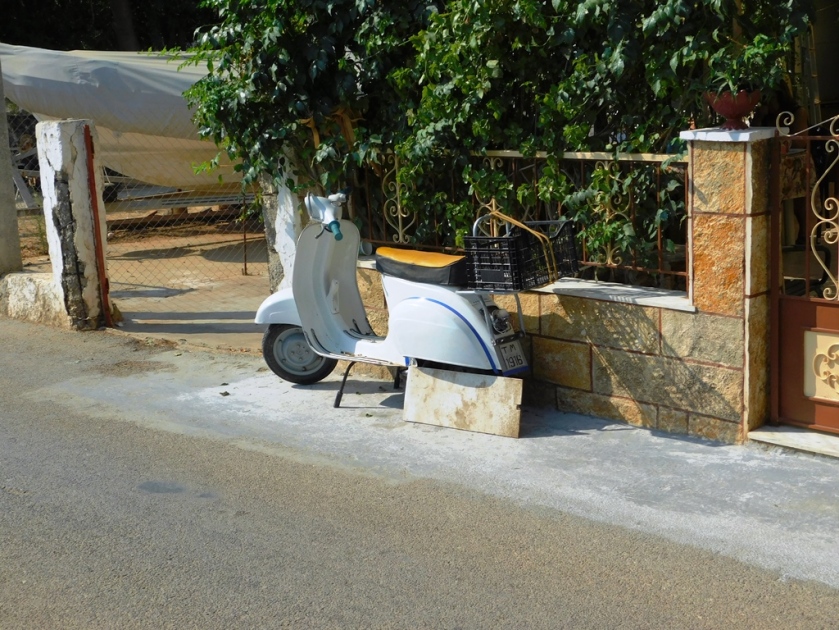
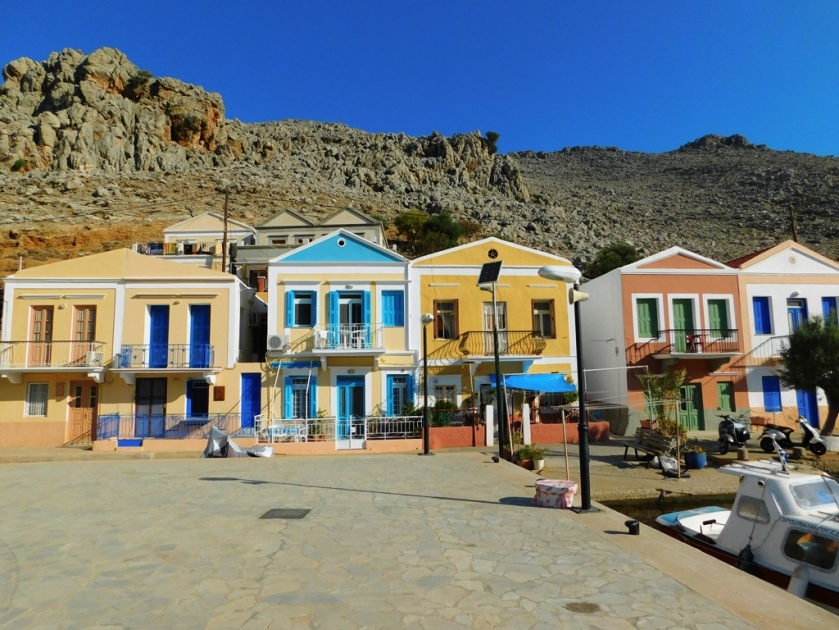
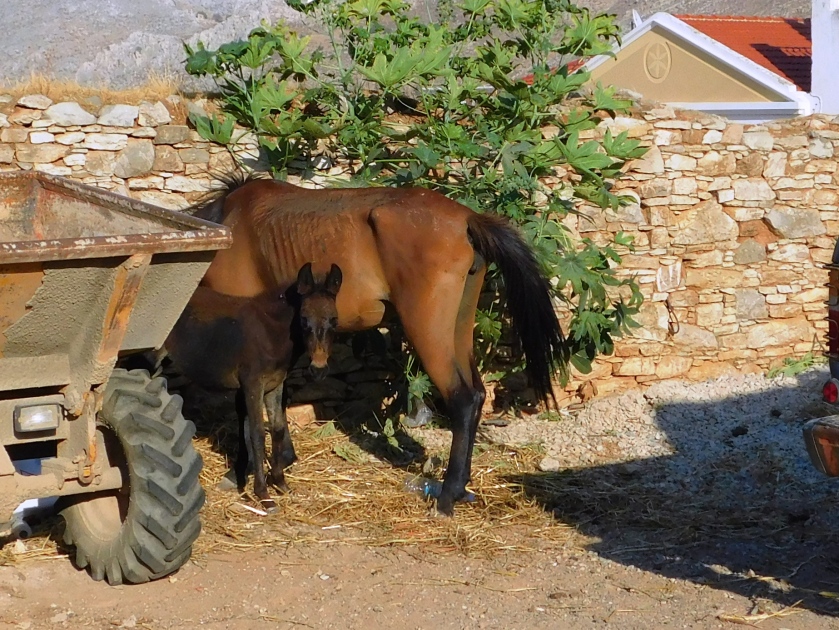
August is over. The crowds have gone. The children are preparing for another school year. Next week the ferry schedules change as Blue Star reverts to smaller boats on the Symi route. Good bye, Nissos Chios, Welcome Back, Patmos!
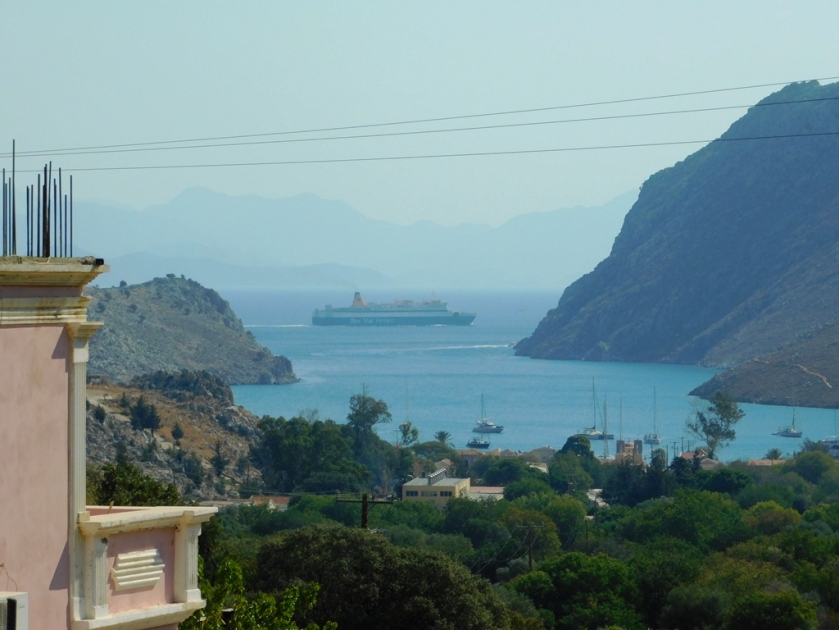
There is also far less traffic on the roads. British tourists tend to be apprehensive about hiring cars and driving on the ‘wrong’ side of the road. The holidaymakers from other parts of Greece and further afield who arrive with their cars on the Blue Star have also gone home again. If you do visit Symi in September it is well worth hiring a car for a day or so to explore the interior of the island and visit Kokkimides monastery, Roukoniotis monastery and Toli Bay. While there are organised mini-bus excursions if there are enough of you, having your own wheels gives you more freedom to stop and take photographs as well as linger at places that take your fancy. On a clear day you can see as far as Kos on one side and Rhodes on the other with the islands of Halki, Tilos and Nissyros also visible.
As the continent of Europe starts to cool to the north of us, so has the breeze that blows down the Aegean, bringing welcome relief from the searing temperatures of the Symi summer. It is still around 30 degrees at midday but after days in the forties, 30 seems quite mild. Nights are cooling off too. We plugged our boiler in for hot water yesterday for the first time since May. Not quite time to dig out the duvet and woolly jumpers just yet though. That doesn’t happen until early November!
Have a good weekend.
Regards,
Adriana
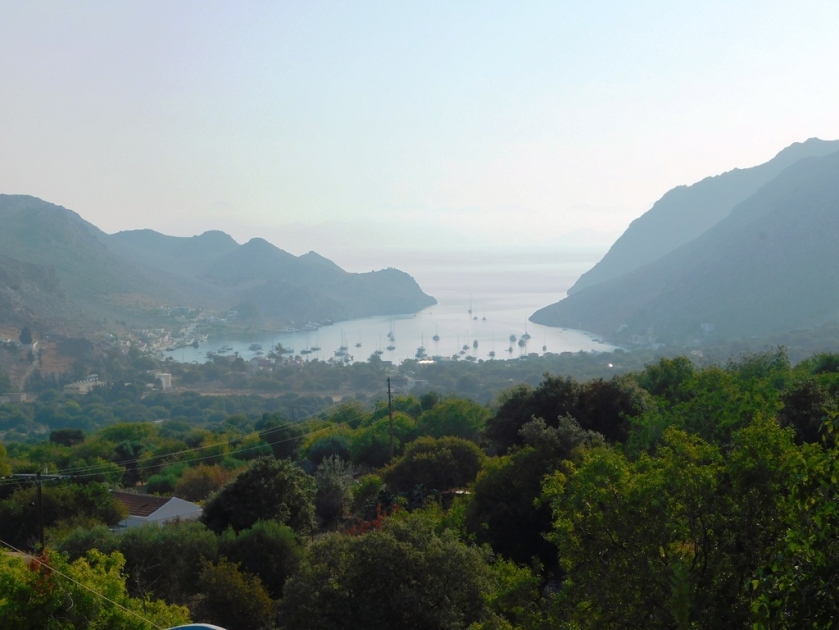
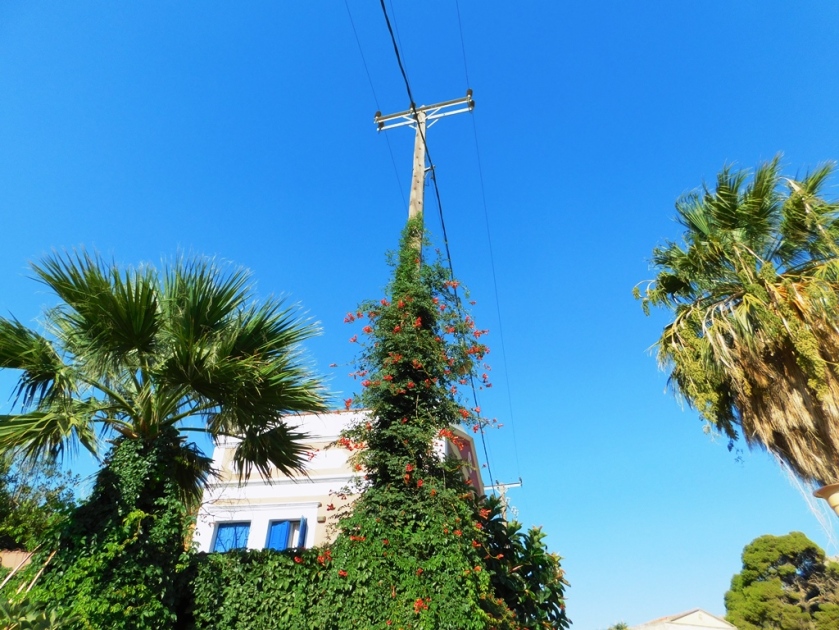
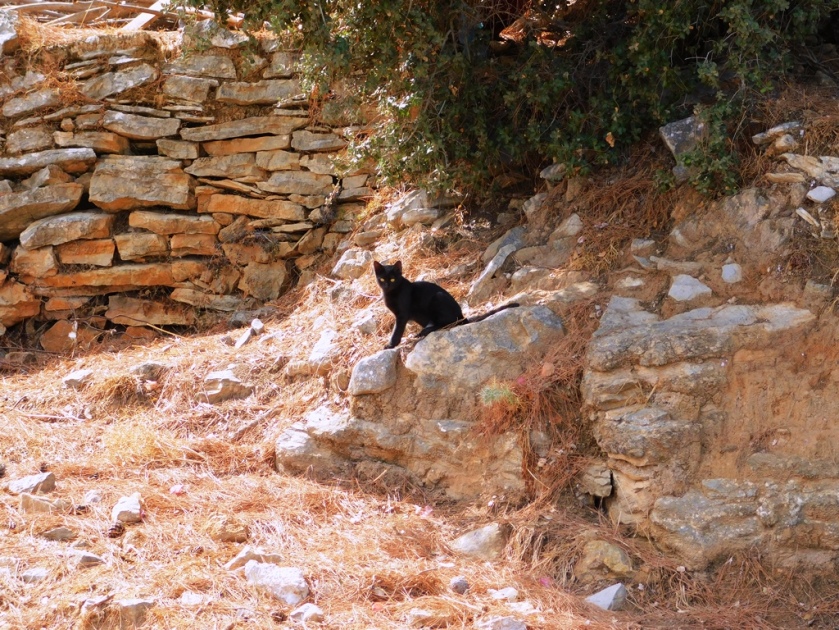
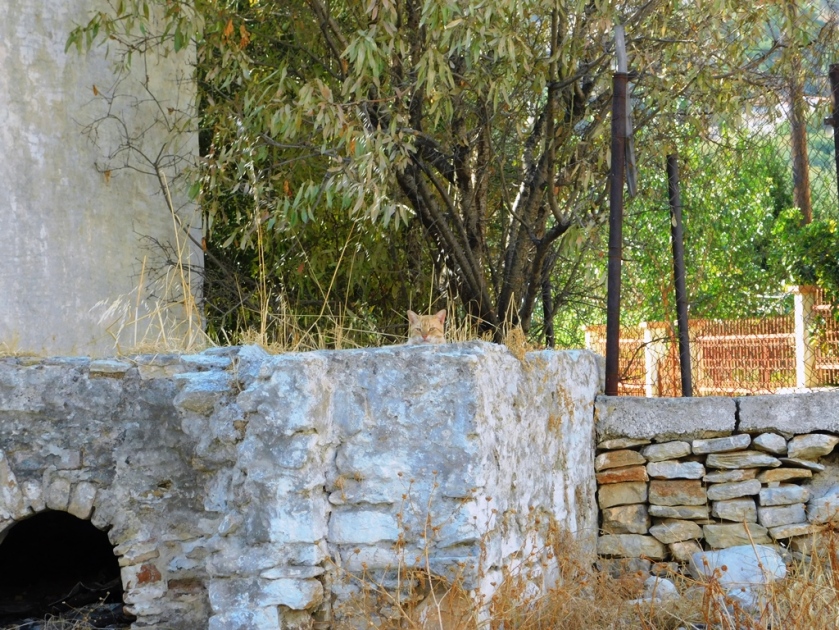
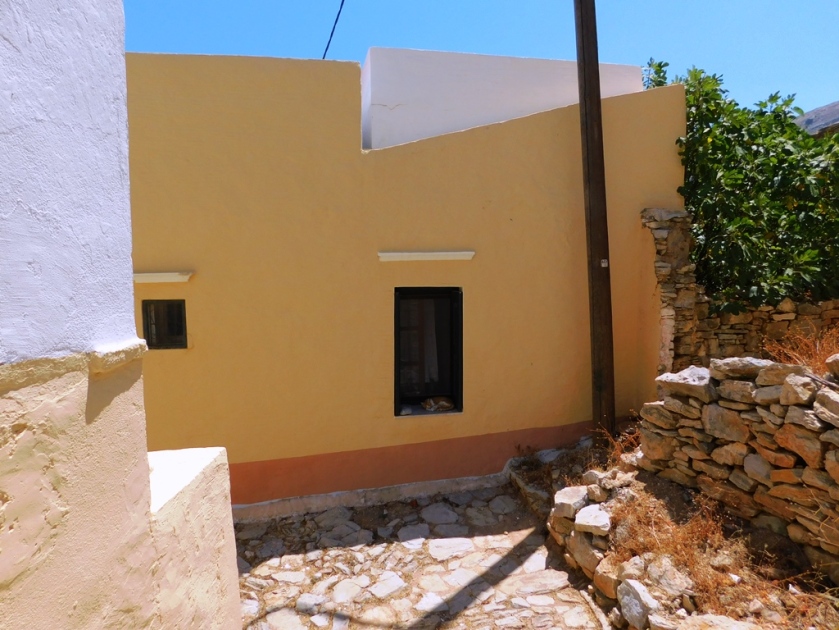
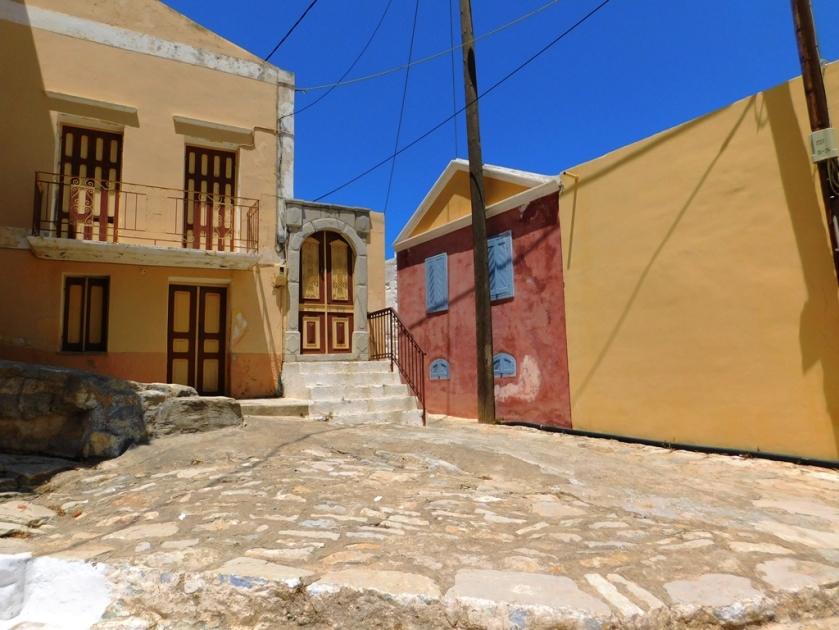
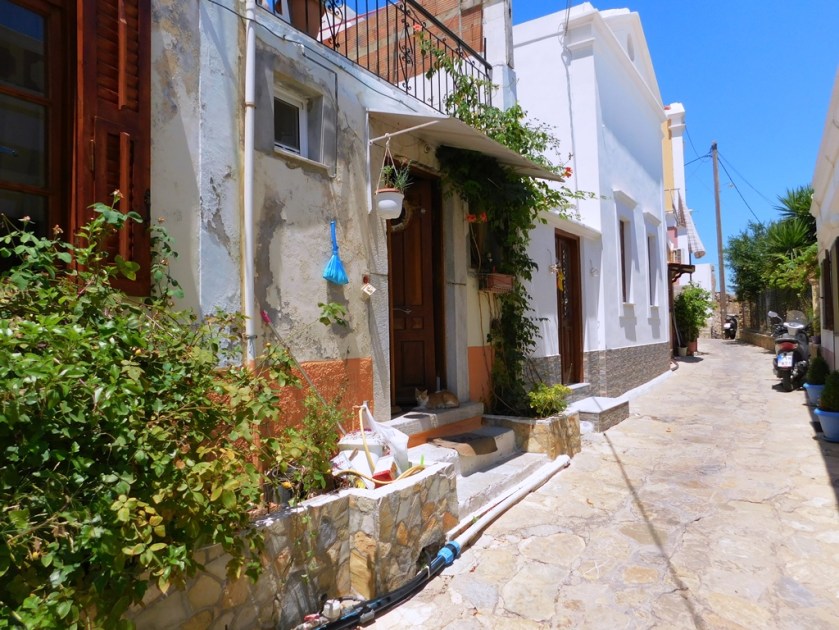
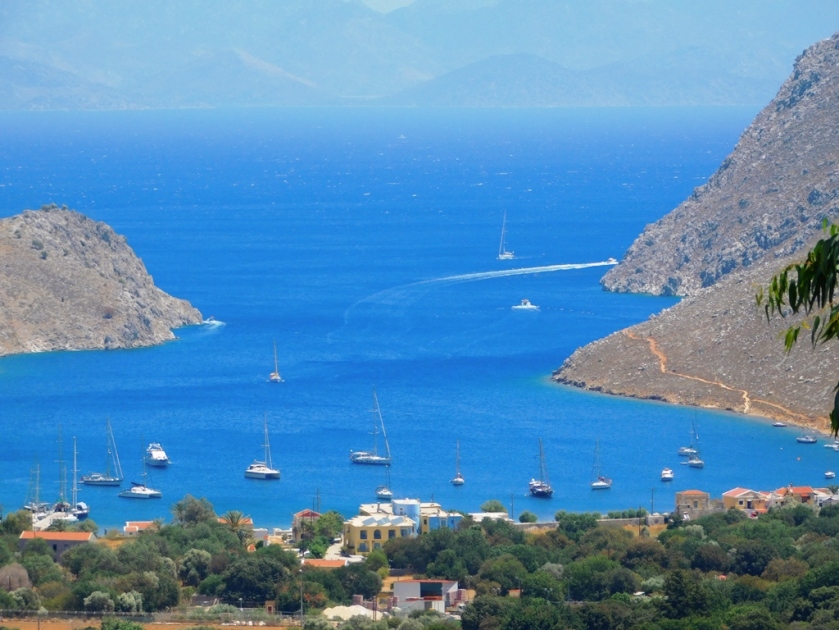
Chorio cats, views from the top and other Sunday musings from Adriana on Symi.


 Adriana Shum