An Island of Cats

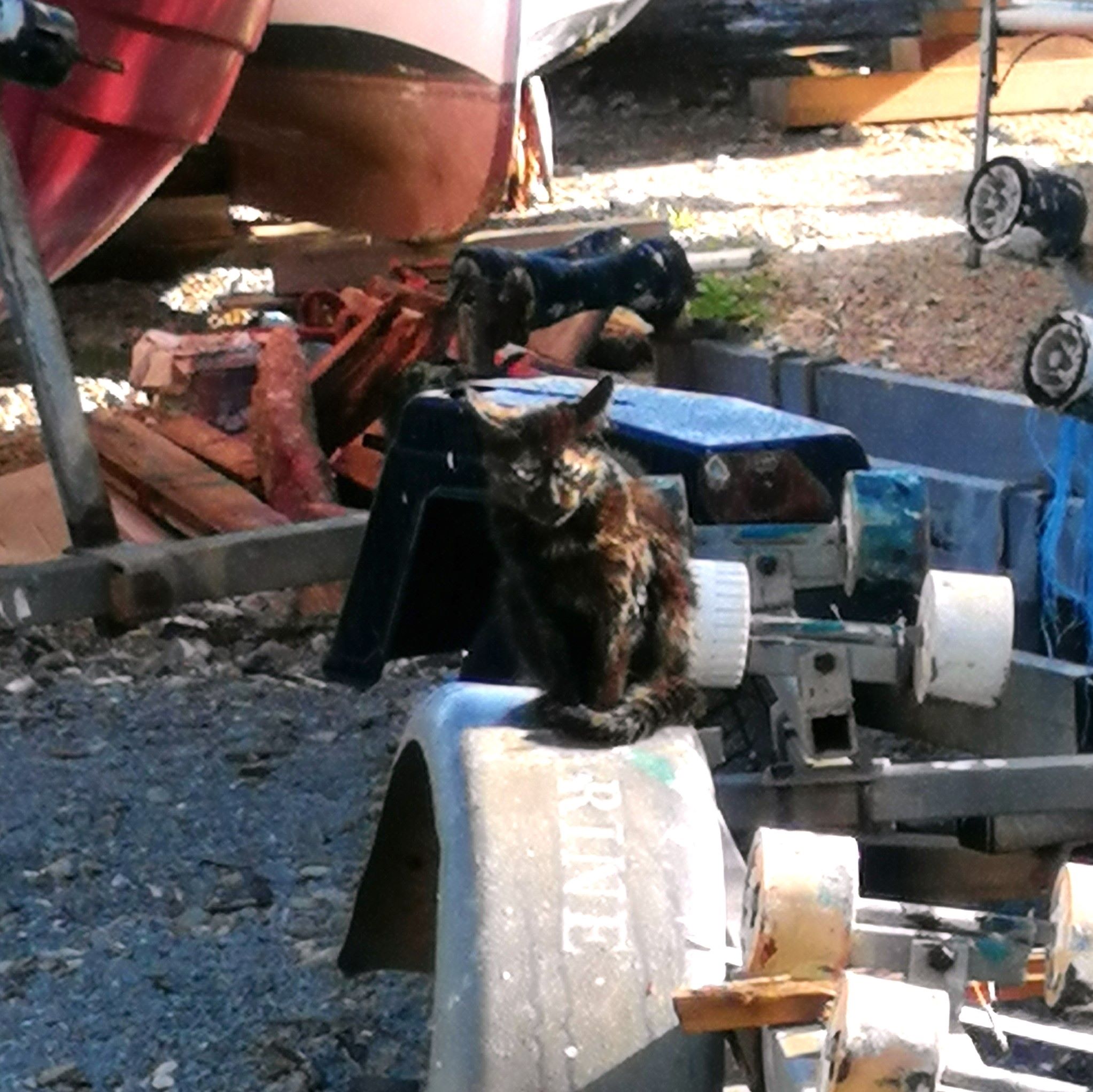
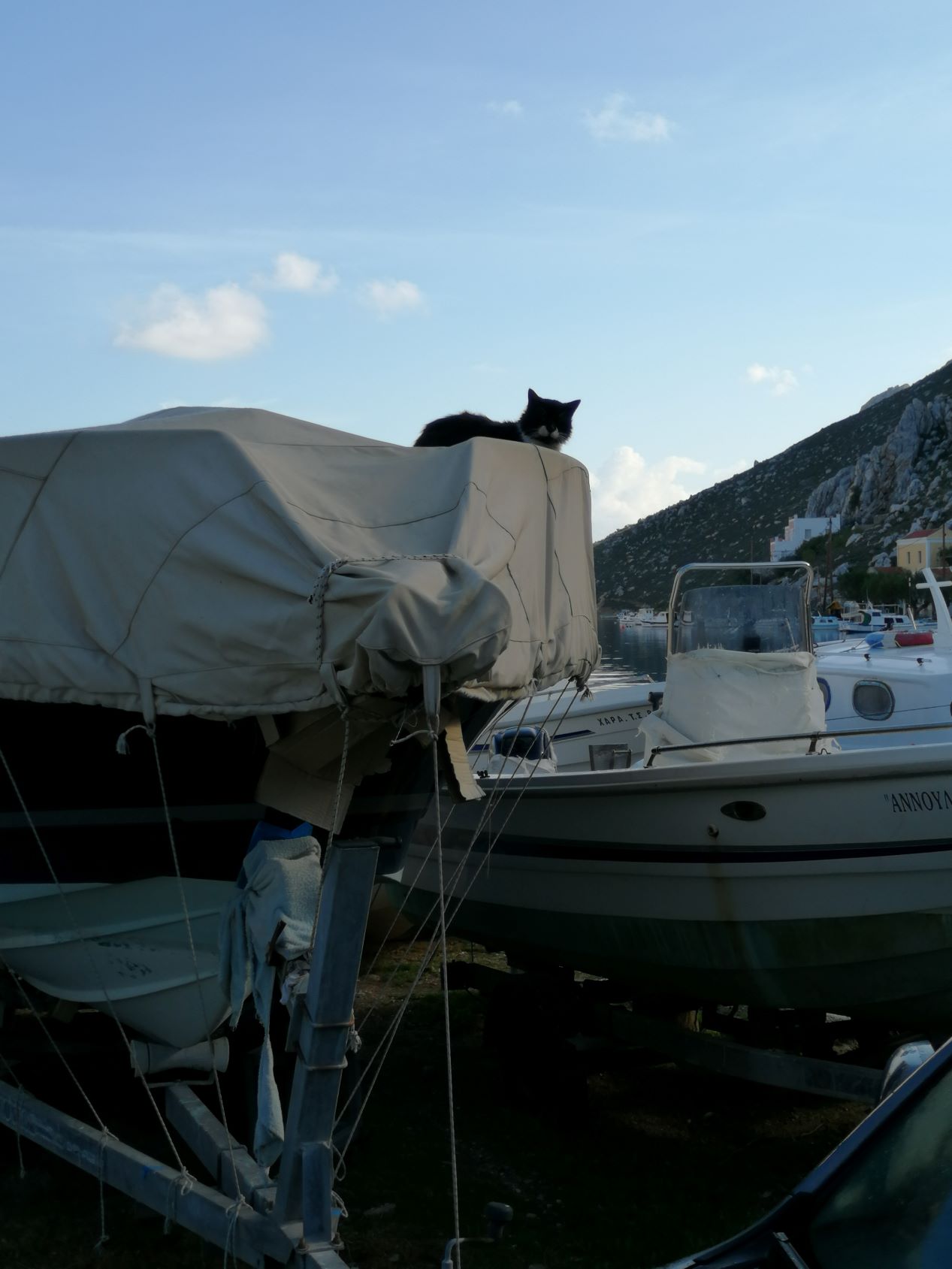
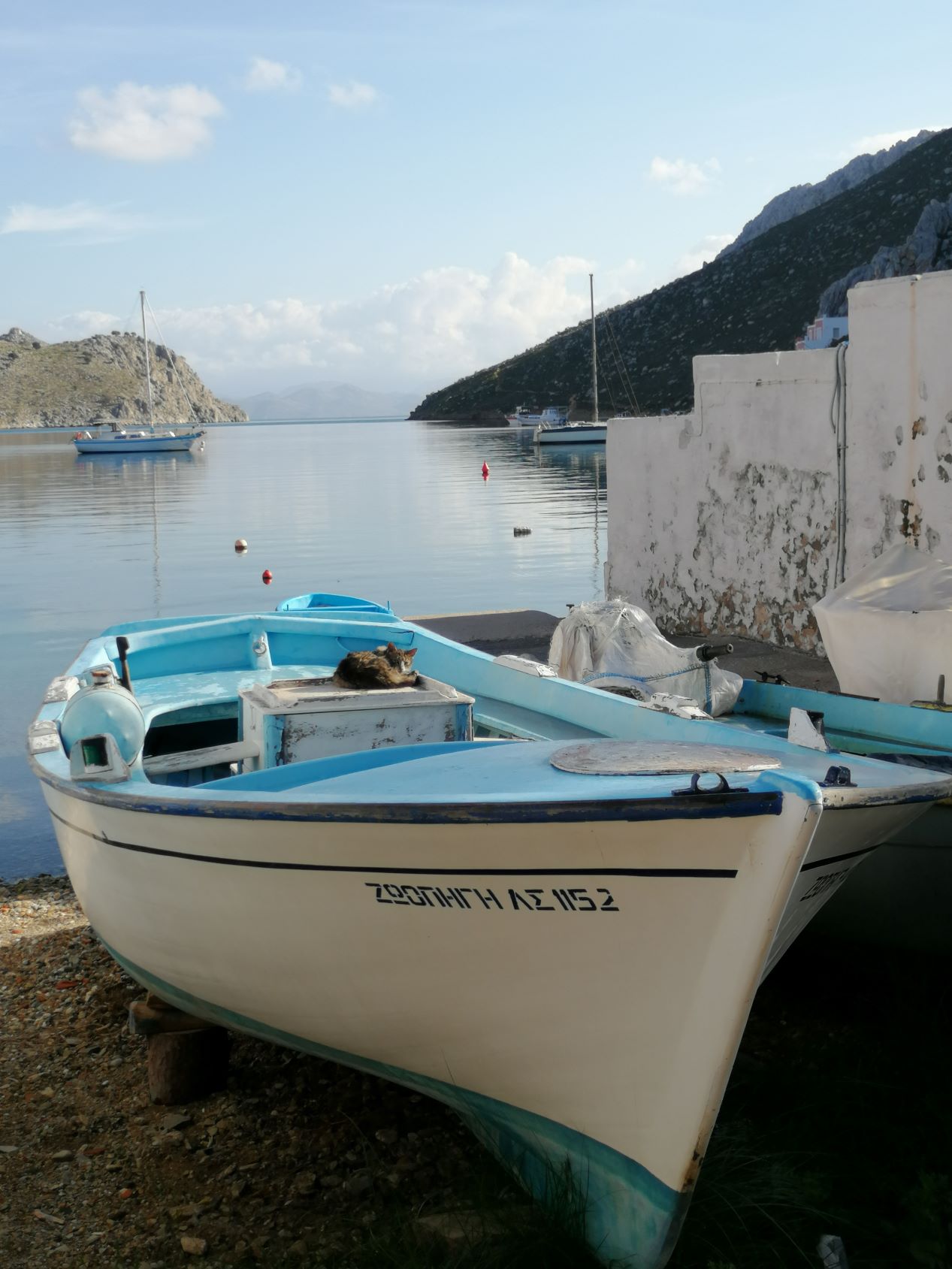
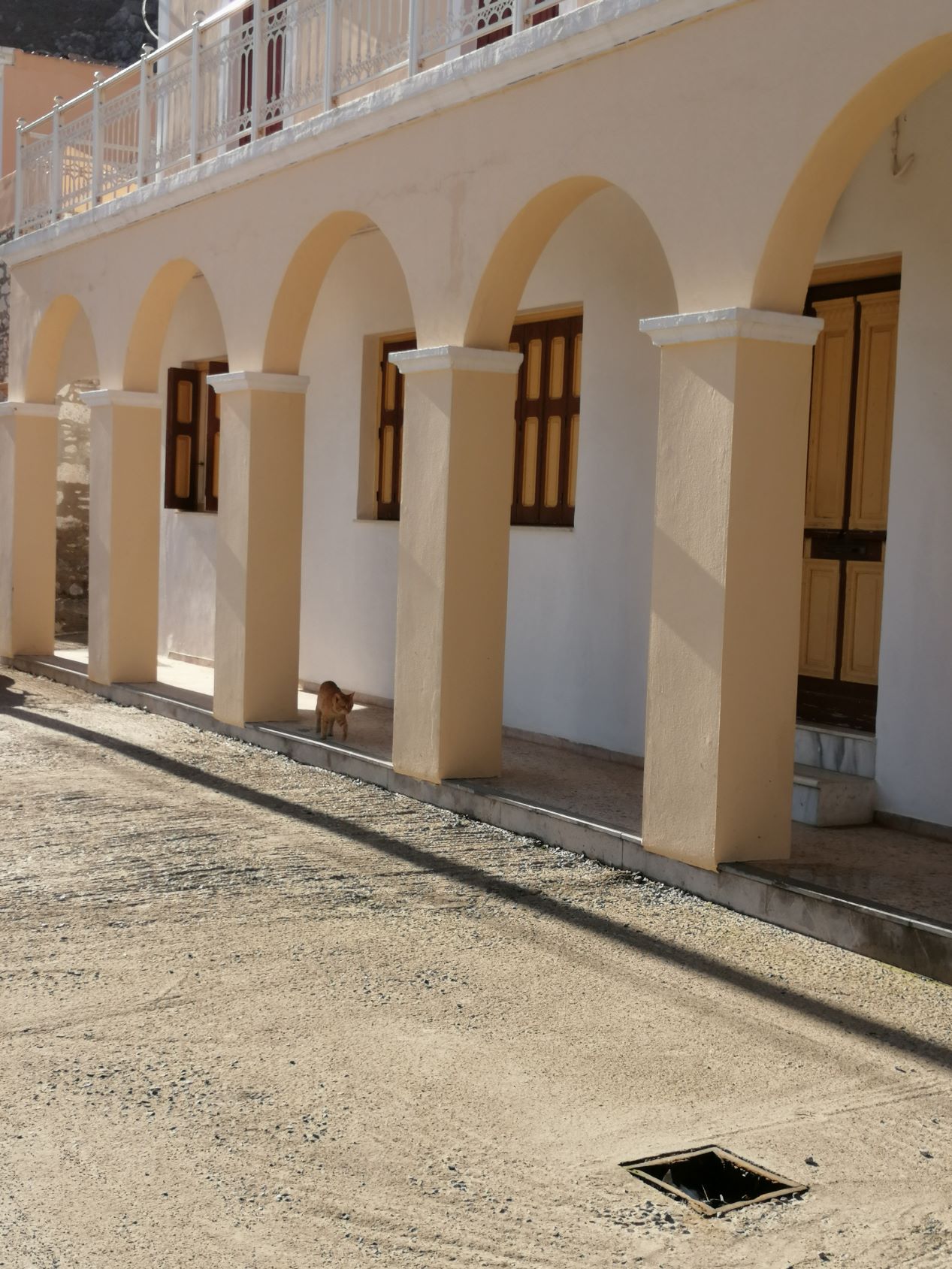
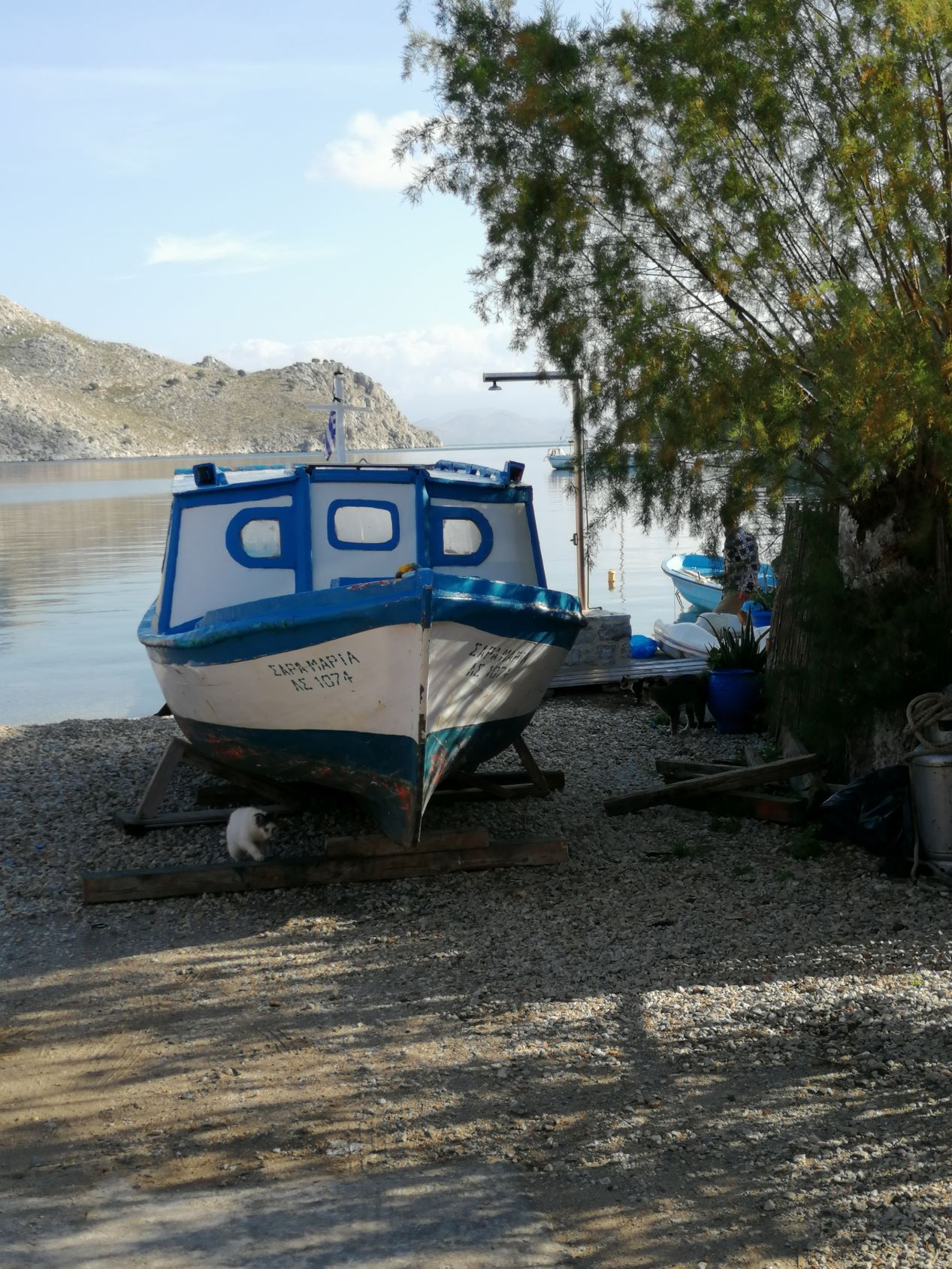
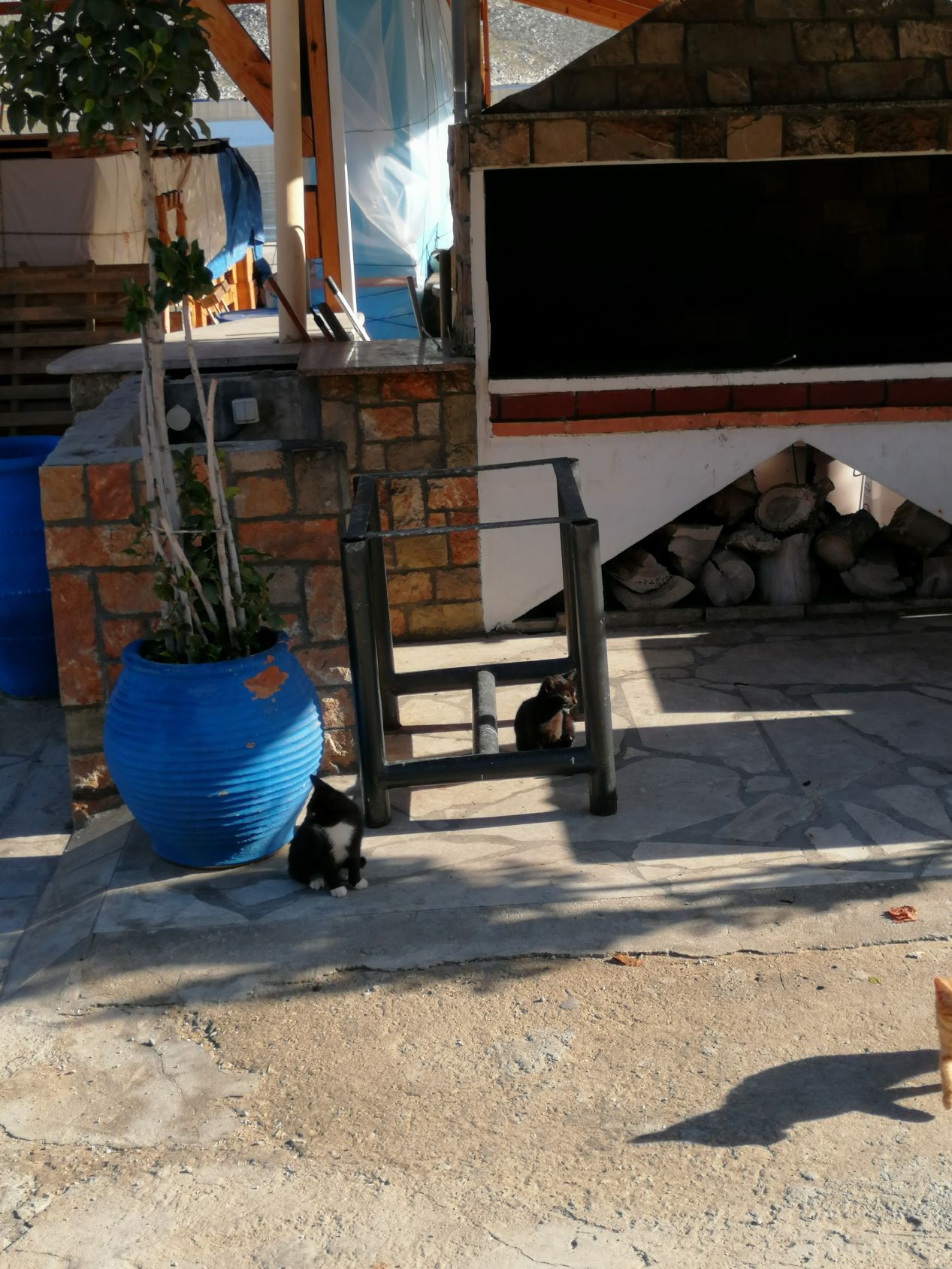
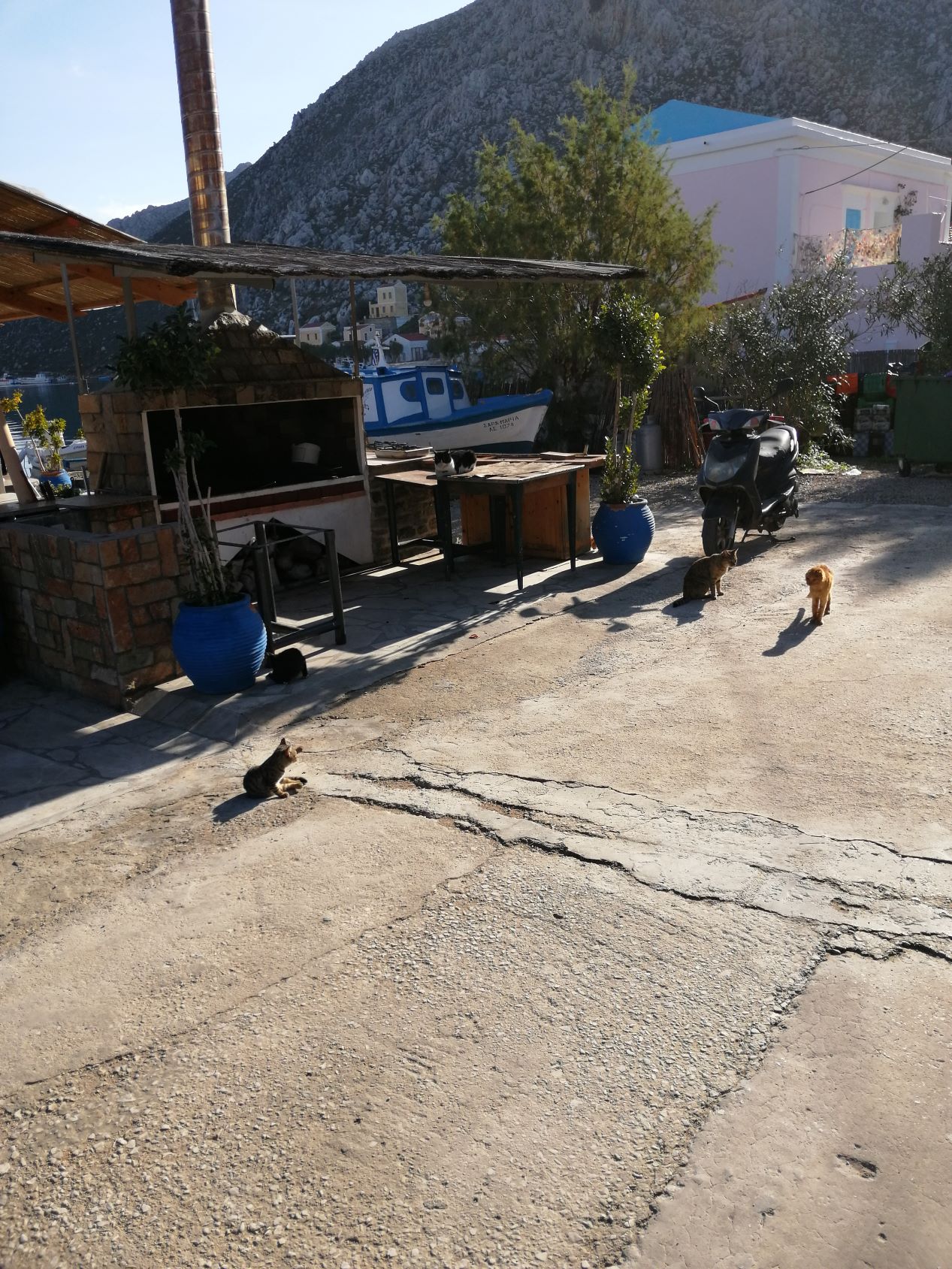
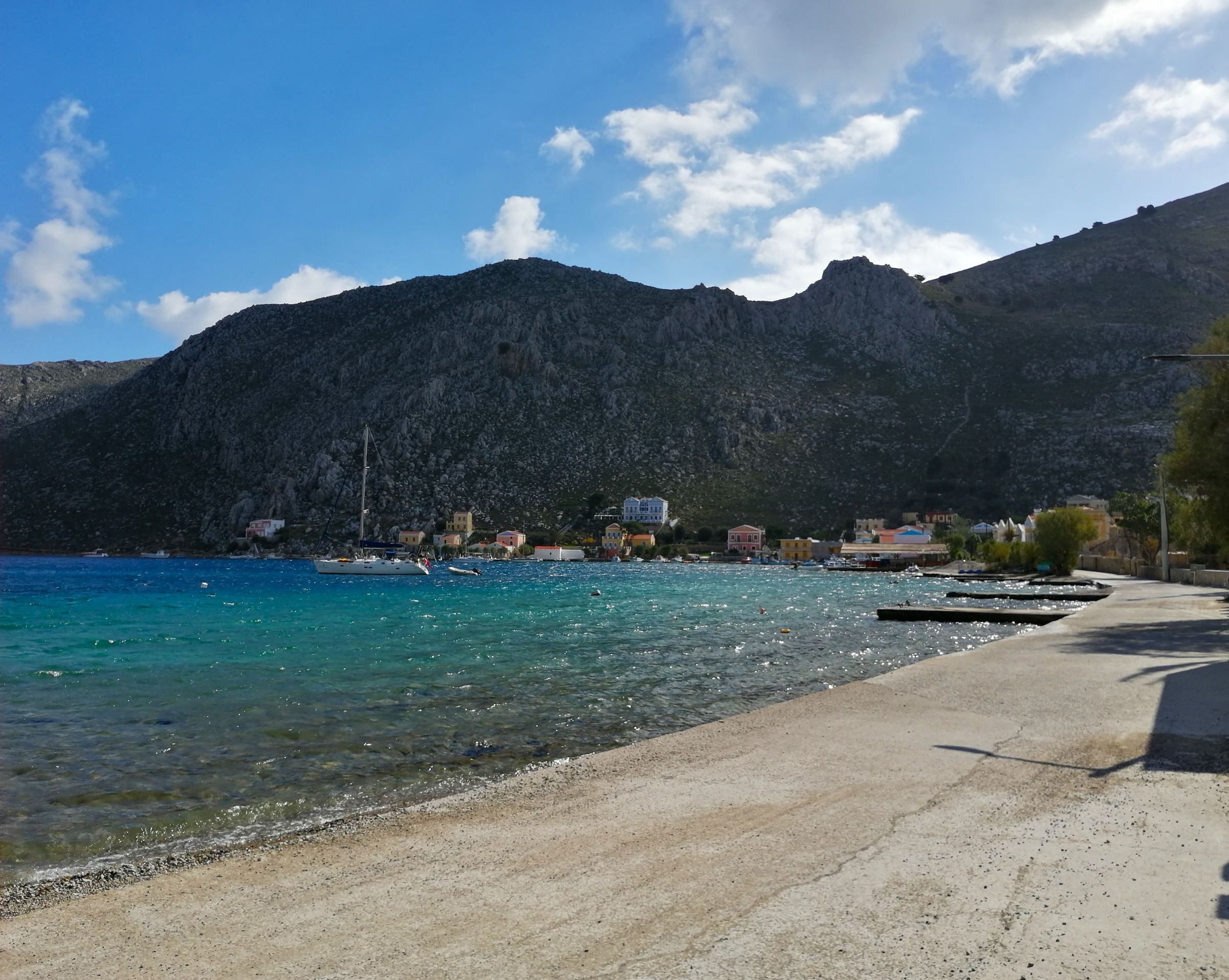
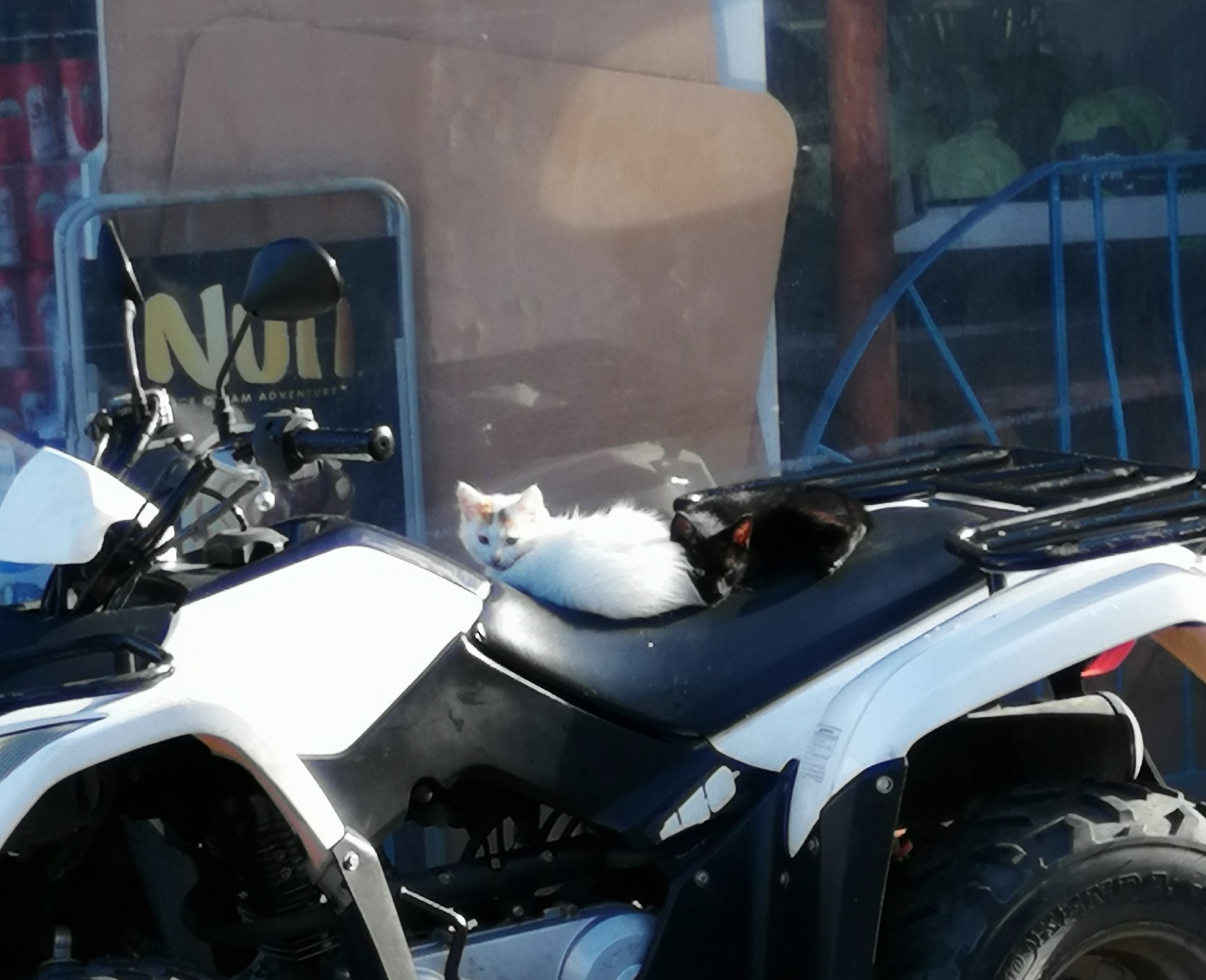
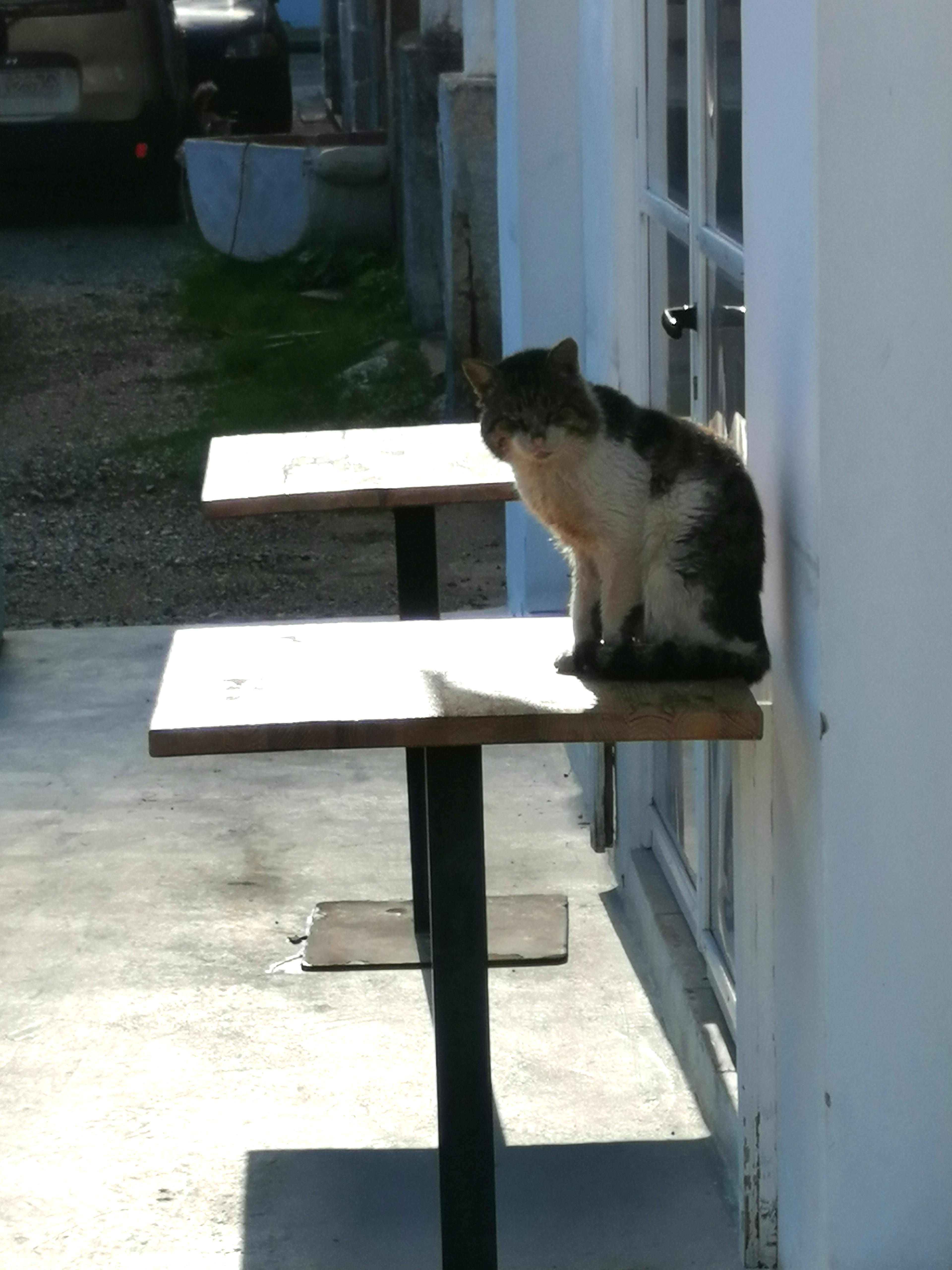
Symi is very quiet at the moment. Some days it seems as though it is an island of cats, chickens and sheep rather than people, particularly on a ‘Blue Star’ day when it feels as though the whole population of Symi has gone shopping on Rhodes. The winter bus service is severely curtailed. Only 3 trips in the morning – at 8, 11 and 1 from Yialos – and then 6 in the evening. No where to go and not much to do outside the nest.

February is slipping past and spring is overtaking a winter that didn’t really happen this year. Oh, we have had rain and wind and ferry cancellations and flight disruptions but by and large we have had a very mild winter. Temperatures have seldom dipped below 12 degrees centigrade on Symi and on sunny days it can be as warm as 26 degrees centigrade. There are concerns in Crete and on the mainland as the mountain areas have not had enough snow to feed the streams and rivers, a problem that is affecting many European countries as snowfall diminishes and glaciers recede in the Alpine regions.

Symi is very quiet at the moment. Some days it seems as though it is an island of cats, chickens and sheep rather than people, particularly on a ‘Blue Star‘ day when it feels as though the whole population of Symi has gone shopping on Rhodes. The winter bus service is severely curtailed. Only 3 trips in the morning – at 8, 11 and 1 from Yialos – and then 6 in the evening. No where to go and not much to do outside the nest.

The main human activity is on the building sites. The new hotel in the southern corner of Pedi is nearing completion. Work is continuing on the new sewage processing plant at the bend in the road above the new port, as well as the new road from the port which will join the main one at that junction. It was announced in the Greek press yesterday that the continuation of the commercial port from Petalo towards the new port has been approved and is out to tender. Apparently this will also include a new slipway so that the slip by the customs shed by the bridge can be closed off. The overall plan is to further reduce heavy traffic around the head of the harbour.

Greek Easter is very late this year, on the first weekend in May. As western/Catholic Easter is very early, at the end of March, April is likely to be quieter than usual. There are the usual fraught speculations regarding ferry schedules and who is opening when and is it worth opening up when there are unlikely to be enough customers to cover costs and so on. As it is, far fewer places than usual stayed open this winter. The big push to digitise the Greek economy and clamp down on tax evasion has had the knock on effect of killing the old ad hoc winter ‘let’s open on Friday night and see who turns up’ trade as everyone has to operate ‘by the book’ these days and that is just far too expensive in tiny places like Symi.

On that subject, you will see far more POS devices when you visit Greece this year. Every kind of business, including freelancers and the self employed, now have to be able to accept all kinds of card payments. There is an understandable reluctance on this, despite heavy state pressure, as service charges on card transactions are so high. The POS device has to be connected to the till which has to be connected to Taxisnet, the Greek tax portal, in real time. We also have to accept IRIS payments which are through an app on your phone. To add to the fun, there is a government app you can download to your phone so if you think you have been issued with a dodgy receipt or that someone is evading their taxes, you can report them to the tax office and there are actually prizes for doing this.
Coming Out of Quarantine

On Monday 4 May the first steps began to ease up on the measures first implemented on 29 February to contain the spread of Covid-19 in Greece.  We no longer have to send an SMS or carry a permit to be allowed out of our homes – unless we have just returned from somewhere else in which case the strict 14 day police-controlled quarantine still applies, in which event no amount of paperwork allows you out until the days are done.  Smaller shops where numbers can be easily controlled have been allowed to re-open. This includes bookshops, electronics shops, hardware shops, shoe shops and clothing shops.  In the case of the latter, strict regulations are in force to prevent clothes from being contaminated and you really need to know your size as trying things on is not allowed at this point.  More shops will be allowed to open on 11 May.

Masks must be worn in enclosed places including public transport such as buses, trains, the metro and so on.  This last isn’t much of an issue on Symi.  The bus has been mothballed for the duration and Lakis is using one of his hire cars – with one passenger at a time, travelling on the back seat.  Unnecessary journeys are still frowned upon and it is not permitted to travel between islands or outside ones prefecture for the time being.  Drivers are now allowed to have two passengers in their vehicles now, instead of one.  Gatherings are still limited to a maximum of 10 people and are generally still discouraged.  We can go swimming but not at organised beaches and not in large groups.  There are still restrictions in place regarding private boats and amateur fishing as the authorities don’t want anyone sneaking off to other islands or travelling illegally between the mainland and the islands, potentially taking the virus with them.

15 May is the day when it will be decided how the country goes forward as by that point it will be clear if there has been an up-tick in infections as a result of increased mobility and social interaction.

Restaurants and cafes may be allowed to open on 1 June, if all goes well. This would be with reduced clientele, greater spacing between tables and strict hygiene measures in place.

As things stand at the moment, all-year-round hotels should be allowed to reopen on 15 June and international hotels on 1 July.  These dates, however, have not been confirmed and are dependent on how the figures run.  There are also no firm dates for when international tourism will resume.  Although tourism is responsible for about 20% of Greece’s economy and, in the islands, practically the only significant source of revenue, re-opening the doors to foreign visitors also brings with it the potential threat of a ‘second wave’ of infection which could be much harder to control.  The quality of the tourist product also has to be considered – would people still come if they can’t go clubbing in crowded Mykonos nightspots or line up like sardines in a row on organised beaches?  Perhaps this will be the year the tide turns back to the things that are uniquely Greek – history, culture, archaeology, museums – things which cannot be found elsewhere and which can, actually, be easier to make safe for visitors and locals alike. Only time will tell.

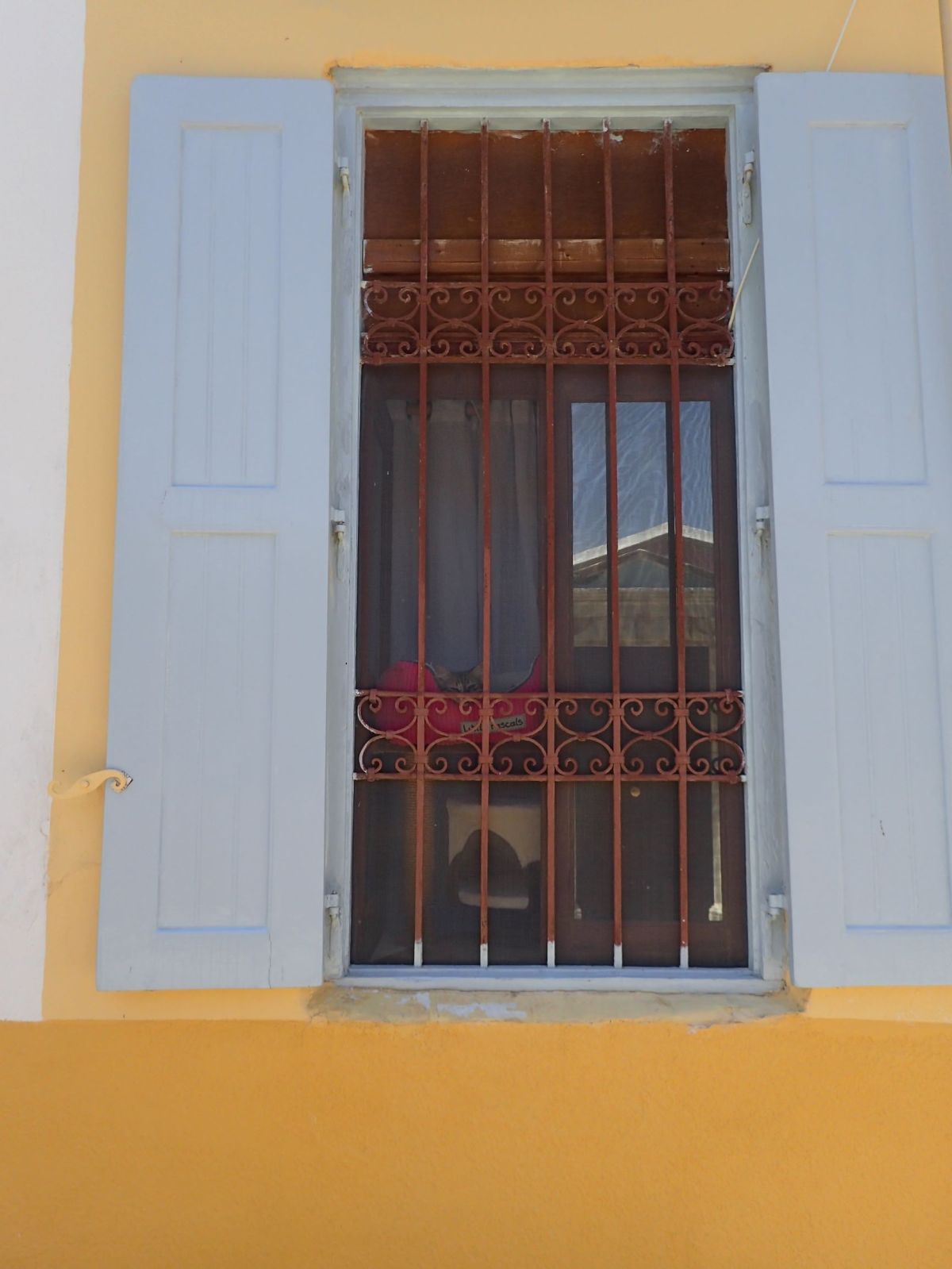
If you look carefully at the photograph, there is a cat, suspended in a special cat bed so that it can look out at the passing parade.  At the moment I think many of us feel like that cat.  Watching to see what happens next before we venture back out into a world that is likely to be very different to the one we saw in on 1 January 2020.

May Postcards from Symi

Most of those package holiday companies have either dropped Symi from their listings as too expensive and awkward to get to (the shrinking ferry schedule is a self-fulfilling prophecy) or the companies themselves have disappeared, gobbled up in the eternal quest for ever cheaper ‘value for money’ deals that eventually became unsustainable. 

blog 14 May 2018 a_marked
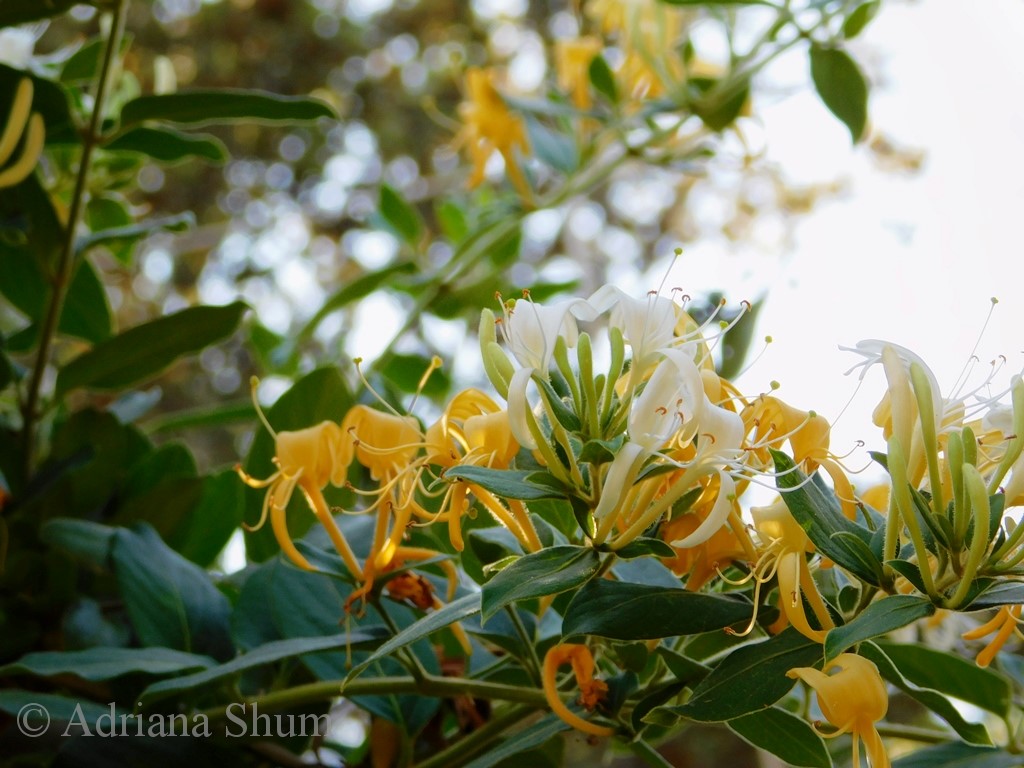
May is a fragrant month on Symi.   Apart from the ubiquitous jasmine and the somewhat cloying Persian lilacs, many older gardens also have honeysuckle scrambling over fences and pergolas.  On Symi this usually flowers twice a year – in May and then again in September.

blog 14 May 2018 b_marked
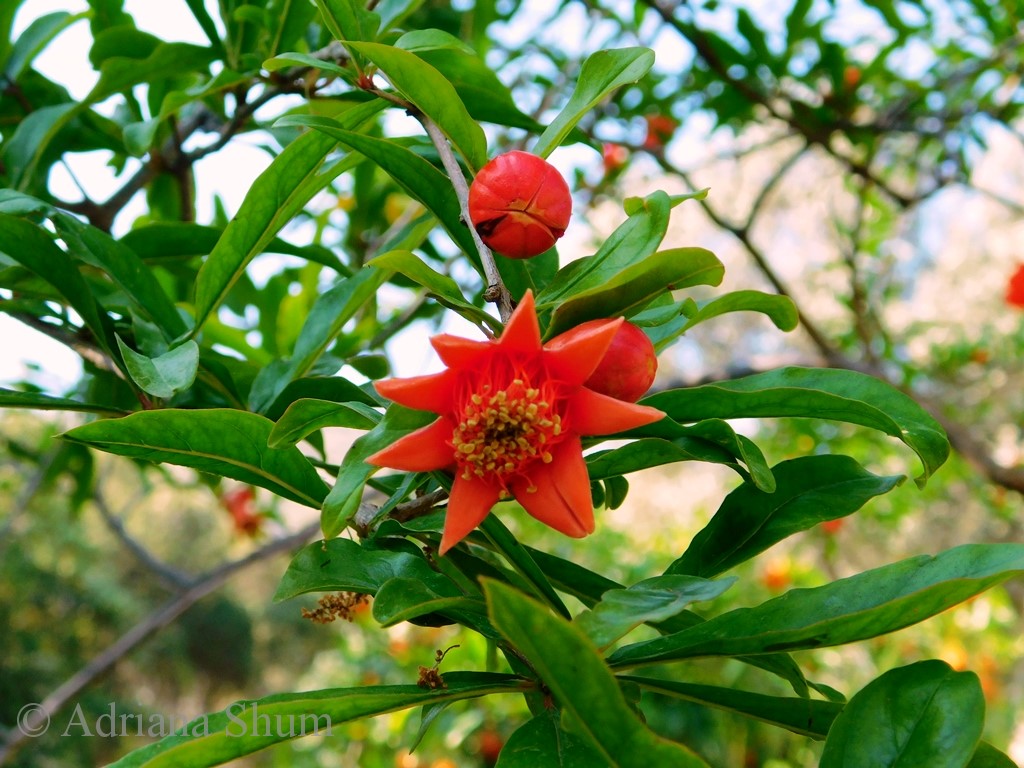
Pomegranate flowers.  Pomegranate trees are quite small, more like big shrubs than proper trees.  As you can see, the flowers are quite solid with thick waxy petals.  The fruit is ready to pick in late September through October.

blog 14 May 2018 c_marked
The courgette glut is well underway.  New blossoms appear early every morning, shrivelling away in the heat of the day.  The fruits grow so fast they have to be picked daily, even if one does not intend to use them that day.  Today’s sweet tender courgette becomes tomorrow’s tough vegetable marrow if left a day too long.  Courgette fritters in all their incarnations are a taverna staple at this time of the year.  They can also be used instead of aubergines in the making of moussaka, sliced thinly lengthwise and grilled to eat with garlic sauce as a mezze, hollowed out or halved lengthwise and stuffed with rice or meat – in May and June every housewife on the island is working her way through kilos and kilos of fresh courgettes. 

blog 14 May 2018 d_marked
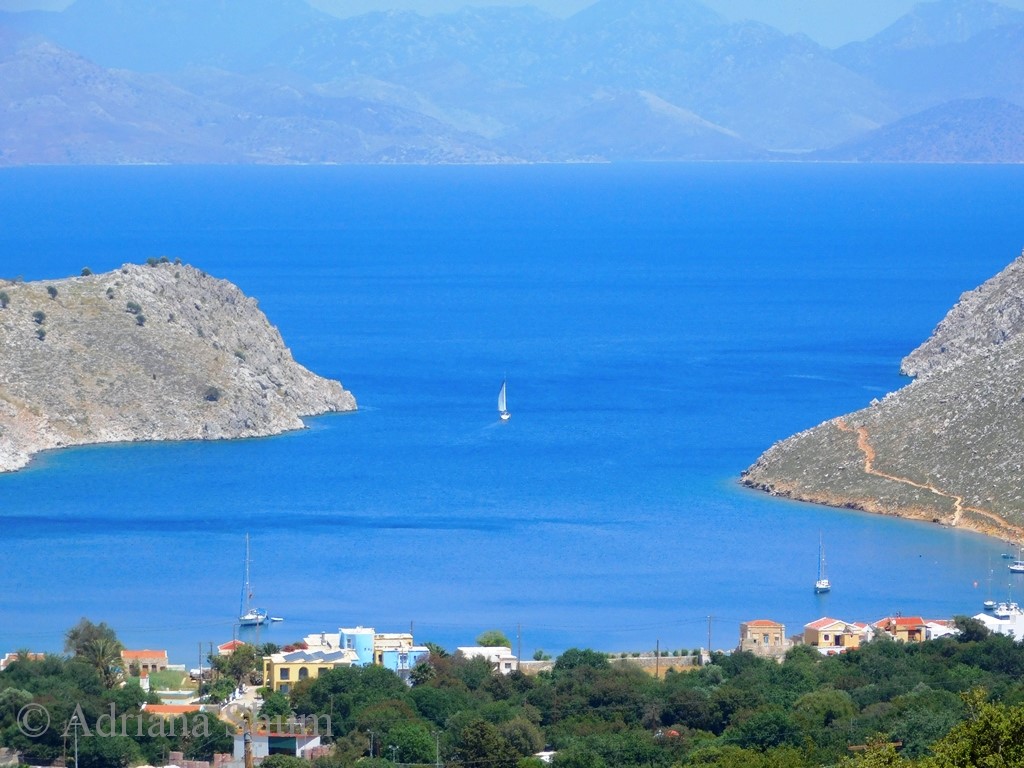
There are more yachts about now.  I caught this early morning departure from Pedi one clear morning last week. That scar on the hillside on the right is the foot path to St Nicholas beach, one of Symi’s most popular family beaches.

blog 14 May 2018 e_marked
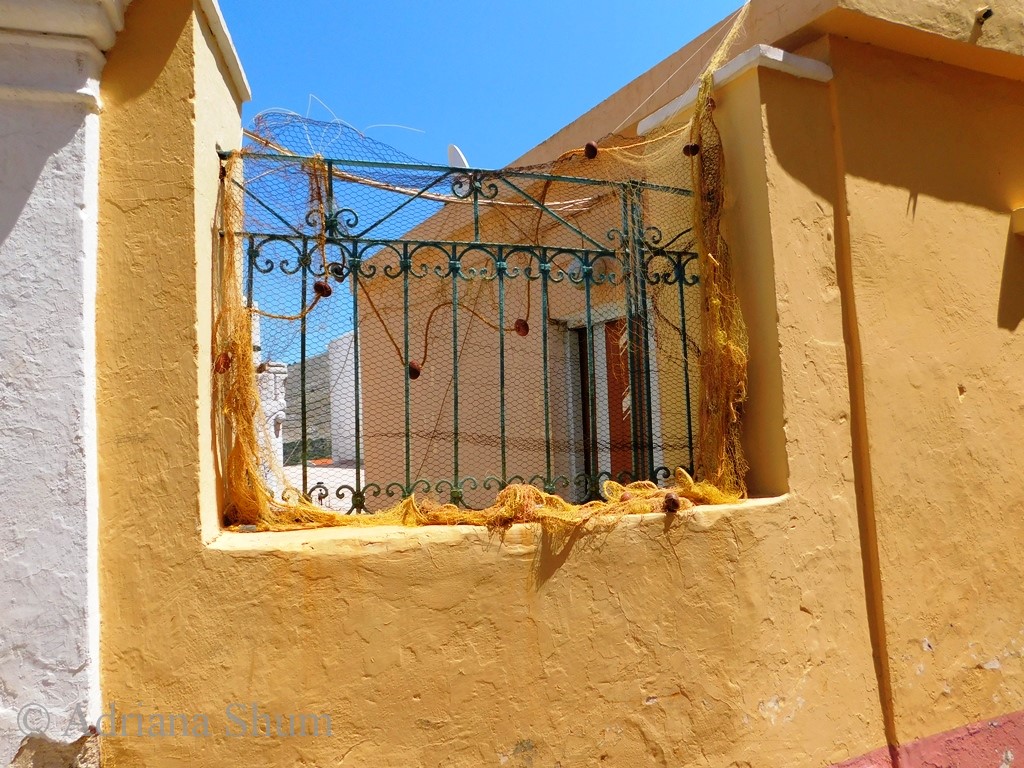
A novel way to discourage cats from sauntering into a Chorio courtyard.  If you spot this place, take a quick peak over the wall. There are the remnants of an old and elaborate colonnade, a fragment of which you can just see on the left of the aperture.

blog 14 May 2018 f_marked
A last lingering poppy in Chorio.  As the earth behind the dry stone walls dries out, the plants shrivel away.  Symi’s secret stone gardens turn back into barren dry stone walls until the drought breaks in late October.

blog 14 May 2018 g_marked
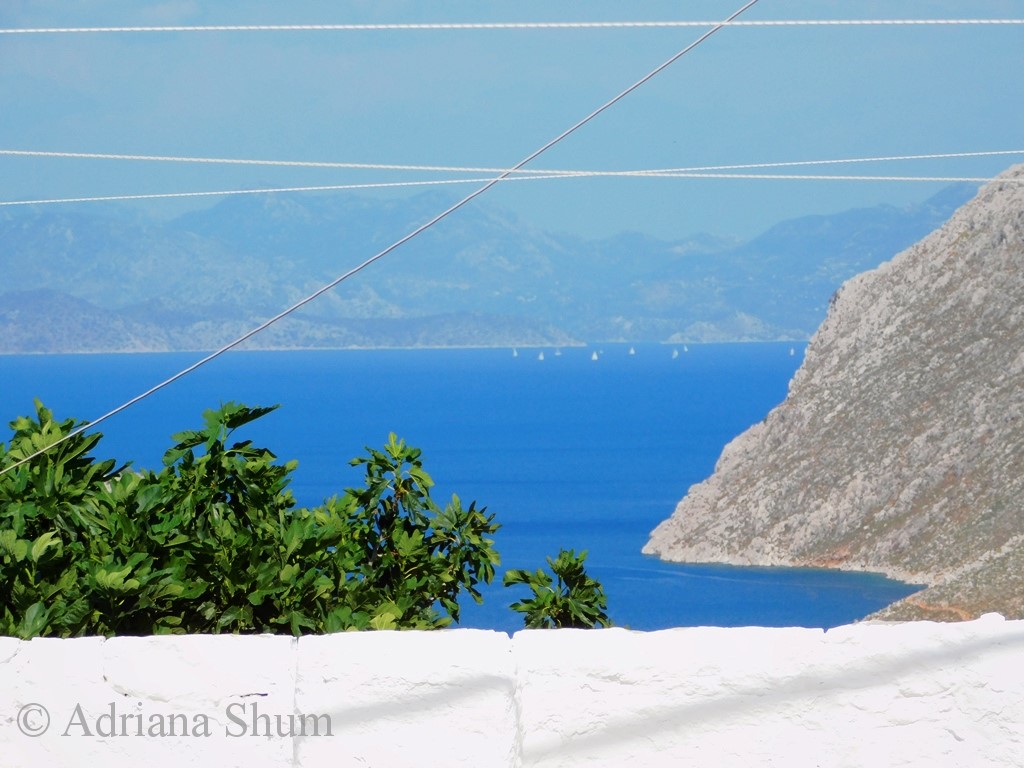
This was the view from the terrace of Agios Thannasis church in Chorio one afternoon last week.   This was most probably a flotilla of charter yachts being delivered to their cruising base such as Kos or even a Turkish port such as Bodrum.

A band of thunder showers passed over Greece last week.  Symi got off lightly with a few muddy sprinkles and a general clearing of the air.  Rhodes and many parts of the Greek mainland as well as neighbouring Turkey had heavy downpours, enough, in some cases, to cause local flooding.  We are unlikely to see any significant rain now until late October or even November.  The Southern Aegean has one of the longest summer droughts in the Mediterranean.  The last time Symi had rain strong enough to set the gutters flowing to fill cisterns was the end of February.  It looks as though 2018 is going to be a very long hot dry summer.

The first Olympic Holiday people arrived on Symi last week, marking the beginning of the official tourist season.  25 years ago there were many package holiday companies servicing Symi, notable among them being Laskarina, Manos, Kosmar, Small World, Travel a la Carte and Hidden Greece.  Accommodation was a mixture of restored traditional local houses, privately owned small studio and apartment developments designed to look just like Symi’s traditional houses and small pensions.  The emphasis was on authentic island life, simple self-catering and lots of convivial dining in local tavernas.  Symi’s tourist businesses timed their openings to coincide with these arrivals, knowing that there would be enough visitors staying on the island to provide them with customers in bars, cafes, tavernas, excursions and the like.

Now that certainty has gone.  Most of those package holiday companies have either dropped Symi from their listings as too expensive and awkward to get to (the shrinking ferry schedule is a self-fulfilling prophecy) or the companies themselves have disappeared, gobbled up in the eternal quest for ever cheaper ‘value for money’ deals that eventually became unsustainable.

All inclusive packages to resort hotels in Rhodes are good for consumers who want to know exactly how much their holiday is going to cost and don’t really care if it is Greece, Spain, Egypt or Turkey as long as the sun shines, the pool is full and the food and drink bountiful and free.  Unfortunately these packages are death to local economies as holiday guests seldom venture forth into the community, prices are pared down to the last cent so wages in these complexes are often below the legal minimum and limited local resources are stretched to breaking point.

Last summer Rhodes found itself in the previously unheard of situation of running out of water.  So much water was being diverted to hotel complexes with their swimming pools, manicured lawns and unlimited showers that there was no water available for the locals.  Villages and towns found themselves without water for days on end. A situation with which Symiots are only too familiar – this is why we all have cisterns – but for which Rhodes is poorly equipped.

Ironically, high value property owners who had invested significant sums in purchasing holiday homes and villas on the island found themselves seriously inconvenienced for the benefit of low value all inclusive holidaymakers whose tourist spend largely stayed in the pockets of the international holiday companies hosting their holidays.  A state of affairs hardly likely to encourage further foreign investment.

That’s probably enough of the serious food for thought for today.  If you are still reading, have a good week!  Remember, you can always join in the discussion by commenting, or by emailing me here.

Regards,

Adriana


Living on the Edge in Yialos

blog 8 May 2018 a_marked
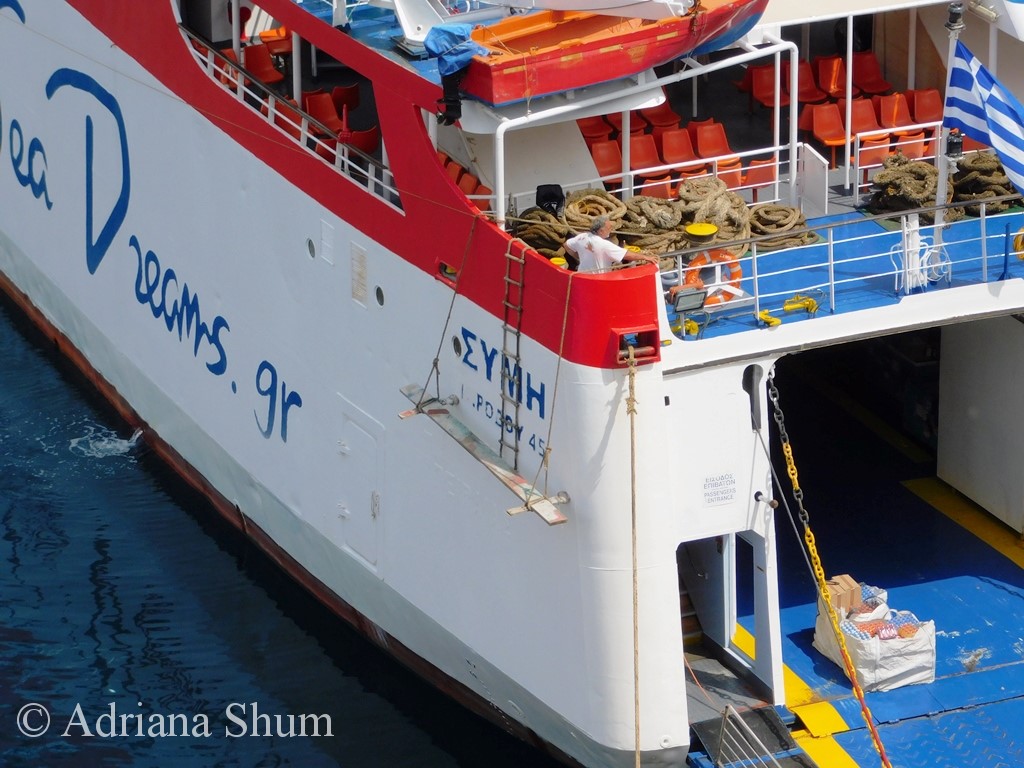
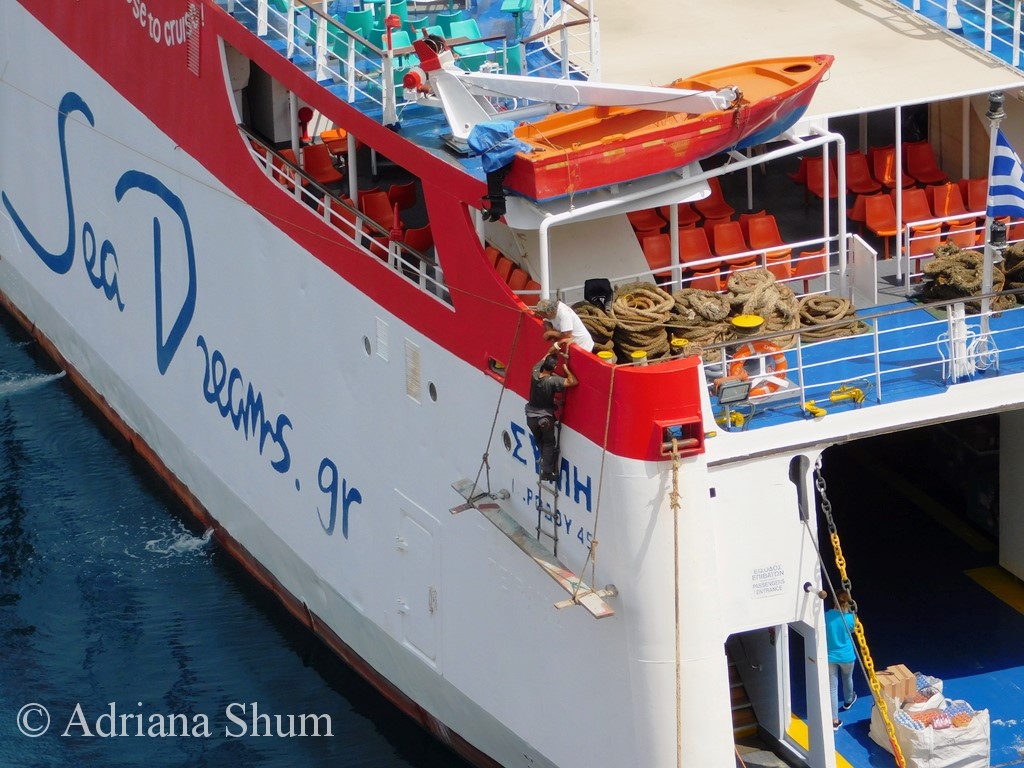
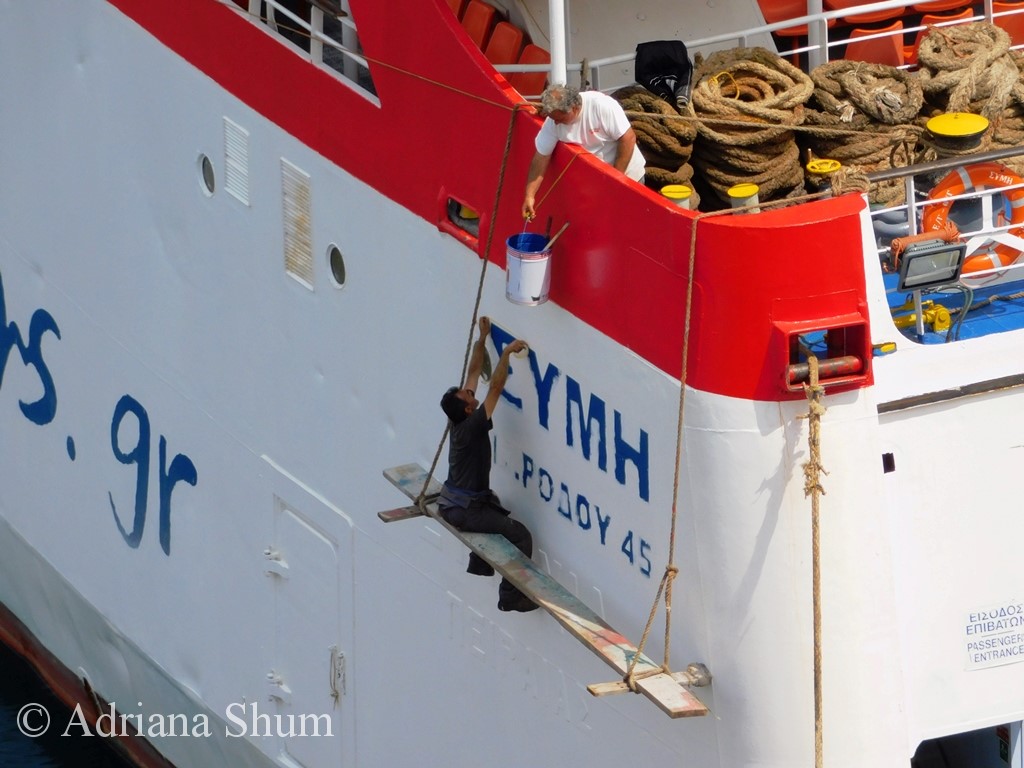
Shortly after 11 on Monday morning, once the day trippers from Rhodes have safely disembarked into the custody of assorted tour guides, I noticed activity at the stern of the Sea Dreams Symi.

blog 8 May 2018 b_marked
On closer inspection, this turned out to be a plank.

blog 8 May 2018 c_marked
Followed by a ladder.

blog 8 May 2018 d_marked
Don’t look down!

blog 8 May 2018 e_marked
I hope this takes my weight.

blog 8 May 2018 f_marked
No, I don’t need the ladder anymore.

blog 8 May 2018 g_marked
Can’t you see I am still putting the tape on?  I don’t need the paint just yet.

blog 8 May 2018 h_marked
Marking out the letters with masking tape.

blog 8 May 2018 i_marked
It looks better already.

Health and safety rules do exist in Greece.  I mean, once a year a road block is set up at the windmills above Yialos to check that people are using helmets when out on their motorbikes.  It is illegal to use mobile phones while driving but no one pays much attention to that one either. We have all seen such Greek island classics as a motorcyclist yakking on the phone while juggling a frappe cup and a cigarette and steering with his knees as he negotiates the waterfront bends in Yialos.

Painters totter at the top of extension ladders, the bottoms of which are balanced on steep steps or out in the street with no hazard signs.  Occasionally someone comes unstuck but this happens remarkably seldom.  This might be because in Greece, particularly in the islands, people grow up taking responsibility for their own actions and don’t count on someone else to look out for them.  If you have survived childhood sleeping on a moussandra loft with a 3 metre ladder to climb up from the stone floor below, the chances are good you have been living dangerously from the outset. Riding to school on a motorbike, clinging to dad’s back along with several other siblings, because there’s no money for a family car brings with it a confidence those of us from more sheltered backgrounds can only envy.

I watched the above sequence of events play out in Yialos yesterday morning.  Harbour balconies offer fascinating insights into island life and if you can handle the steps, it is well worth spending at least your first visit to Symi in one of the neo-classical houses that form the tiers of Symi’s famous amphitheatre harbour.  You may never leave your opera box vantage point for the duration of your stay.  For more mesmerising harbour view observations, visit James Collins’ blog over at Symi Dream – he has to try to work with that view from his desk!

Regards,

Adriana