The last time Symi had any significant rain was on 5 March. I am writing this on 14 April and there is still no rain on the horizon. The spring vegetation is already dying back and the ground cracking in many places. Temperatures have been abnormally warm. Great for the Turkish tourists who came over to celebrate Eid and the end of Ramadan but not so great for a region that has experienced the warmest driest winter since records began. There have already been significant wildfires in parts of Greece and farmers in Crete and Southern Rhodes have cut back on their planting of summer crops due to concerns about the lack of water for irrigation.
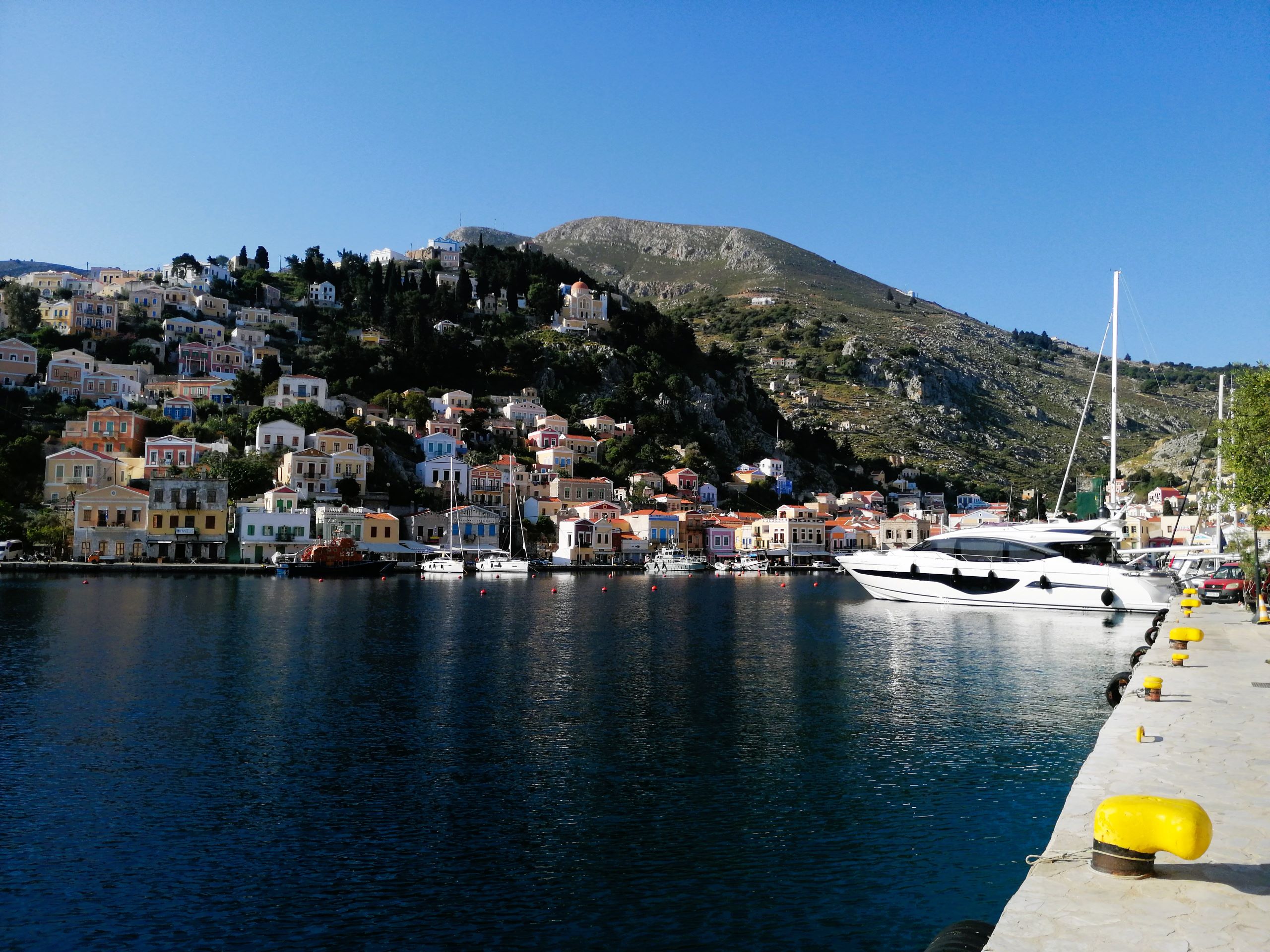
There are very few tourists actually staying on the island at the moment and the main seasonal hotels will only be opening around the Greek Easter long weekend, at the beginning of May. Rhodes, however, has been busy since the end of March so Yialos has already seen steady day-time trade in the form of tour groups and day-trippers, arriving on the King Saron and the Sebeco. This has given some of the restaurants and cafes in the harbour the impetus to open up, at least for midday trade. The tourist shops likewise. The recent Eid holiday combined with the new express visa system for Turkish tourists wishing to visit selected border islands for 7 days brought some trade but nothing like the prosperous Eid holidays before the pandemic, when the holiday fell during the tourist months of August and July and the Turkish lira was still relatively strong. In those days the megayachts filled the harbour and Pedi and there were big smiles on the faces of many businessmen in Yialos.
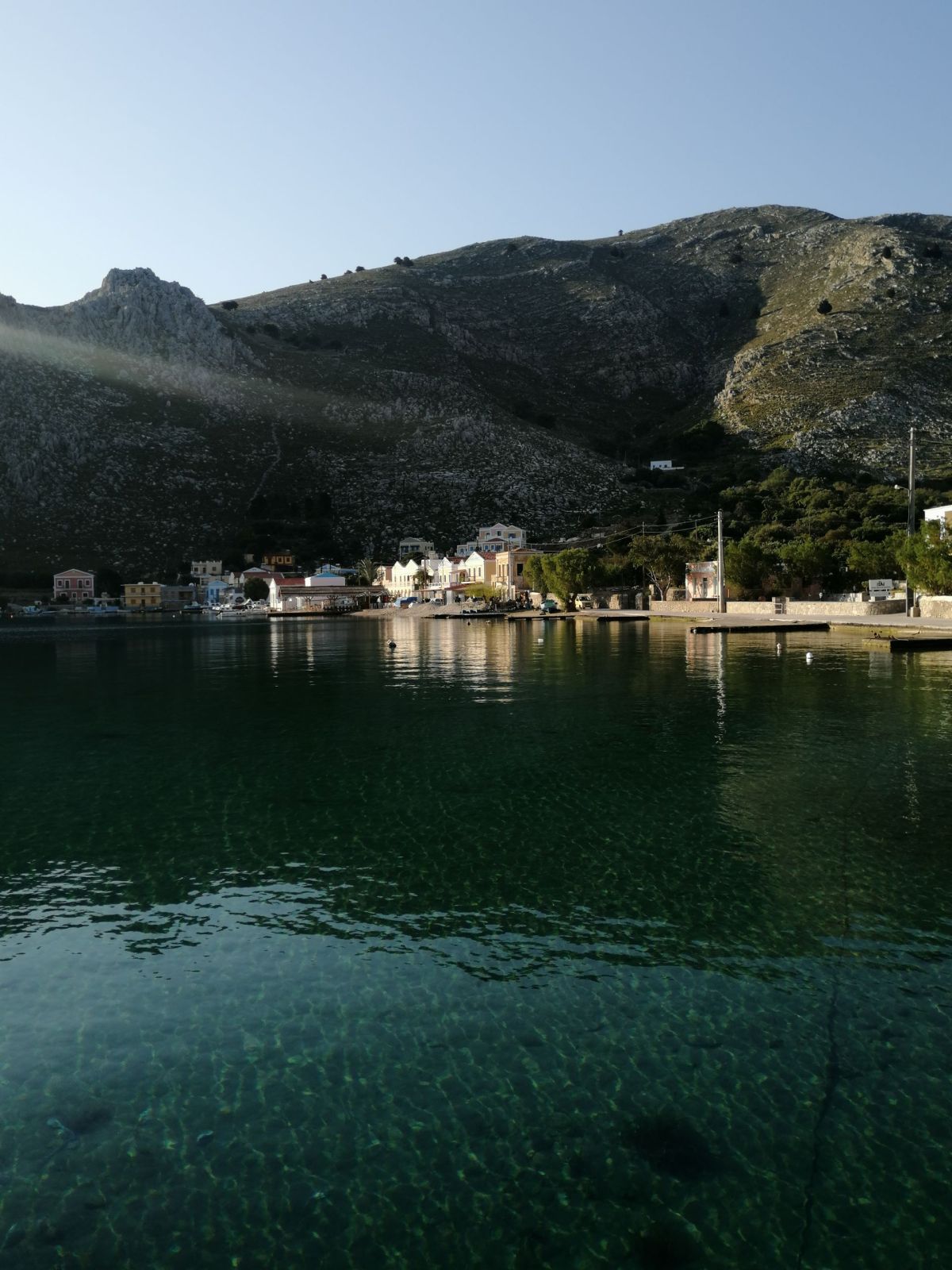
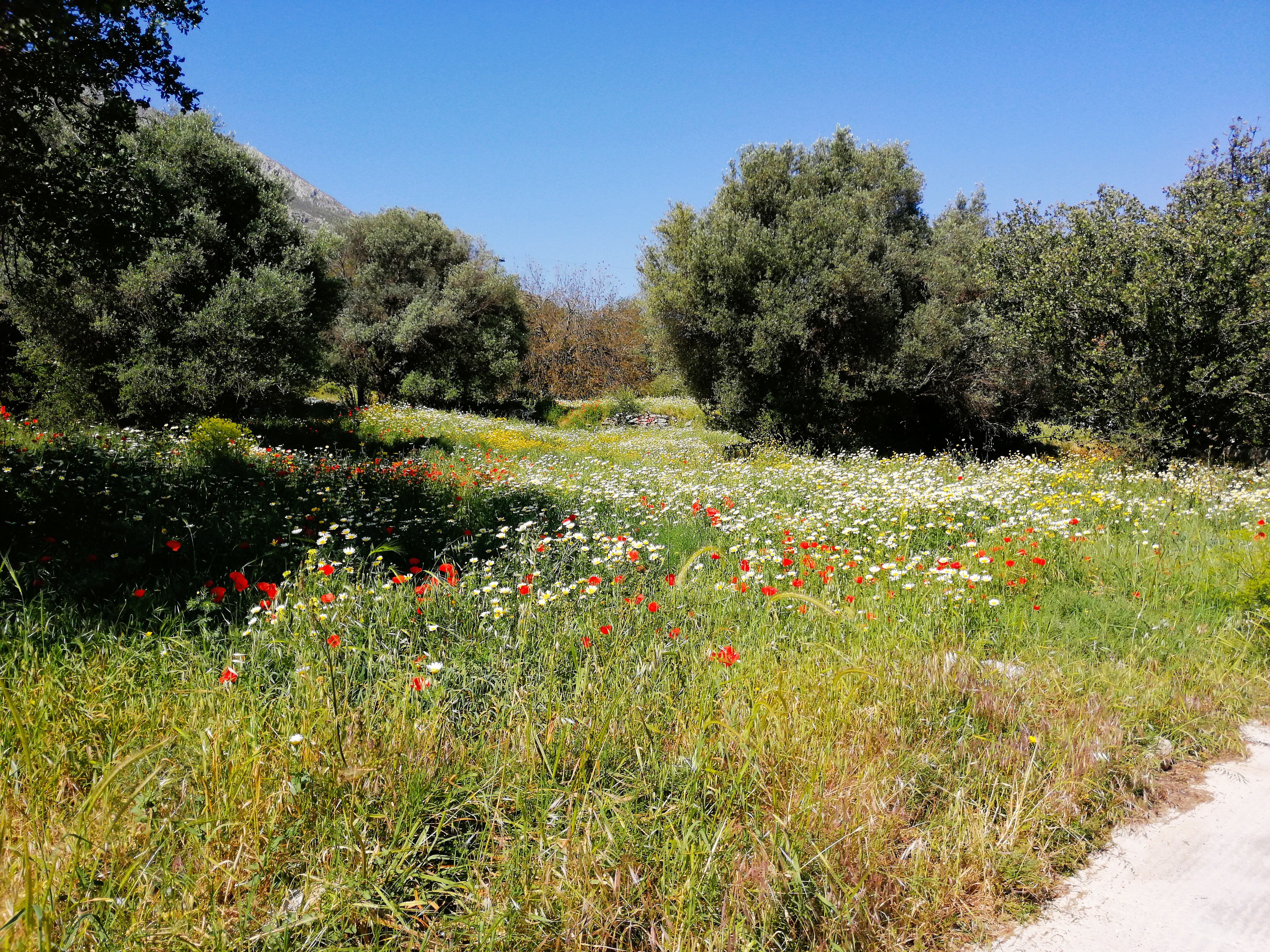
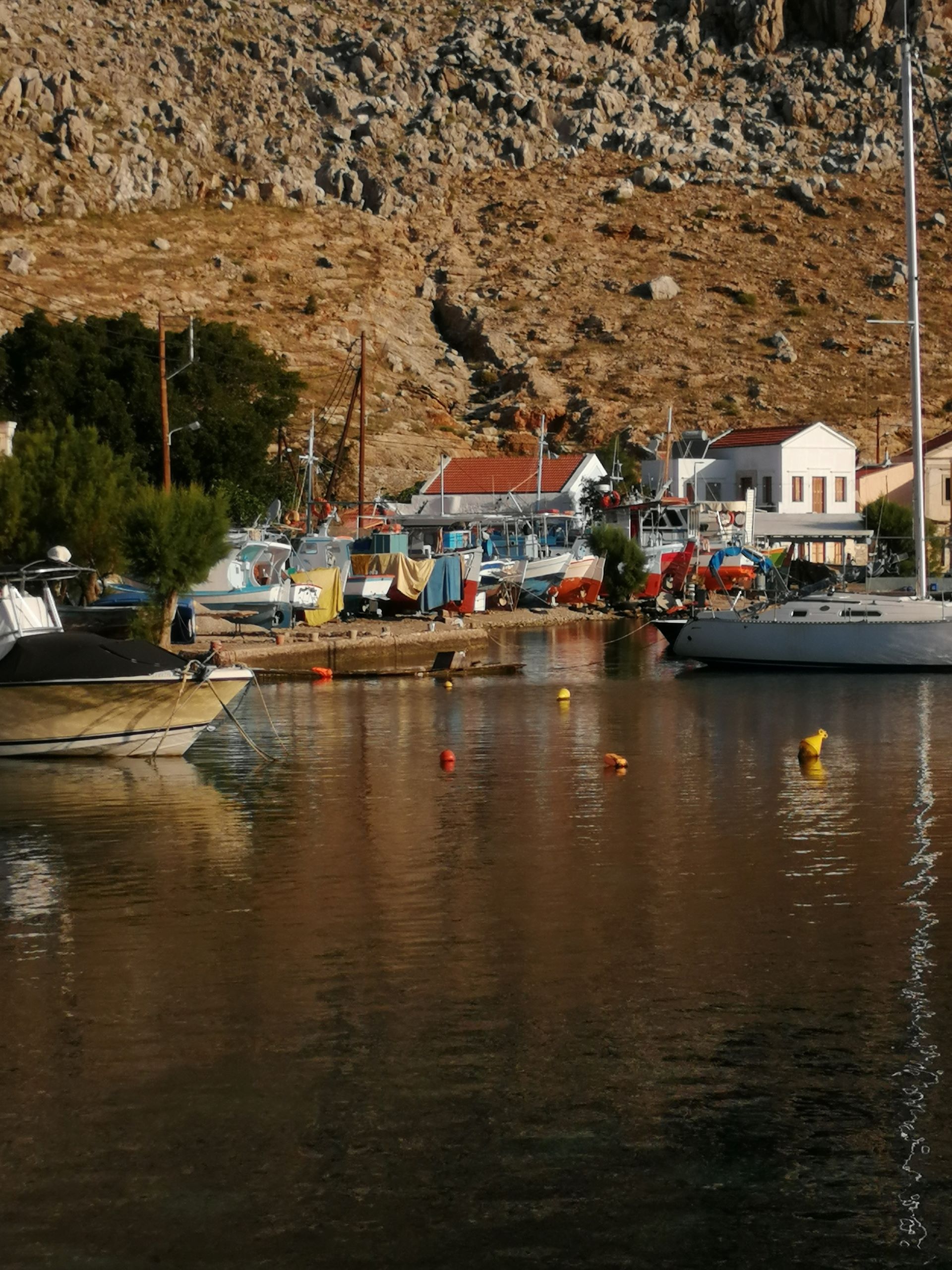
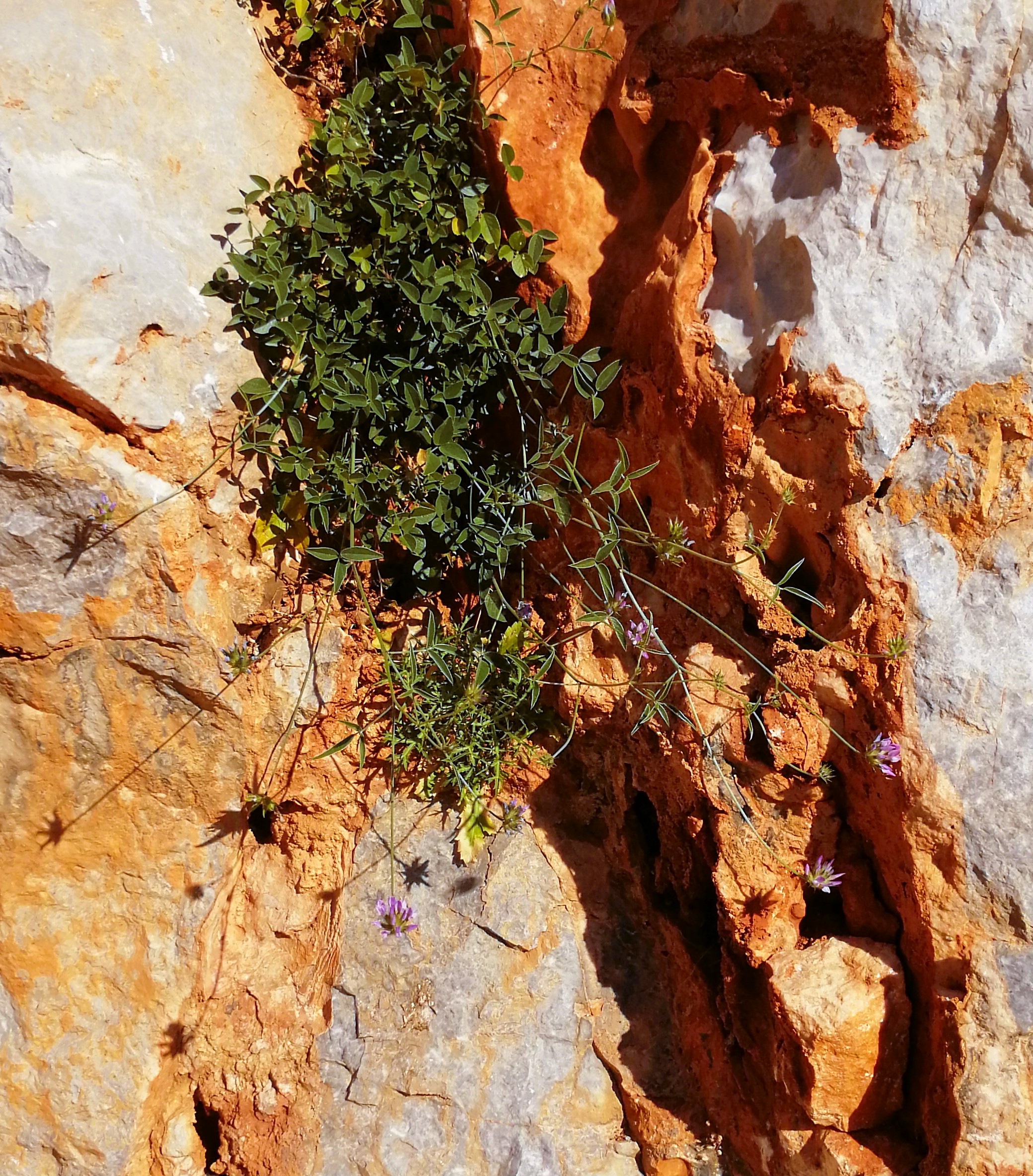
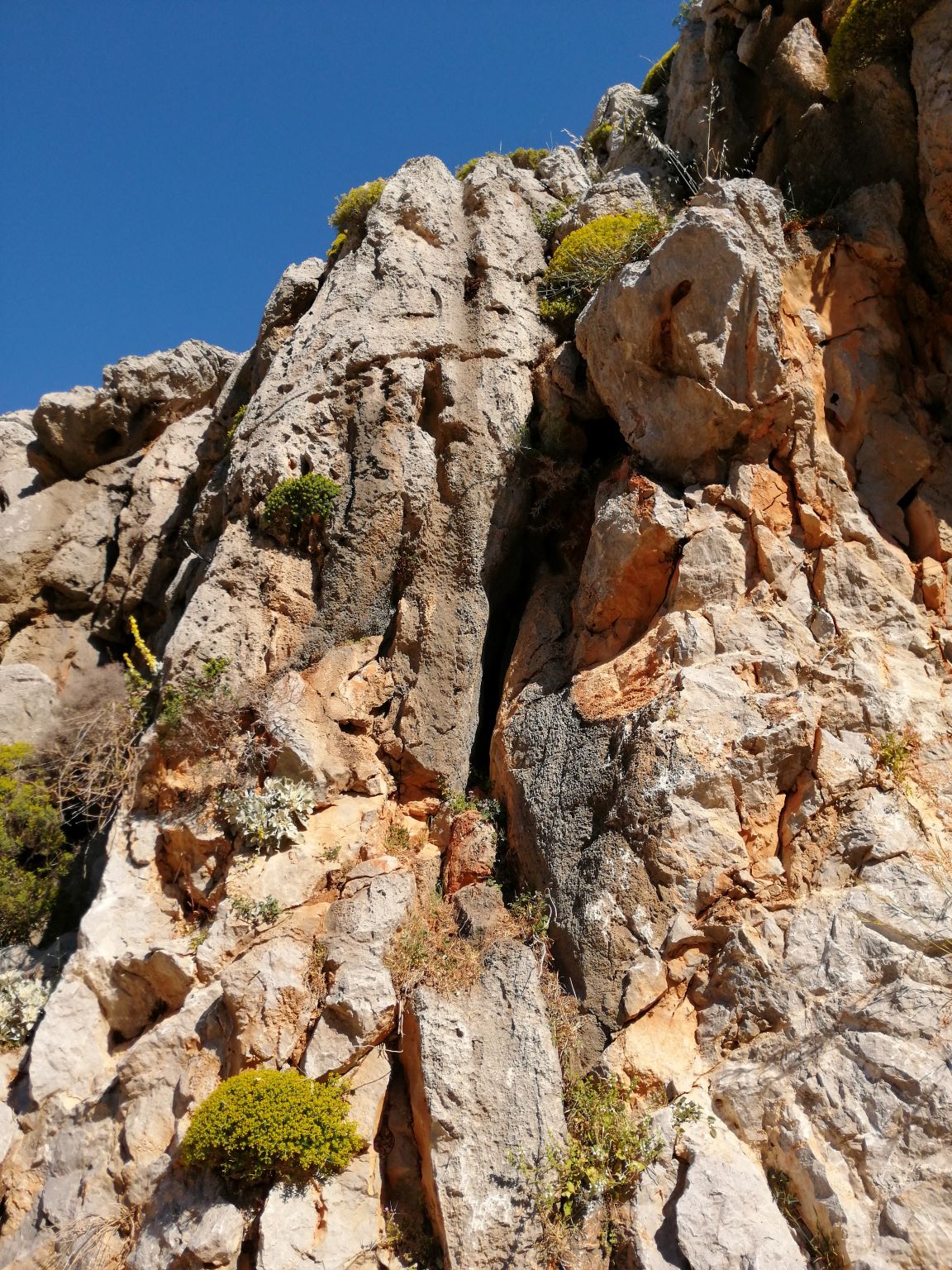
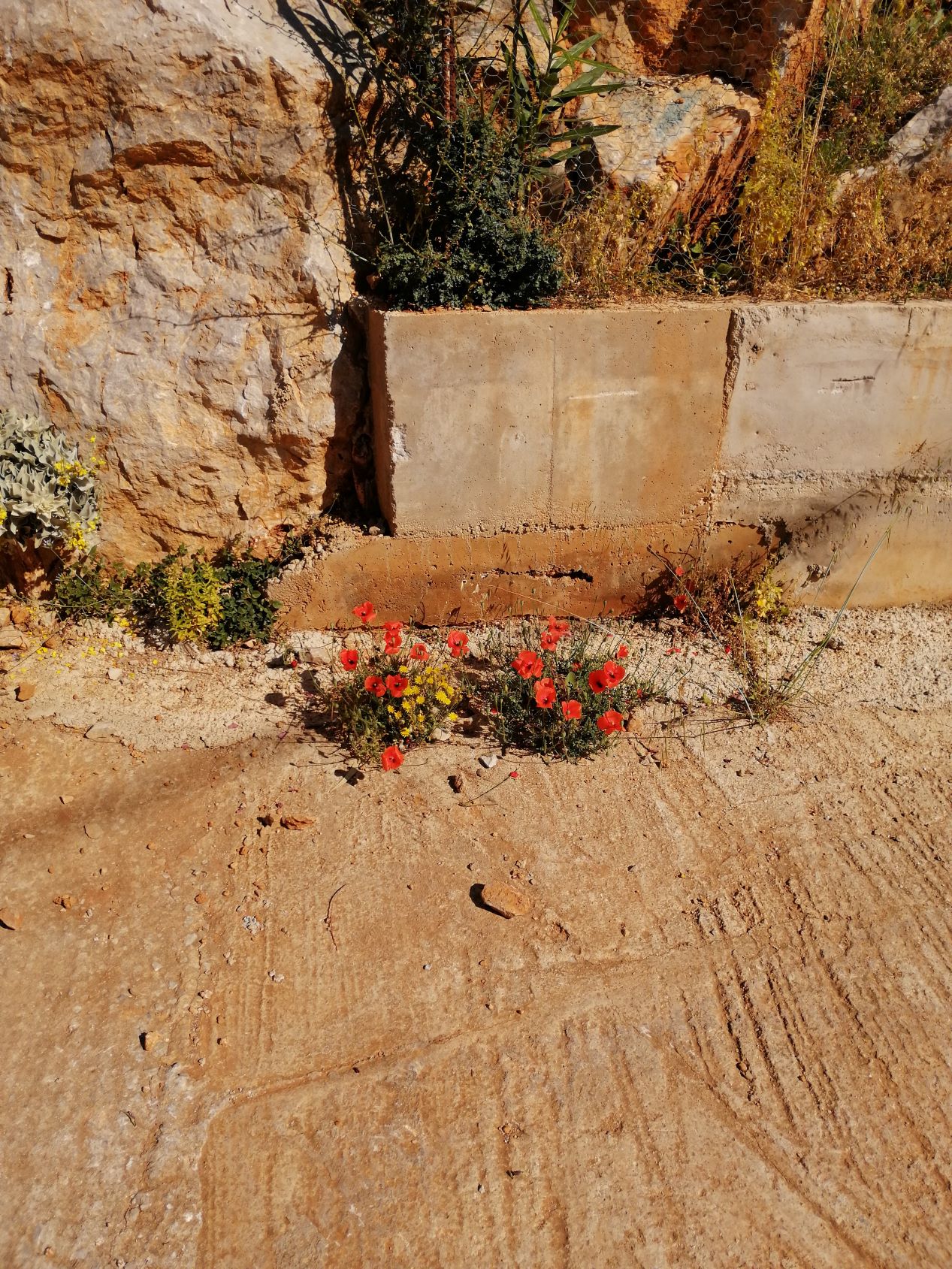
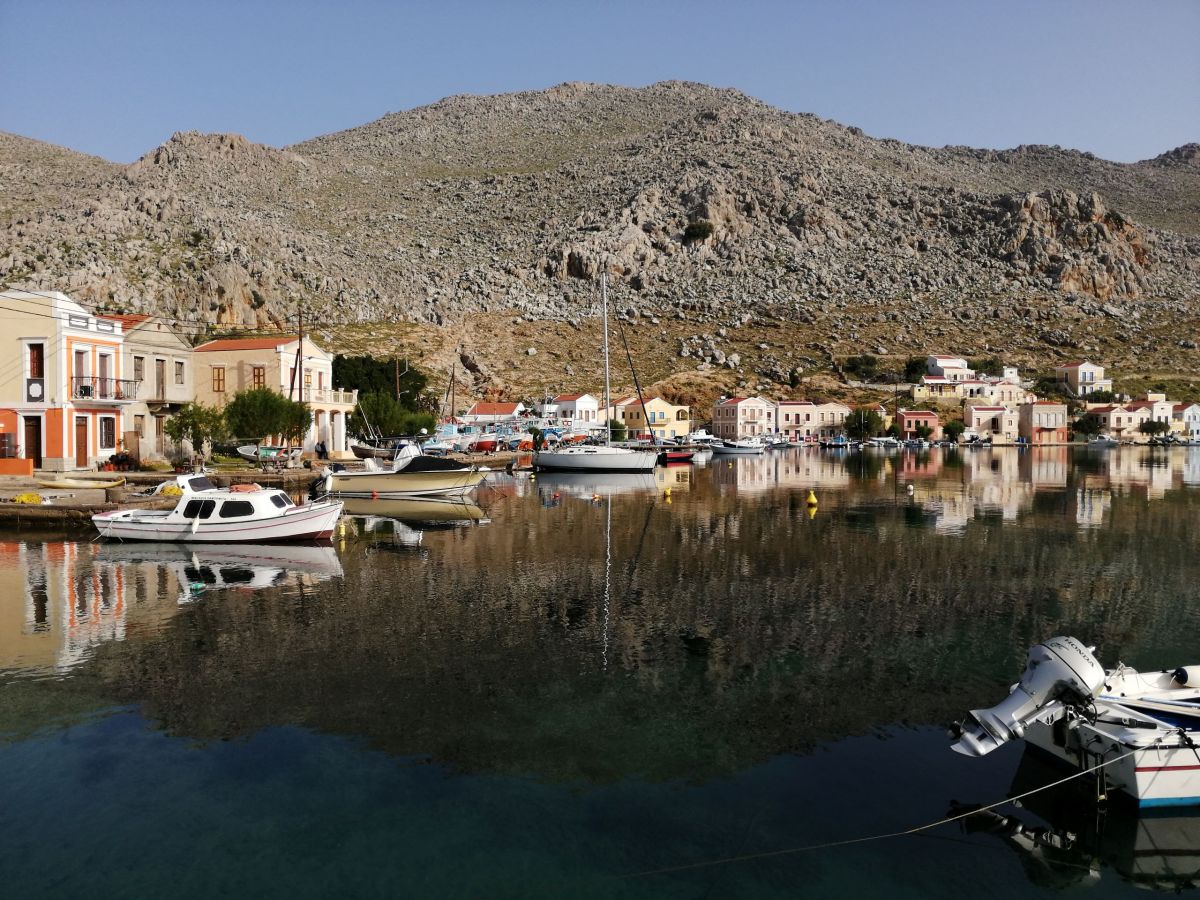
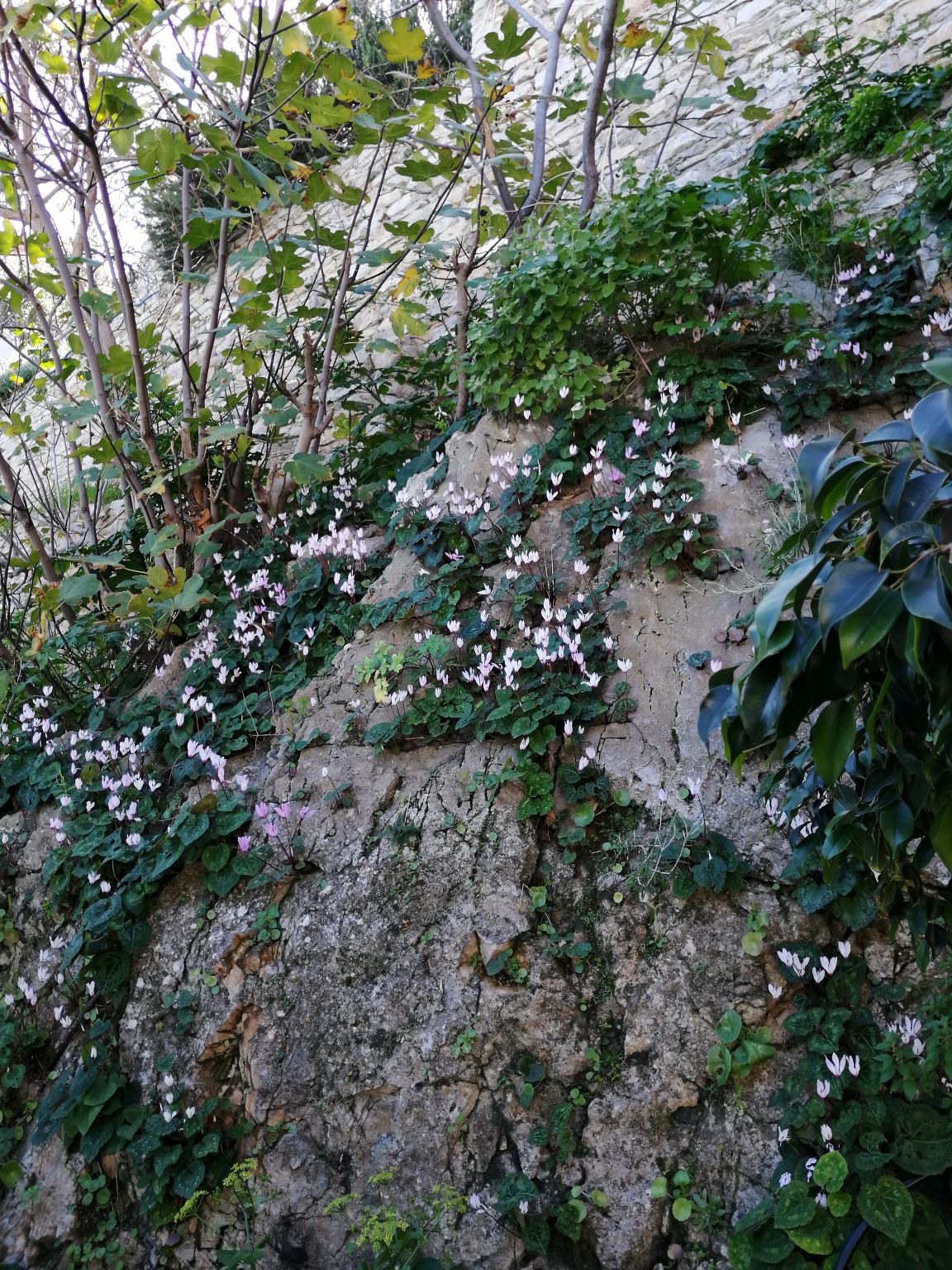
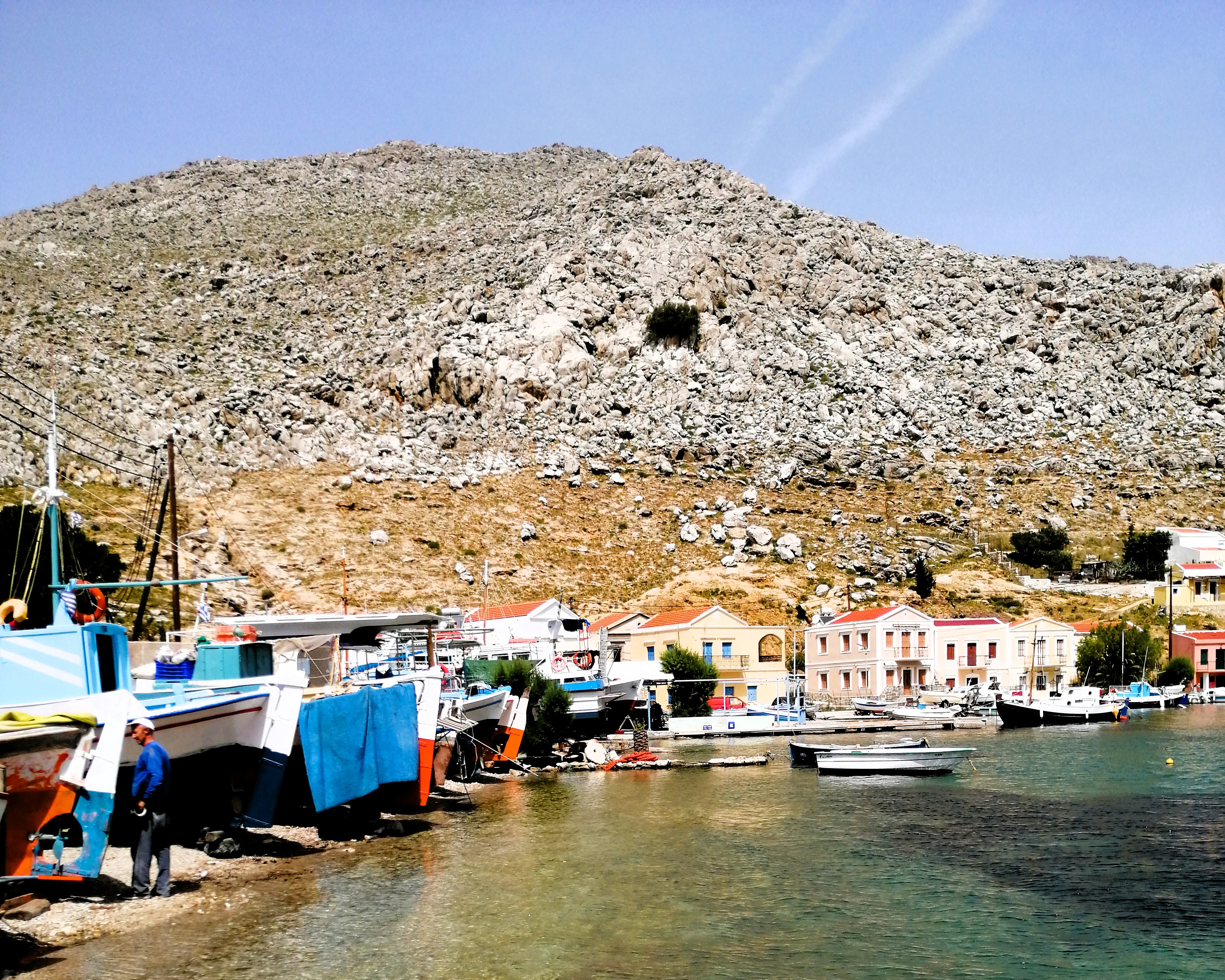
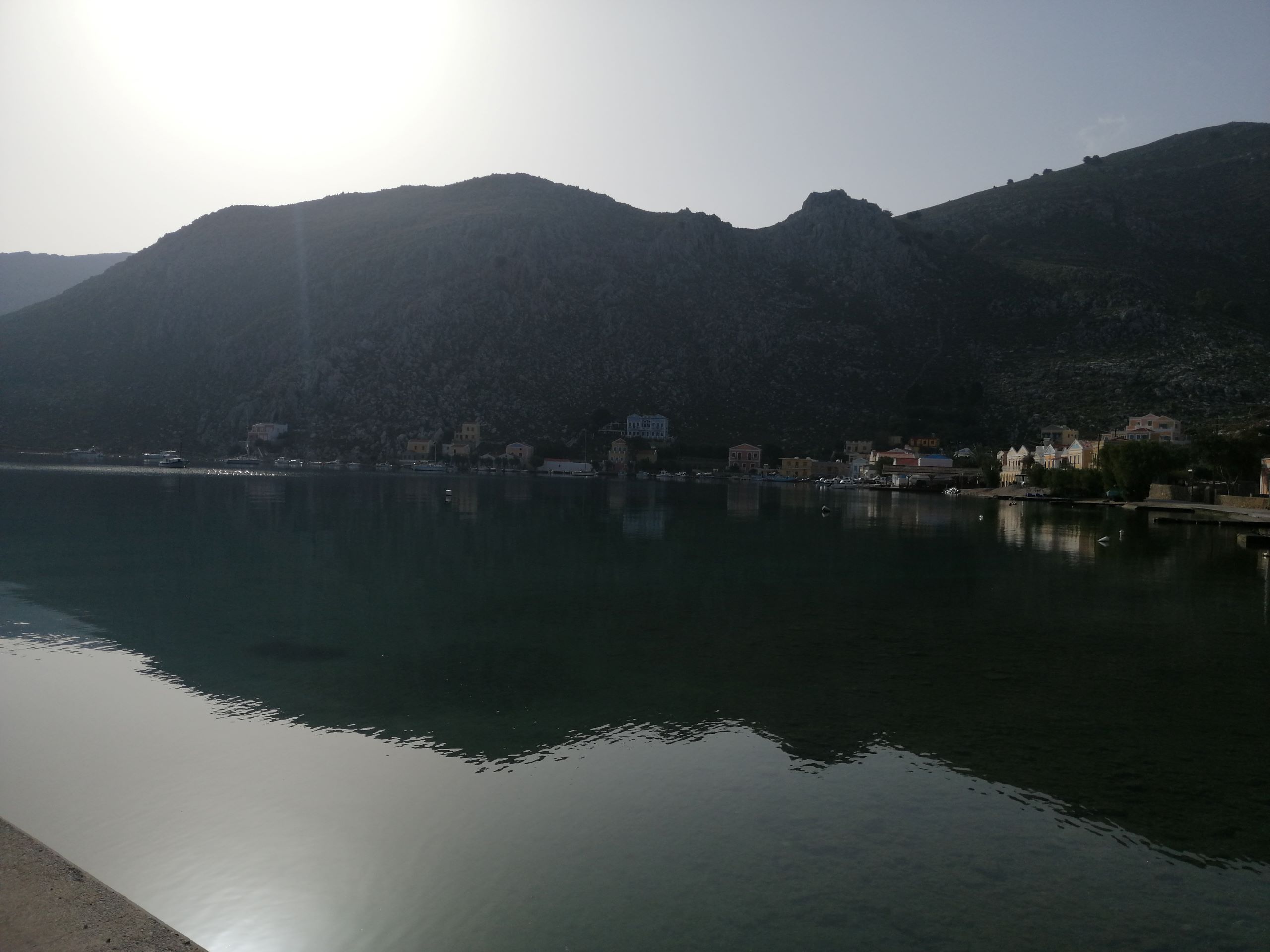
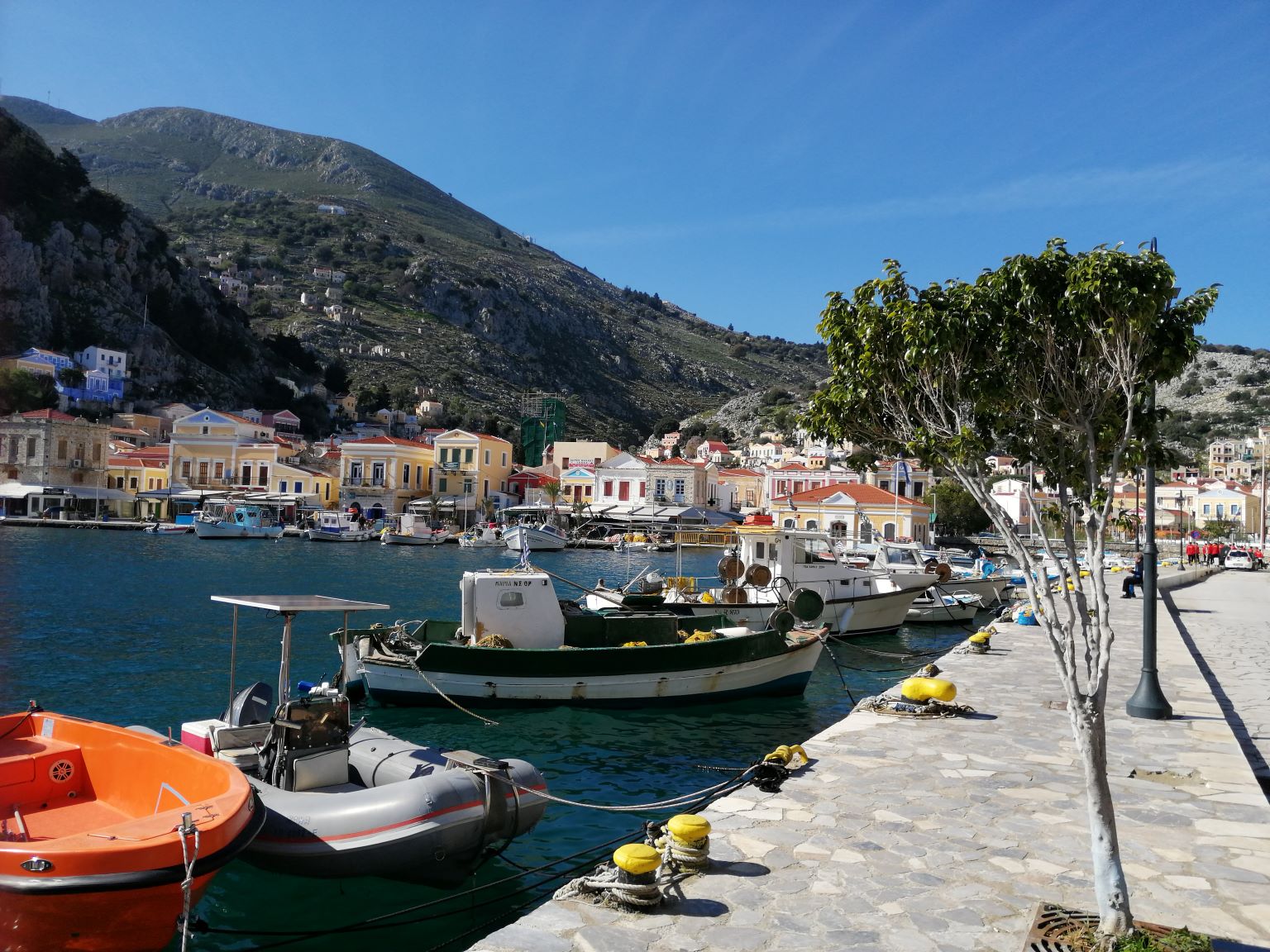
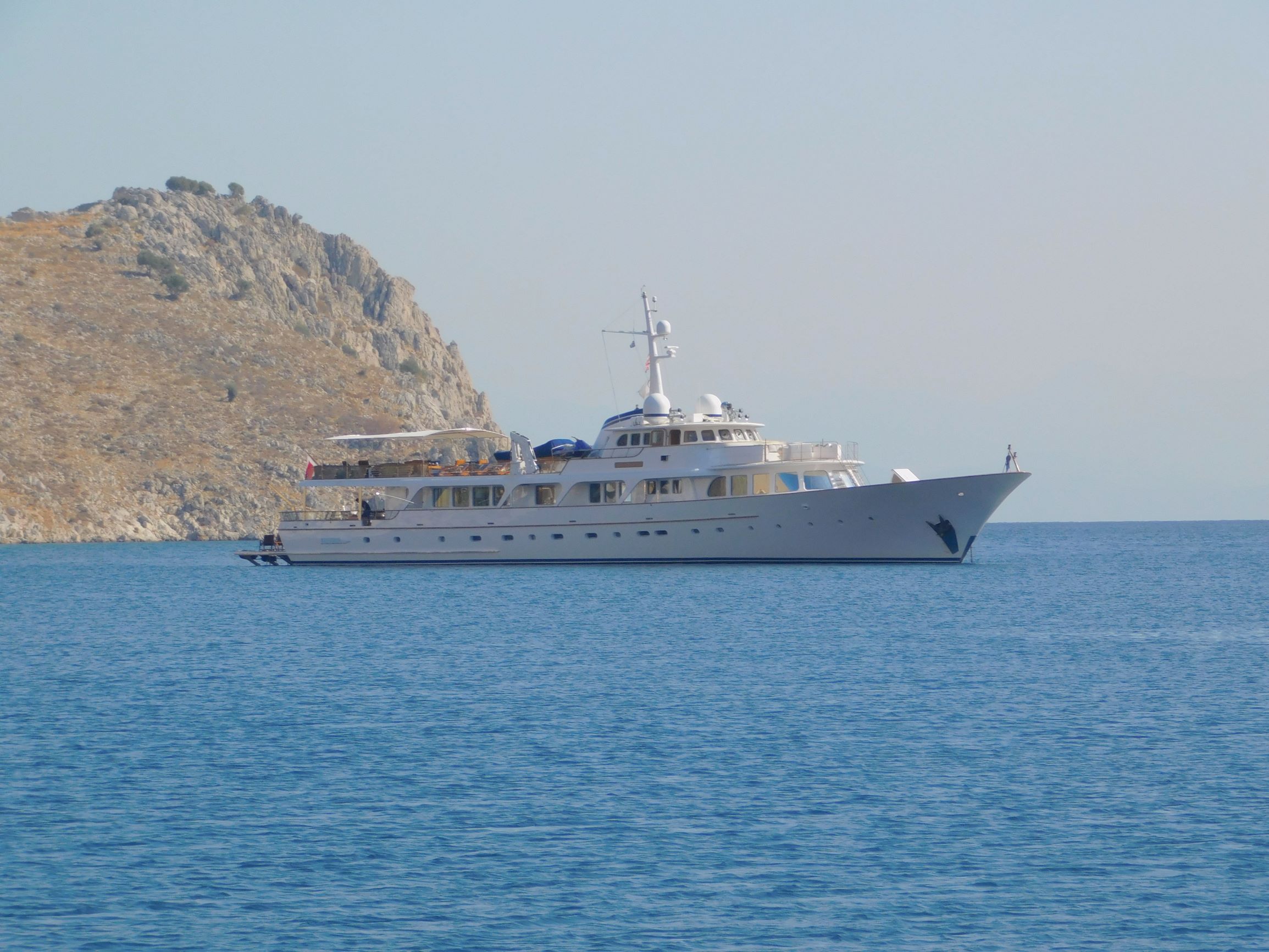
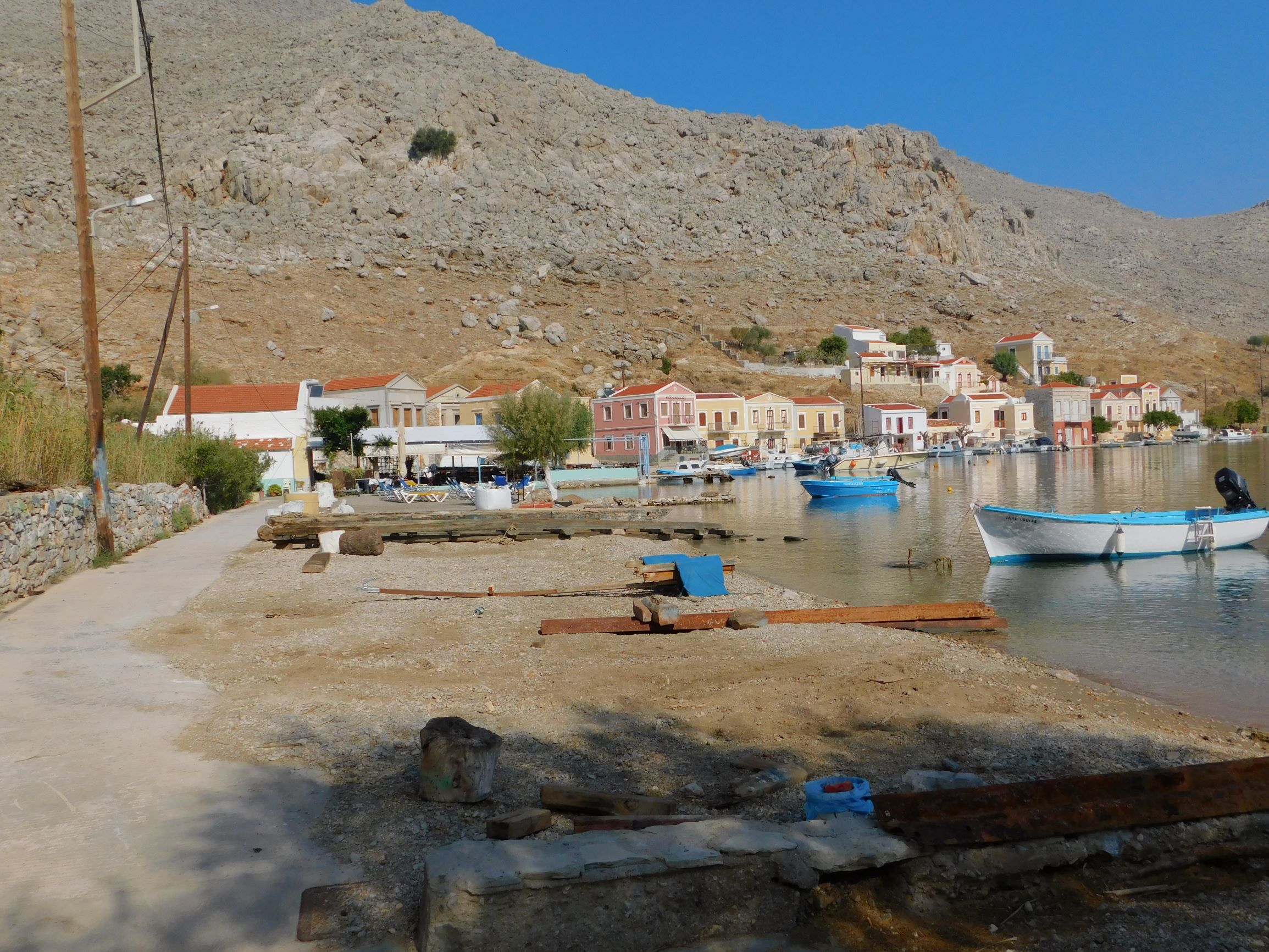
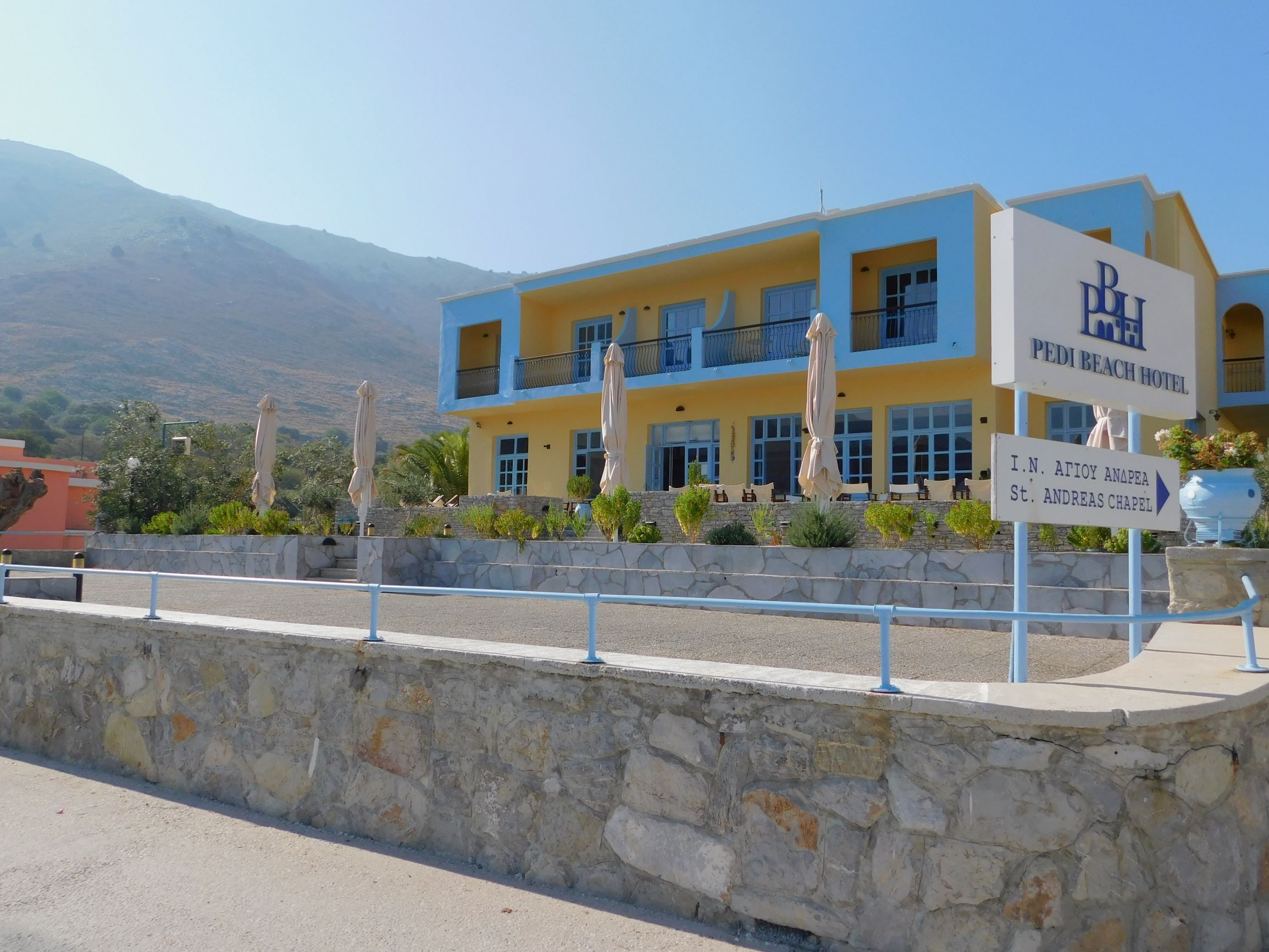
Turkish yachts in Yialos on Thursday last week.The beach at Apostoli’s in Pedi is still a cheerful lineup of wooden caiques.Not much happening on the jetty in Pedi at the moment as the taxi boats are out of the water, having their bottoms painted.The beach at Katsaras is still mostly piles of sand and gravel. The staff have started painting the chairs and tables for the taverna and refurbishing the wooden sunbeds. The tamarisk trees have had their annual decapitation. As you can see, the forecourt of the Pedi Beach Hotel on the right, is still devoid of outside furniture as the hotel doesn’t open until 4 May.The rockface opposite the Asymi Residences hotel in Pedi is a hanging garden of hardy indigenous plants. It might not look like much but there is a feral cat family living in that crevice in the centre of the lower photograph. I only found out because I saw a large ginger cat disappear in there one afternoon. There must be quite a large space in there as the white tip of his tail disappeared completely into the void.Brave poppies in a carpark in Pedi. The little pocket in which they are growing has probably retained more moisture as it is protected by the concrete.
Some informal photos taken on Symi in late March and early April 2024.
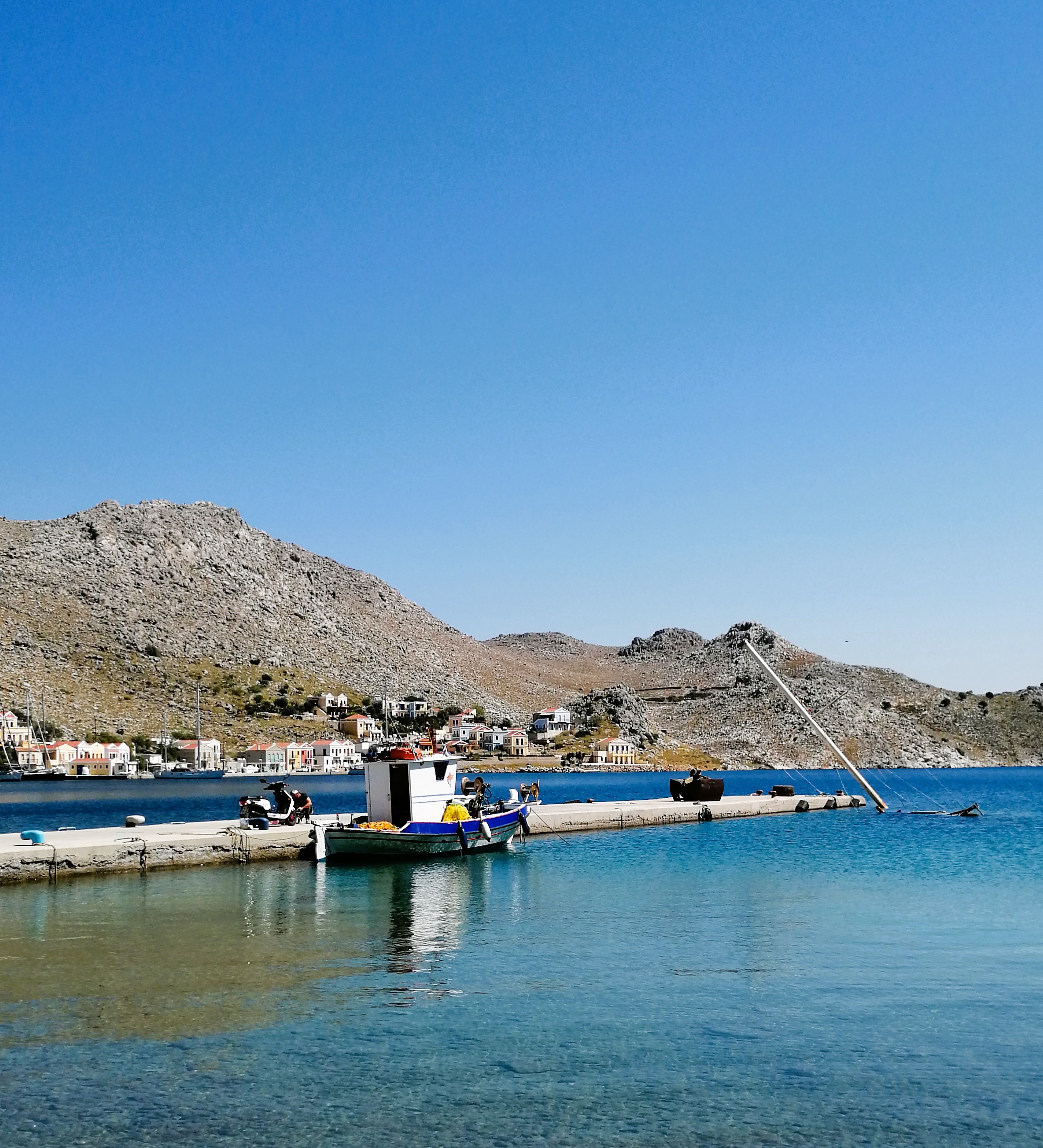
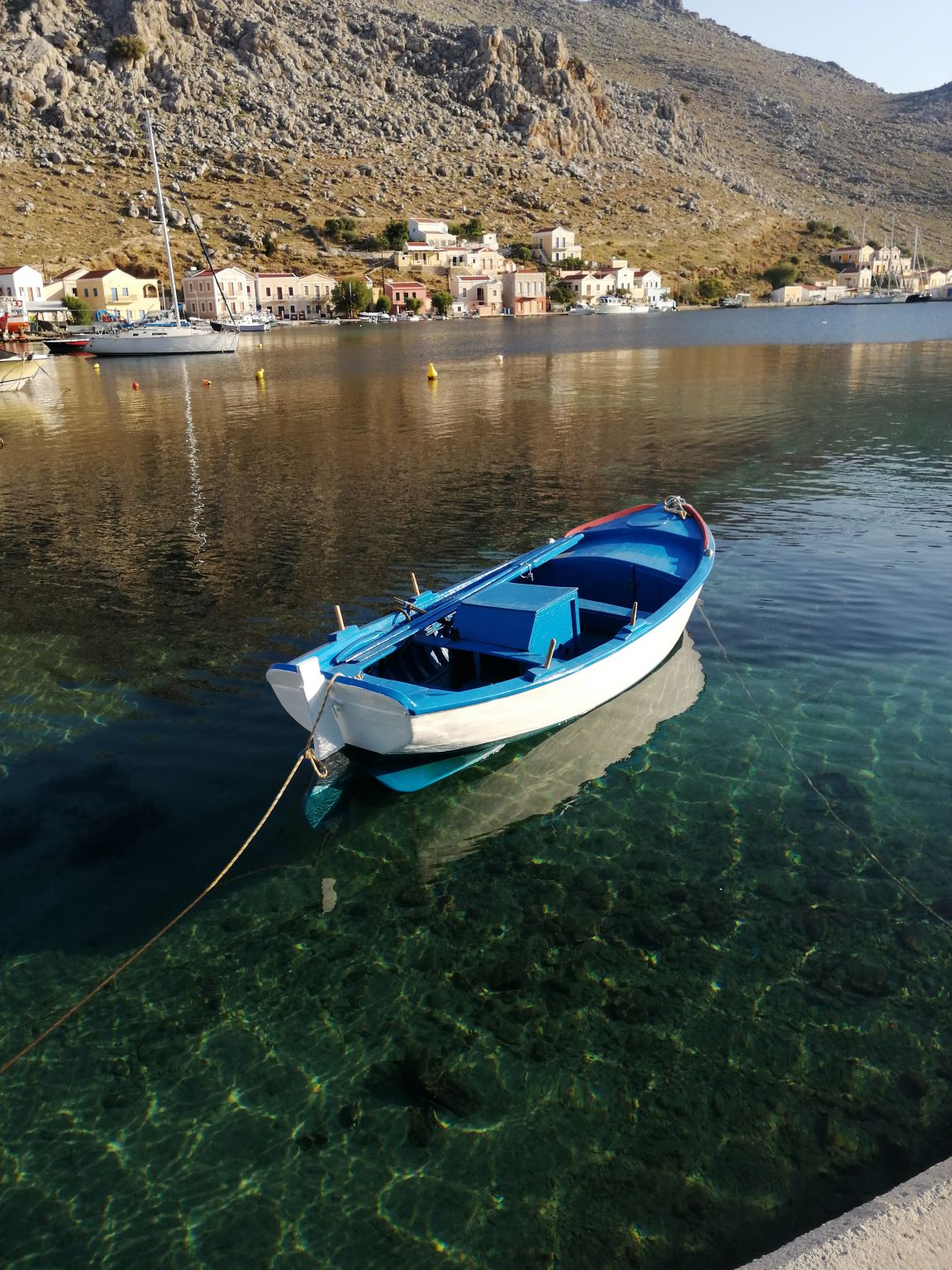
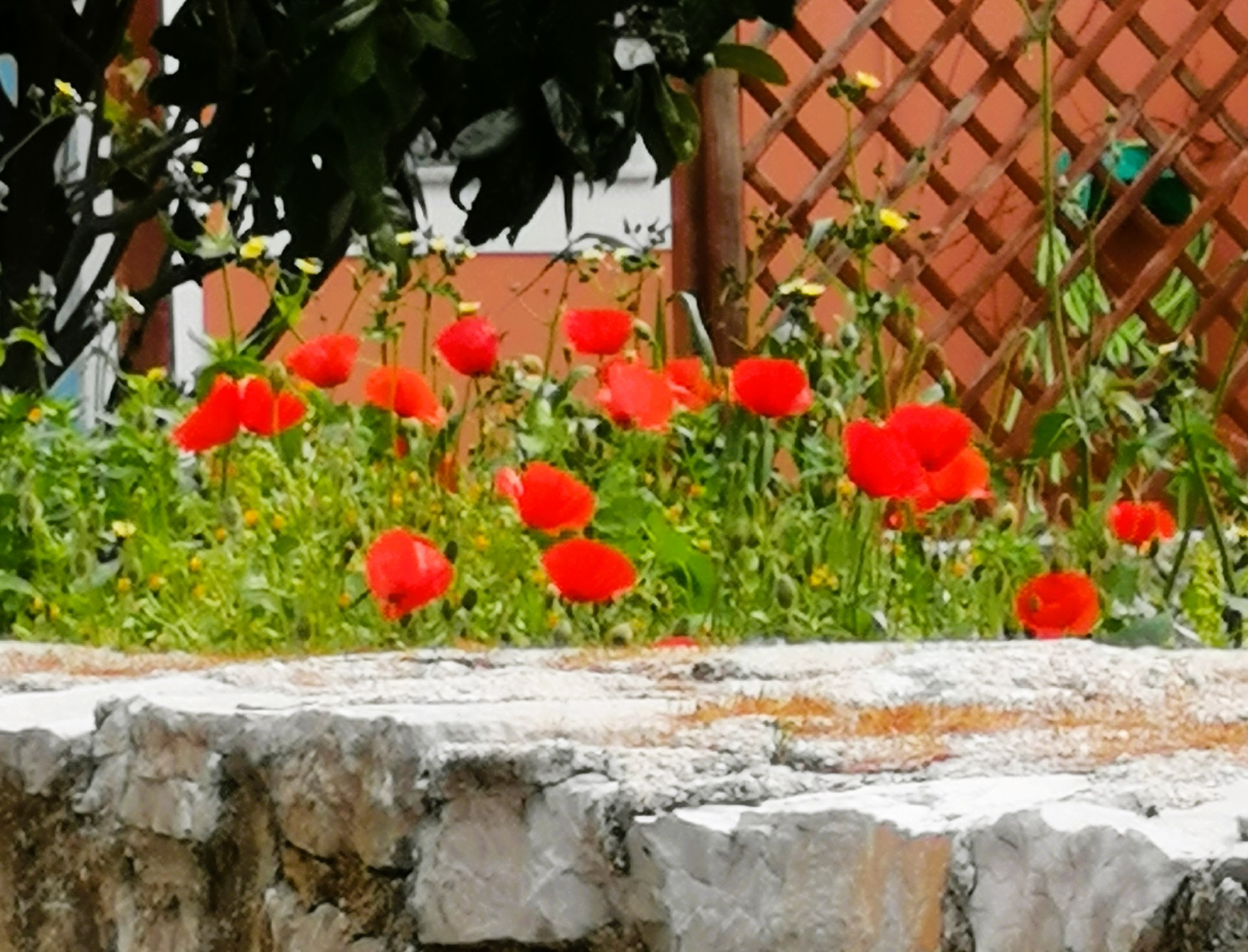
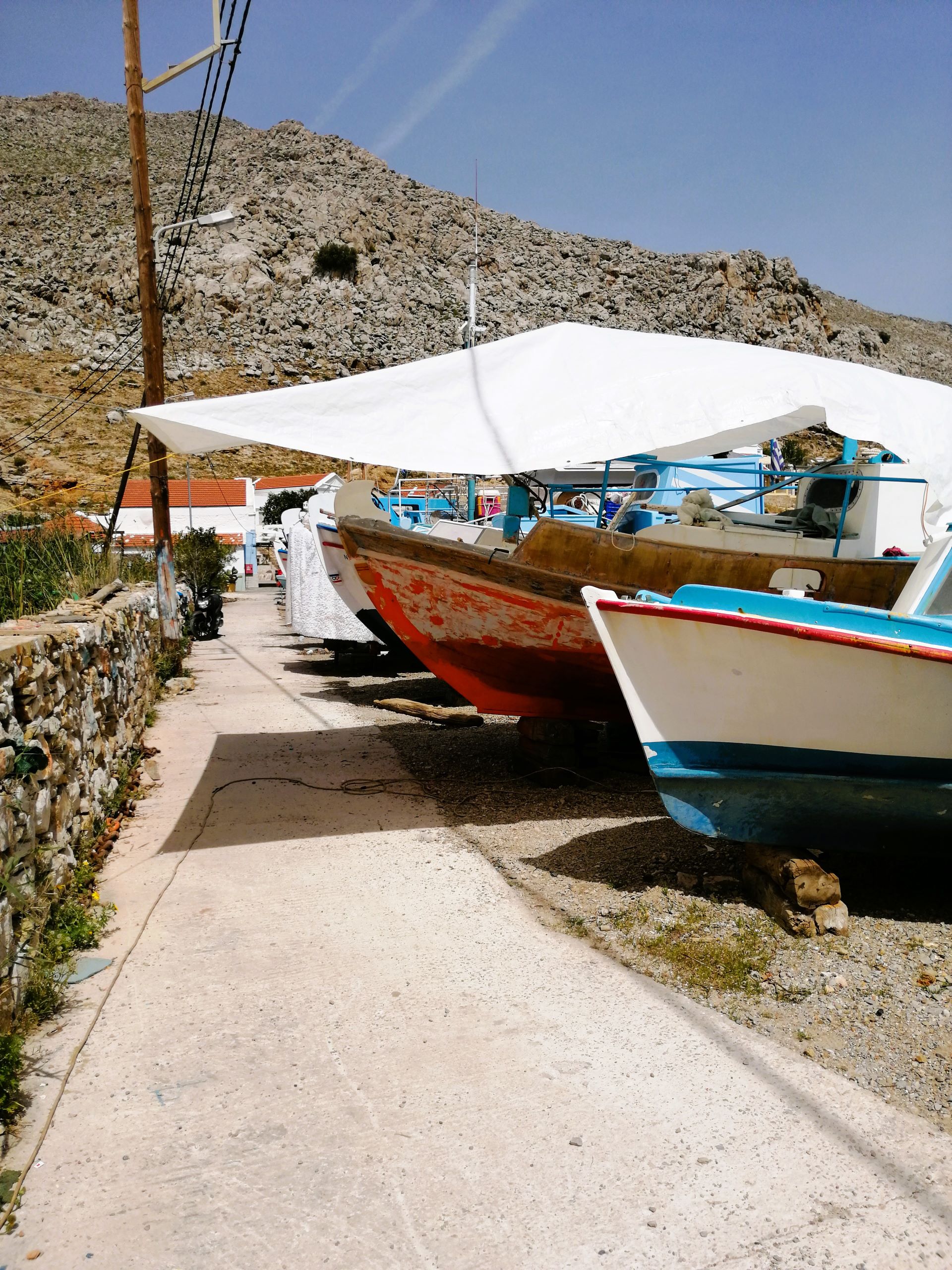
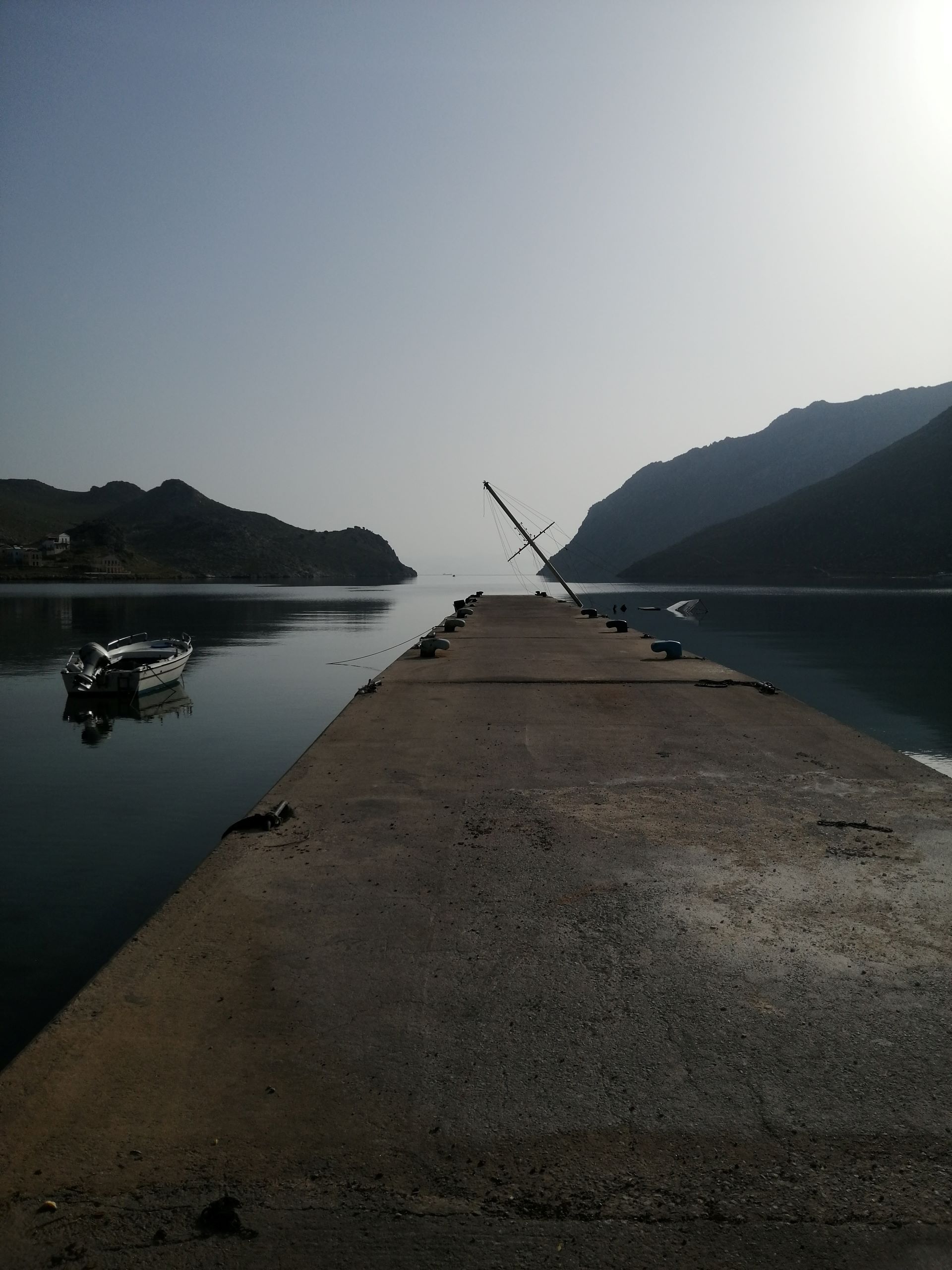
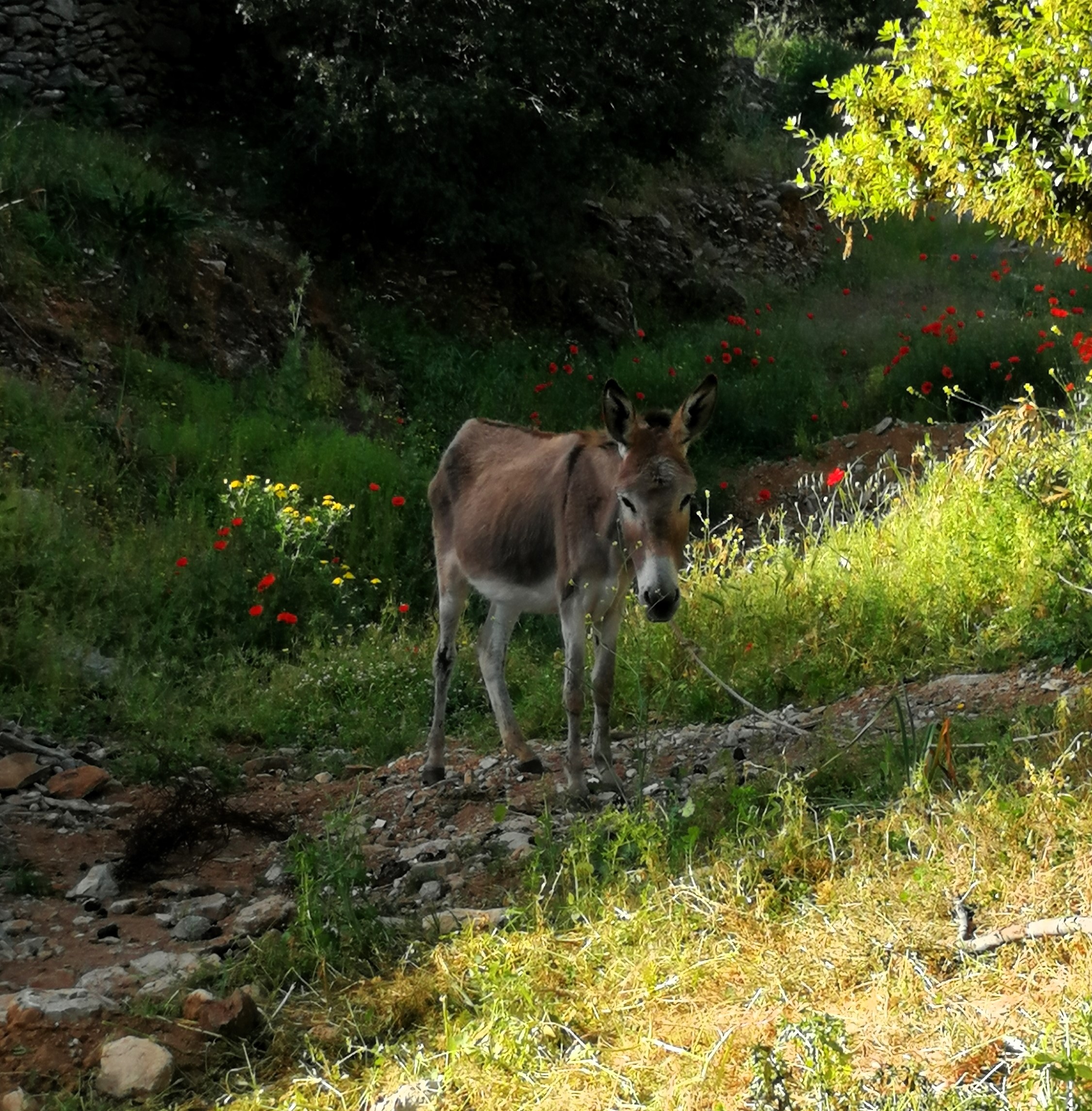
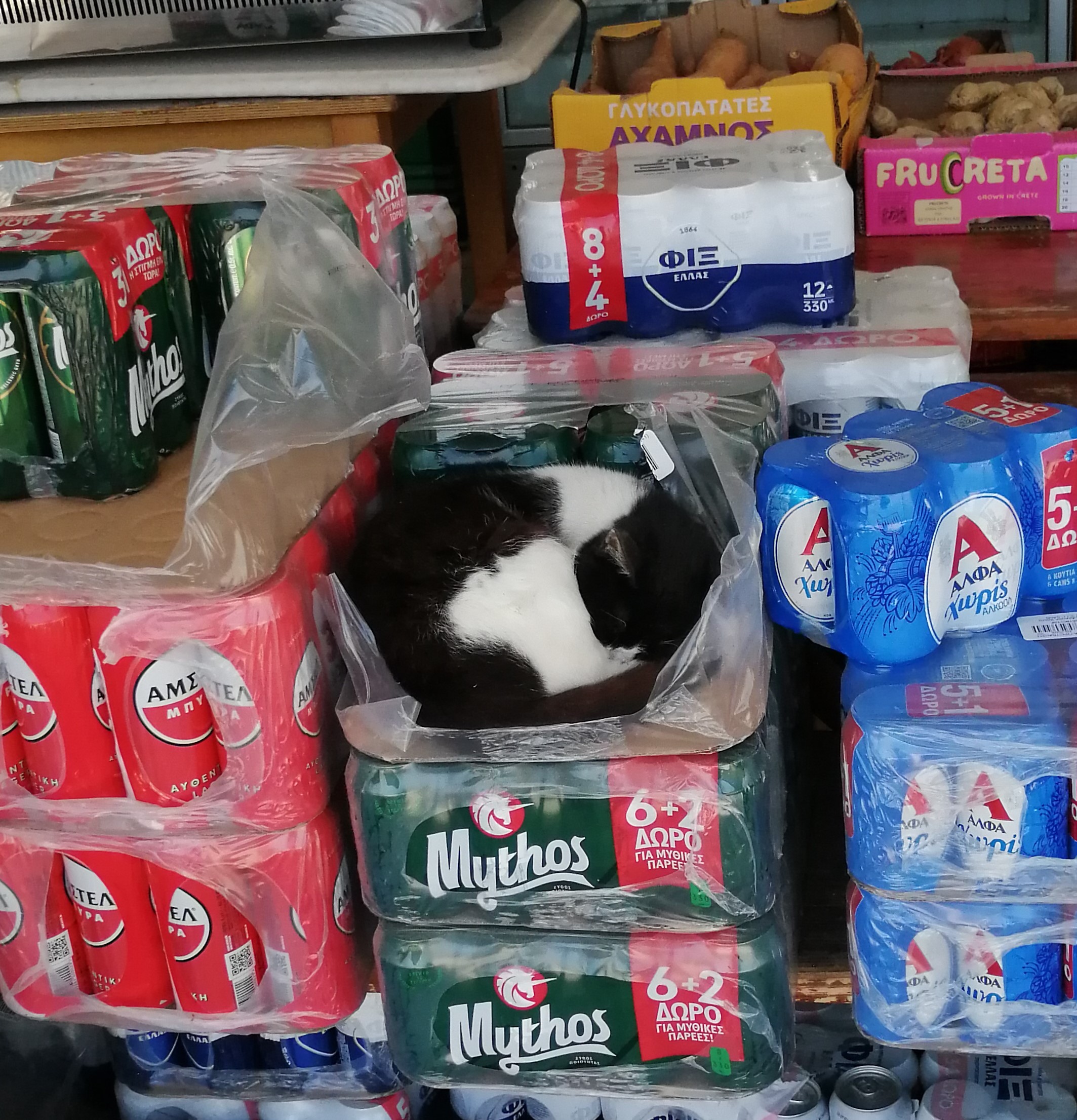
Wild poppies in a garden in Pedi.Wild cyclamens growing out of the rockface behind the bus stop in Yialos.Fishing boats lined up on the beach at Apostoli’s in Pedi. The blue cloth is to protect the hull against the sun. These boats are all wooden and the sun dries out the planking, opening up the seams. In a month or so they will all be in the water and there will be sunbeds along here.The view from the other side. Every day their respective owners come down to sand, grind, spackle, paint and patch. The boats are hauled out and launched using greased ‘ways’ and the only change since Homeric times is that a small bucket shovel and chain winch have replaced man power and brute force.As you can see, the wreck of La Dolce Vita is still there. Greece has been blanketed in dust from Africa for over a week now and visibility is poor.The sailing season has not really started yet. As the month progresses we will probably see more yachts arrive that have been over-wintering in Turkey.With temperatures nudging 30 degrees centigrade everyone is looking for a patch of shade.Including the donkeys in the Pedi valley.Guardian of the six-packs.
Symi snapshots taken over a few sunny days in March 2024.
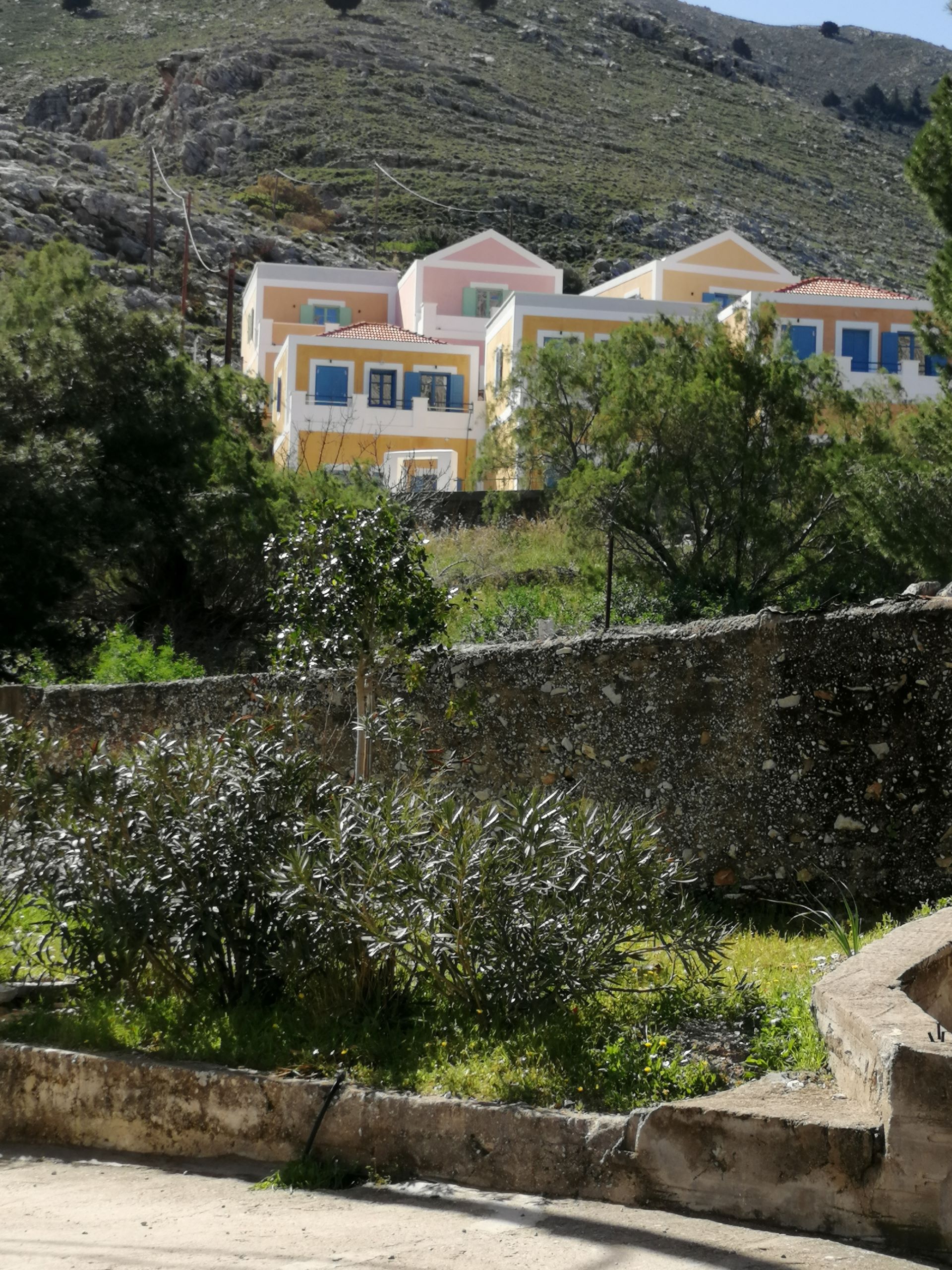
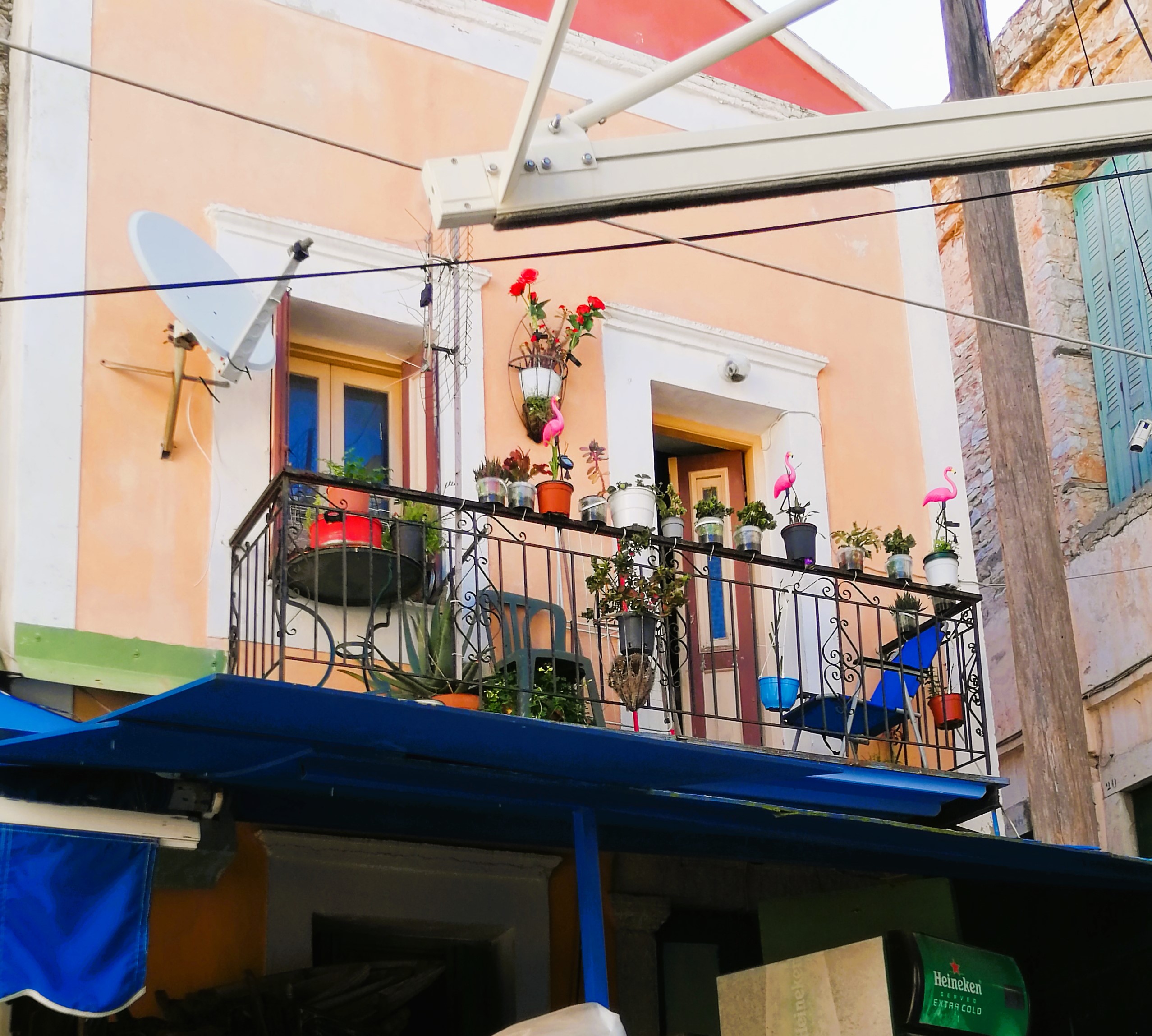
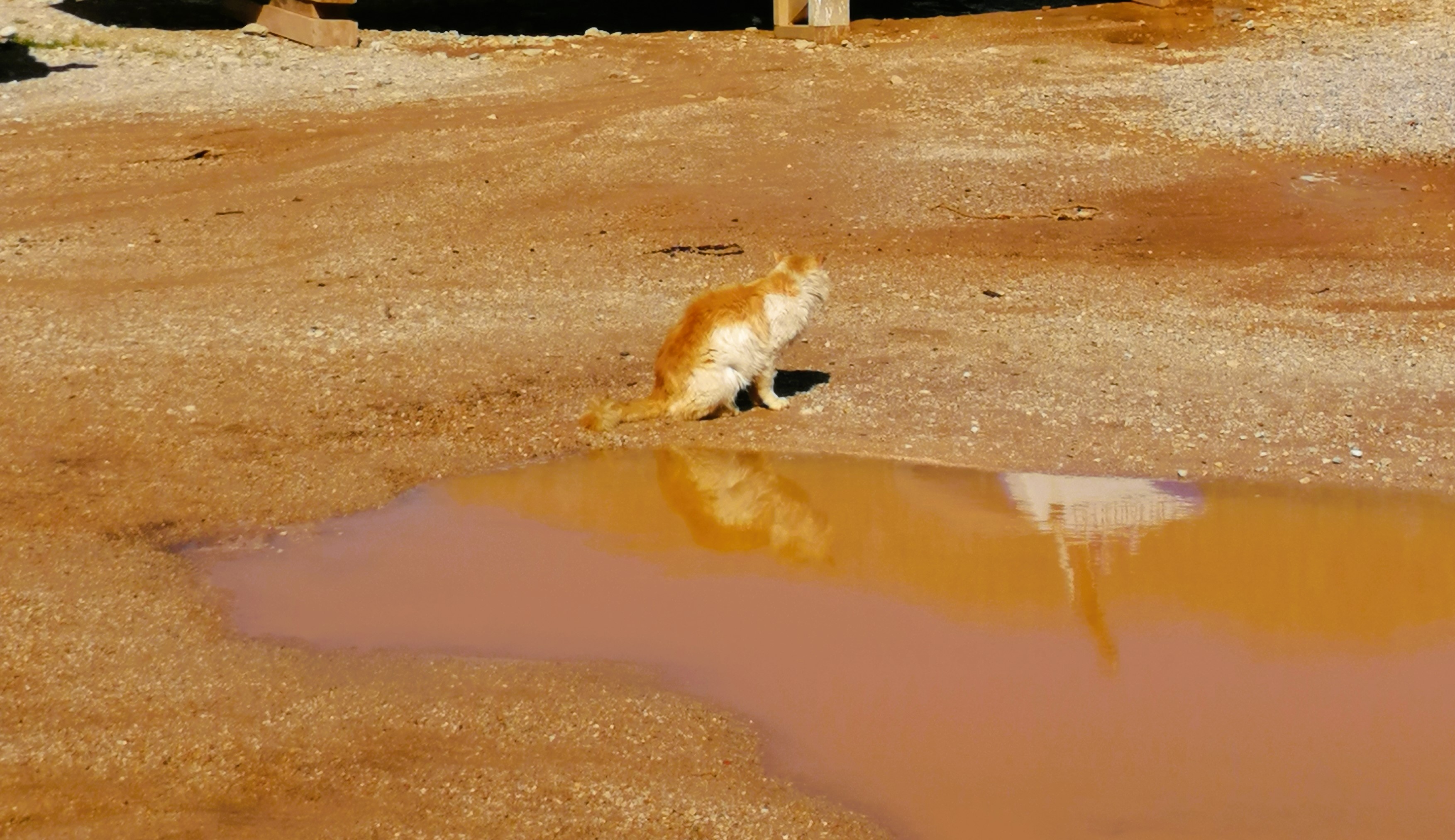
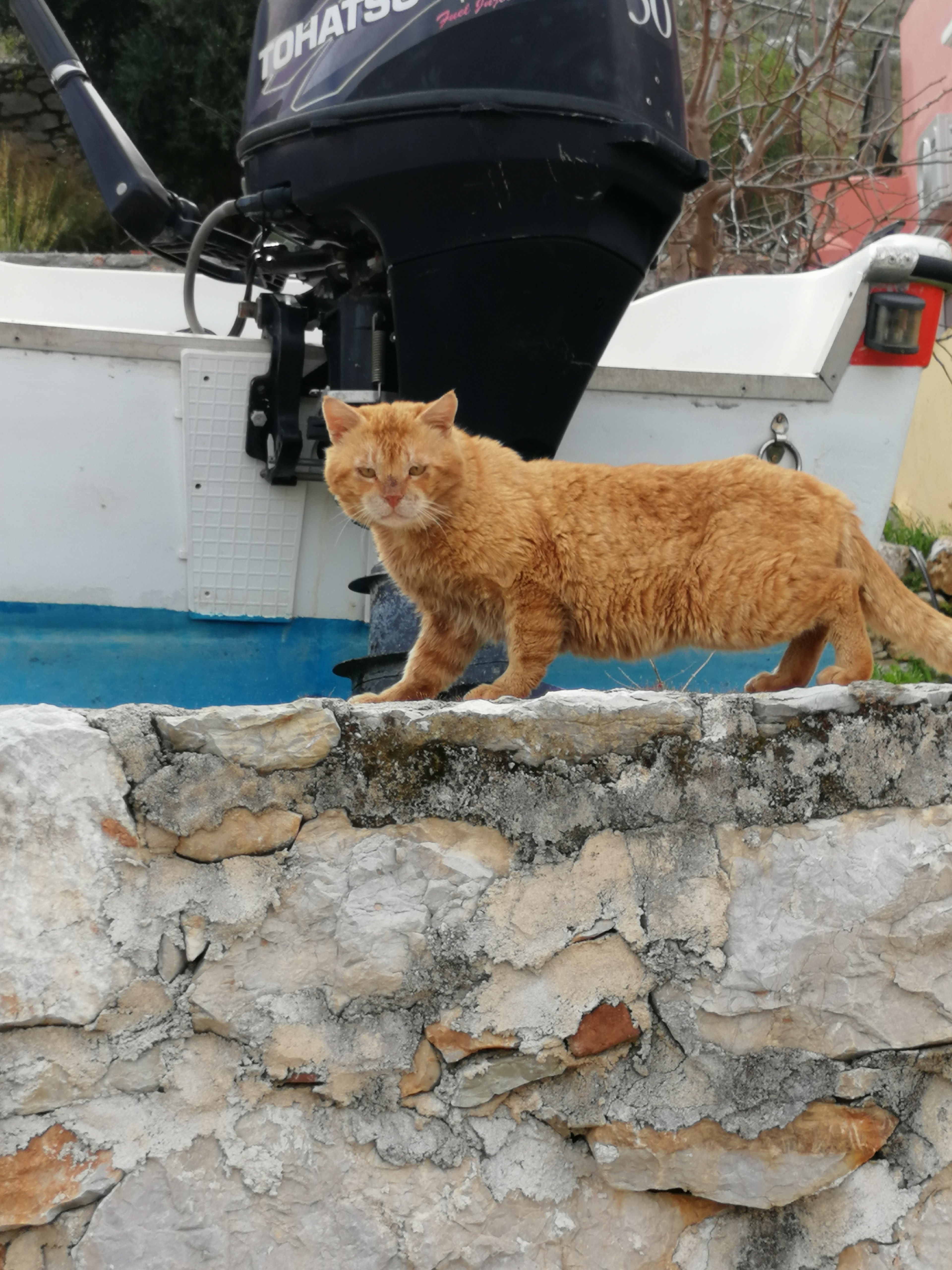
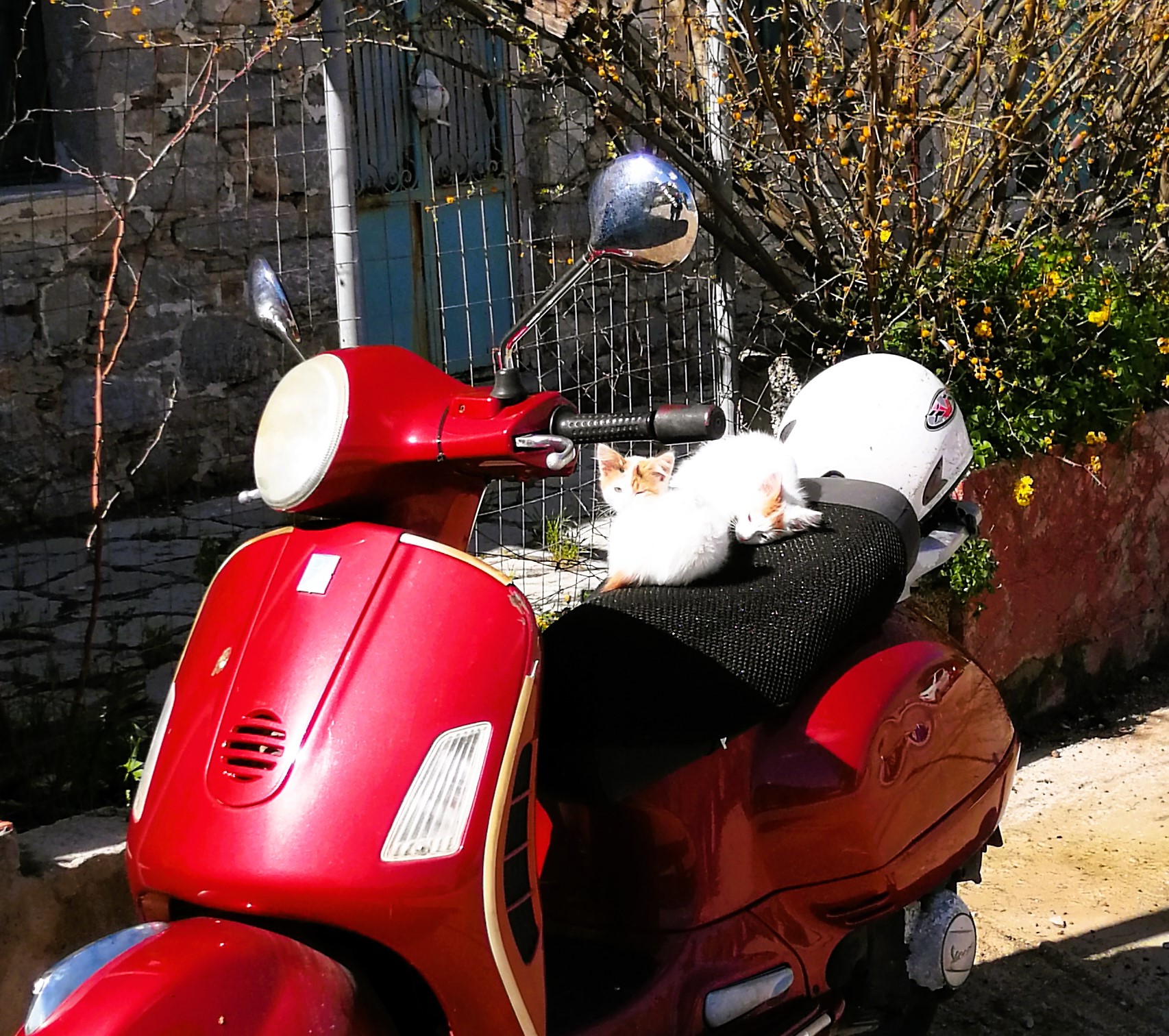
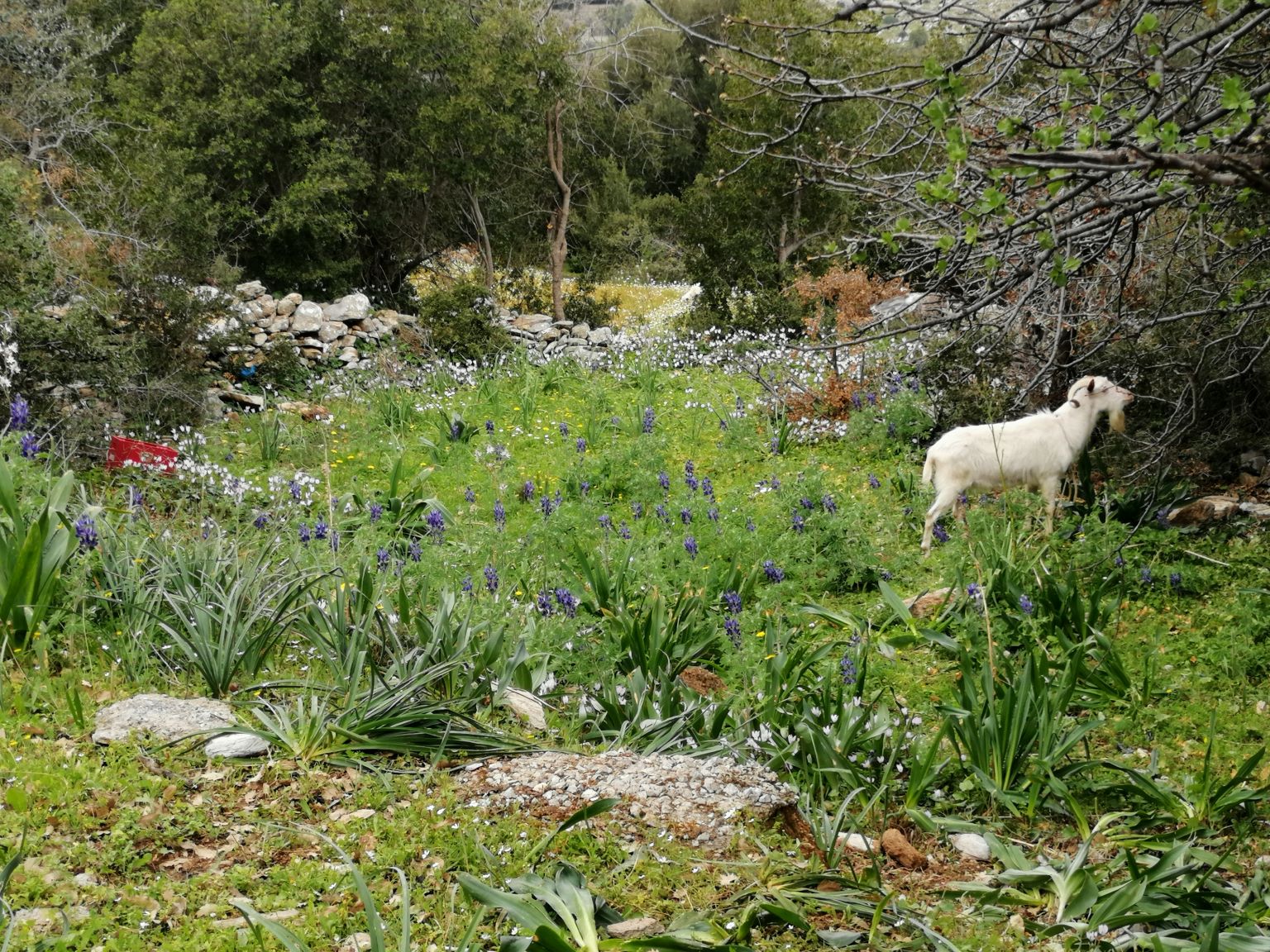
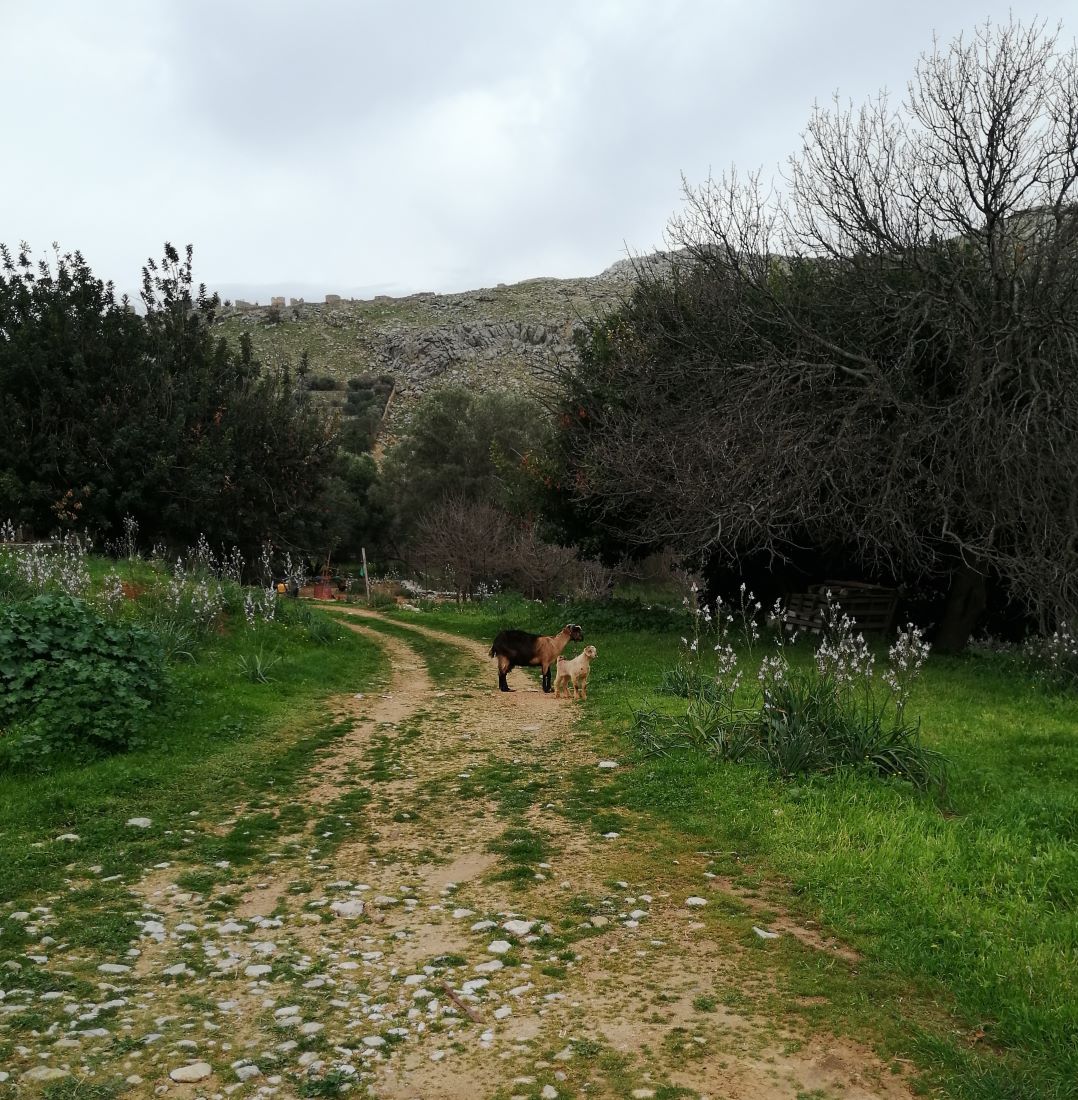
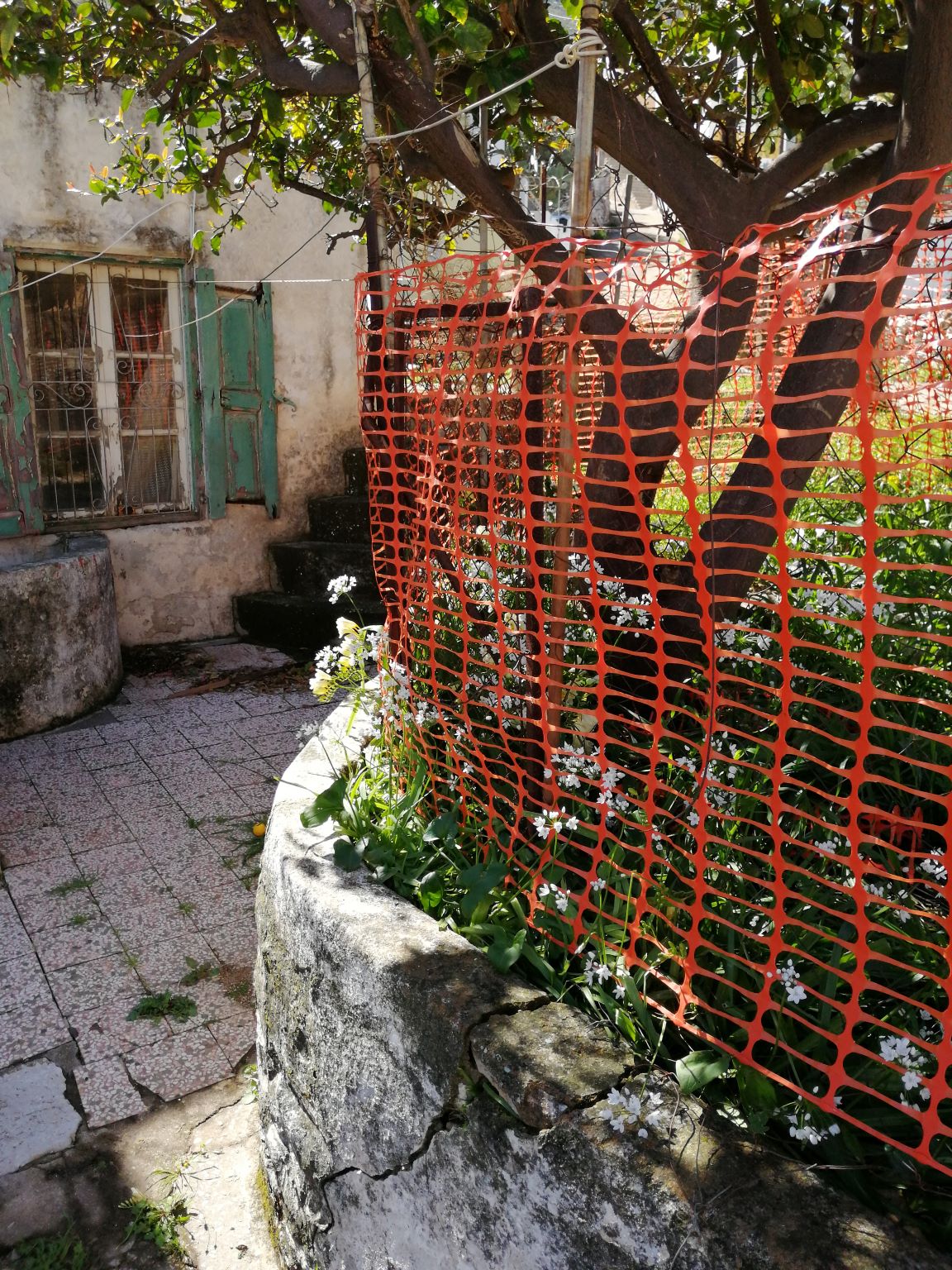
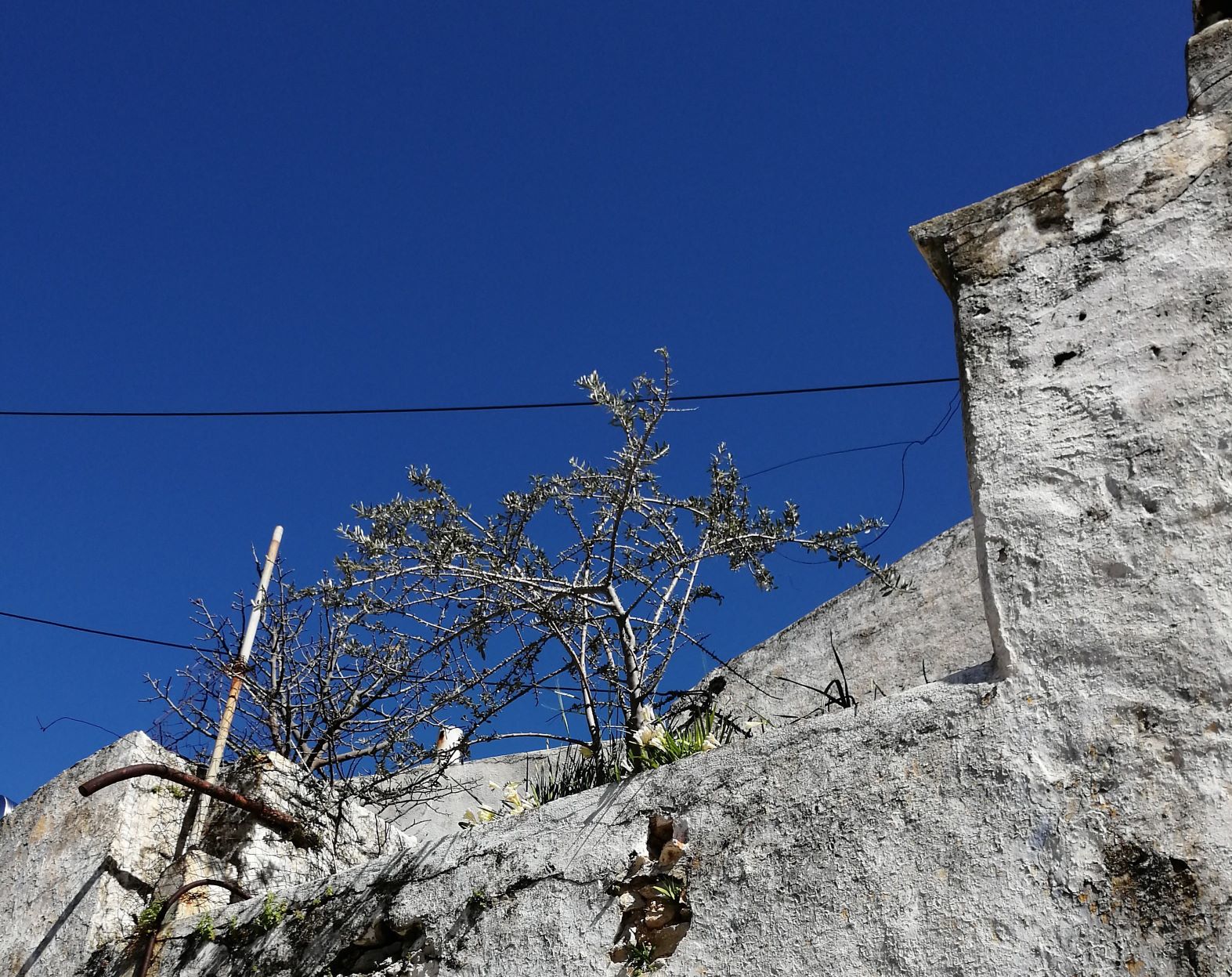
The first phase of the new hotel in Pedi is nearing completion. As you can see, it has been designed to look like a group of Symi neo-classical houses.Flamingos livening up a balcony above the Bella Napoli pizzeria in Yialos.Behind the scenes of a well-known fish taverna in Yialos.The little red figures disappearing into the distance are a visiting football team from Ialysos on Rhodes, over for the day to play against the Symi team.This old bruiser of a tom cat was admiring himself in the puddle but, as cats do, he decided not to face the camera.His friend, however, was more obliging.Happiness is a warm Vespa in a sunny spot.Meanwhile, in the Pedi Valley…Goats and asphodels.Wild garlic and goat defences.I wonder who planted these freesias and how long they have managed to survive in an untended planter of an abandoned building. The tree was probably seeded by birds.Some of Symi’s most interesting and unusual buildings are at risk of crumbling away to nothing due to lack of funding to restore them.
Well no, not really, but we were astonished when we were in Rhodes last week to see the Christmas decorations going up in My Way, a department store on the road to Faliraki that sells everything from power tools and solar water heaters to baby’s nappies and bread bins. Not even a token Halloween cobweb for old time’s sake.
Lidl, the German discount supermarket which has two branches on Rhodes is already selling chocolate Santas and frozen festive geese. What makes all this unusual and worthy of note is that it is most unGreek to be packing out the Christmas tat before the last summer charter flight has even left these shores. One of the joys of Greek holidays is their very lack of commercial pressure. There is no danger of being jingle-belled into submission by the first week of October in Greece. At least, that is how it used to be, so it was surprising to see the staff of My Way wrangling plastic trees on 13 October.
Perhaps last year’s lockdown Christmas has altered perspectives. Or perhaps the grid-locked container ships clogging ports around the world are forcing shop keepers to sell whatever is hanging about unsold from the lockdown days and it was a toss up between the Nutcracker and the Easter Bunny.
It has been a strange summer in a time of strange summers. Symi was exceptionally busy once the starting gates opened. Some businesses in the harbour even reported their best August in years. Certainly in terms of personal observation I got the impression that people were holidaying closer to home. Young people who might previously gone off to Thailand or Bali opted for parental summer homes on Greek islands and found it was more fun than they had expected. The fourth week of August, which is often a sort of no-mansland as the Athenians, French and Italians leave and the northern Europeans only arrive in the first week of September, was really busy as people extended their holidays and last minute AirBnB bookings filled gaps.
September also turned out to be a bumper month. Once it became (relatively) easier for British tourists to travel abroad there was no stopping Symi’s regular September visitors, plus many of those whose usual June plans had been scuppered by Uncle Boris’ traffic light system. There was a real celebratory hum around the island as happy reunions took place in favourite watering holes and those who were last here in 2019 revelled in the September sunshine.
This cheerful vibe has continued into October but it doesn’t look as though we will have many last lingering visitors into November as happened last year when those who were home-schooling and working on line decided they might as well do it on Symi as anywhere else and it was only the implementation of the sudden drastic second lockdown on 7 November that brought the island to a sudden grinding halt.
The winter rains have come early this year, with the first heavy rains reaching Symi on 12 October. This was the first named storm of the season, Storm Athena. This was followed by Storm Ballos a couple of days later which brought more heavy rain to Corfu, Cefalonia, fire-damaged Evia and, most noticably of all, Athens, where footage of children making bridges out of their desks to climb out of a flooded classroom and bus passengers forming a human chain to escape a flooded bus in an Athens underpass made the international news. Symi is turning green again after an incredibly long hot summer drought and temperatures have dropped into the low 20s.
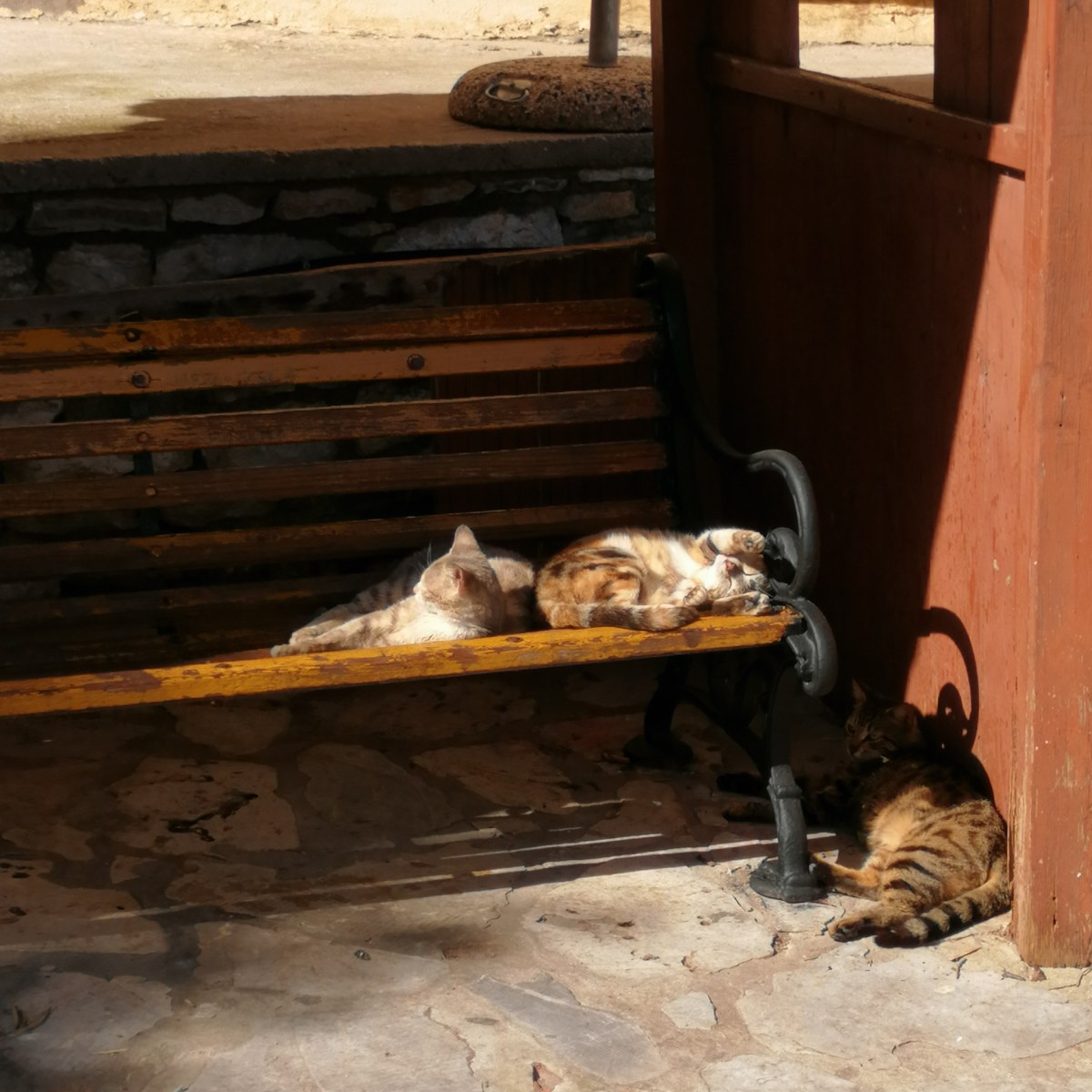
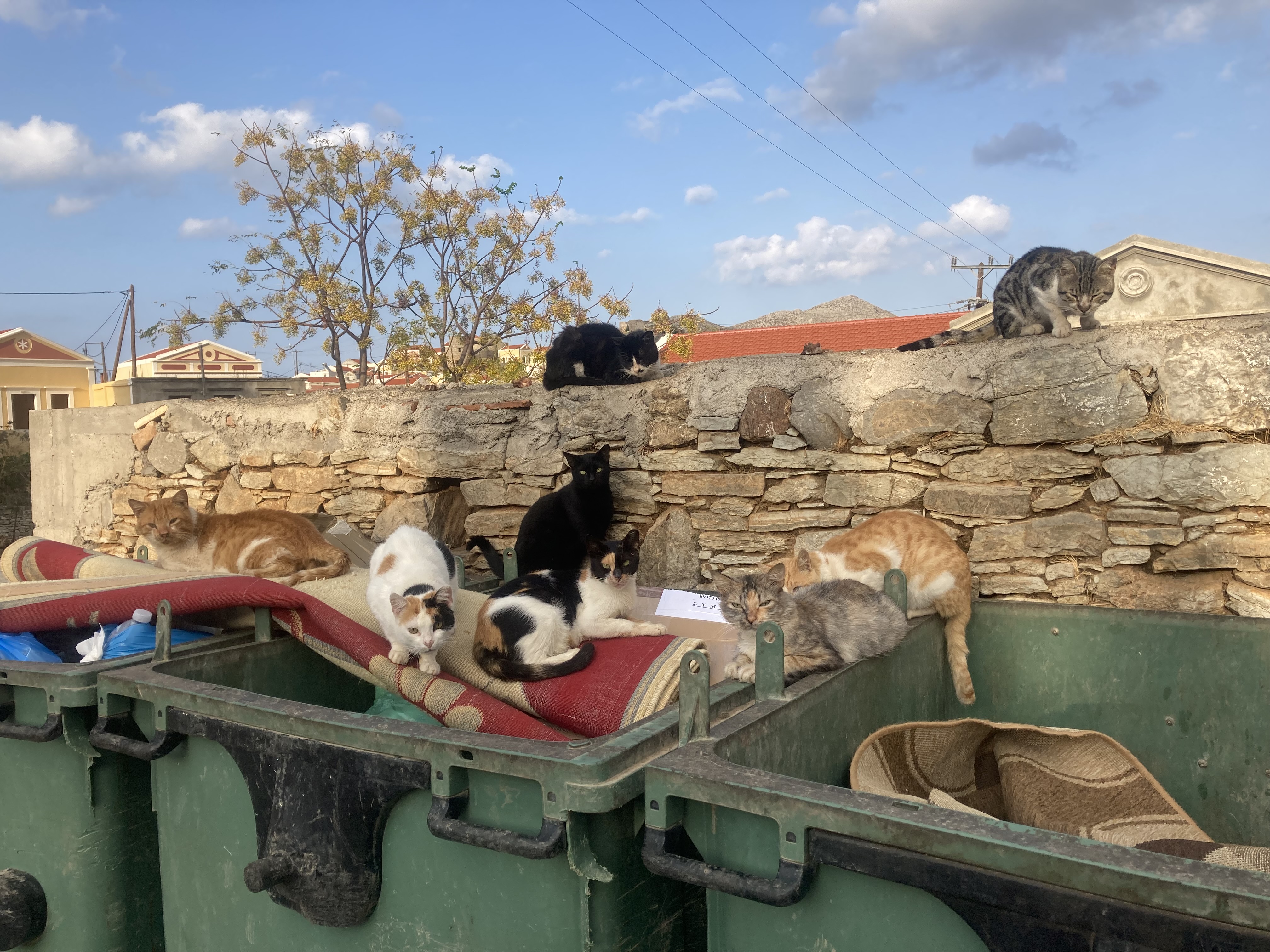
The carpet sellers have arrived and the cats are enjoying last season’s throw outs in the skips of Chorio.
The sunbeds and umbrellas have been packed away at St Nicholas beach in Pedi. They won’t need them to celebrate the Feast of St Nicholas at the tiny chapel on 6 December.
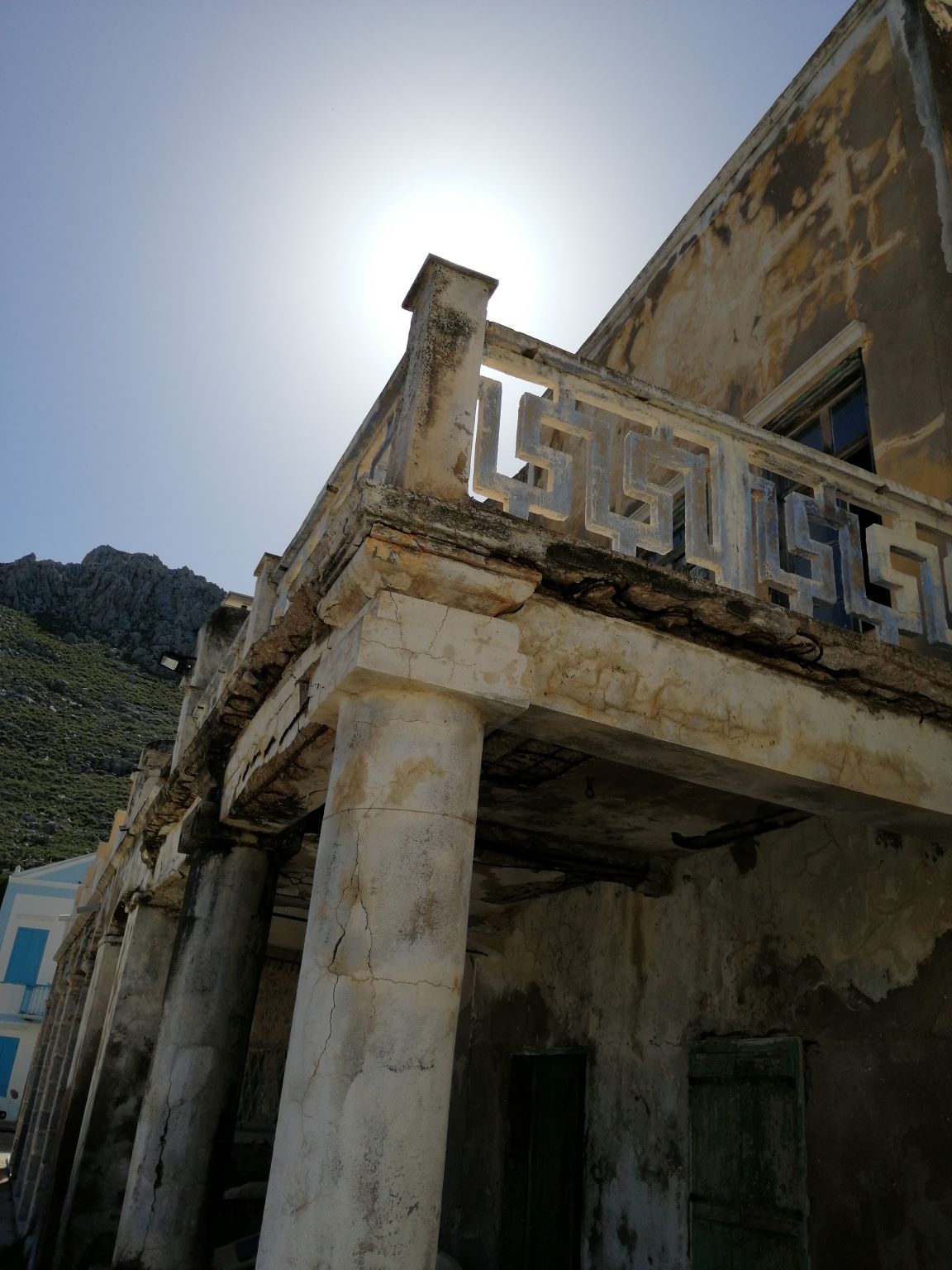
The salt-laden sea air is nibbling away at the terrace of this neglected Art Deco waterfront property in Pedi.
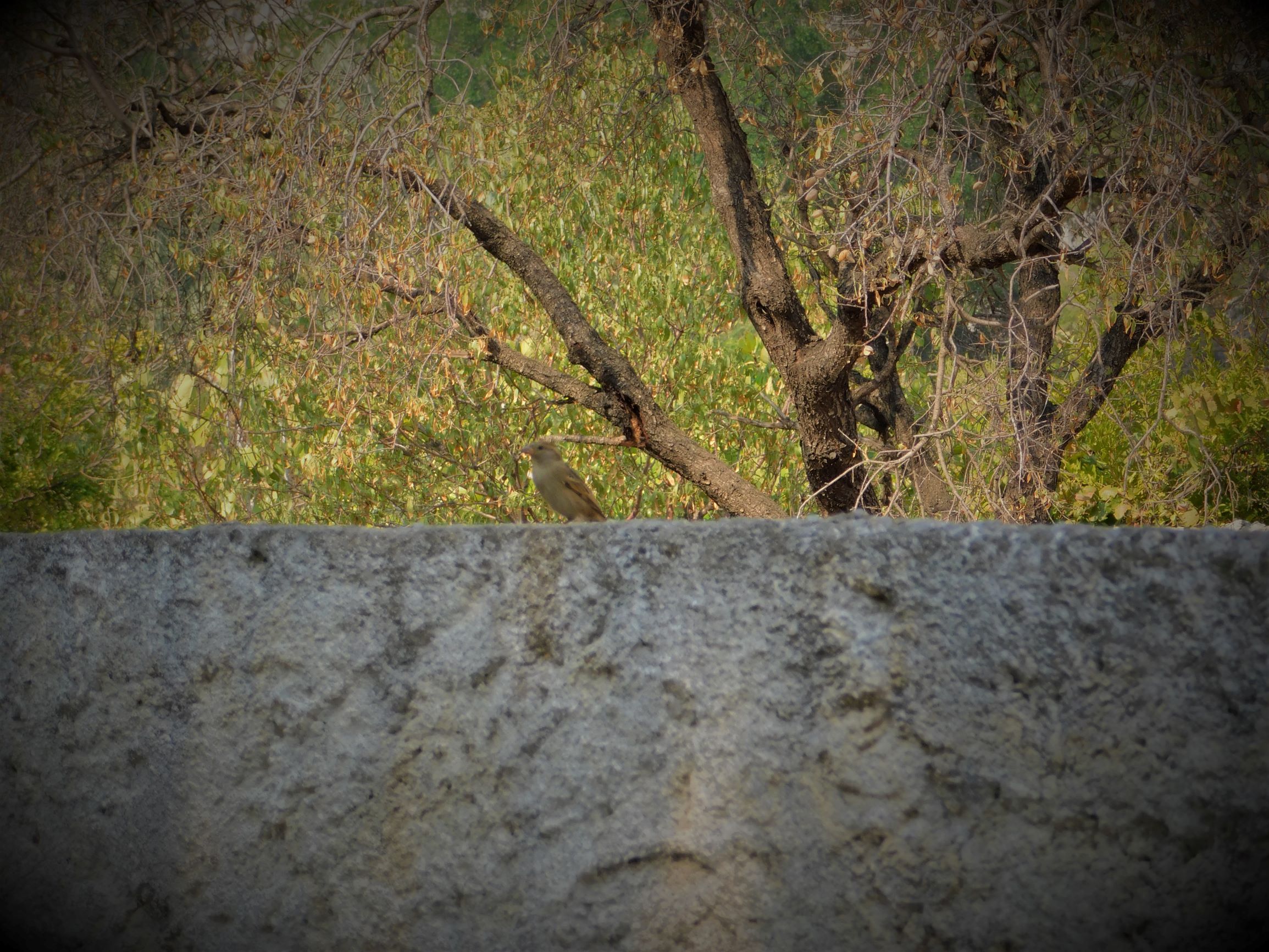
Invisible bird.
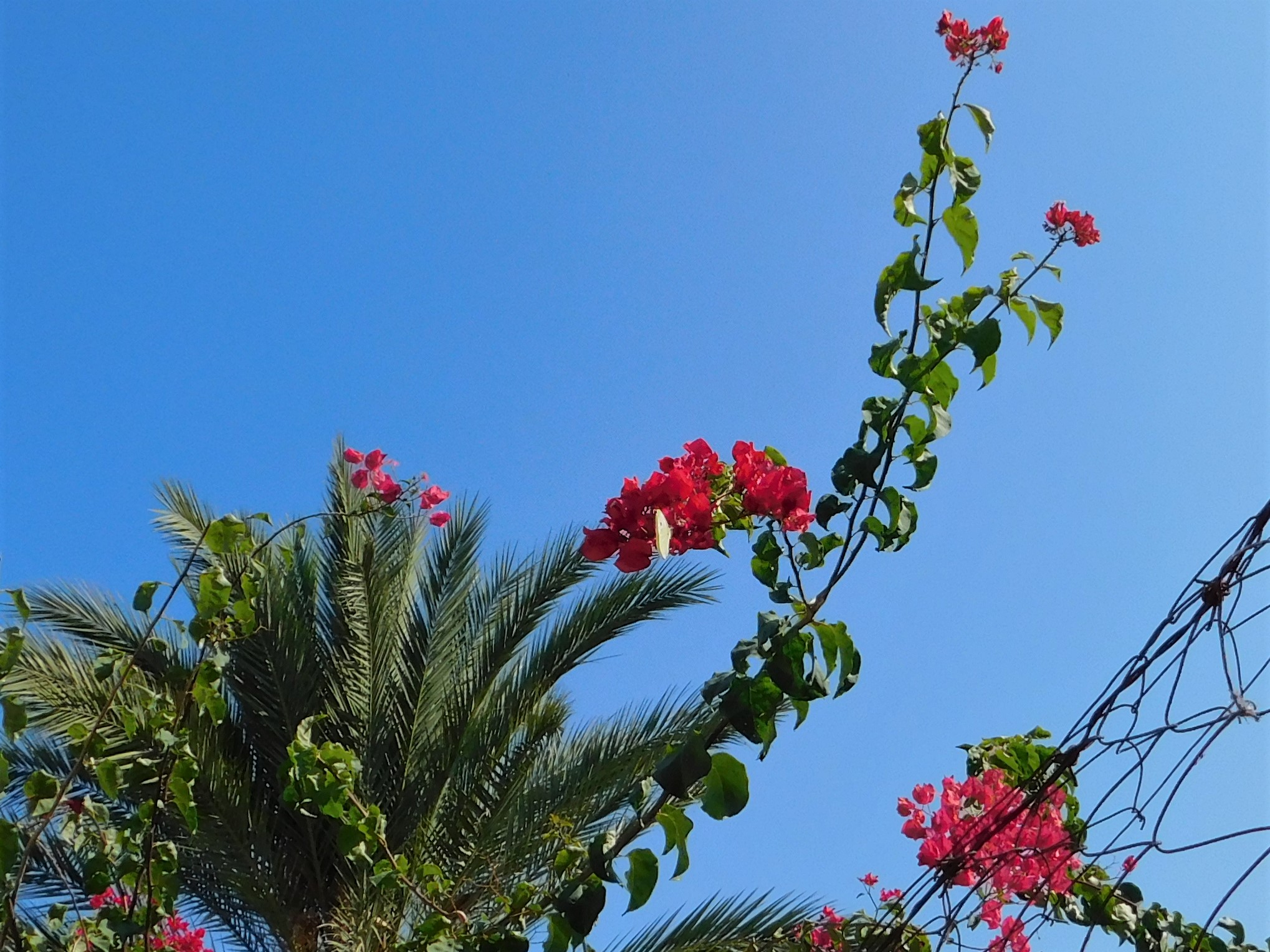
Butterfly and bougainvillea.
Camo cats.
This elegant Canadian beauty was anchored in Pedi for several days last week.
The squill flowers have faded away, replaced by ghostly drifts of pale autumn crocuses and other tiny plants.
Another classic, this one with a Maltese flag.
There has to a story behind this carefully placed ceiling fan blade, resting among the herb bushes in the Pedi valley. Look at how green the sage bushes are after just a little rain.
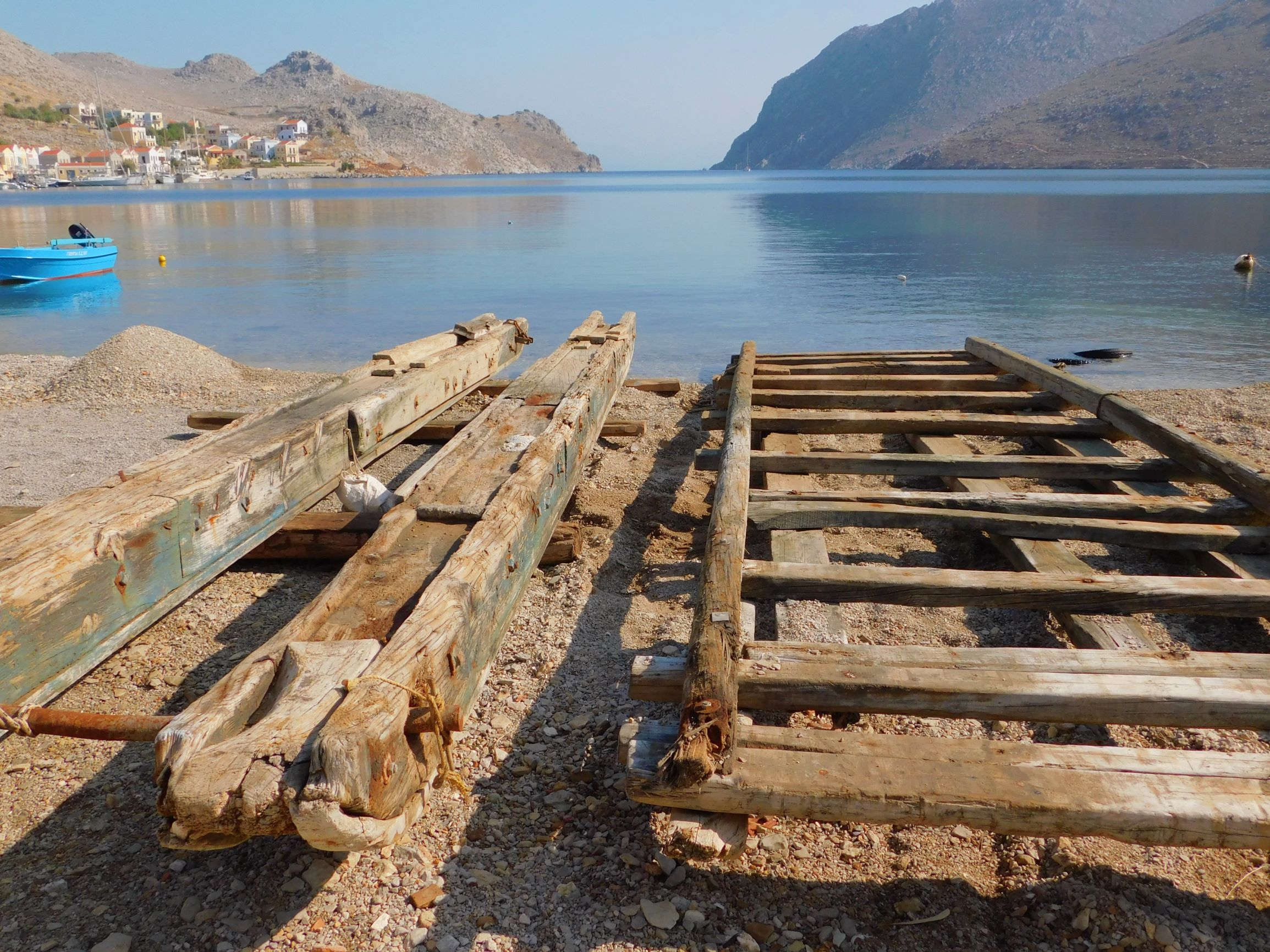
Apostoli is switching from beach mode to boatyard mode. The sledges and skids are being positioned to start hauling out boats.
The fishing season has started. This small trawler will be away for days at a time, if not weeks.
That fragment of shadow is cast by the meander-pattern railing of the Art Deco house you saw earlier. This dilapidated colonnade was once the Kamares taverna in Pedi.
Mimosa
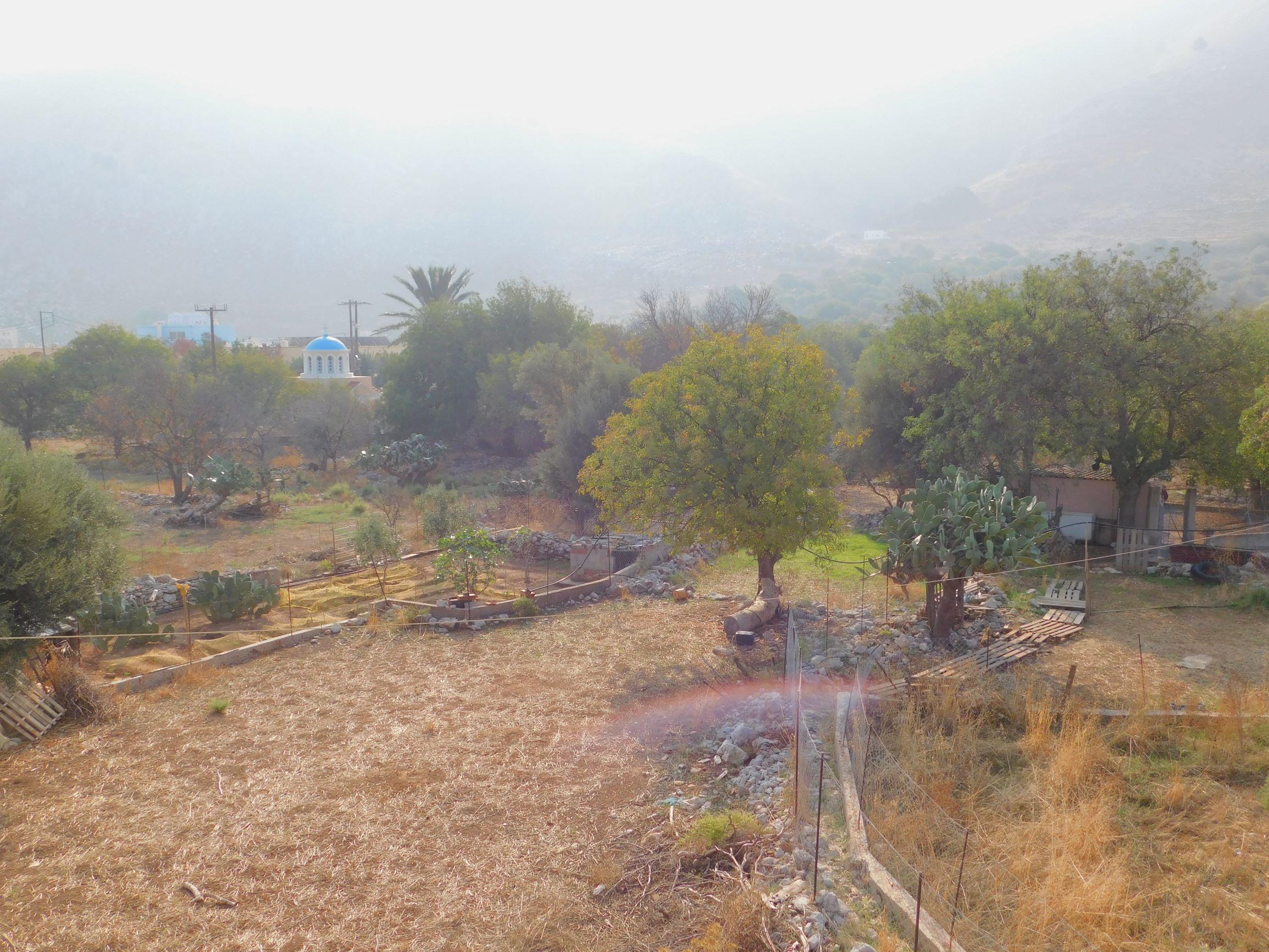
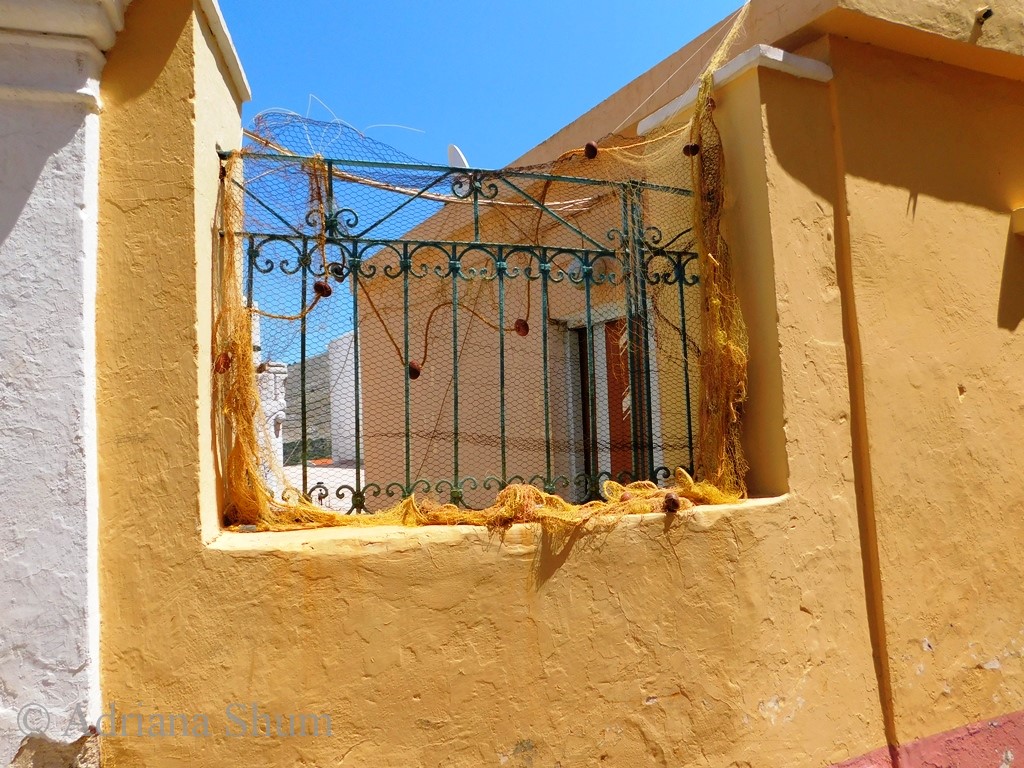
A misty morning in the valley. The yellow nets on the left are to protect vegetable seed beds from birds and cats.
We have only had two rainy days so far but they were enough to wash the dust from the trees and set the grass growing again.
This method of hauling boats up the beaches for the winter dates back to Homeric times. In Greece there is a strong sense of continuity. Why change something if it still works? The underwater profiles of the boats haven’t changed much over the centuries either and they are still built the old-fashioned way at the Haskas boatyard in Pedi, wielding an adze to shape the wood into ribs and frames.
The last guests have left the Pedi Beach Hotel and the staff are systematically packing everything away for the winter.
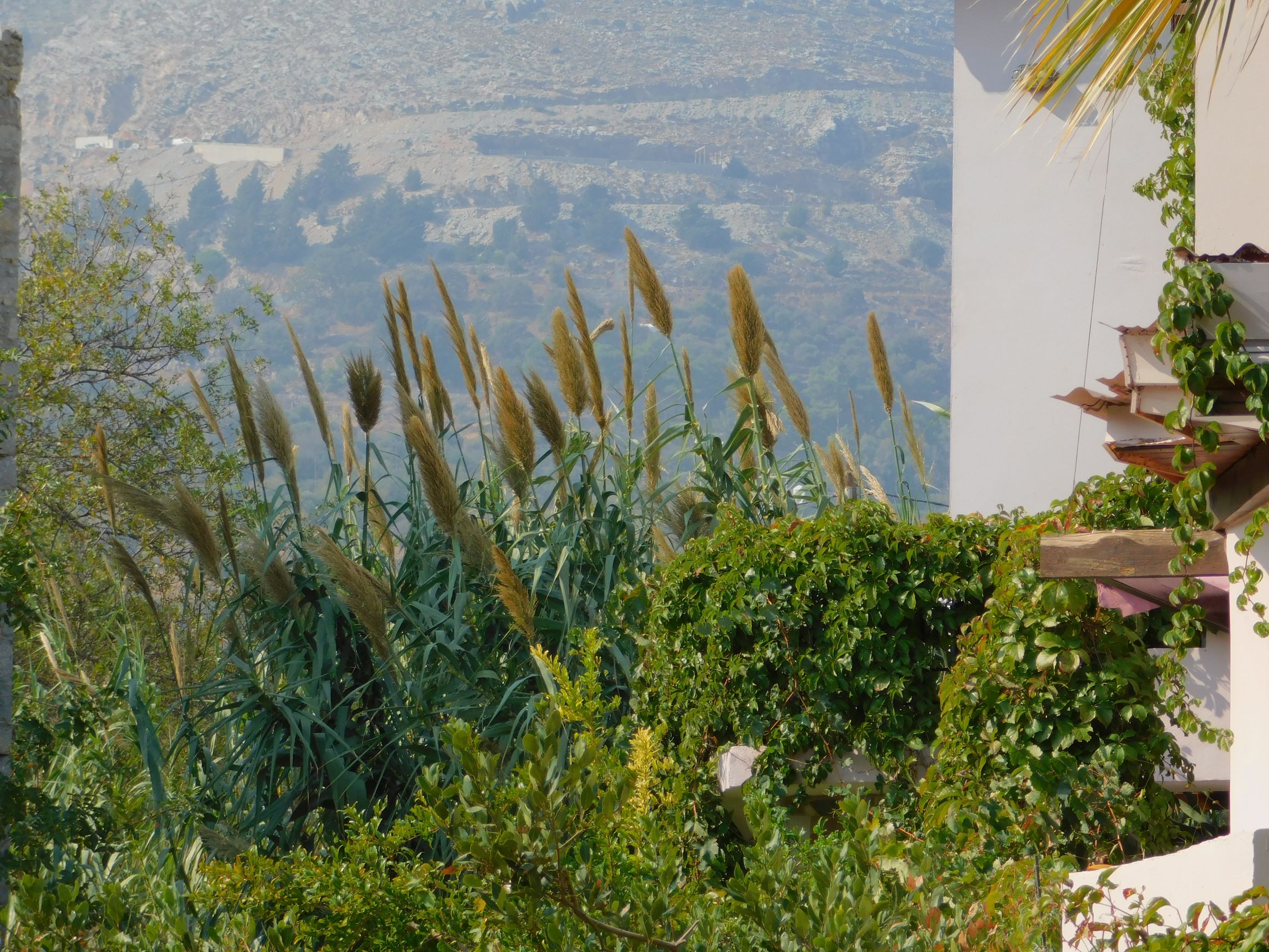
If you look about you, there are a lot of reed beds down in Pedi, despite recent developments in the area. Unfortunately on an island that is more vertical than horizontal, level building ground is in short supply and Symi’s precious wet lands are under threat. That’s the road to Panormitis zigzagging up the hill in the distance.
By Symi standards, this counts as ‘has convenient road access’. Mind the step!
Sage, oregano and thyme – the Symi trinity that scents the island’s hillsides every summer.
The butterflies are enjoying the thyme as much as the bees.
The path from Pedi to St Nicholas beach, fragrant with thyme, oregano and sage.
On a more prosaic note, the new recycling bins have appeared in various places around the island. These ones are in the commercial port in Yialos.
The Nissos Chios, the big car ferry that serves Symi on Wednesdays and Fridays during the summer.
The wall is old but the tree is older. As the tree grows the dry stone wall is adjusted and modified to accommodate its changing shape and dimensions.
Harani at dusk.
Symi has turned into a garden this year. Those long soaking rains for months on end during the winter gave us a spectacular spring and the mountain herbs are putting on a show for far longer this year. Even people who usually come in June are commenting on how bright the thyme flowers are this year. While other countries may be worrying about their bee populations, Symi’s bees are absolutely wallowing in thyme pollen at the moment and the hills are humming.
Recycling has been a big topic for all parties involved in the recent elections. In reality, the bins have obviously been in the pipeline for a while regardless. Rhodes has had them for some time and this is not the first time we have seen bins for collecting aluminium cans on Symi – we covered the same story in the days of the Symi Visitor newspaper, more than a decade ago. The crucial thing is not so much encouraging the locals and tourists to use them but that the contents are then actually taken away and recycled in a sustainable way. Greece has very few recycling facilities and they are all on the mainland, a 17 hour ferry journey away. Rubbish, whatever it is, tends to be high volume, so a cost effective way of transporting paper, bottles, cans, plastic and so on has to be provided to form the next link in the chain. Otherwise we will see yet another recycling initiative fall by the wayside as the contents wind up in a landfill somewhere. In the long term the real solution lies with the packaging industry finding better alternatives that are still effective for their purpose but without the negative environmental implications.
As many of you probably know, I look after holiday homes for various people and provide the services they need to keep them running smoothly. Recently I received a consignment of all the sheets and towels necessary for one particular house. Three sets of everything. They were ordered from an on line source by the owner of the property and arrived in big boxes by courier. Every single individual item, whether it be a sheet or a pillow case or a towel, was folded around a piece of cardboard to give it a neat shape. It was then encased in a printed paper sleeve, giving details of the item. Each of these was then in a separate resealable plastic envelope. That means that for each item of bedding or towels there were 3 items of packaging. What kind of madness is this? Even if those separate pieces of packaging are recyclable, in a place where those particular materials can be recycled, bearing in mind that facilities are not universally available, is it really necessary to fold a pillowcase round a piece of cardboard, wrap it in a piece of printed paper and then put it in a plastic bag? Many of us are old enough to remember when someone would have counted out the appropriate number of items. Laid them on a sheet of brown paper, wrapped it up into a parcel with tape or string and that would have been that.
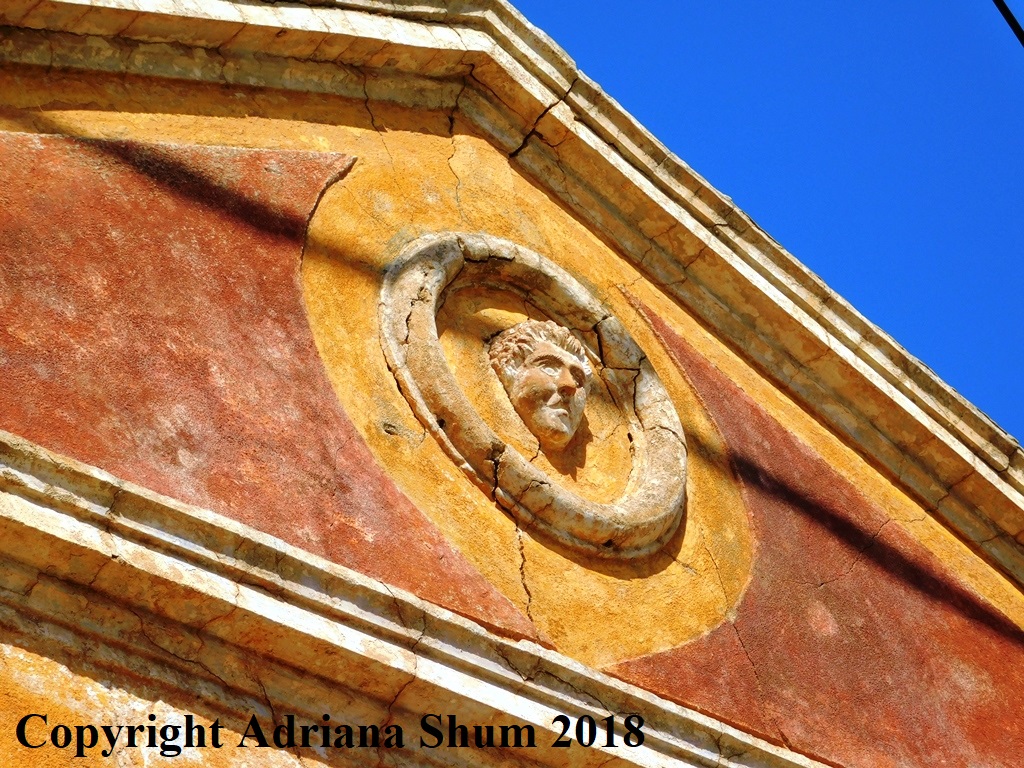
Symi is famous for its beautiful neo-classical houses. The pediments are adorned with all sorts of devices such as stars, crosses, concentric rings and, sometimes, faces. I spotted this one recently in Chorio, near the windmills.
Looking across to the old Kastro from Milos (windmill) ridge of Chorio. The tree-topped hills on the right form the back of the famous amphitheatre harbour. There is a narrow winding road along that crest, leading to the ancient monastery of Roukoniotis and the precipitous descent to Toli Bay.
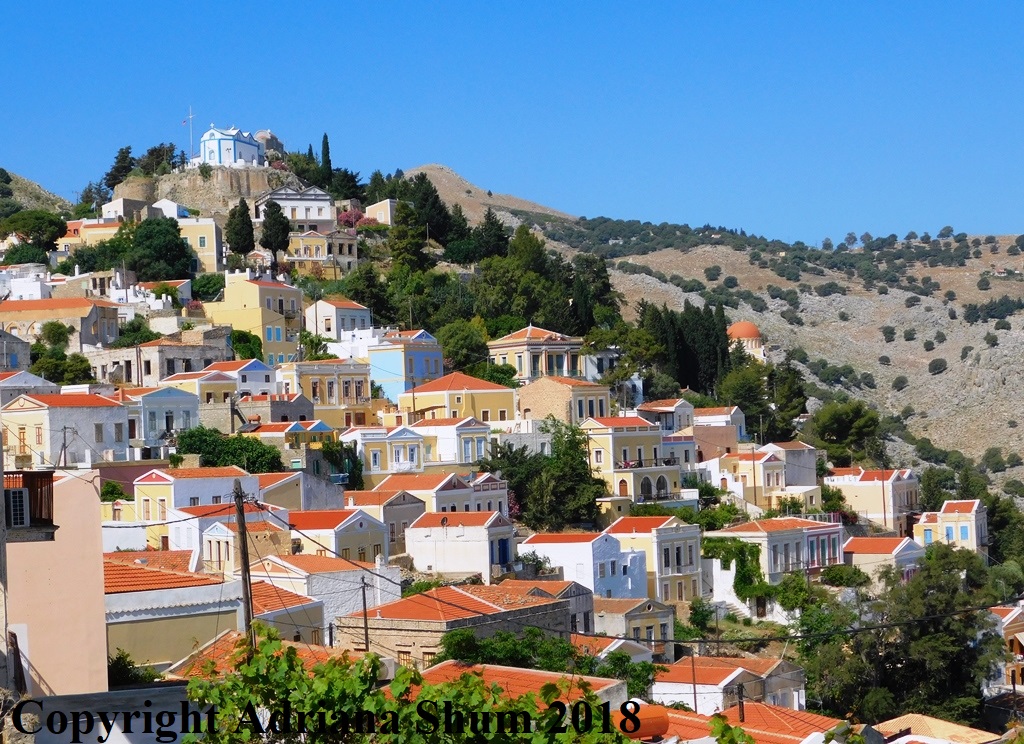
Another view from the same vantage point, showing the back of Yialos far below. The diagonal row of houses visible just above the pergola in the right foreground are on the Kali Strata, the famous steps connecting Chorio with Yialos and Harani. Symi is a very compact island, only 8 miles long and 5 miles wide at its broadest, and most habitation is clustered around this north-eastern group of hills. Getting about, however, involves a great deal of legwork. Those tiers of pretty houses are connected by steps rather than roads. The motor road that connects Yialos with Chorio is an incredible feat of engineering, sweeping far into the countryside and back again, to embrace the steep incline.
Symi is famous for its beautiful neo-classical houses. The pediments are adorned with all sorts of devices such as stars, crosses, concentric rings and, sometimes, faces. I spotted this one recently in Chorio, near the windmills.
When I first came to Symi in 1993 ochre and brown were the dominant colours. Indeed these seemed to be the only colours stocked ready mixed by the local hardware store. If you wanted anything else, you bought packets of pigment and mixed them into the whitewash yourself. Gloss paint was limited to white, ochre and mid-brown – colours that are still common in some neighbourhoods. Then along came acrylic paints and computer mixing and the fun began. The archaeologia, the government department that looks after heritage sites such as Symi, still has final say on what colours are permitted but Symi’s palette has expanded in many directions.
An immaculate house in a quiet lane below the windmills.
Dragon’s breath has scorched the tender petals of roses and other flowers, turning them into pot pourri overnight. Falling humidity and rising temperatures are taking their toll.
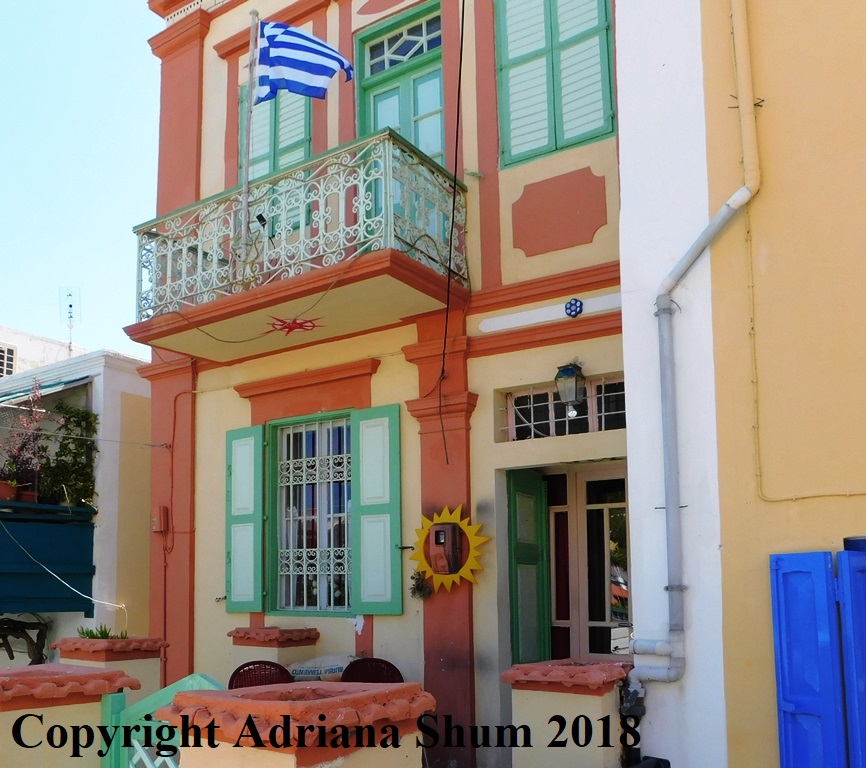
This tottering three storey mansion house off the main square in Chorio has some delightful touches of whimsy. A few months ago, when I was still writing on my original blog, I posted a photograph of the Greek flag held to the balcony railing by a yellow measuring tape. Now the sun brings emphasis to an otherwise ugly electricity meter.
Agia Trianda (Holy Trinity) is the last of the really big churches at the top of Chorio. There is the small church of Periotissa (Our Lady of Pireus) above it but that is little more than a chapel. Those pink blobs on the slopes of the Vigla behind are oleander bushes flowering along the motor road that connects Yialos and Chorio with Panormitis monastery at the south western end of the island. The oleanders continue as far as the turn off to Xisos, Roukoniotis and Toli.
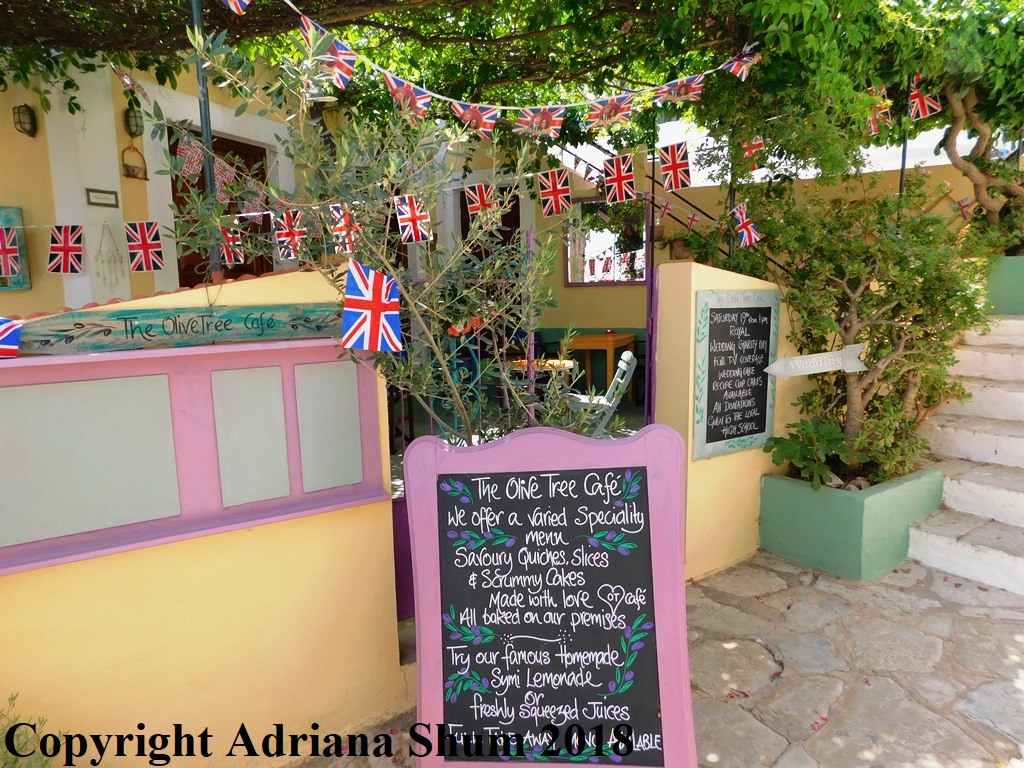
The Markle Sparkle was felt even as far afield as Symi. This was the Olive Tree on Saturday. They were selling Royal Wedding themed elderflower cupcakes in aid of the local high school. Further up the steps, at Lefteris Kafeneion, otherwise known as Bulmas, Pimms was being served with ever more fanciful garnishes as the island’s British expat community arrived, armed with plates of nibbles.
A fallen bag of barley made a great breakfast for these two. They were both trailing loose tethers but showed no signs of going anywhere further than the bag of barley. Ponies, donkeys and mules are still commonly used on Symi, particularly to take materials to building sites and to remove rubble. Most places are just totally inaccessible to any other form of transport. Foals are taught the routes, following with the trains on the various jobs, so that by the time they are old enough and strong enough to carry loads, they know all the lanes and steps.
Most of those package holiday companies have either dropped Symi from their listings as too expensive and awkward to get to (the shrinking ferry schedule is a self-fulfilling prophecy) or the companies themselves have disappeared, gobbled up in the eternal quest for ever cheaper ‘value for money’ deals that eventually became unsustainable.
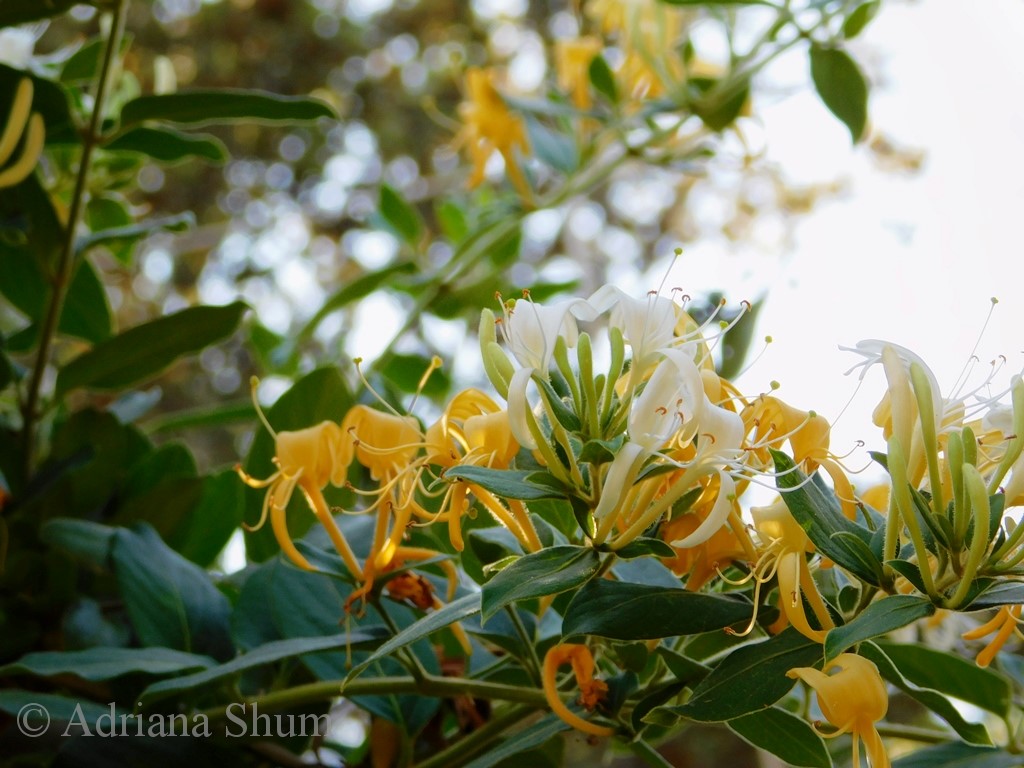
May is a fragrant month on Symi. Apart from the ubiquitous jasmine and the somewhat cloying Persian lilacs, many older gardens also have honeysuckle scrambling over fences and pergolas. On Symi this usually flowers twice a year – in May and then again in September.
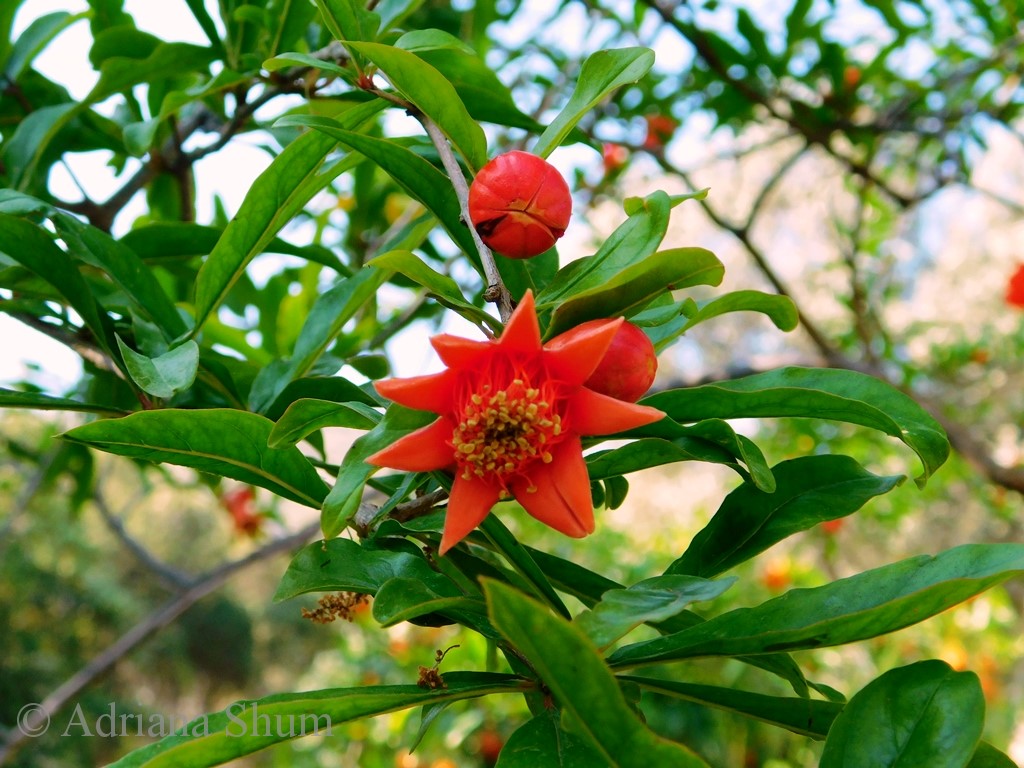
Pomegranate flowers. Pomegranate trees are quite small, more like big shrubs than proper trees. As you can see, the flowers are quite solid with thick waxy petals. The fruit is ready to pick in late September through October.
The courgette glut is well underway. New blossoms appear early every morning, shrivelling away in the heat of the day. The fruits grow so fast they have to be picked daily, even if one does not intend to use them that day. Today’s sweet tender courgette becomes tomorrow’s tough vegetable marrow if left a day too long. Courgette fritters in all their incarnations are a taverna staple at this time of the year. They can also be used instead of aubergines in the making of moussaka, sliced thinly lengthwise and grilled to eat with garlic sauce as a mezze, hollowed out or halved lengthwise and stuffed with rice or meat – in May and June every housewife on the island is working her way through kilos and kilos of fresh courgettes.
There are more yachts about now. I caught this early morning departure from Pedi one clear morning last week. That scar on the hillside on the right is the foot path to St Nicholas beach, one of Symi’s most popular family beaches.
A novel way to discourage cats from sauntering into a Chorio courtyard. If you spot this place, take a quick peak over the wall. There are the remnants of an old and elaborate colonnade, a fragment of which you can just see on the left of the aperture.
A last lingering poppy in Chorio. As the earth behind the dry stone walls dries out, the plants shrivel away. Symi’s secret stone gardens turn back into barren dry stone walls until the drought breaks in late October.
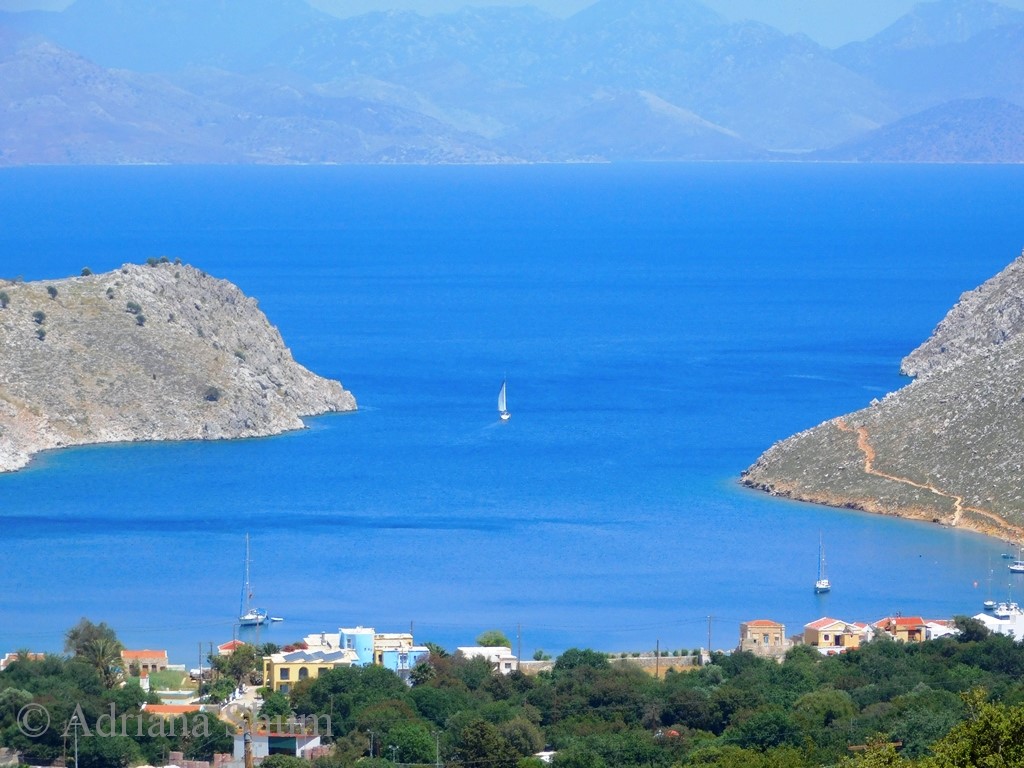
This was the view from the terrace of Agios Thannasis church in Chorio one afternoon last week. This was most probably a flotilla of charter yachts being delivered to their cruising base such as Kos or even a Turkish port such as Bodrum.
A band of thunder showers passed over Greece last week. Symi got off lightly with a few muddy sprinkles and a general clearing of the air. Rhodes and many parts of the Greek mainland as well as neighbouring Turkey had heavy downpours, enough, in some cases, to cause local flooding. We are unlikely to see any significant rain now until late October or even November. The Southern Aegean has one of the longest summer droughts in the Mediterranean. The last time Symi had rain strong enough to set the gutters flowing to fill cisterns was the end of February. It looks as though 2018 is going to be a very long hot dry summer.
The first Olympic Holiday people arrived on Symi last week, marking the beginning of the official tourist season. 25 years ago there were many package holiday companies servicing Symi, notable among them being Laskarina, Manos, Kosmar, Small World, Travel a la Carte and Hidden Greece. Accommodation was a mixture of restored traditional local houses, privately owned small studio and apartment developments designed to look just like Symi’s traditional houses and small pensions. The emphasis was on authentic island life, simple self-catering and lots of convivial dining in local tavernas. Symi’s tourist businesses timed their openings to coincide with these arrivals, knowing that there would be enough visitors staying on the island to provide them with customers in bars, cafes, tavernas, excursions and the like.
Now that certainty has gone. Most of those package holiday companies have either dropped Symi from their listings as too expensive and awkward to get to (the shrinking ferry schedule is a self-fulfilling prophecy) or the companies themselves have disappeared, gobbled up in the eternal quest for ever cheaper ‘value for money’ deals that eventually became unsustainable.
All inclusive packages to resort hotels in Rhodes are good for consumers who want to know exactly how much their holiday is going to cost and don’t really care if it is Greece, Spain, Egypt or Turkey as long as the sun shines, the pool is full and the food and drink bountiful and free. Unfortunately these packages are death to local economies as holiday guests seldom venture forth into the community, prices are pared down to the last cent so wages in these complexes are often below the legal minimum and limited local resources are stretched to breaking point.
Last summer Rhodes found itself in the previously unheard of situation of running out of water. So much water was being diverted to hotel complexes with their swimming pools, manicured lawns and unlimited showers that there was no water available for the locals. Villages and towns found themselves without water for days on end. A situation with which Symiots are only too familiar – this is why we all have cisterns – but for which Rhodes is poorly equipped.
Ironically, high value property owners who had invested significant sums in purchasing holiday homes and villas on the island found themselves seriously inconvenienced for the benefit of low value all inclusive holidaymakers whose tourist spend largely stayed in the pockets of the international holiday companies hosting their holidays. A state of affairs hardly likely to encourage further foreign investment.
That’s probably enough of the serious food for thought for today. If you are still reading, have a good week! Remember, you can always join in the discussion by commenting, or by emailing me here.
Welcome to my new Symi blog, Adriana’s Symi – the free range version! In some respects it will be similar to my original one on the Symi Visitor website in that it will always contain photographs snapped on my travels around the island.
Welcome to my new Symi blog, Adriana’s Symi – the free range version! In some respects it will be similar to my original one on the Symi Visitor website in that it will always contain photographs snapped on my travels around the island. There won’t be as many of the Kali Strata as my daily activities have changed with the closure of Symi Visitor Accommodation and there is no need for me to go down to the harbour with any frequency.
Where this blog will differ, however, is that as it won’t be tied to the specific business of promoting Symi as a holiday destination, I will have greater freedom in what I post and may on occasion venture to share an opinion with you. I may go ‘off piste’ so to speak.
I wrote my first Symi diary listing for the Symi Visitor website back in March 2001. Many of you reading this have probably been visiting Symi and reading my posts at least that far back. It was Wendy’s idea as a way of building up a year-round resource of what life on Symi was like at different times of the year. We hadn’t heard of blogging as a concept and there was no handy software to facilitate putting up posts. It was a case of writing 3 paragraphs and emailing them to Mike Gadd, our webmaster in the UK, who would then paste them onto a webpage for me. No digital images or fast internet connections in those days.
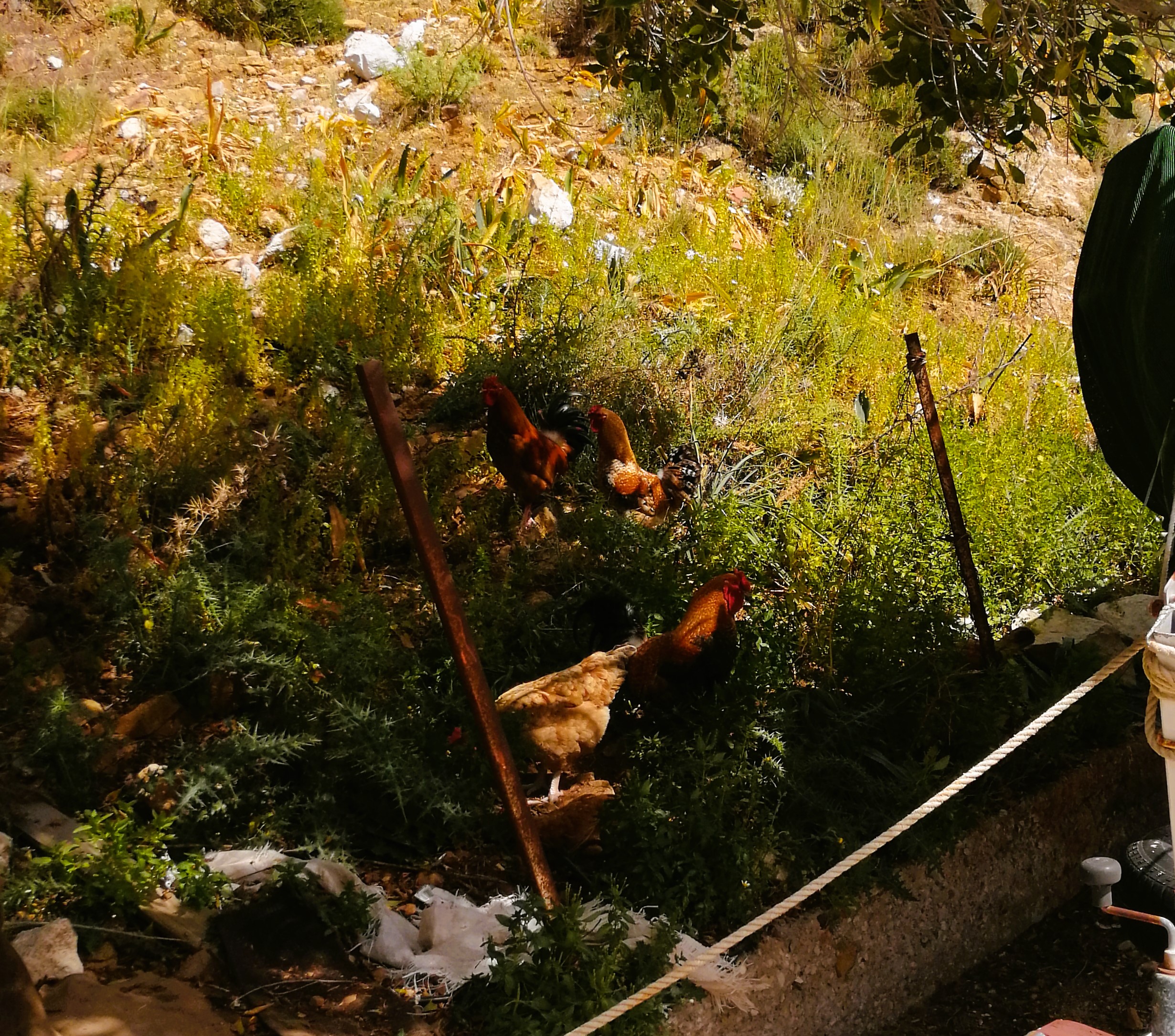
I seem to recall it was around 2005 when I got my first digital camera and started taking photographs to share with you all. It was a very basic Kodak and didn’t have optical zoom. It did, however, take great photographs and it fitted nicely in my pocket. It was a sad day when it fell out of said pocket and the screen shattered. Now, as I lug 600 grams of Nikon bridge camera round my neck, I rather miss the lightweight compacts of yore. No, I don’t find taking photographs with my smartphone an adequate substitute for a compact – I have to change to my reading glasses to see the screen and find the settings to activate it. By that time I will probably have been flattened by the Symi bus or fallen down the steps or the cat/goat/chicken will have moved on.
Thank you for your loyalty over the years. The Symi adventure continues and I look forward to continuing to share Adriana’s Symi with you.






















 Adriana Shum